“Doubt is not always a sign that a man is wrong; it may be a sign that he is thinking.”
— Oswald Chambers
I’ve met lovely, honest people who tell me that they wish they could believe in a loving God of grace, but it is a struggle for them. I’ve also met people who believe in God but are not sure that Jesus Christ is the only way to make contact with him. I’ve met people who believe that Jesus is real and He was willing to lay down his life for them, but they don’t want to get close to an angry Father God. Others think God is great but they have trouble with the whole history of “Christian” behaviour thing.
Others believe in Christ and do all the expected life-style things, but are skeptical that he talks to people today or heals them or miraculously intervenes in their lives because, after 40 years of doing church, they have never seen it.
Some of us journey on this road doing the best we can with the doubts that make us feel too small for the task. When we read expressions like “man or woman of God” or “giants of the faith” we know that it is not referring to us.
Sometimes it’s a matter of needing our hearts healed or enlarged until we can receive. A child whose birth dad left on her second birthday is going to find it hard to believe that a heavenly father promises to stay involved in her life. A boy whose parents were impossible to please will likewise assume that God is angry and disappointed in him. A person who was betrayed by a so-called Christian, especially an older brother, or worse a clergyman, will wonder where this so-called loving self-sacrificing Jesus disappeared to when the going got rough, and if this a set-up to be used again. A person who has been lied to will not buy every story they are told, and if believing every ancient account of events in the Bible is a requirement for a relationship with God they have a large fence to climb.
Here’s the thing. Walking by faith does not require truckloads of faith. Faith is exercised; that’s how it grows. It starts with baby steps. As we take risks and find that God is not like authority figures who berated, beguiled and betrayed, we can take another step. When we give up trying to appease an angry God, and he doesn’t smite us, we take another step. When we see an important lesson in one of Jesus’ stories we take another step. When we dare to pray to him to find lost car keys and have a picture in our minds of them lying under a shrub by the back door, and there they are, we take another step. When we trust another person on this road and are nakedly open about our own scarred story of pain and they treat it like a precious privilege to be protected, we take another step. We are healed inside bit by bit and enlarge our capacity to think and feel differently.
Paul, the guy who distrusted the stories about this Jesus of Nazareth character so much that he had his followers dragged off to prison, later wrote that his prayer was that people, who were like he once was and who have huge doubts, would be strengthened with Jesus’ power in their inner being enough to have the capacity to be able to start to be able to comprehend his love. Our wounds have left holes in our hearts that love just pours through. We all need him to move first. So he did.
Jesus understands and is relentlessly kind. He is not shocked by our doubts, and understands the barriers religious people have left in the way in attempts to protect themselves from their own doubts.
If all you have is one tiny little speck of faith it’s all you need to start this journey. Eventually it will move mountains.
The story is told in the book of John about the time Jesus grossed his disciples out. He said something about not being a part of what he was doing unless they ate his body and drank his blood. For people who wouldn’t touch shrimp barbeque or BLT sandwiches, this was pretty offensive. Some of them left. They didn’t get it.
The ones who stayed didn’t get it either, but Peter, who was one of them, answered Jesus (who asked if they wanted to leave too), “Lord, to whom shall we go? You have the words of eternal life, and we have believed, and have come to know, that you are the Holy One of God.”
Later, they understood the significance of “eating his body and drinking his blood” when they remembered the last supper where he offered them broken bread and wine and said, “This is my body. This is my blood.”
Jesus spoke the language of metaphor. That’s why his first miracle involved replacing the ceremonial cleansing water at the wedding in Cana with gallons and gallons of wine. Wine symbolized his blood which was shed to save people from their sins. But all these things became clear only in retrospect.
Children tend to be concrete literal thinkers and the disciples often thought like children. People often misunderstood the language of the Kingdom because, like children, their thinking was literal. God often speaks in symbolic pictures.
Jesus said, “It is the Spirit who gives life; the flesh is no help at all. The words that I have spoken to you are spirit and life.”
His words came to life for the disciples later when Holy Spirit brought them to memory and interpreted them.
Sometimes the Lord will give us a puzzle piece and it does not make sense to us. Sometimes there is the temptation to try to make sense of it before we have the other pieces, but there is meant to be a certain amount of tension as we follow Jesus in faith, not understanding what on earth he is talking about.
Like Mary we treasure and ponder, but we don’t always know where this is all going. I think of Joseph who died before seeing the man he raised as his own son crucified and risen from the dead. I’m sure he knows now, but it must have been difficult at times.
In the chapter that comes in the middle of the discussion of the charisma, or gifts of the Spirit, Paul talks about living with only part of the picture.
For our knowledge is fragmentary (incomplete and imperfect), and our prophecy (our teaching) is fragmentary (incomplete and imperfect).
But when the complete and perfect (total) comes, the incomplete and imperfect will vanish away (become antiquated, void, and superseded).
When I was a child, I talked like a child, I thought like a child, I reasoned like a child; now that I have become a man, I am done with childish ways and have put them aside.
For now we are looking in a mirror that gives only a dim (blurred) reflection [of reality as in a riddle or enigma], but then [when perfection comes] we shall see in reality and face to face! Now I know in part (imperfectly), but then I shall know and understand fully and clearly, even in the same manner as I have been fully and clearly known and understood [by God].
And so faith, hope, love abide [faith—conviction and belief respecting man’s relation to God and divine things; hope—joyful and confident expectation of eternal salvation; love—true affection for God and man, growing out of God’s love for and in us], these three; but the greatest of these is love. (1 Cor. 13: 10 – 13 Amplified)
So what do we do in the meantime, when we see only in part?
We have faith that He will not lead us astray.
We cooperate with Holy Spirit living in us in the development of our character that leads to hope that does not disappoint.
And when we don’t know what we are doing, we err on the side of love.
We love because He loved us first and He gives us the ability to extend to others the grace He extended to us.
Sometimes following Jesus means saying, in all humility, “I don’t know. But I have come to believe, and to know, that Jesus Christ is the Holy One of God and I choose to follow Him.”
Sometimes my young friends like to post snippets of lyrics to songs in the status box on Facebook. My first reaction is often, “Are you OK, honey?” Then I figure it out – a song has spoken to their heart.
But it has not spoken to mine, and out of context it sounds, well, a little weird. Since I don’t know the song and have no emotional connection to it, the words are often just an interesting record of something that means something to somebody else. Thanks for sharing.
Photos can be like that too. I have my grandmother’s photos here, black and white records of her unnamed friends standing in front of grey rose bushes long since scattered in the wind. I can appreciate that they had deeper meaning to her than they do to me, and I suppose I kept them around out of respect for the things that were important to her, but now I’m paring them down and storing the more interesting ones in waterproof boxes.
For many years I was surrounded by people who told me about the wonderful things God has said. The Bible records them. I read them for myself. But for many years when someone quoted a verse of scripture it felt like reading lyrics to somebody elses favourite song.
Then I heard the Singer. I heard the Song.
The difference between studying the Bible and hearing the Voice of the Lord for oneself is like the difference between reading the lyrics and hearing the song.
John, the disciple who rested his head on Jesus’ chest, understood. Jesus came, not as more lyrics, but as the song. He told the religious people who studied the puzzling snippets of lyrics they had, that they were about Him, and that there was more to a song than written words. But they had to let go of their “expertise” to hear -and for many that was troubling.
There is more, so much more, to this relationship with God. The difference between reading about the King of the Universe and going for a walk with him is like the difference between looking at photo of the memory of grey roses and actually touching and smelling colourful living roses.
John understood the lyrics when he heard the Voice sing the song:
Before time itself was measured, the Voice was speaking.
The Voice was and is God. This celestial Word remained ever present with the Creator; His speech shaped the entire cosmos. Immersed in the practice of creating, all things that exist were birthed in Him. His breath filled all things with a living, breathing light— A light that thrives in the depths of darkness, blazes through murky bottoms. It cannot and will not be quenched.
(The good news of John, chapter one, The Voice)
The Bible is a divinely inspired record of wonderful lyrics. But lyrics alone are not the Song our hearts long to hear. What is He singing over you?
Well, it’s the season of my number-changing day, as my little granddaughter calls it.
This time of life has potential to be depressing for some of us. The question that crops up in this decade is, “What have I done with my life?”
This blog is about change, and I often write about leaving the past behind and pressing on to become who we are meant to be. In spite of many deeply regrettable choices I have made in the past, I am learning to say, “It’s grace that has brought me safe thus far.”
Sometimes it’s easier to forgive others than it is to forgive ourselves, but moving forward also means letting go of the debt accrued against ourselves by ourselves. In the same way that forgiving others means letting go of the expectation that they will somehow, someday, make up for things they stole or failed to provide, forgiving ourselves means letting go of the expectation that our past selves can ever make up for offenses against our future selves. I’m not talking about not taking responsibility; I’m talking about recognizing the futility of the task of trying recoup lost years by striving, and instead emptying our hands of false coping skills, so that God can provide the love and acceptance we still so desperately need.
I thought about Paul, the writer of so many letters to young, struggling believers. I wonder how he lived with the fact that he hated followers of Jesus so much that he had them dragged out of their homes, imprisoned, and even, in the case of Stephen, executed. He called himself “the chief of sinners” for what he had done. And yet, with the weight of that knowledge, he was also able to grasp the reality of God’s forgiveness. He knew he was loved, not just for the person he was going to become, but for the person he was at that very moment -for the person who had not yet “attained.” He could say, “By the grace of God I am what I am.”
I asked the Lord for a word from Him that would show me where I am and give me a sense of direction. I feel like I’m so far behind where I should be. I lost so many years to sympathy-addiction and depression that I have felt a kind of desperate need to make a difference in the world while I still have a bit of time left. I want to get busy and do something important for God.
The word I feel he is giving me for this year is “simplify.” The words of this song describe my feelings:
What can I do for You?
What can I bring to You?
What kind of song would you like me to sing?
‘Cause I’ll dance a dance for You
Pour out my love to You
What can I do for You beautiful king?
‘Cause I… can’t thank You enough.
…
All of the words that I find… and I can’t thank You enough.
No matter how I try… I can’t thank You enough.
Then I hear You sing to me: “You… don’t have to do a thing
Just simply be with me and let those things go
‘Cause they can wait another minute
Wait… this moment is too sweet
Would you please stay here with Me
And love on Me a little longer
I’d love to be with you a little longer
‘Cause I’m in love with you
(from “A Little Longer” by Jenn Johnson)
I’ve spent a lot of years wading through good and bad doctrine and theology, healthy and unhealthy forms of church structure and methodology, and proper and improper ways to express worship. If I were to classify my relationship with churchianity on Facebook it would be “complicated.” Today, if you were to ask me for my personal statement of faith, it might simply be:
Jesus Christ, Son of God, crucified, buried, raised from the dead and coming again. And this Jesus, who showed us who God really is, loves me. Holy Spirit tells me so. In the cross of Christ, offensive to the self-made, and foolish to the logical, is all my expectation.
By the grace of God, I am what I am. Present tense.
If that’s good enough for the Creator of the Universe, it’s good enough for me.
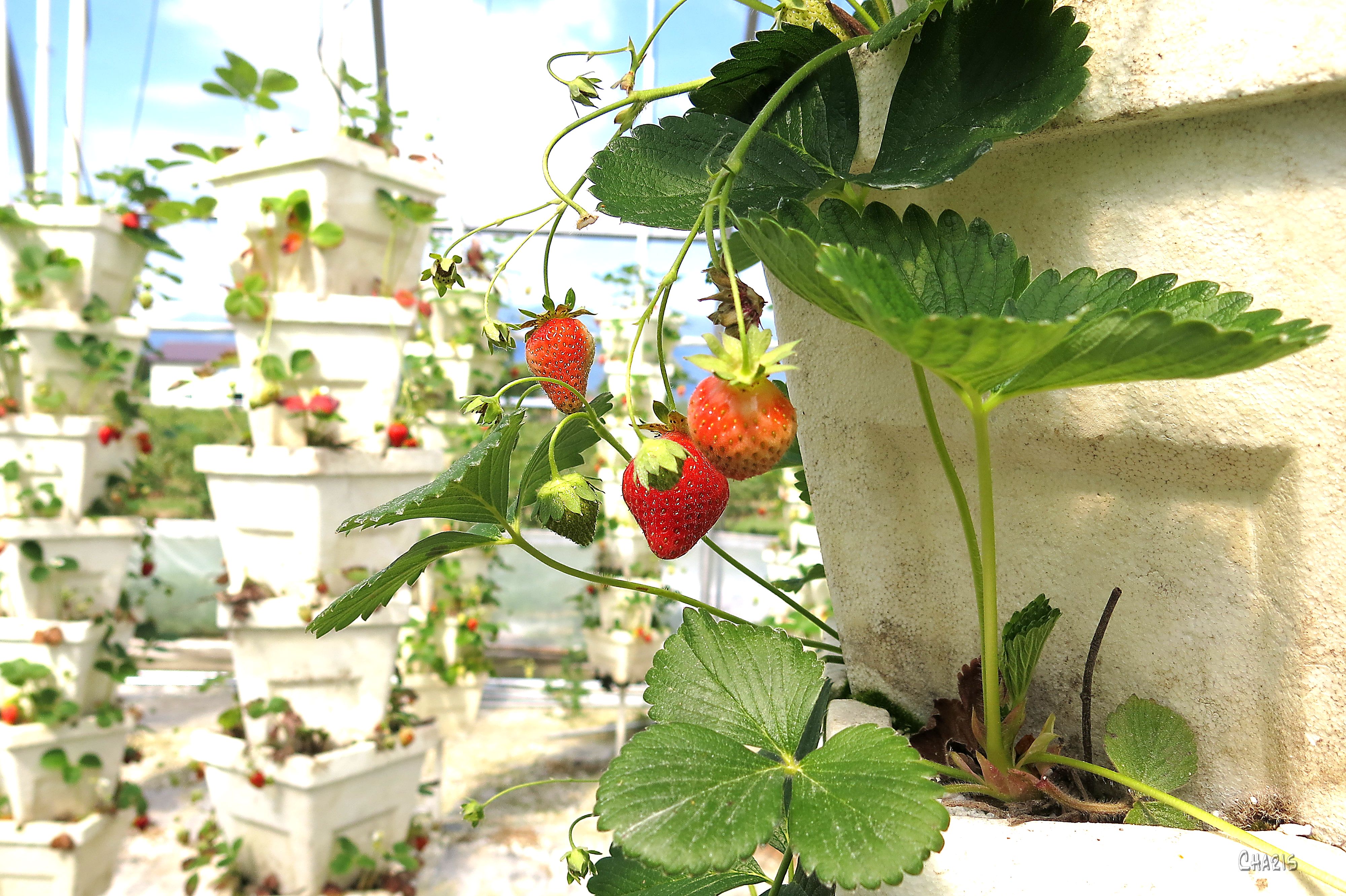
When he placed a bowl of fresh strawberries in front of me at the breakfast table, I knew I was in the home of a truly wealthy person. I was about ten-years old and our family was visiting an old friend who had inherited a grand Edwardian home in Vancouver. The previous owner kept it exactly the way it looked when his wife died in the twenties. It was a fine house with servant’s quarters, and call bells, inlaid parquet floors, and portraits of important-looking people peering down from the walls around the grand staircase. Our host gave me my own room with a four-poster bed and a Romeo and Juliet balcony -and strawberries on fine china for breakfast. I felt like a princess.
I don’t think my grandchildren believe me when I tell them that we didn’t have nectarines, or kiwis, or sushi, or even pizza when I was a kid. Pizza was a new fad when I started Jr. High school -and let’s just say it had not yet been perfected. We never had fresh green vegetables that didn’t come straight from the garden in the summer. We ate canned peas, corn and green beans and boiled carrots most of the year. Spinach was this vile black stuff in a yellow and red can that even Popeye would be loath to touch. Fresh Mandarin oranges, wrapped in green paper, only showed up at Christmas; peaches, nestled in wooden boxes, came off the back of a truck from the Okanagan in August; and strawberries, ah, beautiful strawberries, came in little woven baskets at the end of June. Strawberry season was so special that church ladies had strawberry teas just to celebrate. And we had strawberry shortcake with piles of whipped cream, or strawberry and rhubarb pie, or strawberries and ice cream for dessert until the season was over about a month later – but always at the end of the last meal of the day, after we had earned it by dutifully downing our mushy canned peas or yucky spinach.
But strawberries for breakfast? I had never tasted anything so good. Who has dessert first thing in the morning?
I was thinking about Jesus’ first public miracle when he changed the water into wine at Cana. When he chose to replace the water with wine and to use the six giant stone vessels that held water for religious purification rites, he was deliberately messing with some folks’ idea of decently-and-in-order. He provided a taste of the wine to come (which, in Biblical metaphorical language, represented The Messiah’s blood ) in a display that was just like His over-the-top grace. It was His job to show us what God, his Father, is really like, so He did. When the banquet manager tasted it, he was amazed that it was better than the wine the crowd was already a little tipsy on (because, as he noted, that they probably wouldn’t appreciate it properly by this point.) Like God’s grace, it’s quality was better than required.
At the wedding that marked the beginning of his public ministry, Jesus was giving a taste of the goodness of the Father, a filled-to-the-brim abundance of provision, to people who had no appreciation for its significance. John says he revealed his glory there – and he offered his family and friends a taste of the glory to come.
In God’s economy we do not have to strive to earn His favour. Like strawberries for breakfast, His goodness is served up for people who do not realize it is merely a taste of the glory to come.
Taste of His goodness; see how wonderful the Eternal truly is. Anyone who puts trust in Him will be blessed and comforted. (Psalm 34:8)
This week I had strawberries for breakfast -with sushi.
“We need to be trued,” she said.
“Trued?” I asked.
“Trued,” she said. “It’s an old construction word meaning everything has to be in line before you can build on it.”
I called a dear older friend yesterday to tell her an event had been re-scheduled. She has just come back from spending several weeks alone, resting in the Lord.
“I’m so glad you called! Let me get my notebook. I thought this was just for me, but the Lord said it’s for more than me. It’s for you. It’s for His church.”
When she came back and picked up the phone this is part of what she said:
“We are the temple. We are the living stones and Christ is the cornerstone, yes? Well, we need to be careful that our foundations are true to the cornerstone. We all need to be in alignment with Jesus Christ. It won’t do to get in line with whatever stone you are near hoping they are true. Every stone must be trued with the cornerstone.”
“He is talking to me about stones,” she went on, “About cobble stones, about building stones, about precious stones, about polished and engraved stones, about prospecting for gold nuggets the size of eggs. This is a season of building. Personal building first — then building together — but we must become true to the cornerstone and nothing but the cornerstone.”
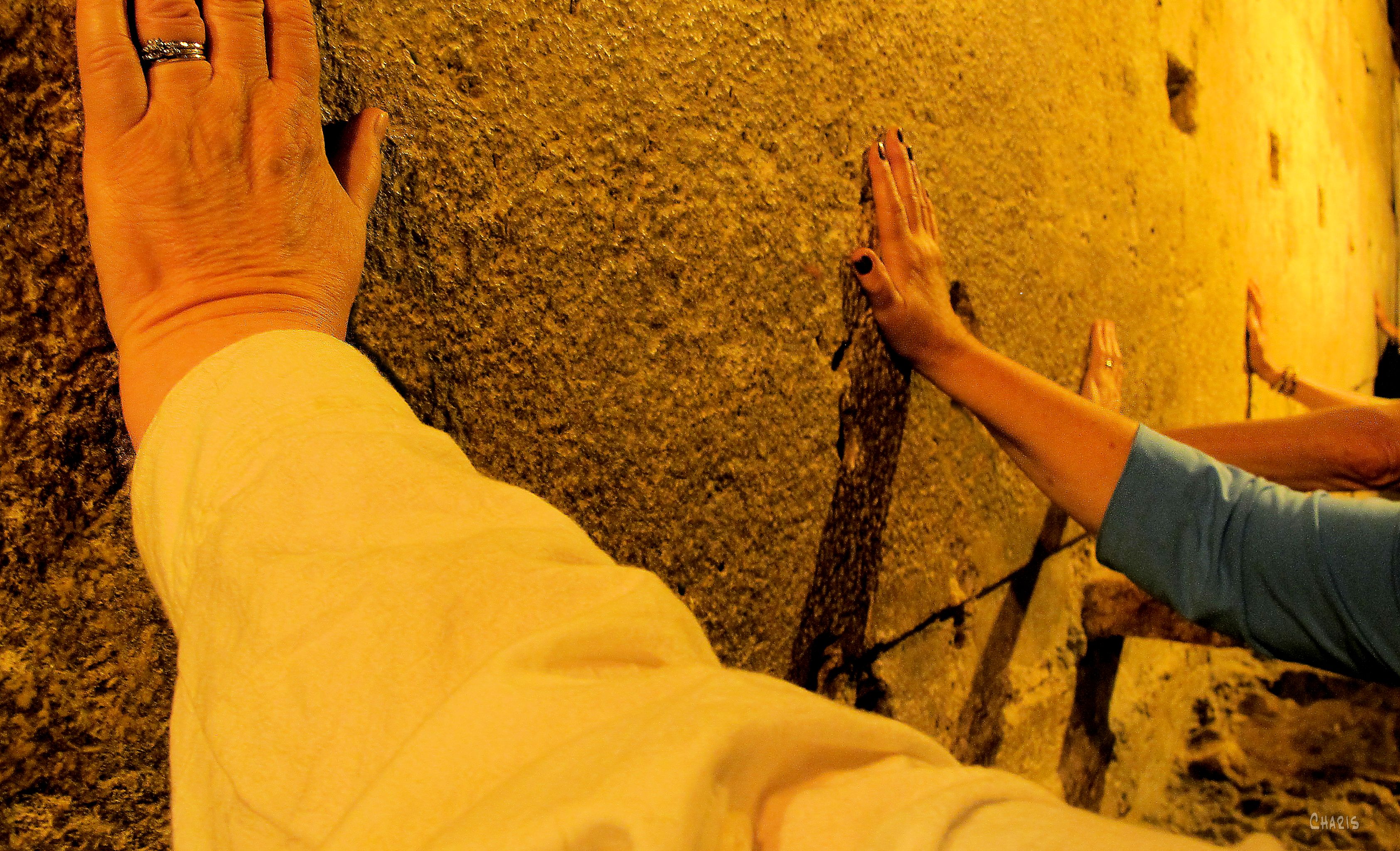
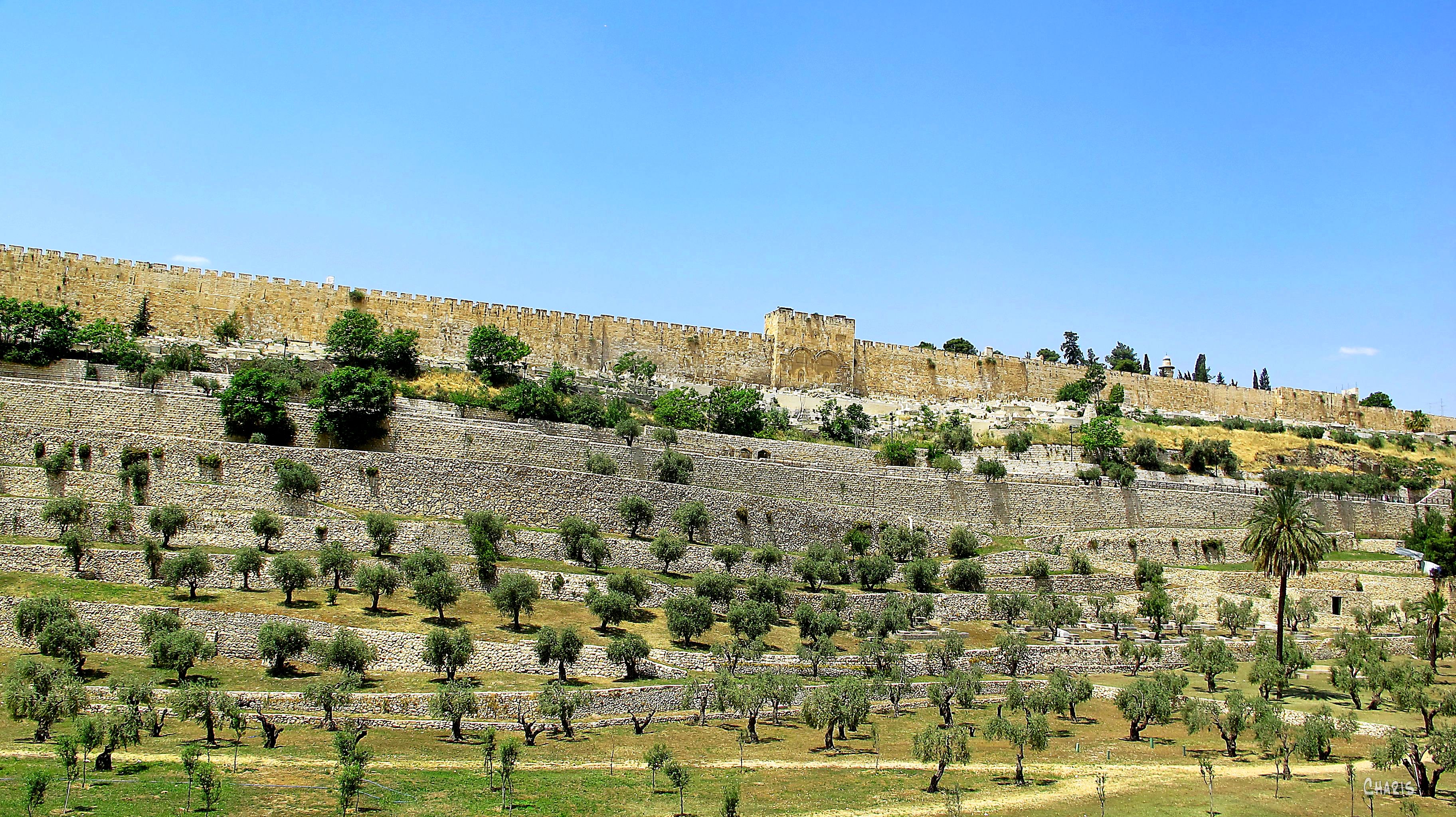
I remember a hugely impressive stone I saw a few months ago. We stood in a tunnel under the Temple Mount in Jerusalem and touched an enormous stone about 11 1/2 feet high and 41 feet long. They called it a “master course stone” and it was a foundation stone for the western wall of the temple area where Jesus was brought as a baby, where his parents found him talking to the learned men while still a child, where he drove the money-changers and merchants out, where he taught, and where he wept when he saw its future. This stone was so perfectly dressed, with every tiny bit of extraneous rock chiseled off, that no mortar was needed to hold the massive walls and buildings together (we were told the temple was probably three times taller than the Dome of the Rock which dominates the Temple Mount now) but this also made it possible for the Romans to dismantle the temple in 70 A.D. just as Jesus predicted. The old temple was torn down within a generation of his resurrection. God doesn’t live there anymore; the dwelling place of God is now in mankind -his adopted sons and daughters.
The stone we stood beside sat on bedrock and was almost as big as a bus, but when it was laid even this giant master course foundation stone had to be moved and adjusted until it was in perfect alignment with the cornerstone.
Another illustration of being in alignment came through Susanne who commented on an earlier post this week. She included this quote:
“Has it ever occurred to you that one hundred pianos all tuned to the same fork are automatically tuned to each other? They are of one accord by being tuned, not to each other, but to another standard to which each one must individually bow. So one hundred worshipers met together, each one looking away to Christ, are in heart nearer to each other than they could possibly be, were they to become ‘unity’ conscious and turn their eyes away from God to strive for closer fellowship.”
― A.W. Tozer, The Pursuit of God
These words written by Mr. Tozer reminded me of this story:
I once sang with an amateur orchestra made up of members with widely varying skills. (It included a gracious group of experienced musicians who mentored young players.) At rehearsal I found the tuning somewhat disorienting. As I walked across the stage in front of the orchestra pit (it was a concert of scenes from opera) I could hear the pitch gradually rise slightly from one side to the other. This was the problem: the young musicians tuned to each other rather than to the piano which was on stage right. (Since a piano was included in the work and its pitch cannot be easily changed, the instruments needed to tune to it rather than the oboe this time.) At any rate, the concert master rushed in, having arrived late, and picked up the problem with a discerning ear honed by years of experience. He supervised the re-tuning of the instruments and everything was back in order.
Both stories give the same message. When the stones are all lined up with the cornerstone the building has integrity and stability. When the instruments of the orchestra, which all have their unique qualities, are tuned to the same pitch, even though each instrument plays a different part, the result is harmonious unity. When the Church, the universal Church, is in alignment with Jesus Christ, our cornerstone, we are in alignment with each other. We are in tune with each other. We are one in the Spirit. We are one in the Lord.
The Church is not a man-made edifice, nor is it a group of people aligned to a particular doctrinal emphasis or administrative style or methodology or personality. The Church is the body of Christ with all of its members intact. The Church is me and the Church is you trued to Jesus Christ.
The Church is Christ in me and Christ in you, the hope of glory.
The Church is made up of living stones with Christ as its head -an organic, breathing, growing and moving force of love against which the gates of hell cannot prevail.
You are coming to Christ, who is the living cornerstone of God’s temple. He was rejected by people, but he was chosen by God for great honor.
And you are living stones that God is building into his spiritual temple. What’s more, you are his holy priests. Through the mediation of Jesus Christ, you offer spiritual sacrifices that please God.As the Scriptures say,
“I am placing a cornerstone in Jerusalem, chosen for great honor, and anyone who trusts in him will never be disgraced.”
Yes, you who trust him recognize the honor God has given him. But for those who reject him,
“The stone that the builders rejected has now become the cornerstone.”
And,
“He is the stone that makes people stumble, the rock that makes them fall.”
They stumble because they do not obey God’s word, and so they meet the fate that was planned for them.
But you are not like that, for you are a chosen people. You are royal priests, a holy nation, God’s very own possession. As a result, you can show others the goodness of God, for he called you out of the darkness into his wonderful light. ( 1 Peter 2:4-9)
We are obviously not in unity of the faith yet. We need each other, because going it alone is a sure way to lose perspective. We need the concert masters who are part of the orchestra (and not soloists!) who can keep us tuned to the Maestro/Master Musician and in time with Him, so we will be in tune and in time with each other. We need the whole orchestra playing together without rivalry over which section is the greatest. We need the builders who keep their eyes on Christ and help us stay true and in line with Him, (and not themselves!) because Jesus showed us who the Father really is.
And he gave the apostles, the prophets, the evangelists, the shepherds and teachers, to equip the saints for the work of ministry, for building up the body of Christ,until we all attain to the unity of the faith and of the knowledge of the Son of God, to mature manhood to the measure of the stature of the fullness of Christ,so that we may no longer be children, tossed to and fro by the waves and carried about by every wind of doctrine, by human cunning, by craftiness in deceitful schemes.Rather, speaking the truth in love, we are to grow up in every way into him who is the head, into Christ,from whom the whole body, joined and held together by every joint with which it is equipped,when each part is working properly, makes the body grow so that it builds itself up in love. (Ephesians 4:11-16) (emphasis mine)
I didn’t intend to. In fact the only reason I went out with this guy, who was persistent enough to ask eight times, was to prove to him that we had nothing in common and that it would be colossally boring.
It wasn’t. He talked to me like I had a brain. All my male friends were boys I had grown up with; this was a man. That fact was kind of intimidating so I said goodnight and that was that. But…..later I needed an escort to a posh event with the opera company I was a part of and none of my male friends would be caught dead in a place like that. I was desperate so I asked him, and he obliged. One of the women at the reception asked me how I snagged a “gold key blazer man.” I didn’t even know what that was, but the fact she was impressed made me look again. He drove me home and we sat in the car and talked for hours. We went out several times after that. He bought me expensive gifts. He took me to fine restaurants. He introduced me to his friends who were in a different world than mine.
On Boxing Day, all those years ago, my brother and I were at our grandmother’s house. I remember being a bit of a grouch and not wanting to join in the usual annual family crokinole tournament. I overheard him ask Grandma, “Sheesh. What’s the matter with her?”
“Nothing,” Grandma said. “She’s just in love.”
I was a bit annoyed and then I realized, Oh my goodness! She’s right! I miss him and I would rather be with him than with my family on Christmas! Oh, no!
The “Oh, no!” was because I knew this demanded a response and would change my life and mess with my plans.
It did. But in a good way.
We’re still together and we still talk and talk on long drives to visit our grandchildren.
In the Bible God often uses the image of the bride and the suitor -in Song of Solomon, Isaiah, Hosea, and again in Revelation where He talks about returning for his bride.
I remember singing this old carol with a small ensemble in a concert once and the bass protested that He had no idea what the words meant or how it related to Christmas. Men sometimes have difficulty with the whole concept of being the object of God’s pursuit. Some of them become quite angry at songs they call “Jesus is my boyfriend songs.” My husband says it’s because men like to see themselves as the one who initiates. (I think the Lord obliges and uses other human experiences like Father/son and shepherd/lost sheep as well.)
The bride image is one I understand though. I hear the Lord throwing little pebbles at my window in the night and softly singing, “Come away with me.”
This ancient Cornish Christmas carol, “Tomorrow Will Be My Dancing Day,” reminds me that everything he did, from laying down his right to be recognized as the king of the universe, to washing the feet of his disciples, to laying down his life and conquering death was to pursue us and invite us to dance with him -because He is in love with us.
And know this: in the last days, times will be hard. You see, the world will be filled with narcissistic, money-grubbing, pretentious, arrogant, and abusive people. They will rebel against their parents and will be ungrateful, unholy, uncaring, coldhearted, accusing, without restraint, savage, and haters of anything good. Expect them to be treacherous, reckless, swollen with self-importance, and given to loving pleasure more than they love God.
Even though they may look or act like godly people, they’re not.
They deny His power.
I tell you: Stay away from the likes of these.
(2 Timothy 3:1-5)
Apathy is not peace.
Pleasure is not joy.
Control is not order.
Tolerance is not love.
Self-sufficiency is not sufficient.
I ask no other sunshine, than the sunshine of Your face, oh Lord. Oh come, oh come, Emmanuel!

























 Charis: Subject to Change