Why I Appreciate Ranting Critics

book shelf ch

My trusted friend learned the value of living simply by growing up in a military family subject to frequent moves. She has offered to help me de-clutter my house. Then I discovered that she considers our many books and dvd’s to be clutter. Um… this might not work. We have three walls of floor-to-ceiling shelves crammed with books — and perhaps a pile or two in the bedroom. And my home office. And maybe the living room… and the deck. I tried to tell her they make an excellent extra layer of insulation. She rolled her eyes.

I do cull regularly (my husband’s stuff is much easier to part with for some reason) and I do avoid second-hand bookstores, and clearance tables in the mall, so there are fewer books coming in. But now I’m having to worry about clutter on my computer since I have a Facebook friend who lets me know about free e-book promotions on Amazon -and he has great taste.

So, I am trying to be freer with what I part with, and more discerning about what I let in.  Now I’m researching authors and their works more before buying. I realized something about book reviews and reviewers today. I’m more likely to be attracted to a book with a few bad reviews than pages of gushing changed-my-lifes. Is it bad that I take some book reviewer’s negative online critiques as recommendations? Self-appointed heresy-hunters have panned some of the best books I’ve read. I’m beginning to recognize their names. Thanks, guys.

Do you remember video rental shops? One thing my husband and I discovered was that if the blurb on the box said, “HILARIOUS!!!!” we would probably hate it. It’s not that we are humour-challenged, it’s just that, after a while, humour that comes at the expense of someone’s dignity begins to lose it’s appeal. We also found certain popular critics had very different ideas of what constituted  an entertaining evening than we did. If they disliked something, we might just pick it up.

We’re weird that way. Popular not only does not know our address, it has never even wandered down our street. And we don’t mind.

The same author’s name popped up in a few places recently. I decided to check him out; he seems to say some rather radical things. Most of the reviews of his latest book on Amazon were over the top  five star best-thing-I’ve-ever-read stuff, which I immediately dismissed as friends’ or relatives’ or groupies’ kind attempts at helping sales. Four and three star reviews tend to mention possible flaws (which all the best authors have.) Then I skipped down to the one and two star stuff. There weren’t many, but one of the reviewers, who was very witty because angry people can be quite funny, hated the book, the author, and everyone on his friends list. Thankfully, the reviewer clearly delineated why he hated it, and in the process revealed his own character flaws and  the thinking that led to his disgruntled attitude.

Love it. I’m getting the book. The very things that offended him are in areas where I have also been offended, and where I realize I need to change.

I read a quote from a Christian author and teacher who listed his four favourite theologians, then stated he didn’t completely agree with any of them. Love it. Nobody has the entire picture, although some of the parts they do have are excellent.

We can learn, and grow, and change when we are willing to toss out some old books (or ideas) to make room on the shelf for ones we haven’t considered yet, knowing that  Holy Spirit will continue to teach us discernment and refine our thinking in the process of renewing our minds.

Now, if you will excuse me, I have to make room on the shelf.

Let the Healing Streams Abound

Jesus, lover of my soul,
let me to thy bosom fly,
while the nearer waters roll,
while the tempest still is high;
hide me, O my Savior, hide,
till the storm of life is past;
safe into the haven guide,
O receive my soul at last!

Plenteous grace with thee is found,
grace to cover all my sin;
let the healing streams abound;
make and keep me pure within.
Thou of life the fountain art;
freely let me take of thee;
spring thou up within my heart,
rise to all eternity.

(Charles Wesley)

Mr. Medema’s music is available here.

Fences Around Fences

fences mtn fade bw corel

Nothing is really lost in God’s economy. I learned a lot in my research for the novel I never finished.

I learned that anger is not a good motivator.

I learned that I can change my mind about a group I distrusted.

I learned that suffering is not the only way to gain Godly wisdom. If we pay attention to history and the wisdom gained by other people’s mistakes, we can move on down the road more quickly than if, like recalcitrant teenagers, we have to experience absolutely everything for ourselves.

I was following a discussion on purity and the courting/betrothal movement today. A couple of blogs pointing out some basic assumptions about purity and responsibility made me think.

One of my characters, who had been delivered to a medieval nunnery in my non-existent novel, questioned the high value placed on living without sexual experience as a basis for recognized sainthood for women ( I learned this after I spent a considerable amount of time reading about the lives of saints officially canonized.)

“Why is it,” the young girl asked, “that so many women are honoured for what they did not do instead of what they did do? Why is protecting your virginity until death of more value than raising loving, courageous children, or treating a difficult mother-in-law kindly?”

Even today, the emphasis on purity and “guarding one’s heart” against any undo or premature emotional, or especially sexual feelings, in order to avoid temptation, may seem like a good idea at first. Alas, as is often the case, when wisdom is hijacked by fear the result is usually more rules – fences around fences. For parents who fear that their kids might someday suffer the same negative consequences of giving into temptation like Mom or Dad did, control becomes the new temptation.

In medieval times it was thought that virgins had greater influence with God in their prayers, so families often designated one or two of their progeny to cover the sins of the rest of the gang by shipping them off (often against their will) to cloisters and monasteries. Enclosure behind high thick walls ensured the “purity” of their bodies, if not their hearts.

Some young people are still raised with the notion that any sexual feelings or attractions qualify as impure thoughts and uncontrollable lust, and that merely being alone in the presence of someone of the opposite gender can lead to “defrauding.”  Not only does this skip the opportunity to develop self-control, it often leads to young women feeling responsible for men’s lack of it. The crazy part is, once they are married (when a young man is brave enough to run the gauntlet and seek her father’s permission to formalize a conversation over a plate of nachos  – with a view to marriage) the young woman, who has been told for years that thinking anything other than no, no, no is “defrauding,” is now suddenly “defrauding” if she says anything other than yes, yes, yes. She goes from “You mustn’t!” to “You must!” without passing Go. Legalism can take the fun out of everything.

You can tell that grace is no longer a part of the equation when God’s permission has to be qualified with yeah-but disclaimers and words are re-defined. When impure means having a God-given sexual feeling and lust is merely being attracted to someone, or guarding your heart means shutting it down, fear is running the show. Self-control ( aka moderation) is a fruit that comes from Holy Spirit — whose love casts out fear.

The actions of Godly wisdom and of human fear may look the same for a while, but one leads to freedom and the other to more slavery (the whole point of Galatians). God sees the heart – and there’s a wideness in his mercy.

Love means respecting our own and others personal boundaries. Love means recognizing and respecting our own and others limitations when it comes to resisting temptations to indulge in practices that will not be in our best interest, whether eating, or overworking, or making out without making a commitment to care. The grace of Christ means we are no longer slaves to fear, nor to deliberate choices to act in ways that come from contempt for God, others or ourselves.

The gate may be relatively narrow, but it’s hard to dance on a tight rope of our own making. It is for freedom that Christ has made us free. Let’s not get tangled up in barbed-wire fence rules again.


And for those who can’t contain the yeah-buts, try this.“Do not put child in bag”

The Importance of Gardens

IMG_2237 white pink dahlia corner ch

When my grandfather retired he became the gardener for the property he and Grandma and my parents shared.  This was a good arrangement until the signs of early dementia cropped up. The problem was that Grandpa was a farmer at heart, and not a gardener. As recent memories turned into dust in the wind, he returned to old painful memories and began to see mother’s flowers as weeds that competed for resources with the precious grain crops he fought so hard to grow during the dusty 30’s in Saskatchewan. Before Mom’s prize dahlias had a chance to bloom he hacked them down with his hoe.

Mother was not pleased. She was a farm girl too, and admired waves of wheat in an open field, and vegetable patches dripping with peas and beans as much as anyone, but she also appreciated “impractical”  flower gardens that produced nothing more than visual pleasure.

When there is not enough to go around, survival comes first. The problem is that many of us return to familiar barrenness of past pain, and live our lives in fear of want, as if God is on a budget and there is not enough to go around. Without new memories our relationship with him can be one based merely on survival (what do I need to do to be saved?) and neglect appreciation of his beauty and abundance. Francis Frangipane wrote:

Indeed, Jesus frequently drew revelation about the Father from the observable world around Him. He told His disciples to “consider the lilies” (Luke 12:27) and spoke of God’s love and care, even for the sparrows (v. 6). He saw miracles of life contained within the power of a simple seed, and He made this revelation a centerpiece of His teaching (Matt. 13).

Indeed, many of the Lord’s greatest sermons were presented, not in the temple or behind the pulpit of a local synagogue, but in the cathedral of creation, at lakesides and hilltops.

We think of Gethsemane as the place where Jesus sweat blood in prayer, and so it was. But Gethsemane was a garden, and the Bible tells us that Jesus “often met there with His disciples”(John 18:2). I love the fact that the Lord routinely found joy among flowers and landscaping, and that He “often” brought His disciples there to teach them.

Yet not only was the setting of a garden a familiar place for Jesus while He was alive, but even in death His tomb was set in the midst of a garden (John 19:41). In fact, when He rose from the dead, a distressed Mary thought Him to be the gardener (John 20:15).

Jesus obviously saw the creation as an echo of the Father’s heart. He found in nature a place, a quiet place, to seek and find communion with God. Beloved don’t deny yourself this exquisite pleasure.”

There is more beauty, so much more beauty, in Jesus Christ than we yet know.

More than Watchmen for the Morning


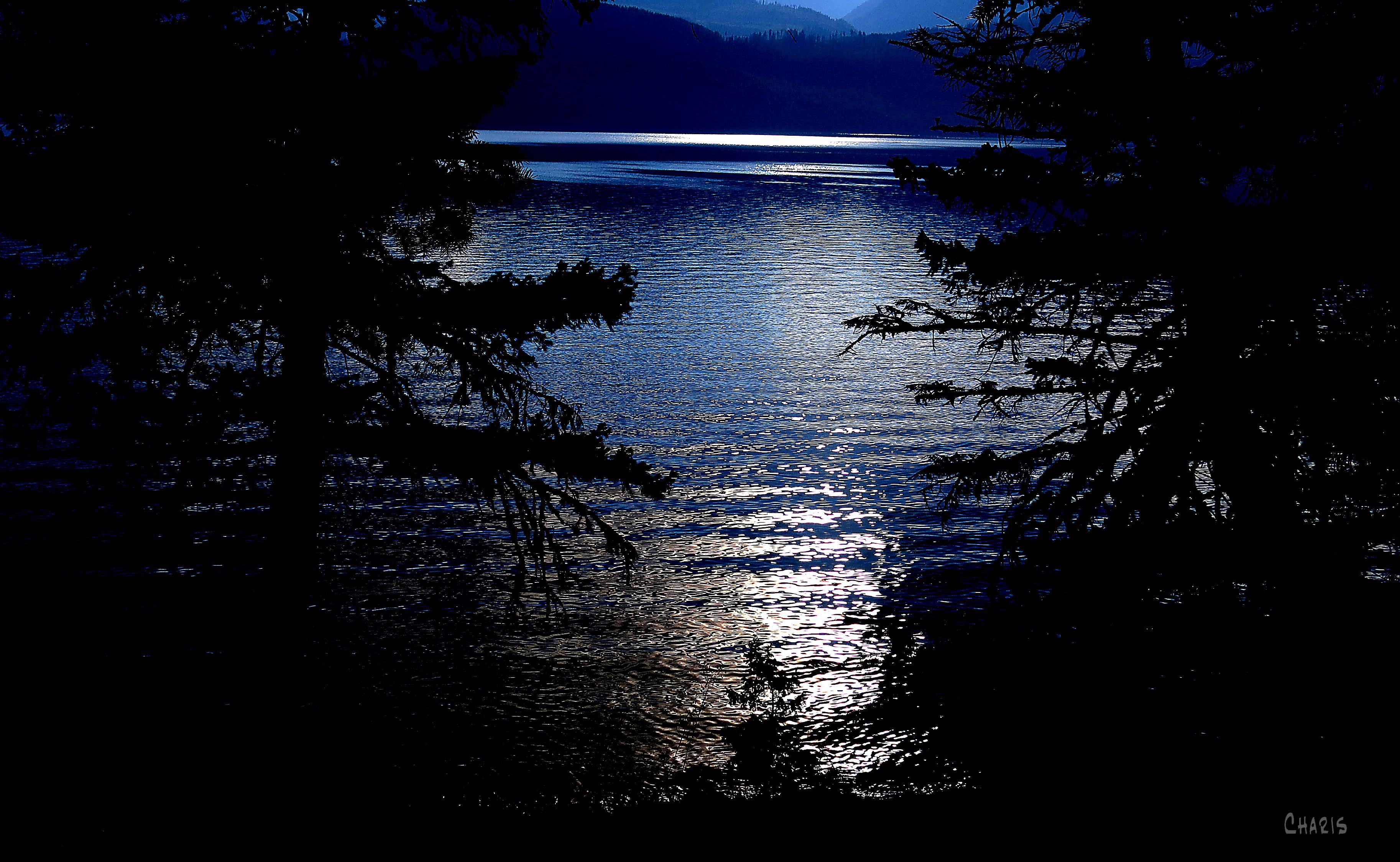
IMG_3200 dark water lake

I wait for the Lord, my soul waits,
and in his word I hope;
my soul waits for the Lord
more than watchmen for the morning,
more than watchmen for the morning.

(Psalm 130:5,6)

Therefore I remember

The world lost another beloved soul to depression today. I enjoyed Robin William’s work very much and will always remember his twinkling blue eyes. But I also understand that humour often springs from pain. I remember what it is like to be in that lonely place without hope — in the midst of other people enjoying life. I am re-blogging a remembrance of that place in hope… in hope that knowing that someone has survived hopelessness will allow one more person, perhaps you, to let someone else carry hope for you when the darkness seems unending… in hope that the Light will fill your heart and never leave.

Charis Psallo's avatarCharis: Subject to Change

Someone asked me recently, “What is the difference between heartache and depression?” Having known both I could answer, “Heartache causes you to cry out, in your pain, to the God of hope; depression causes you to lose sight of hope.”

I do not believe that humankind faces any greater pain than the loss of hope. I’ve had a lot of painful physical problems in my life, but none so bad that I wanted to die just so the pain would stop. Depression made me want to die.

I was familiar with the sense that the dark clouds were again descending and feeling helpless to stop the storm that sucked all the colour out of my life. If you understand what I mean by this, I urge you to keep your eyes on the sliver of light on the horizon, and when it disappears, to cling by faith to the memory…

View original post 346 more words

Many Waters

tos creek cascade waterfall ch IMG_3392

The voice of the Lord is over the waters;
The God of glory thunders;
The Lord is over many waters.
The voice of the Lord is powerful;
The voice of the Lord is full of majesty.
(Psalm 29:3,4)

First

db feet ch MG_3664


I made the mistake of checking the news right after I woke up this morning. I felt overwhelmed.

There’s a reason why Jesus said to “seek first the kingdom of God” in his advice on how to handle anxiety (recorded in Matthew 6.)

At the  lake this past week I sat on the dock at 5:30 in the morning, praising my Saviour for his creation and for his goodness. I felt mindful of him the rest of the day. When we start the day with the peace and joy of Holy Spirit we can carry his peace of his kingdom into the world with us.

It’s harder to seek God first, when you are back at home, when the alarm goes off in the morning, and the news blasting into your cocoon of serenity smacks you upside the head with the reality of living in a world where hatred , cruelty and selfishness still flourish.

I wonder if the verse in Psalms about not fearing bad news is not that bad news will never come; perhaps it is actually saying that bad news does not have to trigger fear and give us anxiety attacks. I wonder if it means that knowing God sees the bigger picture and has better plans, and, if we seek his kingdom first, he will communicate that sound, wise love to his people. Sometimes we react, using the reasoning and weapons of the world,  then panic and seek God later — if only to get us out of the mess we made when we realize we are short of provisions.

First things first.