Let

After their last supper together, Jesus asked Peter to let him wash his feet. Peter protested.

Peter looked at Jesus and said, “You’ll never wash my dirty feet—never!”
“But Peter, if you don’t allow me to wash your feet,” Jesus responded, “then you will not be able to share life with me.” (from John 13 in The Passion Translation)

Jesus confronted him sternly. This was important. This was so important that Jesus said Peter could not be a part of him if he did not let Jesus wash his feet.

On that evening full of important parting instructions, he also said, “So this is my parting command: Love one another deeply!” (verse 17)

Loving one another deeply requires mutual submission. Submission is not a word I like. Surrender is even worse. By confronting Peter he gave the clear message: Unless you are willing to accept help — my help — you can’t be a part of this.

This is the aspect of submission that I’ve missed for so many years. Submission doesn’t mean being a doormat to someone who would take advantage. Submission means saying, “How can I extend myself to help you to become all Christ means you to be?” Submission also means surrendering to Christ when he says, “Let me help you.”

Submission means becoming vulnerable to God’s goodness.

Experiencing God’s goodness is a prerequisite to loving one another.

Creative Meditations for Lent, Word prompt: Let

Love

Recently I met a refugee family who has demonstrated love in a way that goes beyond the usual experience in North America. They come from a country where it is illegal to change religions or influence anyone to change religions. When approached by two young men who were looking for an understanding of God, a Christian man gave them Bibles to read. After they read about the God who loved us so much that he let his son die and overcome death so that if we believe in him we will have eternal life, they chose to follow the God of love. They found new life in Christ.

The consequences of assisting at the birth of this new life were dire for this man and his wife and children. They faced serious death threats. Even after they fled to another country, they were incarcerated, the mother and the children for a short time and the father for five years.

Conditions in that prison were appalling. The father endured great stress. The mother and children knew great hardship as well living without him in the home. And yet everyone in the family says their love for God grew most during this time as they experienced his faithfulness and provision. They are truly beautiful people, and the love of God shines through tears as they tell their story.

Today I thought about the way love takes the risk of birth. My granddaughter asked me if childbirth hurts.

“It does,” I told her, “But the reward is so great that most women who have given birth once choose to give birth again because they know the joy of seeing new life and that love is greater than pain.”

My mother nearly died giving birth to me. I heard the story many times. The physical consequences for her lasted a lifetime. And yet she chose to give birth to my brother even when a doctor warned she could face problems again. She did it out of love for someone who would not understand the significance of her willingness to suffer for him until many years later.

As I think about it, I realize that the greatest force in the universe is love. It was love that motivated Jesus to suffer, die, and overcome death. It was love that sent my new friend to those men knowing that he could suffer and even die for doing so. It was love that sent my mother to the delivery room for the second time knowing she could suffer like the first time, or even die.

It is love whenever someone is willing to extend themselves beyond a low-risk comfort zone to make it possible for new life to begin and grow. Only the love of God is strong enough to overcome the fear of suffering or even death and cause a person to know they are loved even in the middle of severe trials. We can love because God loved us and gave us first mortal life, then the opportunity for eternal life through Jesus Christ.

And now these three remain: faith, hope and love. But the greatest of these is love. (1 Corinthians 13:13 NIV)

Creative Meditations for Lent, Word prompt: Love

That Other Time the World Was Inconvenienced

bethlehem queue ch

It must have seemed like the whole world had been inconvenienced – everyone except the leaders and bureaucrats who ordered the chaotic mess. What were they thinking?

What ordinary citizen could afford to walk away from a shop or farm or business and travel for days, simply to register for the privilege of paying more taxes? With the town’s resources stretched and tired traveler’s incomes pinched, tempers flared. They usually do when people feel out of control.

Only two people could afford to appreciate the unprecedented circumstances. Eventually a few more outsiders on the bottom rung of the social ladder understood,  and later some inquisitive foreigners showed up, but most people had no idea the world was about to change. They dragged themselves into the next day not knowing they had just entered a new era.

Seven years ago, I stood in crowd of hot, tired people from every place except the town we were in. We all waited for a chance to squeeze into a ridiculously small room with a metallic star around a hole in the floor. This place, the tourist machine told us, was the birthplace of the Christ.

Our guide had his doubts. He made a quip that locations of famous events in Israel were more likely to be determined by the availability of parking for tourist busses than archeological evidence. He favoured an empty field north of the edifice. Nevertheless, on tired legs and aching feet hundreds of us shuffled forward on a worn stone floor as the cacophony of many languages surrounded us.

Today, looking at photos, I remember the crowds in Bethlehem. It was the Sabbath. Christian sites were open on the Sabbath, so it seemed like a good day to go. Bethlehem no more lay in peaceful stillness that day than I suspect it did on the day Joseph and Mary arrived for the census ordered by Caesar Augustus.

We passed armed soldiers at check points beside high walls and rolls of razor wire. Later in the day, loud fighter jets passed overhead while we wandered around ruins on the outskirts of town. A man in our group, who was a native Israeli raised on a kibbutz, became very serious and immediately took out his cellphone.

“This is not good,” he said as he waited for someone to answer. “The Israeli air force never flies exercises on the Sabbath. They’re on a mission.”

We felt the tension in the air. When we returned to our hotel, we learned the planes had attacked a convoy of trucks in Lebanon. With only partial information available speculation and rumour filled in the blanks.

I don’t think I’ve had a discussion with anyone in the past month, on an online group call, or by text, or yelling across the fence, that hasn’t begun with observations of these strange times and unprecedented circumstances we find ourselves in. As the repercussions of a halted economy begin to sink in, and voices express more irritation with inconveniences, speculation and rumours fly.

The lull in the daily-ness of life in the past six weeks provided me with time for reflection. I see a young Jewish couple in my mind’s eye.

The woman is very pregnant. They have walked for days. Her back aches and she needs to pee again. The baby’s head is engaged and intermittent cramps make her stop and lean on the man while she waits them out. Yet she and her husband smile at each other and exchange knowing glances. They know what this means.

The God who sent an angel to bring both of them into his plan played the politicians and experts who thought they were in charge. He inconvenienced the whole country to arrange to get them here in this place at this time. Without fanfare, an ancient prophecy is about to be fulfilled. In the midst of enormous upset, strain, and confusion, the world was changing forever.

On this night, at the perfect moment, predetermined from the beginning of time, the Messiah arrived. God with us. The crowds queueing in the streets, worried about finding accommodation and having enough shekels to pay for everything, had no idea they were entering a new era.

The fullness of time arrived.

Nothing would ever be the same.

Joseph and Mary knew. God graced them with his favour – not with a life of painless ease, not with social approval, not with wealth, but with inclusion in his plan. He shared the secret of the ages with them.

They knew.

God smiled and the angels rejoiced.

Fly!

boy running bw ch DSC_0324

Love, it seems, made flying dreams so hearts could soar…

-Jerry Goldsmith & Paul Williams

Children are often the best teachers. I watched this boy running and leaping on newly exposed grass on a south-facing hill where the sun melted winter’s snow. He spread his arms like wings and flew down that hill as only the young can.

As I edited photos this morning, a line from the song, Flying Dreams, came to mind.

This was the day churches and theaters were told to limit gatherings to fifty people or less because of the threat of contagion. We did not yet know that within a few days we would be isolated in our house unable to see or hug our children and grandchildren, but we knew the situation was serious.

The photo I took that day reminds me of the innocent, trusting nature of children. They played without fear while their parents made plans to teach, nurture, and protect them during this time when fear wraps the world in its ugly grip. Children simply trust and obey the ones who care for them. That’s their job.

To be humble is to remember to trust in the One who loves us perfectly and not place other sources in positions of authority over him. (Don’t hear what I’m not saying. God gives people intelligence, skills, and wisdom for a reason.) Repeatedly, the Bible tells us that God has a special place in his heart for the humble. His love raises them up so their hearts can soar over any circumstance.

Then Jesus, overflowing with the Holy Spirit’s anointing of joy, exclaimed, “Father, thank you, for you are Lord Supreme over heaven and earth! You have hidden the great revelation of this authority from those who are proud, those wise in their own eyes, and you have shared it with these who humbled themselves. Yes, Father. This is what pleases your heart and the very way you’ve chosen to extend your kingdom: to give to those who become like trusting children. (Luke 10:21 TPT)


Looking Back: Fake News and the Right to Think for Myself

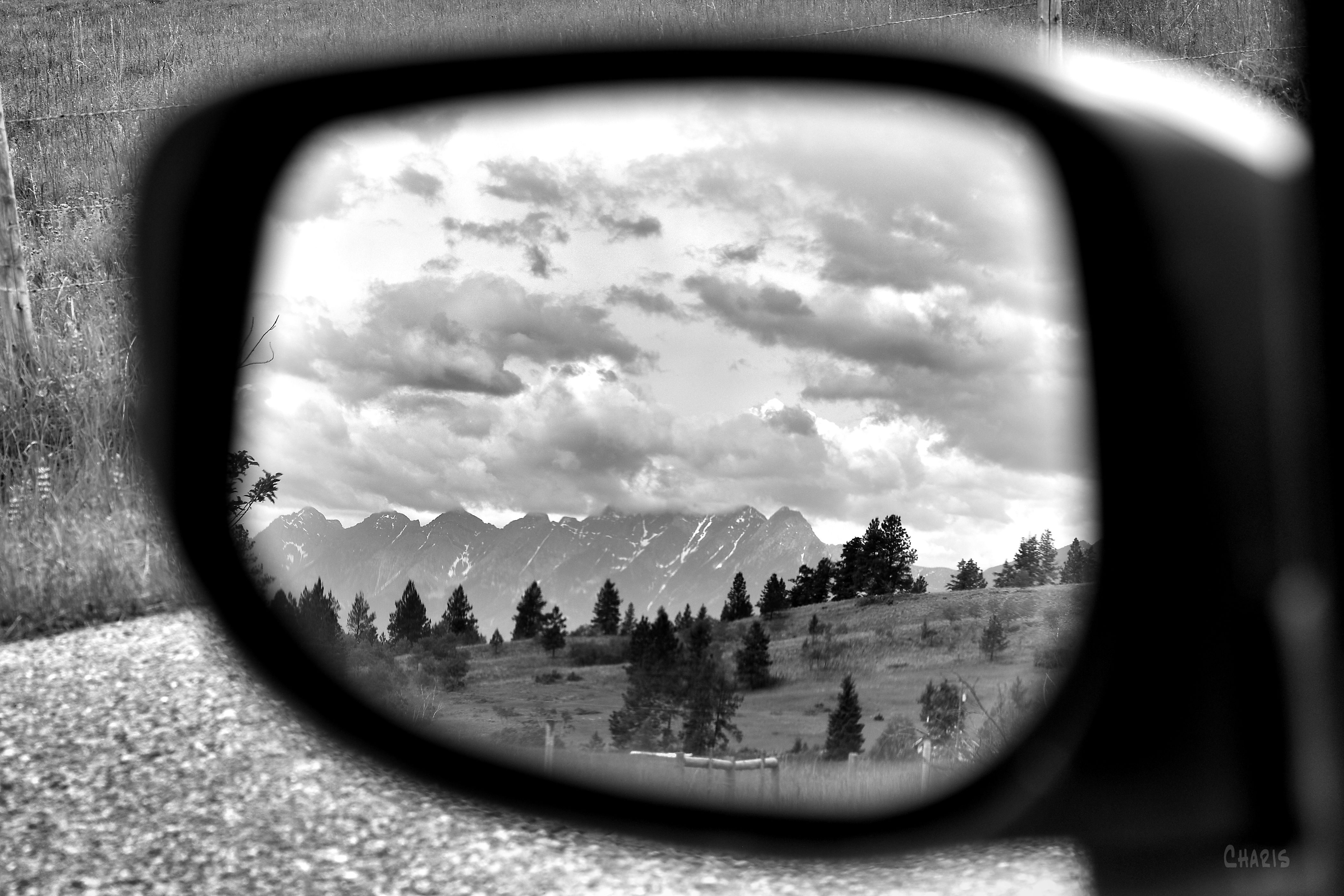
rear view mirror ch rs DSC_0215

I grew up with someone who lied – a lot. She lied when it was not in her best interest. She lied when it was in no one’s best interest. She lied when her story could easily be disproven. She lied when the mood was light and when the mood was serious.

She also told the truth – a lot. She sometimes told the truth when most people would have exercised more discretion, but she could be incisive. She also had many valuable skills and taught me practical, useful knowledge I am grateful for to this day.

People she upset labeled her a compulsive liar and broke off relationships. Folks inclined to be more gracious added, “Sally’s* version” with a wink to the end of any information they passed on from her.

When I asked about family history she related, my uncle said, “Well now, you know how she had trouble getting her story straight,” he said, adjusting his dusty cowboy hat. “But you know she meant well.”

We all learned she couldn’t get a story straight — eventually. The problem was that sometimes she told the truth. Important truth. Truth that required response.

I couldn’t trust what she said, but I couldn’t afford to dismiss her either. The major complicating factor was that I loved her dearly and knew that she loved me and did her best to care for me. I knew she had a good heart and would never intentionally hurt anyone, but the lying did hurt a lot of people, myself included. Kind, responsible family members cleaned up more than a few messes she left in her cheerful wake. They shrugged and privately gave me a more accurate version later.

It wasn’t until after she died that I read an article explaining the complicated, frustrating behaviour of the person that was part of my childhood environment. A disorder resulting from head trauma, or brain damage before birth, or as a result of advanced age, can cause a person to “confabulate.” Often, as in my caretaker’s case, parts of one story mix with the details of another story without the speaker being the least bit aware of blatant inaccuracies. Sometimes their brain will fill in forgotten memories with memories from another time, or a work of fiction, or even from another person’s story. In all innocence they trust their mind to give them accurate information and are hurt when you accuse them of making it up.

Sally sincerely believed she was telling the truth. Since she showed some other traits of learning disabilities, such as being almost illiterate, I began to understand. She was not intentionally lying after all. She would stick to her story even as people stared at her, slack-jawed at the audacity of her whoppers. She cried when they rejected her.

She could say, for example, “School is closed today because some bad kids stole a backhoe and burned it down when they hit a gas main.” The actual story was that school was closed because workers accidently hit a water pipe when they were working on the building extension. The part I needed to know was that my school was closed that day. The school that burned down was her school, half a century earlier. Sometimes it was like she saw a version of events through a distance-distorting rearview mirror and temporal space anomaly at the same time – but the essence was still there.

More than once I was embarrassed when I passed on a confabulated story. More than once I struggled with anger for believing all of it. In the years when I developed, like most teens, a radar for hypocrisy, I was not very respectful. I didn’t want to be seen with her. As an adult I honoured her and even enjoyed her, but kept a skeptical distance. She died more than thirty years ago and as I write this, tears fall because I know she loved me more than anyone before or since. I would love to hear her ridiculous synopsis of the six o’clock news about now, because as off-base as it could be, there was always an essential truth I needed to know in there somewhere.

Growing up in that environment taught me an important lesson. I cannot assume a report is entirely true. I cannot assume it is entirely false. The balance of accurate facts and misplaced facts cannot always be determined by the teller’s motives. We are all broken people in some way and our stories are filtered through experience, lack of experience, biases, selfish motives, altruistic motives — and even brain damage. I may not agree with Dr. House in the re-runs I’ve been watching that “everyone lies,” but I don’t believe everyone tells the whole truth and nothing but the truth either. God only knows what the whole truth looks like, but I want to hear what people have to say anyway.

Whether it’s the government, or social media sites, or heresy hunters who want to clamp down on sources of “fake news” or “bad teaching” or “uncertified medical opinions” and thereby determine truth for me, I want to shout no!

When someone tries to keep me from seeing the work of a writer, or a speaker, or photographer, or film maker because their narrative doesn’t fit the desired grid, I feel insulted. To eliminate sources “experts” consider fake is to imply there are some they consider to always be perfectly accurate.  I have to question their motives.

If I let another source do the critical thinking for me, I’m relinquishing a hard-earned skill and the opportunity to ask questions, spit out the bones, and humbly accept correction when I have swallowed something without exercising proper discernment. Worse than that, it means giving up access to important information that could be in there somewhere that I need to pay attention to. Creativity begins with thinking outside the box.

I believe we can ask God for wisdom and discernment. I believe we can pray for His light to shine in dark places and expose intentional lies and evil motives. I believe information should be as accurate as possible and age-appropriate when presented to children. I believe positions of trust require scrutiny and accountability. Justice must be seen to be done when trust is intentionally broken.  These things are important. But I also believe God gave us brains for a reason. Without exercise, they will atrophy.

I’m not a child anymore. Give me the freedom to think and discern for myself, please. I know how. Sally taught me.

*not her real name

As Different as Chalk and Cheese

Sometimes I wonder if one of the greatest miracles Jesus performed was to keep the disciples from killing each other. This week, as I watched another political/religious family feud break out on social media I remembered that Jesus, born into a time of political high tension, took both a collaborator and a resistance fighter on a road trip. It’s time to re-blog this.

Charis Psallo's avatarCharis: Subject to Change

boys buckets painting ch rs DSC_0204

I grew up in a family where teasing was a form of affection. Wrestling, practical jokes, funny stories that revealed weaknesses in each other? All normal (to us). To those not accustomed to this way of relating, such play appeared intimidating and offensive. Most of the time we knew where the line was, but in the background, we often heard someone warning, “You had better stop now before someone gets hurt!”

And then someone got hurt. A line was crossed. For one of the participants the action wasn’t fun anymore. Teasing became bullying (to them). Fights ensued.

Like many parents, we discovered our children’s individuality early. One liked to cuddle. The one who had to move-it move-it move-it resented the restraint of adult arms. One cried easily, one bounced back like an inflatable clown punching bag, one treasured solitude, and one was happiest when surrounded by 27 of her closest…

View original post 1,596 more words

Why Have Children?

newborn

I have been reading articles and listening to young friends talk about reasons they choose not to have children. They have given thought to this and their lists of reasons are logical. Children do make demands on time, finances, and emotional and physical resources. Some people would rather spend their efforts on pursuits they consider to be potentially more rewarding. Some don’t think they would be good parents. Frankly, I would rather people recognized that factor before neglecting or abusing a child. Sadly, some don’t want to risk a repetition of the home they grew up in. Intentionally childless people’s decisions are not illogical; the choice is evidence-based and values-based, but it is a unique choice historically.

In times past, when food was plentiful, and wars weren’t tearing couples apart, the population grew. Today, in many of the wealthiest countries of the world, the birthrate is shrinking below replacement levels.

All of this has made me wonder why people do choose to have children. Why, in the decades after WWII, when shortages were still a reality, and even in the years when birth control became less complicated, did people have children? I don’t think couples intentionally filled the station wagon with kids as some sort of patriotic duty to re-populate, at least not consciously. I asked some friends from my parents’ generation. One person’s response surprised me.

“It was a celebration of life, in defiance of death,” she said. “After so much loss in our homeland, we longed to share what we still had: life. We survived. We had little to give materially, but we could give the most precious thing that was given to us – the beauty and joy of being alive.”

As I thought about this, I realized that each of us owe our existence to at least two other interdependent human beings living in interdependent relationship with others. None of us got here by our own efforts. There is no such thing as a self-made man or woman. We all needed mothers who shared their bodies, and fathers who, at the very minimum, contributed part of the life force given to them. Most of us also had communities that helped raise us.

boy playing monkey bars bwI thought about beauty and joy. I remembered the beauty of a field of beaming sunflowers and the first warmth of an April sun on my face. I remembered seeing the Ice Capades with stunning athletes in sparkling costumes glide through colourful spotlights chasing them around the rink. I was five years old and wondered if my eyes could take in anything more beautiful. I remember the joy of playing with my funny kitten, Mittsy, and of discovering the delicious cold thrill of strawberry ice cream on my tongue. I remembered how I gloried in the confidant vigour of my young body as I swung on the monkey bars. These were not only gifts from my parents, but gifts passed on from a good God.
I thought about joy and my search for it through difficult times in the valley of depression when I nearly lost hope of finding it again. Last night, as I entered rest, I had a simple, but profound revelation. I have learned, through experiences that have not always been easy, that joy is discovering that God is who he says he is. He is the one Jesus came to show us.

We often think a successful life is one in which a person has an admirable career,  money to spend on pleasure, and many decades without suffering. What if there is more? Today I felt overwhelmed with shared joy as I listened to my giggling, happy grandchildren making new discoveries. At this stage of my life, when I live with the reality of a life-threatening disease, and the greater reality of death-defying hope of  life both here and in eternity, I can say this is my distilled list of reasons to have children:

  • Beauty.
  • Joy.
  • Love.
  • Hope.
  • Life. Life here and now and life forever in Christ.

I love life!

There is more provision set aside for us than we could ever possibly imagine. I thank my parents for giving of themselves. I bless them.

I thank God for creating beauty, for loving us, and sharing his joy.

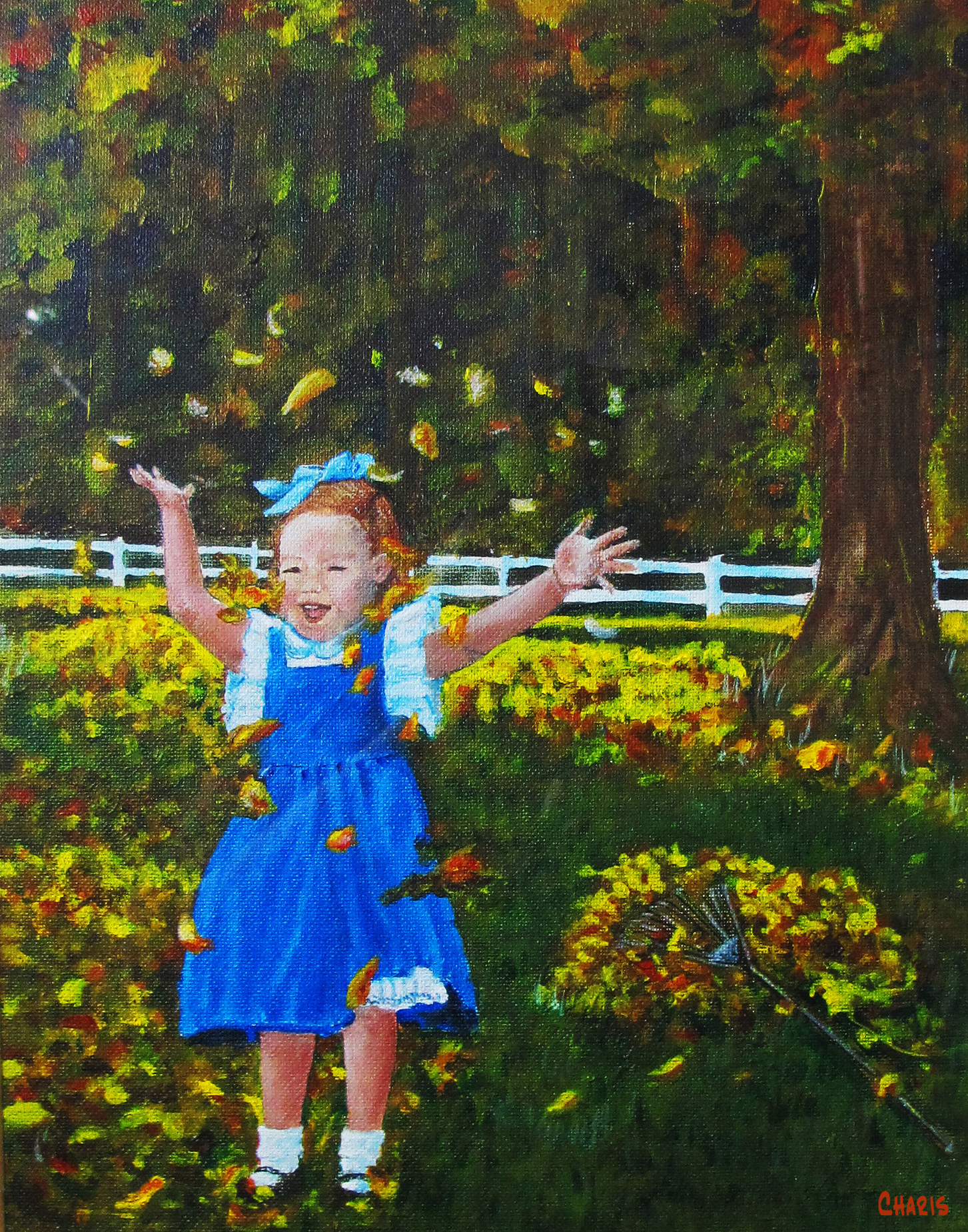
painting girl leaves crop_ charis 1142

For the beauty of the earth,
For the beauty of the skies,
For the love which from our birth
Over and around us lies,
Lord of all, to thee we raise
This our grateful hymn of praise.

For the beauty of each hour
Of the day and of the night,
Hill and vale, and tree and flower,
Sun and moon and stars of light,
Lord of all, to thee we raise
This our grateful hymn of praise.

For the joy of human love,
Brother, sister, parent, child,
Friends on earth, and friends above,
Pleasures pure and undefiled,
Lord of all, to thee we raise
This our grateful hymn of praise.

(From For the Beauty of the Earth by Folliet S. Pierpont, whose parents gave their baby a distinctive, original name)


Hope: Child-like Expectation

Child-like expectation painting ch DSC_0908 (1)

Some people love routine. If asked what they are doing at 2:15 p.m., Wednesday, February 19, 2029, they can tell you. Because it’s a Thursday. At 2:15 p.m.. Assuming no unforeseen circumstances interrupt the schedule, they will be doing what they always do on Thursdays at 2:15.

I hate routine. It feels like prison to me. I don’t even like taking the same route to the grocery store twice in a row.  Loss of efficiency is not so much a factor as lack of expansion.

Lately I fell into a routine. It’s not a good sign. My routine involved a prolonged daily stop at Procrastination Station. I’ve been neither exploring nor creating. Worse, I realized I’ve hunkered down, “waiting for the other shoe to drop” as my pessimistic former self would say. Other people can accomplish more when routines make sure they remember to remember, but when I choose routine, it’s because I lack energy for growth and I am protecting myself from disappointment.

I prayed about this as I stared at another blank page, bereft of creative energy. I realized that loss of wonder is connected to loss of hope. Loss of hope, for me, darkens and curls the pages of my story when I allow cares of this world to overshadow the goodness of God. Recently I’ve I allowed myself to become burdened by cares for my divided country, cares for my friends’ predicaments, and especially cares for my family’s pains, feeling a responsibility to do something about situations outside my purview. It hasn’t been working.

This past weekend, I agreed to paint at a gathering of believers as they played and sang worship songs. I had a few ideas for a subject, but none really moved me. Then, a couple of hours before gathering up my art paraphernalia to toss in the trunk of the car, a photo of my little granddaughter showed up on Facebook Memories. She was beside the street in bare feet, waiting excitedly for guests to arrive for a birthday party.

She waited in expectation of something good about to happen. I thought, Wait a minute…hope is expectation of the goodness of God. I need to paint this. I started it on Friday evening. What I didn’t know then was that the speaker’s theme on Saturday evening would be “Child-like Expectation.”

I had asked the Lord where I went off track. This weekend, I felt him saying it was when I lost the perspective of a child. When I forgot that I am a child of God I gave up wonder. When I neglected to cling to the hope –the expectation– of seeing the goodness of God in the land of the living, I took my eyes off Jesus and began to shut down creatively.

My hope is not in what I can do. My hope is in who God is. I am not a person left alone to figure it all out all by myself. I am a child of the King and I have the best Dad in the whole wide world.

“Learn this well: Unless you dramatically change your way of thinking and become teachable, and learn about heaven’s kingdom realm with the wide-eyed wonder of a child, you will never be able to enter in.” – Jesus

(Matthew 18:3 TPT)

Written in Blood

DSC_0704 (2)

Some of the things I post are written in blood. My blood. They have cost me plenty and were a struggle to write, but I knew there was gold in them.

Apparently no one else, or at least very few, noticed the glitter.

I don’t check blog stats most of the time anymore. I am realizing that some concepts I struggle to articulate are mostly the result of my need to process something that matters only to me and perhaps a handful of others. They are not without value — just without hits.

Some of the things I’ve posted are more like quick sketches on the back of a junk mail envelope. Sometimes something I wrote in 15 minutes catches the attention of readers. A friend with a large following shared one of those recently. Within a few hours I received an unexpected notification from WordPress that it was receiving thousands of hits. (Thanks, PM.) I desperately wanted to go back and fix some details, the kind of awkward bits I am nose-blind to until I sniff around from the vicarious position of an expected house guest, but too late.

I wonder what it was like for serious composers who spent years struggling to write symphonies and operas and oratorios only to have their reputation hang on a simple song they wrote for a local playhouse because they needed quick rent money. Bobby McFerrin is a brilliant classical and jazz musician. What is he known for? Don’t Worry. Be Happy (which I actually enjoy listening to on gloomy rainy days like this one.)

Fans are fickle. God is committed to my good. I need a reminder not to get them confused. He showed us how to be who he created us to be when wrote his message in blood long before anyone (including me) had any idea of what he was talking about.

For an audience of one.

(But you can read this too — if you want to.)

Then Shall the Eyes of the Blind Be Opened

DSC_1104 (5)

Following up on a reminder to remember, let me tell you this story.

“What would we do if that happened in our family?” my son asked. A book he read for a school assignment upset him. It was the story of a girl who became blind.

“First we would cry,” I told him. “Then we would make adjustments and help her to live life as best she could.”

That was an inadequate answer. I had more to learn. A few weeks later our daughter, his younger sister, went blind.

A case of pink eye, combined with side-effects of medication for another condition and the use of contact lens I told her not to wear, but should have confiscated, turned into a raging infection. I didn’t realize how serious it was until one morning, a couple of weeks before Christmas, she screamed that she couldn’t open her eyes because of pain. We took her to the hospital still thinking she was overacting a bit when the ophthalmologist told us she was admitting her. She had “fried her corneas” and faced serious scarring that meant she would probably lose her eyesight permanently.

The doctor was not nice about it. She yelled at us in the hallway in front of patients and staff, berating our parenting ability and accusing us of negligence. I was terrified and filled with guilt. Not only could my precious child go blind, but it was my fault!

The next few days were agony for all of us. Our daughter was placed in a small windowless room near the nurses’ station on the children’s ward. Anyone who visited her was also essentially blind, since any light caused her great pain. Every hour, day and night, a nurse entered and administered painful drops, which, we didn’t know at the time, she was allergic to. Her condition deteriorated.

“First we cry,” was entirely inadequate for the situation. “First we weep and wail and throw up,” was more like it. Of course, we tried to not let her see – or rather hear – our reaction. We tried to maintain a positive attitude around her, even when the doctor told her there was no way she was going home for Christmas. She would be spending it in the dark, stuffy room.

Of course, we prayed, but it was more and more difficult to maintain any kind of faith with every new negative report. But God…

“There was someone in my room last night, Mom,” she said when I came in early in the morning.

“It was probably a nurse, or hospital staff,” I said.

“No. I always know when the door opens because the light in the hall hurts and besides, they always talk to me. This felt different. The door didn’t open. It was just there. I felt, I don’t know, a presence.”

I assumed painkillers caused her to hallucinate.

Then the doctor came in. She was shocked. Our daughters’ eyes were much better. There was no sign of infection and inflammation and swelling were fading. She remained in hospital a couple more days to make sure, but she came home for Christmas.

Today she is a teacher and artist – a professional photographer who depends on keen eyesight. She was told she would never be able to wear contacts or have laser surgery for near-sightedness, but that prognosis was not fulfilled either. Now, she doesn’t even wear glasses. When doctors predicted her husband would die of necrotizing fasciitis, she had faith and hope beyond any logical scientific limitations. An encounter with the Healer opened her heart to possibilities she never imagined. It opened our hearts as well.

Here is where I was wrong. I told my son that if such a thing ever happened in our family, we would try to find ways to cope. Even though I grew up in the church and heard all the stories in the Bible about how Jesus healed people, I didn’t know he still heals. The best we could reasonably expect was help in learning to cope.

I know, the first yeah-but that comes to mind is the question about why many people who pray are not healed. I don’t know. All I know is that people who believe The Healer is part of who God wants to show himself to be for us see a lot more miracles and healings than people who have lost hope. People who rejoice in his goodness are free to live in hope – and hope frees us to live without limits.

God is good.

DSC_0042 (2)