Blank

legal pad  paper pen IMG_1298

There are no thoughts in my head. Well, none of any significance anyway. I keep a list of blog ideas for days when nothing floats to the surface of the puddle of potential that is my mind. But nothing on the list grabs my attention.

There are no emotions in my soul today either. I don’t feel good, I don’t feel bad. I’m not particularly up, down or sideways.

My body feels tired, but not sick. I’ll get going eventually. The highway is closed due to a commercial truck spill so there’s no use rushing. I’ll take my camera and my music and probably enjoy the day as I drive to Alberta again, but there’s time for another coffee.

Then it dawns on me. A year ago this week my Daddy died. I’ve done okay this first year as an orphan. My heavenly father has indeed been the perfect father for me. My earthly father was old and tired and in pain. He missed my mom and he wanted to be with Jesus. I wanted him to go.

Our Jewish friend told us they mourn a death with rituals for a week, then again at three months and at a year. Then they are done and get on with living. We tend to plow through until we can’t plow anymore.

Perhaps the Lord is telling me I’m under no obligation to be “on” for myself or anyone else- or even for him. It’s okay to just stop here for a while.

I’ll be back.


Bashless

I was tempted to go on a rant about a certain religious hypocrite who builds his own power base by preying on vulnerable people’s spiritual longings. I fussed and fumed for a while and decided to re-post this instead. I need the reminder. Consider this an open letter to myself — but contrary to the entire concept of open letters, the person to whom it is addressed has actually read it.

Charis Psallo's avatarCharis: Subject to Change

I hope to keep this blog a bash-free zone, not that it comes easily to me. Change will  require effort. I have been known to wield an acid pen and in the past have taken far too much delight in humour that comes at the expense of another’s dignity. Sorry ‘bout that.

I just read this: Now if you feel inclined to set yourself up as a judge of those who sin, let me assure you, whoever you are, that you are in no position to do so. For at whatever point you condemn others you automatically condemn yourself, since you, the judge, commit the same sins. God’s judgment, we know, is utterly impartial in its action against such evil-doers. What makes you think that you who so readily judge the sins of others, can consider yourself beyond the judgment of God? Are you, perhaps, misinterpreting God’s generosity and patient…

View original post 663 more words

Bring Him Home

When I was a wee little girl I sat on my Daddy’s shoulders as he ran and my mother screamed. He had been a competitive sprinter and he didn’t hold back. I thought sitting up there was the greatest feeling in the world.

dad cadet mervin dorsey 2011 06 24 130

Today I believe he knows freedom from an old man’s body and the chains of dementia and is again running as free as the wind.

His health was declining. He was becoming more child-like and he spent a lot of his time staring out the window, longing to see Jesus face to face and be reunited with Leah, the love of his life. But he told me he was afraid of pain and the process of transitioning beyond this physical place. Yesterday morning I was listening to a new recording by Josh Groban of the song “Bring Him Home” and turned it into a prayer that God would take my Daddy home, without pain, in his sleep.

My heavenly Father heard and answered, just the way he did when I prayed for Him to take Mom home. In the afternoon I got a call that when my sister-in-law went to check on him at noon she found he had passed away in his sleep. He had a recording of “How Great Thou Art” made at an anniversary party for him and Mom playing on repeat in the background.

God is good, full of mercy and very, very kind. Precious in His eyes is the death of one of His own.

I will miss him, and the conversations that never happened, but in the light of eternity, it will only be a short time before I see him again.

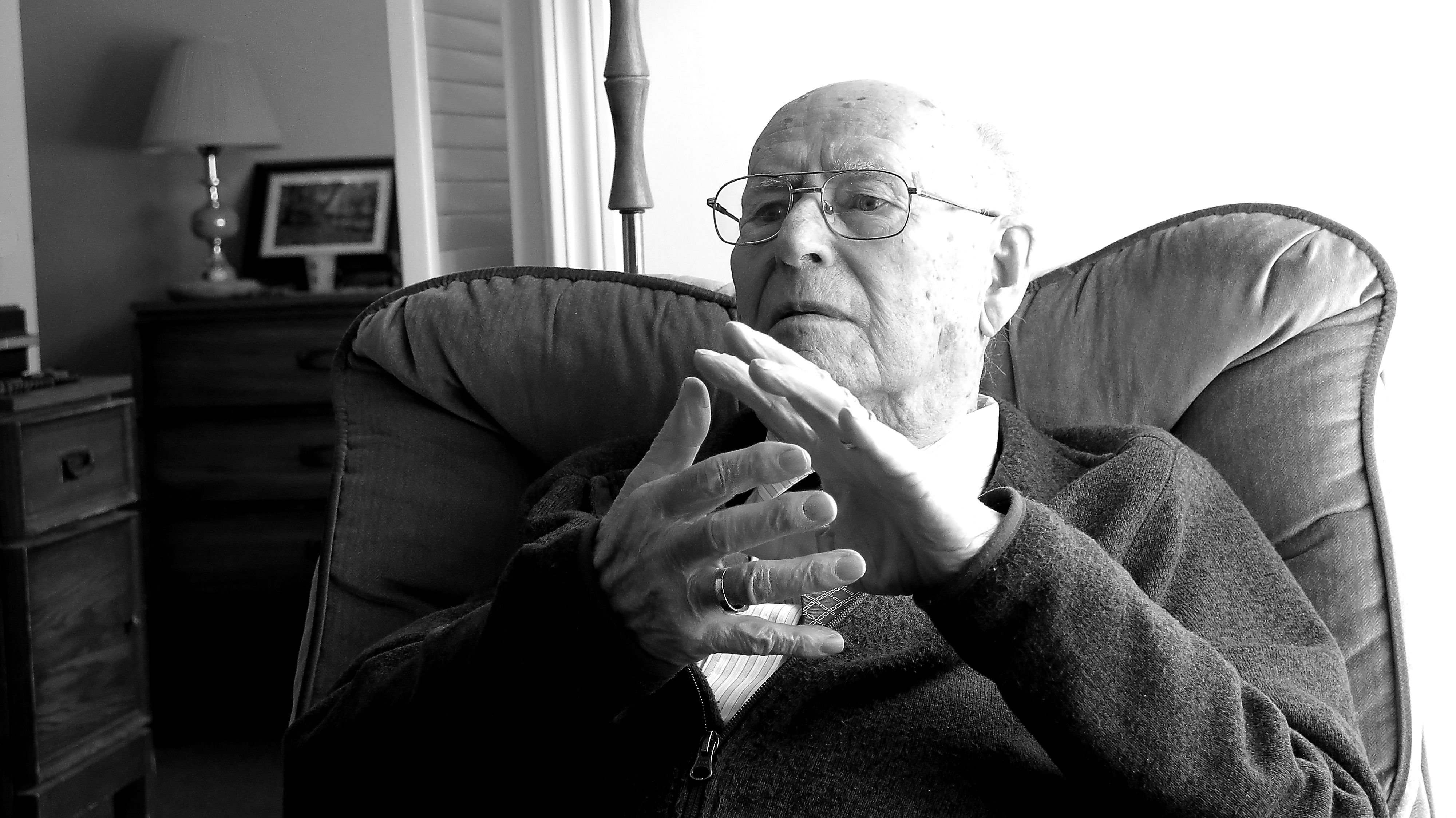
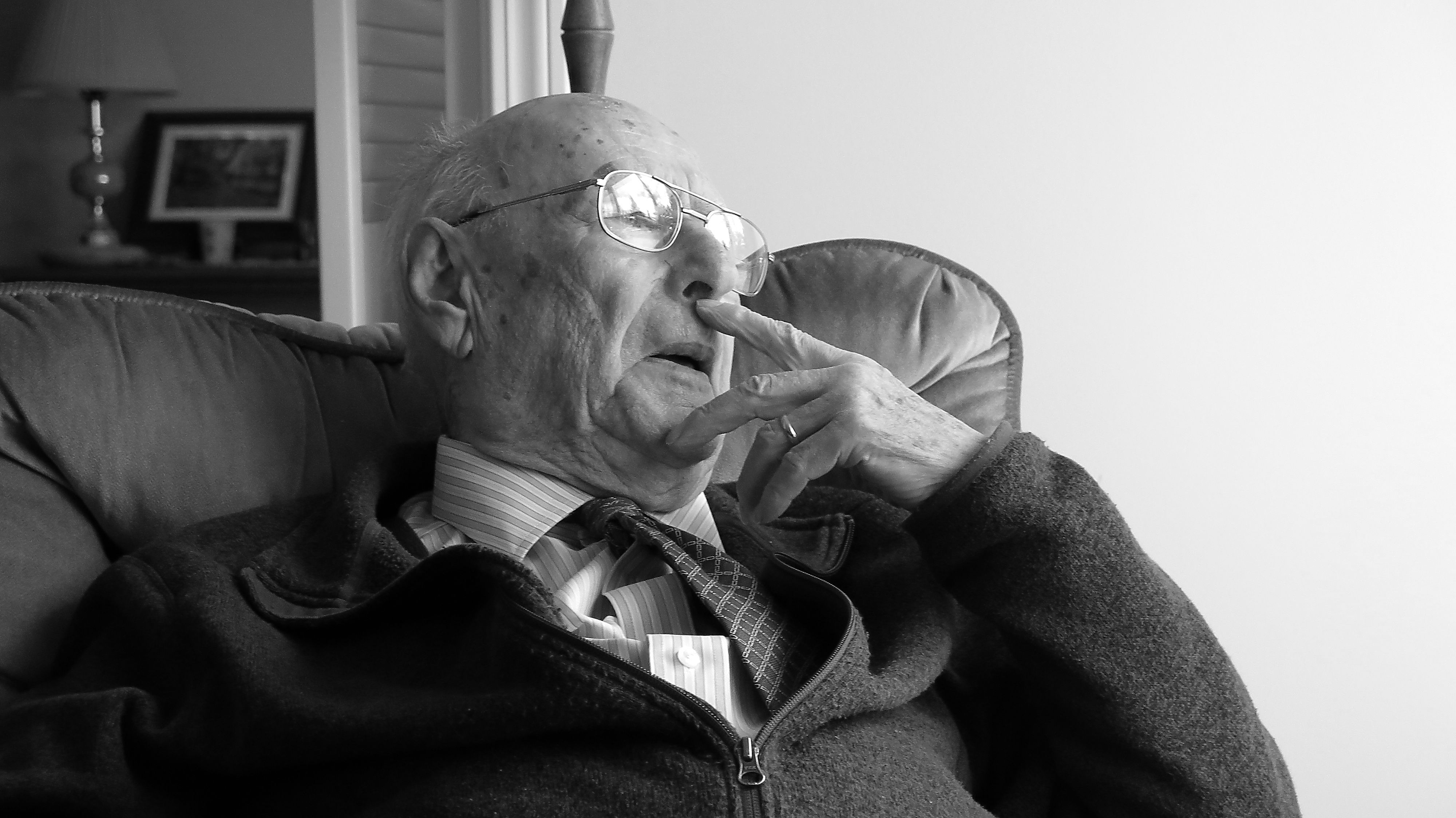
My Dad was a writer and a story-teller. A month ago I snapped photos of him telling one of his many tales of a Saskatchewan boyhood.

IMG_1988 dad 6

IMG_1981 dad 5

IMG_1984 dad 3 bw

IMG_1983 dad 2 bw

IMG_1978 dad 1 bw

IMG_1986 dad 4

Many people will remember him for his writing and story-telling in schools and theaters and old folks homes.

I will remember being carried on his shoulders, sitting higher and moving faster than anybody else in the crowd because my Daddy was the fastest, handsomest, greatest Daddy in the world.

It’s Like…

IMG_2437 mountain fisher dark trees ch crop


When my uncle from Saskatchewan came to visit I took him to one of my favourite lookouts to see the mountains. I asked him what he thought. He thoughtfully stroked the stubble on his cheeks that reminded me of the stubble covering his flat fields after harvest.

“They’re okay I guess, but they kind of block the view, ” he said.

A talented musician I once worked with told me she had a similar reaction. She grew up in The Netherlands and although she had seen pictures of mountains she never actually climbed even a hill until a visit to Scotland when she was eighteen.

“The mountains in Canada make me feel claustrophobic,” she said. “I miss the sky.”


My beautiful picture

 
I must admit that when I take trips back to the prairies I appreciate the sky and the marvelous sunsets, but I feel so exposed. My Dad joked that on his childhood farm he could see the train coming two days away and it was this environment that necessitated the invention of the outhouse.

Communication involves so much more than the facts of terrain and topology. Words and images don’t always contain the same meanings to different beholders.

I loved the annual “Missionary Convention” at my church when I was a kid. The missionaries on furlough brought costumes and articles from far away exotic cultures and told stories of eating local comfort foods that made kids raised on Jello and Wonder bread gag. I remember one guy telling us the problems he had translating the Bible into the language of a society whose only previous outside contacts had been oil and mining company workers and anthropologists. He wondered how to translate, “Behold the lamb of God.” Somehow “Behold the fuzzy creature of God” didn’t seem appropriate. “Behold the little pig-sized animal covered with curly whiskers like the ones on Jake the geologist’s face” seemed too cumbersome to repeat more than once. He finally went with “Behold the piglet of God” because these people raised pigs and often took the little ones into their homes as pets. He knew that word could be shocking in other cultures, but it conveyed the meaning of something innocent, valued and loved. A lamb, in a way, was like their piglet, but then again, not really. There are limits to how far an analogy can go. Sometimes you need more than one.

Jesus told stories to explain a kingdom outside the experience of the people who gathered around him. “The kingdom of God is like a pearl. It’s like a coin. It’s like…”


“The disciples came up and asked, “Why do you tell stories?”

He replied, “You’ve been given insight into God’s kingdom. You know how it works. Not everybody has this gift, this insight; it hasn’t been given to them. Whenever someone has a ready heart for this, the insights and understandings flow freely. But if there is no readiness, any trace of receptivity soon disappears. That’s why I tell stories: to create readiness, to nudge the people toward receptive insight. In their present state they can stare till doomsday and not see it, listen till they’re blue in the face and not get it. I don’t want Isaiah’s forecast repeated all over again:

Your ears are open but you don’t hear a thing.
Your eyes are awake but you don’t see a thing.
The people are blockheads!
They stick their fingers in their ears
so they won’t have to listen;
They screw their eyes shut
so they won’t have to look,
so they won’t have to deal with me face-to-face
and let me heal them.”

(Matthew 13: 10-15 The Message paraphrase in modern clichés)


God still speaks to us today in stories and similes that come from our own cultures. His language is not always English nor any other spoken language. He can speak through nature and pop music and babies and even international politics – and many other ways that connect us with his heart – but most people don’t hear because his imagery means little without a desire to understand the story-teller. His language is relationship. He is the Word.

I’ll be honest and say that I enjoy poetry and I write poetry, but I don’t read a lot of it. It’s work and I want to know the poet has something of value to say before I invest mental energy in interpreting the imagery. You can’t read poetry (except perhaps limericks) without taking time to ponder over what the writer is trying to communicate. Taking time to listen to God develops eyes to see and ears to hear what the kingdom of God is like, but more importantly what the Lover of our Soul is like.

“But you have God-blessed eyes—eyes that see! And God-blessed ears—ears that hear! A lot of people, prophets and humble believers among them, would have given anything to see what you are seeing, to hear what you are hearing, but never had the chance.” (verses 16-17)


“Oh Lord my God, when I in awesome wonder consider all… I see… I hear… Then sings my soul, my Saviour God to Thee.” (How Great Thou Art)

Skin People Stories

Take a picture of me jumping!

We wondered what our wee granddaughter was talking about when she asked a question about “skin people.” Her story books were full of talking fur or feather people, she explained, so she wanted her mommy to know she was talking about other kinds of people who look like us.

“They’re called humans, Honey,” her mommy answered.

The next day, within the hearing of other shoppers she asked, “What are those humans doing over there?”
More than one head turned.

I realized that many children’s stories meant to teach a moral lesson use personified critters –clever foxes, wise owls, sneaky snakes, innocent baby bears. It’s easier for authors to frame a story when you are in control of the rules in the fictional world simple characters live in. It works. Kids love it, and there are fewer stupid human tricks for us to explain.

Lately, she’s been asking me to tell her stories about me or her mommy or my friends. At nearly six-years old she has become a student of skin people nature, which can be pretty baffling at times.

Since we were discussing birthday plans I told her this true story about my friend and a birthday cake. There were two people who loved to play jokes on each other. One year “Dolly” decided to play a big trick on her friend, “Burt.” She hired a baker to decorate a cake made up of doggie biscuits frosted together (because he had already played a joke with doggie biscuits on her). From the outside, the birthday cake looked fantastic. Then she dropped it off at Burt’s house. He wasn’t home, so his wife took it gratefully and said she would give it to him later.

After a few days she had not heard anything from him and wondered if his feelings were hurt, so she phoned him.

“The cake was amazing,” he said. “Wow. Thank you so much!”

“It tasted good then?”

“Marvelous!” he gushed. He paused and then said, “I’m sorry, Dolly. I have to I have to tell you what happened. I was tired when I got home so we put it in the freezer and thought we would bring it out when we had company. But last night my wife suddenly remembered she promised to supply the cake for a birthday party for a person at the Old Folks Home. It was too late to order one and yours was beautiful so she brought it down to them this morning.

“Oh No! Did they give the dog biscuit cake to the old person, Nana?” granddaughter asked.

“Well, Dolly called the baker and asked him if he had a cake in the shop she could have and he did. So she hurried over there and bought the cake and rushed to the nursing home with it. She ran into the kitchen and asked the cook if Burt’s cake was there because she wanted to trade it for a fresher cake, but the cook said the cake was already in the dining room for the party. Dolly ran to the dining room.

“Don’t cut that cake!” she yelled.

“Why not?” everyone asked.

Just then Dolly’s friend Burt came in the room and everyone laughed and laughed because they were all playing a joke back on her. Burt knew the cake had dog biscuits inside and he told everybody he was playing joke on Dolly. He already had another one there for the party.

“Why was it funny?” my granddaughter asked.

“Why did she make a cake of dog biscuits? That would taste yucky. That could hurt his feelings.”

“How did Burt know there were dog biscuits inside? Why did he tell his friend he was giving it to the old person? Wasn’t that a lie?”

“Why did the lady forget to order the cake? Didn’t she write it on a calendar?”

“What bakery did Dolly go to?”

Well, I thought it was funny. My next story will start with “Once upon a time there were three bears…”

Skin people communication is so complicated. Friends who understand each other can share practical jokes and laugh at the re-telling for years. Let-your-yea-be-yea-and-your-nay-be-nay people will ask, “Why would you give me a dog biscuit cake? Why would you dishonour me this way?”

Nothing is more shaming than being told your attempts at communication with people you care about have been interpreted in the opposite way you intended – especially if they wait for years to tell you that they have only been smiling politely and they have found you offensive all this time.

Sometimes in our attempts to make connection too much is assumed. It’s like we have only a partial picture of this skin person and they are much more complicated than we think because unlike illustrations of fur and feather people in story books they keep bouncing out of the frame.

The moral of the story: Never assume you understand skin people. Never assume skin people understand you.

Do you know what I mean?

Loneliness: You know what I mean?

IMG_0486 ducks 3


Was it something I said?


There is a strain of loneliness infecting many Christians which only the presence of God can cure.A.W. Tozer

I don’t remember where I heard this said about people in the arts who venture into the public eye, but it stuck with me: Artists want to be noticed, musicians want to be heard, actors want to be loved, and writers want desperately to be understood.

It takes a certain amount of courage to venture into a field that exposes one’s inner thoughts and then depends upon the approval of strangers to make a living. I suppose the same could be said for other fields requiring vulnerability, from stripping to politics to scientific research. Even accountants and morticians need approval to keep their jobs. But some people have a greater drive to make connections. Some people are more acutely aware of loneliness.

Writers strive to find a dozen ways to phrase a thought hoping to find the one that brings a response to the question, “Do you know what I mean?” Ya know?

Yet even the most successful artistic people in the world can have a profound sense of loneliness. Sometimes a success backfires and arouses jealousy. Have you noticed how the critics are drawn like moths to the flame of a book or article that gains popular approval?

I absolutely love how Lara Merz responded to an interview question about how to handle negative reviews: “I would say try not to take things too personally, especially if the reviewer is someone you are not in relationship with. There is something about honesty from a loved one or deep friend who cares about who you are, and who you are becoming that is often worth taking heed to, but strangers are trickier because we know nothing of who they are, how healthy they are and the why the book was pushing buttons. Buttons get pushed for many reasons and most of them have very little to do with what pushed the buttons, but rather why there are buttons there in the first place.”

For approval junkies like me criticism can be devastating, because I have buttons. The truth is we all have buttons. Until we are perfectly healed and know we are deeply loved by God we are all offendable and will take off  (or bite back) when we feel threatened. Maybe that’s the definition of maturity – having fewer and fewer buttons.

The healing strength of approval and connection that comes from friends and spouses is beautiful but in a way tasting that love can create an even greater awareness of loneliness. Sometimes we find ourselves tempted to compromise on values to maintain those connections. A lot of people use service to the needy as a means to overcome loneliness, hoping dependency on the care-giver will create a strong bond. And I hate to break this to those of you who are in search of the perfect mate. It is possible to be profoundly lonely in even the very best marriage.

There comes a time when we have to admit that our most loyal fans, our closest friends and even our faithful lover do not understand us. When we accidentally touch one of their buttons they will also fly away emotionally. My point is that there is only one reliable source of approval, and that is from the One who created us to be who we are and notices, hears, loves and understands perfectly.

There are some who are called to walk closely with the Lord. Part of their training necessarily involves rejection, and it will occur again and again until they understand that God is jealous for their attention, their love. They cannot give unselfish love until they have received unselfish love from the only One capable of giving it and who heals their hearts.

If you find yourself in a lonely place, pay attention to the quiet. It’s Jesus calling.

I Want My Daddy!

boy wheelchair

What do you do when God gives you a real live miracle?

First, you respond with thankfulness. Then you look toward the One the sign points to. Asking Him why we received a miracle brings as silent a response as asking why there have been times when we did not see a loved one healed. A better question is “What?”

“What would you have us do with this experience?”

“What does this mean?”

“What are you showing us about yourself?”

Or “How would you have us respond?” ”

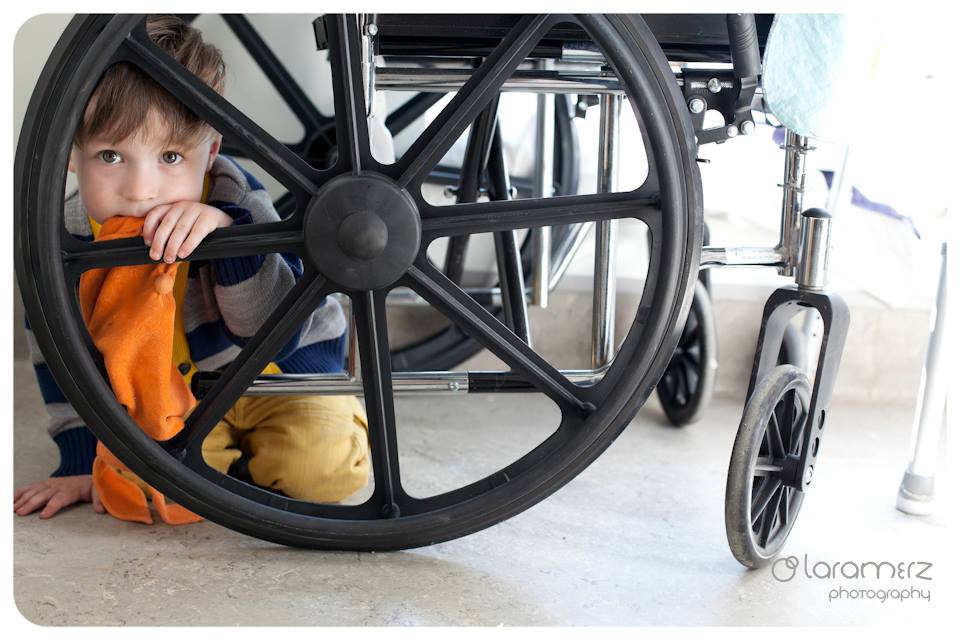
My job during the crisis was mainly to care for the children. We knew people were praying and most of the time felt a cocoon of love around us, but to be honest there were times when this little boy in the photo felt the agony of not having his Daddy there with him, of not knowing why somber adults spoke in hushed voices or stopped talking when they noticed him playing at their feet or hiding behind the door. There were times when he cried inconsolably, “I want my Daddy! Where is my Daddy? I need my Daddy!” and no one, not uncles or grandmothers or even Mommy could comfort him. There were times when he refused to eat or sleep and trashed his room late at night when grown-ups insisted he go to bed.

Then there were times when he was the one with the strongest faith, when he sat on Mommy’s lap and looked into her eyes and said, “We don’t hass to be afraid, Mommy. We don’t hass to be afraid cuz Jesus is wiss us.” When doctors privately gave his Daddy a 0% chance of recovery from necrotizing fasciitis (flesh-eating disease) he and his sister set aside drawings and pine cones and other precious things to show Daddy when he came home. They sang songs about nothing being impossible for Jesus.

What do you do when God gives you a real live miracle? What you do with a miracle is tell the story truthfully, including the times of outrageous faith, and the times of soul-crushing disappointment. I appreciate our son-in-love Bruce and daughter Lara Merz’ efforts to be accurate when they tell the story of their miracle in the book While He Lay Dying. They are honest about their struggles, their fears. their set-backs. They are honest about surges of faith that came from beyond themselves. They are honest about the difficulty of pursuing being a community of love and being transparently vulnerable in times of crisis. They are honest about the way God accomplished the very tasks Bruce had once strived to accomplish, by bringing them about while he lay in bed doing absolutely nothing. At all. He couldn’t even breathe for himself.

One of the contributors to the book is a fine physician who witnessed the roller-coaster ride that this event entailed. He volunteered to verify the chronology and medical information and write a chapter from his perspective. Their pastor gives his story of how the event led to greater revelation for him and its significance for the larger church, and Bruce and Lara’s little daughter also expresses her point of view.

What do you do when God gives you a real live miracle? You stand up, relinquish your rights to life as you have known it and say, “This is what we saw. This is what God did. This is Who He is to us.” You become a witness to His goodness. You give him all the glory for the things He has done.

Last week I heard this little guy giggling as his Daddy tucked him into bed. God heard his cry. Daddy came home without any loss of limbs and with organs functioning better than before he becme ill.

This week the book telling this amazing story of how the Lord gathered an army of believers to pray for the life of one man and support one little family has been released. I think you’ll find it inspiring.

BruceMerz_WhileHeLayDying_Cover_V25-691x1024

The website:
http://whilehelaydying.com/#

Book available from:

Amazon in both print and eBook form. (A free Kindle download is available for reading eBooks on computers and other devices.) Click on one of these:

In the USA

In Canada

In the UK

Kobo (eBook)
Indigo/Chapters with free shipping until Dec. 15

Essence Publishers (print)

Your local bookstore by request

Profits beyond expenses related to book to go to charity.

The Author Who Benefits You Most

hoh fog grass trees diagonal IMG_4662

“The author who benefits you most is not the one who tells you something you did not know before, but the one who gives expression to the truth that has been dumbly struggling in you for utterance.”
— Oswald Chambers

It Gots Bones


IMG_8319

Have you ever read a brilliant quote –and were afraid to post it because the author has made other statements you don’t agree with?

I quoted someone I thought gave a delightfully pithy observation. Giving credit where credit is due, I named the the author, of course. Later someone contacted me saying, “I didn’t know you were a follower of McBarnacle! Are you aware of his eschatological position on the role of kumquats in the millennium, or his opinions on the Publicat party?”

OK. I made that up. But here’s my point: I do not worship human beings or consider any one of them to be right about everything –at least not as right as I am.

When my then three-year old grandson was visiting he asked me what I was making for supper. I told him chicken. He was quite excited because, as he said several times in a row, he reawy, reawy, reawy liked chicken.

When we sat down to eat he took a bite and yowled, “It gots bones! Why you put bones in it?”

Apparently until that point the boy had never eaten anything more challenging than chicken nuggets. Who knew? I tried to explain how to pick it up and eat around the drumstick, but for him, this was too much work and dinner was a massive disappointment.

I’ve also heard many people complain that they feel called to another fellowship because they are “just not being fed.”

I want to respond, “So pick up a fork.”

We want to be fed our comforting spiritual food in easily digested liquid form from denominationally-approved sterile 10-minute-devotional bottles.

It is written in Hebrews 5: About this we have much to say, and it is hard to explain, since you have become dull of hearing. For though by this time you ought to be teachers, you need someone to teach you again the basic principles of the oracles of God. You need milk, not solid food,  for everyone who lives on milk is unskilled in the word of righteousness, since he is a child. But solid food is for the mature, for those who have their powers of discernment trained by constant practice to distinguish good from evil.

IMG_8777 child plate

Ask any little kid. Teething is the pits. It makes you wonder if chewing is really worth it. Learning to avoid bones and spit out grizzle takes even more skill and diligence and often involves uncomfortable experiences with learning how to dispose of a hunk of gnarly weirdness with enough decorum not to embarrass your mother. If our tummies are full of warm sweet milk, or our hunger is satisfied by pre-masticated mechanically de-boned breaded fried chicken blobs, drumsticks will hold no thrill.

Just the thought of spiritual whole fish (or pomegranates) can send some people on a google search of heresy hunter sites.

I wonder if God is silent on some questions we desperately want answers to because he’s waiting for us to be motivated enough to chew on something for a while. Yes, the young need milk, but not forever. I’ve heard people worry aloud that some writers/teachers/leaders include just enough truth to get you to trust them, but if you do you are certain to be deceived.

Well, if you plan to swallow everything, yes –but not if you use your God-given discernment, developed by constant use, to chew the nourishing bits and spit out the bones.

So, if I quote someone, it’s because that particular statement resonated with me, and not because I plan to sell the homestead and move into a commune where we all wear purple, drink koolaid, and shout “Heil McBarnacle!”

Yes, it gots bones. Deal with it.

Meaning What?

IMG_8579 Bull River rd head in the clouds mountain

One of my favourite lines from the film Awakenings is spoken by Dr. Sayer in a job interview scene. He was describing his research history.

SAYER
It was an immense project. I was trying to extract a decigram of myelin from four tons of earthworms.

DIRECTOR
Really?

SAYER
I was on it for five years. I was the only one who really believed in it. The rest of them said it couldn’t be done.

KAUFMAN
It can’t.

SAYER
Well, I know that now.
I proved it.


The writer of Ecclesiastes came to this conclusion after a lifetime of research:

“Everything is meaningless,” says the Teacher, “completely meaningless.”

I don’t often read Ecclesiastes. It feels like spending an afternoon with a gouty old curmudgeon  who will extinguish your dream with a cynical grunt. Today I saw it a little differently.

I heard of a famous physicist who announced to his esteemed colleagues that after 30 years of research he came to the conclusion that his hypothesis was wrong. I was impressed. How often do you see that? (May I admit a secret admiration for writers and speakers who freely admit their failures?)

Although many people worship scientists as unbiased seekers of truth anyone who has been caught in the craziness of ego wars in academia will tell you that they are wounded humans like the rest of us. Sometimes political blockades in the form of withheld research approval only come down with the demise of those in positions of power. But maybe that’s just my disillusioned curmudgeonly side coming out. But, you know, science is not the only field where disillusionment has dented trust. There’s religion, politics, arts, media, sports, romance….

The writer of Ecclesiastes lists the areas in which he spent a lifetime of research. His hypothesis was that these pursuits would bring meaning. His conclusion was that they were all futile (or in King James English “Vanity, vanity…”:
-The pursuit of pleasure (thoroughly investigated)
-Wisdom vs. madness
-Work and professional accomplishment
-The pursuit of justice (in a world of corrupt courtrooms and oppression)
-Companionship
-Political power, respect, and honour
-Striving to please God
-Wealth

No wonder he was in a bad mood. He spent a lot more than five years trying to extract myelin from worms; he spent a lifetime proving that human reasoning and effort alone is not sufficient to comprehend the big, even massive, picture of meaning on this earth, let alone in the universe.

I read a bumper sticker somewhere that said something like, “Perhaps the purpose of your life is to serve as a warning to others.”

Perhaps.

Perhaps that is why the stories of tragic drama stay with us longer than happy-ending comedies. The essential moment in a tragedy is that point when the leading character has a flash of insight that allows him to say: This is where I went wrong. That moment gives them the authority to lay the diamond of wisdom at the feet of the audience: This is where you can do it differently. This is where you can repent of my mistakes and change the way you think.

In the final chapters of Ecclesiastes the writer offers us the distilled, refined wisdom of a lifetime that was a process of elimination in the search for meaning. He has earned the right to speak. We need to pay attention.

In my search for wisdom and in my observation of people’s burdens here on earth, I discovered that there is ceaseless activity, day and night.  I realized that no one can discover everything God is doing under the sun. Not even the wisest people discover everything, no matter what they claim.


Don’t let the excitement of youth cause you to forget your Creator. Honor him in your youth before you grow old and say, “Life is not pleasant anymore.” Remember him before the light of the sun, moon, and stars is dim to your old eyes, and rain clouds continually darken your sky. Remember him before your legs—the guards of your house—start to tremble; and before your shoulders—the strong men—stoop. Remember him before your teeth—your few remaining servants—stop grinding; and before your eyes—the women looking through the windows—see dimly.

Remember him before the door to life’s opportunities is closed and the sound of work fades. Now you rise at the first chirping of the birds, but then all their sounds will grow faint.

Remember him before you become fearful of falling and worry about danger in the streets; before your hair turns white like an almond tree in bloom, and you drag along without energy like a dying grasshopper, and the caperberry no longer inspires sexual desire. Remember him before you near the grave, your everlasting home, when the mourners will weep at your funeral.

Yes, remember your Creator now while you are young, before the silver cord of life snaps and the golden bowl is broken. Don’t wait until the water jar is smashed at the spring and the pulley is broken at the well. For then the dust will return to the earth, and the spirit will return to God who gave it.