We are a people of our destiny, not our history.

We honour the past, but we don’t live in it.
– Graham Cooke

We are a people of our destiny, not our history.
We honour the past, but we don’t live in it.
– Graham Cooke

Don’t be afraid, I am with you;
don’t give way, for I am your God.
I strengthen you and I help you;
I uphold you with the right hand
of my justice. (Isaiah 41:10)
Don’t be afraid,
for I have redeemed you.
I have called you by your name,
you are mine. (Isaiah 43:1)
My dear children, let’s not just talk about love; let’s practice real love. This is the only way we’ll know we’re living truly, living in God’s reality. It’s also the way to shut down debilitating self-criticism, even when there is something to it. For God is greater than our worried hearts and knows more about us than we do ourselves.
And friends, once that’s taken care of and we’re no longer accusing or condemning ourselves, we’re bold and free before God! We’re able to stretch our hands out and receive what we asked for because we’re doing what he said, doing what pleases him. Again, this is God’s command: to believe in his personally named Son, Jesus Christ. He told us to love each other, in line with the original command. As we keep his commands, we live deeply and surely in him, and he lives in us. And this is how we experience his deep and abiding presence in us: by the Spirit he gave us. (1 John 3:18 -24 The Message)
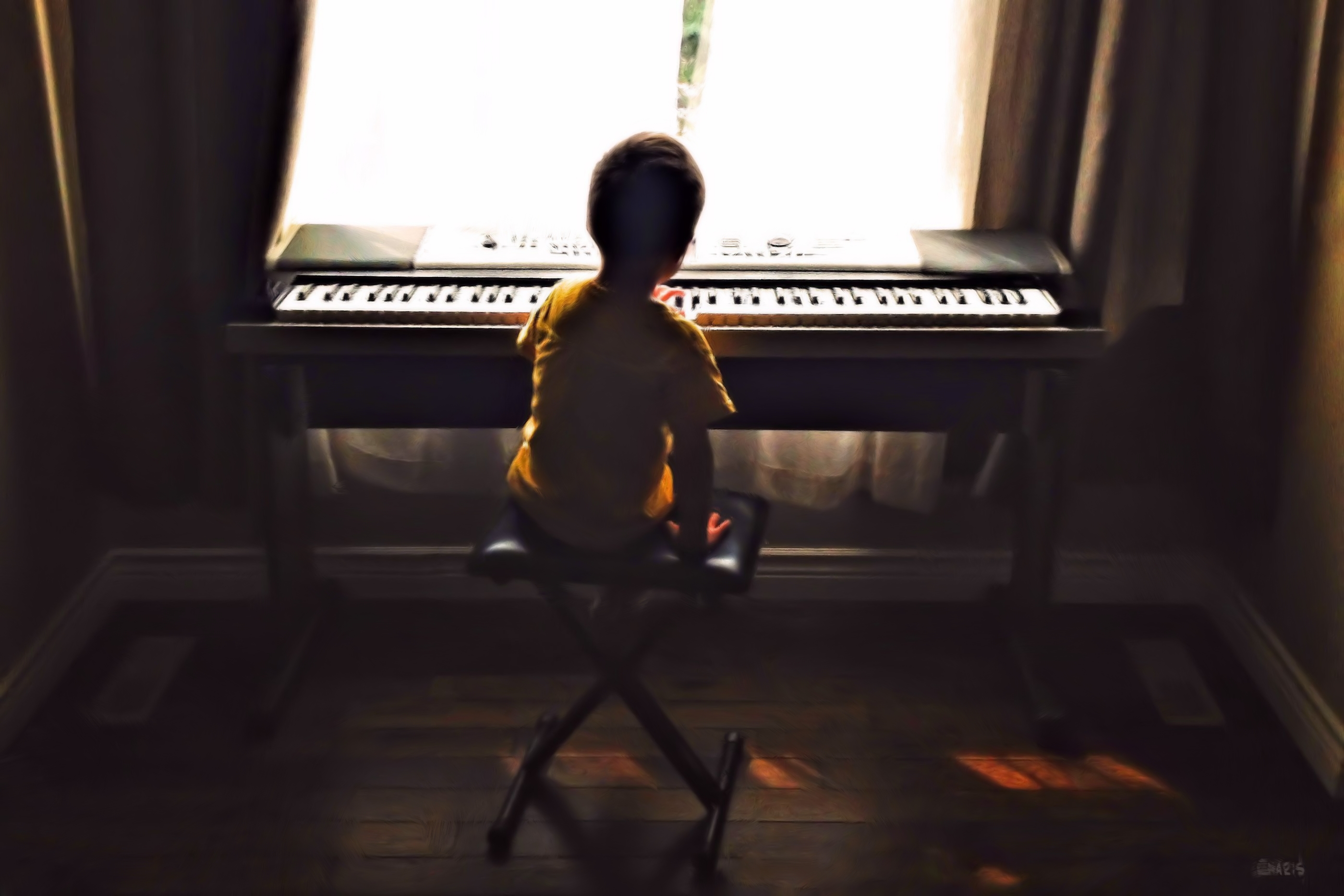
I’ve had the privilege of teaching some very gifted students over the years. I noticed that the most successful – those who developed and maintained a love of music and who sang or played both skilfully and from the heart – had something in common. They learned from their mistakes. They did not ignore them, neither were they overwhelmed by them.
The hardest ones to teach were the ones who, although equally gifted, couldn’t accept correction, no matter how carefully I phrased it. Some always had an excuse: “The sun was glaring on the page. You played a wrong note and it threw me. My parents woke me up too early and I’m tired….”
Some fully acknowledged their mistakes, but broke down in episodes of self-flagellation and dire prediction: “I’m so stupid. I’ll never get this right. I just can’t do it. I’m not smart enough. I haven’t got talent like the girl you were teaching before me. It will never happen!” (I may have been one of these.)
Some had plenty of talent. They swam in oceans of potential. They dreamed of accolades and standing ovations – but they didn’t dream of stopping to fix mistakes. They ignored them, or practised them over and over so that they were set in concrete after a few weeks, or they just plain never practised at all, as if the potential of being a star was close enough.
Someone told me the quality of being teachable is called meekness. On this last day of the year I have been doing a review of what I learned. It would be easy to ignore evidences of change and focus on failures, making excuses for my mistakes. There are hundreds to pick from. It would also be easy to fall into despair, and spout off my frustrations with my lack of love and self-discipline and tendency to repeat the same wrong note twenty times in a row. But self-criticism that condemns is debilitating. It removes hope and makes me want to quit and wallow in shame.
“God is greater than our worried hearts,” John the Beloved wrote. He knew our Great Teacher sees our potential. His corrections are directed at bringing out the talent he has already placed in us. He chooses the music that will challenge enough to stretch us, but not exasperate us. He urges us to practise, because he knows the joy and freedom we will experience when that which once seemed impossible flows naturally and beautifully.
The teacher smiles and says, “Well done!”
Then we grin, ask for our next new piece of music, and rush home to practise.

Those who are devoted to God will flourish like budding date-palm trees;
they will grow strong and tall like cedars in Lebanon.
Those planted in the house of the Eternal
will thrive in the courts of our God.
They will bear fruit into old age;
even in winter, they will be green and full of sap
To display that the Eternal is righteous.
He is my rock, and there is no shadow of evil in Him.
(Psalm 92:12-15)

Discipline means to prevent everything in your life from being filled up.
Discipline means that somewhere you’re not occupied,
and certainly not preoccupied.
In the spiritual life,
discipline means to create that space in which something can happen
that you hadn’t planned or counted on.
— Henri Nouwen

I love the way little kids can’t wait for the day to begin. We had a family gathering last week and my little five year old grandson was amazed that I could still be asleep at 6:45 a.m. He and his buddy, Harvey the bull dog, jumped on me with an affectionate early morning enthusiasm I haven’t experienced for a few years. Harvey even gave my ears a good licking. It wasn’t long before the other kids were wrestling on my air mattress and in my sleeping bag because that’s what they were designed for, right?
The next morning I was helping two of the kids get ready for school when one of them noticed the brilliant rosy dawn out the window. I grabbed my phone and snapped a photo as a school bus went by, driving into the sunrise.
I’ve decided to adopt their attitude. It’s Monday! It’s morning! We can get up and sing Raffi’s brush-your-teeth song ch ch chch ch chchch ch! Or for my taste, Stuart Townend’s “Christ Be in My Waking.”
Thank you, Lord. It’s good to be alive!

We are confident that God is able to orchestrate everything
to work toward something good
and beautiful
when we love Him and accept His invitation
to live according to His plan.
(Romans 8:28 The Voice)

In God’s economy nothing of value is actually lost. Theory is all well and good, but until our personal stories work something of Christ’s character into to us, we don’t know Him. Not really. He never asks for anything of us – even our lives – without plans to give us something greater in return.
“You notice that the Apostles got their revelation for the Church in practical situations. They never met around a table to have a Round-Table Conference, to draw up a scheme of doctrine and practice for the churches. They went out into the business and came right up against the desperate situation, and in the situation which pressed them, oft-times to desperation, they had to get before God and get revelation. The New Testament is the most practical book, because it was born out of pressing situations. The Lord gave light for a situation. The revelation of Christ, we might say, in emergencies is the way to keep Christ alive, and the only way in which Christ really does live to His own.”
— T. Austin Sparks
Those gathered around our son-in-love’s hospital bed while he was in a coma and expected to die, admitted they had no idea how to pray. As they cried out in desperation, the Lord answered. It started with one man who wanted to reconcile with his brother. Then another, and another until many people who were woken in the night to pray for him and were reminded they needed to go to a brother or sister and be reconciled before they could pray with authority. As they did, the miracles started happening, one tiny rise in blood pressure at a time. The Lord was asking for a united unoffended body of believers to come together to pray in faith.
They dug deep and found Holy Spirit had already planted the seeds of faith and love in their hearts long before they needed it. He was there all the time, in their story with them.

“The wilderness is that season of our lives where God, through our loneliness, teaches us that his will is to do something in us, not merely do something for us. That is, by walking by faith and not by sight, he works in us a stronger faith, leading to a deeper worship that results in a greater joy.”
— Paul Matthies


 Charis: Subject to Change