Heresy!

IMG_8240

Some things are clear. Some things are not.

IMG_8241

This statement grabbed my attention:

Yesterday’s offense becomes tomorrow’s heresy.

When I heard this statement in a discussion of how the early church fathers handled (and mishandled) disagreement I had to pay attention.

Far too often I’ve heard the word heresy thrown at people on the journey –people who are in process, people who have not yet arrived. I have wondered what the difference is between being in error and promoting heresy. Perhaps this statement helps to clarify.

Yesterday’s offense becomes tomorrow’s heresy.

Some things are clear. Some things are not. By heresy I mean the big stuff – lies about the character of God (Father, Son and Holy Spirit), lies about who we are, and lies about God’s intent and interaction with us. By heresy I definitely do not mean the size and shape of a communion cup or how you cut your hair or your preferred worship style. I mean orthodoxy, the essentials of the faith, the Apostle’s creed kind of stuff. Behaviour and practices (orthopraxy) are the result of living out what we really believe.

So many truths are suspended in the tension of paradox (two seemingly conflicting concepts, dying in order to live, for example). In the process of asking the questions which give meaning to answers God gives latitude (aka grace) to explore all the neighbourhoods inside a paradox. Sometimes we revel in the revelation of an aspect of God we have not seen before. We celebrate it. We take it out for a spin to see how it works. We proclaim it.

IMG_8237

Then we feel the backlash from those who have had a different understanding. Then the bashing over the head with the Bible starts. Then proof-texts send less-than-subtle messages telling you to change back. Change is uncomfortable. It throws off the equilibrium of everyone around us.

I have friends who are vegan. The reason is not important here, although it is valid and unique to their situation. They will tell you that as soon as people learn of their choice they are confronted by the defensiveness of those who feel their freedom to eat egg salad sandwiches is being attacked. The temptation for some people in this situation is to retaliate and disparage the character of those who consume animal products. My gracious friends are not among them. You are perfectly welcome to consume a cheeseburger in their presence. Sometimes in Christianity, if you ask a scary question or make a choice that is different from others around you, the backlash can take you by surprise.

In the discussion about heresy one person pointed out that historically if the conversation stopped at the point where both sides could agree, or agreed to disagree on emphasis or the priority of a concept and how it plays out in our actions, there was still unity (if not uniformity) and a chance for seemingly different truths to exist within a paradox. Since ideas have consequences the way we choose to live out our faith in Christ will reveal which truth we emphasize (and our understanding at that particular moment –  which, if I may remind you, is subject to change as we seek the Lord and pay attention to what He is showing us. It’s called growth.)

Heresy takes root when we are unwilling to honour the truths in the understanding of others and must not only prove ourselves right, but are compelled to prove them wrong. I use the word “compelled” because the father of lies takes advantage of anger and unforgiveness to plant lies in this fertilized soil. That’s what he does. And history proves he has taken his role seriously.

People who have gone off the rails have often been good people who desired to pursue and honour God. Often a stream of Christianity has a revelation they have stewarded well, but when they chose to stand against other streams, to devalue and dishonor them in order to feel better about their choices, we can see heretical ideas begin to form within a generation or two. Out of feelings of hurt and rejection comes the defense and explanations that lead to division, proof-texting that ignores or dismisses context or other passages of scripture, and loss of sight of the other end of the paradox scale.

In other words, as 1 Corinthians 13 states, “We see in part.” There are already too many sects holding up their piece of the puzzle as if it is the only one. No one denomination has a monopoly on the truth, and no one denomination is entirely in error. As uncomfortable as questions and change and the potential for error make us feel, or as frustrated as the restraints of traditional understanding and practices make us feel, we in the universal church cannot afford to make our choices from a place of offense, unresolved issues and unforgiveness.

This way heresy lies.

IMG_8242

Truth needs to upheld and error corrected, yes, absolutely. But there is a better way.

It’s called love.

Holy Discontent

IMG_7459 clouds over Mt. Baker

Today is All Saints Day and Reformation Day and I’m thinking about those who have gone before (not that there aren’t some pretty magnificent saints living among us now). When I think about it, the saints I most admire did not live pretty, tidy lives. Many of them had major struggles -fightings within, and fears without, as the song “Just As I Am” says. I think it is this very trait of willingness to contend with personal weaknesses and to contend with reality of a fallen world in the light of vision of the Kingdom of God that impresses me. What can I call it? Perhaps a satisfaction with the Saviour, but a holy discontent with status quo?

Sir Francis Drake understood this when he wrote:

Disturb us, Lord, when we are too well pleased with ourselves,
When our dreams have come true
Because we have dreamed too little,
When we arrived safely
Because we sailed too close to the shore.

Disturb us, Lord, when
With the abundance of things we possess
We have lost our thirst
For the waters of life;
Having fallen in love with life,
We have ceased to dream of eternity
And in our efforts to build a new earth,
We have allowed our vision
Of the new Heaven to dim.

Disturb us, Lord, to dare more boldly,
To venture on wider seas
Where storms will show your mastery;
Where losing sight of land,
We shall find the stars.
We ask You to push back
The horizons of our hopes;
And to push into the future
In strength, courage, hope, and love.


The Burmis Tree

IMG_7388 burmis tree colour dark clouds bw

I’ve driven past the Burmis tree too many times to count but I have never stopped to photograph it before. Apparently it is the most photographed tree in Alberta. There are always vehicles pulled over near it and locals watch in amusement as tourists try to push their doors open and steady their cameras in winds that can almost knock you off your feet sometimes. I’ve never stopped or taken my camera out – just because so many other people do, and I  have to be different I guess. But this week the light was perfect, and nobody was watching, so…

Experts (who knows which ones) say it is a 600 to 750-year old limber pine. That means it could have been a sapling during the time of the last Crusades or the Black Death. It could have been bending in that wind when Kublai Khan came to power, when Dante and Chaucer were writing, when William Wallace was painting his face blue, or Marco Polo eating noodles in a Chinese take-out for the first time, or Wycliffe had just lost his teaching position for ticking off the University establishment with the crazy notion that if you are going to tell people to follow the teachings of the Bible they should at least be able to read it for themselves. I suppose the tree is worthy of attention simply for standing from then until now.

Except that it sort of blew over that time in the nineties, after it was pronounced officially dead about twenty years before. The thing is the Burmis tree is just about the only thing that the town of Burmis still has going for it, so some stalwart citizens discretely employed rods and brackets and raised it back up again. When annoying vandals (sans Huns) broke off an iconic branch they glued it back on and supported it with a rod, Jeremy Bentham-style.

Most photographers, including me, edit it back out.

Don’t get me wrong, I love history, I really do. I almost passed out from excitement when I saw the gates of Ninevah and the Rosetta Stone and the Elgin Marbles at the British museum. No beach vacation on earth could ever compare to walking the pavement of Jerusalem or hearing the crunch of pottery shards underfoot in Shiloh. But there is something about this sad-looking dead tree, reminiscent of a Dr. Seuss illustration, gathering tourists’ attention on the side of a blustery highway that makes me want to ask, “So, little tree, what have you done lately?” The tree’s claim to fame was that it had lived for such a long time. An amazingly long time actually, but now it is no longer living and I wonder if it is an homage to life or to death and its inevitability, even if one had the strength to stand strong through a thousand winter gales.

I suppose though, that all these historic figures I admire are just as dead as the Burmis tree. Well, deader actually, because they popped off their mortal coils long before the tree gave in. So many women and men of the past have demonstrated greatness and taught us profound truths, but they are gone now too. Perhaps the lesson of the tree is to simply be an example of standing in the gales of adversity, and having done all one can, to stand some more.

I pondered. Then I read this quote by E.M. Bounds (who demonstrated some standing ability himself):

The past has not exhausted the possibilities nor the demands for doing great things for God. The church that is dependent on its past history for its miracles of power and grace is a fallen church....”

Hmmm… Perhaps that’s why the Lord drew my attention to the Burmis tree this week. The greats were not great when they started. There was a time when they were as weak as saplings. But when we look to the deep thinkers and devoted people of the past and the institutions they started more than we look to the God who longs to be active in our present, we tend to cease to see, or even believe in miracles of power and grace in our own day – or when we do we dismiss them as coincidences or “unexplained” events too good to be true.

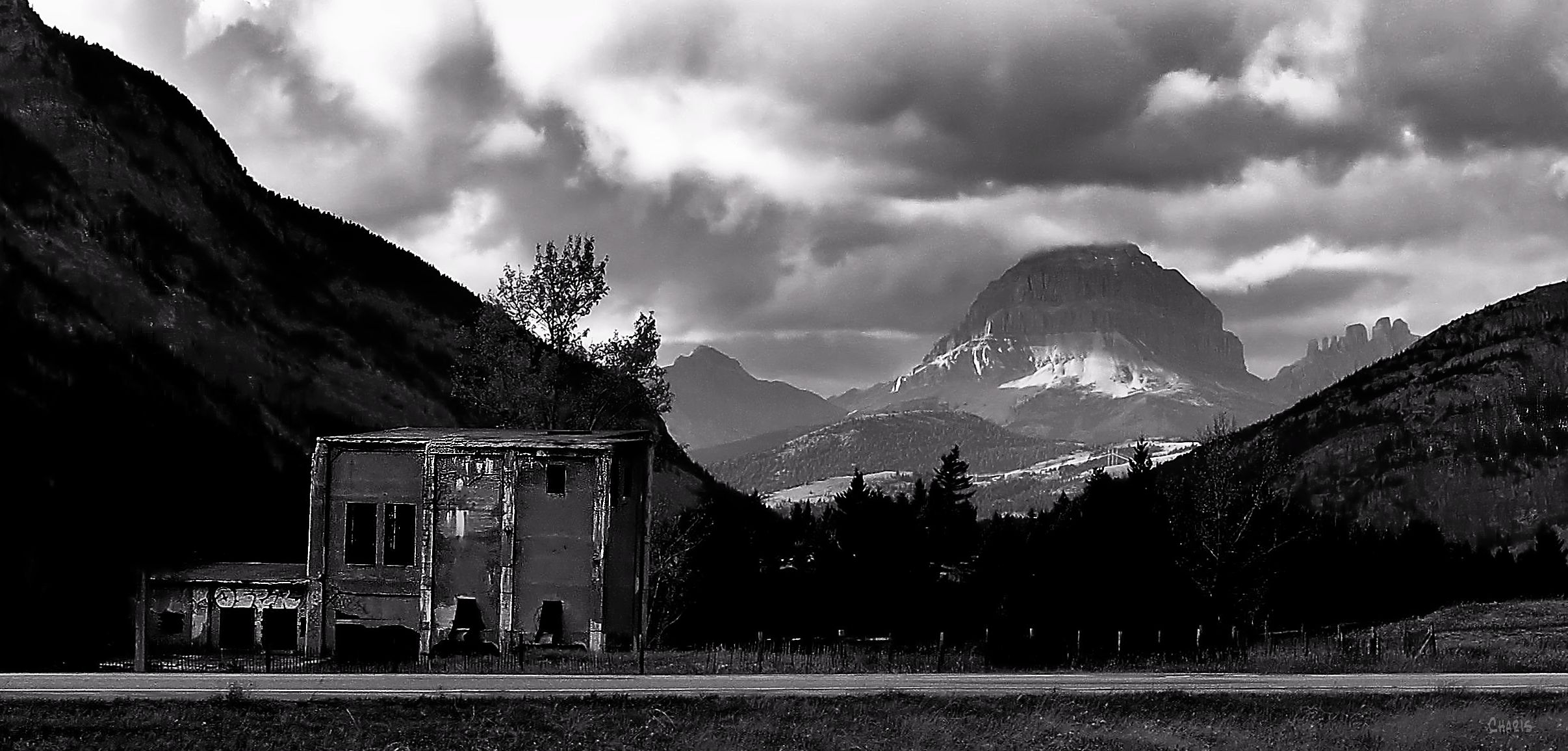
Further down the road the fire-ravaged shell of the old Mohawk tipple in Burmis stands as a symbol of the loss of prosperity and hope in a town of people who ran out of resources. There are some vacation homes in the area, but not much else is happening in downtown Burmis these days.

The thought strikes me that it is so easy to forget Who our source is and to try to resurrect dead monuments to the past instead of pursue active encounters with God.


IMG_7397 crowsnest from burmis coal tip bw ch

St. Paul, the intellectual who changed his opinion about Jesus Christ so drastically he went from killing his followers to risking his own life to bring the good news of the kingdom of God, had this to say to folks in Corinth: When I came to you, I did not come with eloquence or human wisdom as I proclaimed to you the testimony about God. For I resolved to know nothing while I was with you except Jesus Christ and him crucified.  I came to you in weakness with great fear and trembling.  My message and my preaching were not with wise and persuasive words, but with a demonstration of the Spirit’s power,  so that your faith might not rest on human wisdom, but on God’s power.”


Change


autumn foilage gouache


Most Christians are still living with an Old Testament view of their heart. Jeremiah 17:9 says, ‘The heart is deceitfully wicked.’

No it’s not. Not after the work of Christ, because the promise of the new covenant is a new heart.

-John Eldredge

While He Lay Dying

I’ve been helping (in a small capacity) my daughter and our beloved son-in-law write their story. The book is titled While He Lay Dying and is the story of one little family in a small city who saw the love of God through the worst circumstances, as a young husband and father lay comatose, and on life support, his body shut down from toxic shock after contracting flesh-eating disease. The odds of his surviving were 0%. For a long time he lingered as near to death as his doctors had ever seen in a person who survived. His recovery was nothing short of miraculous. There were angel sightings, reconciliations, revelations, heart-healings and far too many co-incidences to be co-incidences, but it was not an easy time. Every day our emotions rode a roller coaster.

Going through proofs with them has stirred up a lot of feelings for me. They tell their story honestly, candidly and dare to boast in the lessons God showed so many during that time, as tens of thousands around the world joined to pray with perseverance for the life of one man. A physician on the team also contributes his account of witnessing this event and a pastor shares profound insights that are significant for the universal Church –the Body of Christ.

I am overwhelmed that the Lord allowed me to be a part of this story, and even though I like to think I am a writer, words fail me. Today I use some of my images to describe the feelings of those days with music by Vitali.


From the Foreword by Bishop Todd Atkinson:

Jesus trusted His Father and gave Himself over to death on the cross,
Then followed a long Friday night and a long Saturday…
And while he lay in the grave, His followers asked,
“What was that all about?”

For some of you it’s been a long wait…
Something died years ago.
Some part of your faith died.
Some part of your hope died.
Some promise you were holding on to died.
We cannot raise ourselves out of that…

But we’ve got a Father who is able to.

Burning Coals

IMG_5797 sunset turbulence ch

If you think God has no wrath you do not understand the power of His love. What kind of loving Father sees his children slaughtered and does not feel outrage?

Yet he tells his people not to avenge themselves. Romans 12:

Beloved, never avenge yourselves, but leave it to the wrath of God, for it is written, “Vengeance is mine, I will repay, says the Lord.”

Instead he asks his children to respond in the most counter-intuitive way possible!

To the contrary, “if your enemy is hungry, feed him; if he is thirsty, give him something to drink; for by so doing you will heap burning coals on his head.”

For those thousands of people around the world who trust in him and who are seeing their children beheaded and their fathers burned, and their mothers raped and the enemy surrounding their city this seems like an incredibly impossible request. But there s a reason. When we fight darkness with darkness we ourselves are overcome by evil.

Do not be overcome by evil, but overcome evil with good.

Evil brings it own kind of blindness. It lies to us. It keeps us from seeing who the real enemy is. The idea of heaping burning coals on someone’s head is to give them something to carry home and start their own fires with. It is a gift of light and warmth that allows them to change their thinking and breaks the cycle of revenge.

If we take revenge for very real cruel acts of hateful persecution we risk killing the very people Jesus came to save — hostages of the evil one who have been his captives for so long they have believed his lies. They are delusional. Mental health workers will tell you some of the most difficult people to work with are those who suffer from paranoid delusions because they fear the very ones who want to see them healed. There are times, when for the sake of safety of others (and themselves) when they need to be restrained, but it is always understood that their reactions are the result of working under the assumptions of a lie. Many persecutors are operating under the assumption of a lie perpetrated by the father of lies -the god of this world – the real enemy -satan. That’s where God’s wrath is directed.

It is so easy to be captured by the spirit you oppose. There are genuinely evil people out there who have deliberately chosen to be the devil’s servants. And there are wounded people who have been deceived. God sees the heart. That’s one reason He says he is in charge of vengeance. When we fight darkness with darkness we are contaminated by the lie. We are called to walk in the light.

Today I was moved almost beyond belief when I heard the story of a mother and her children in Baghdad asking to be baptized even as the city is surrounded by troops hell-bent on killing people who identify as believers in Christ. They ask this even as Iraqi soldiers surrounding their enclave have said that they are prepared to discard their uniforms and run. Where does that kind of courage this woman has demonstrated come from? Would my trust in the Eternal goodness of God be so great that I would do that under the same circumstances?

Would I be willing, like the brother of a man who had been chopped to pieces in Mozambique by those who opposed the message of salvation in Christ, to approach them and say, “You can cut my body into a thousand pieces and everyone will cry out, ‘Jesus Christ loves you.'” The entire village turned to Christ.

Love like this is more powerful than all the bombs in the world.

Praying for courage and profound world-changing love in the persecuted church around the world today –especially in Iraq. May they see the glory of the Lord as God’s will is done on earth as it is in heaven.

Lord hear our cry! In the Name of Jesus who bowed the heavens and came down.

Psalm 18

I love you, O Lord, my strength.
The Lord is my rock and my fortress and my deliverer,
my God, my rock, in whom I take refuge,
my shield, and the horn of my salvation, my stronghold.
I call upon the Lord, who is worthy to be praised,
and I am saved from my enemies.

The cords of death encompassed me;
the torrents of destruction assailed me;
the cords of Sheol entangled me;
the snares of death confronted me.

In my distress I called upon the Lord;
to my God I cried for help.
From his temple he heard my voice,
and my cry to him reached his ears.

Then the earth reeled and rocked;
the foundations also of the mountains trembled
and quaked, because he was angry.
Smoke went up from his nostrils,
and devouring fire from his mouth;
glowing coals flamed forth from him.
He bowed the heavens and came down…

Young Love, First Love

Blossom
Blossom

You know those dreams where you are back in high school or university and you realize you have an exam and you can’t remember your locker combination or the room number — or if you ever went to that class? Sometimes my life feels like that when I’m awake. I thought I was done with learning something and I find myself back in school — only this time it’s the school of higher un-learning.

This week the song “Young Love, First Love” has been going through my head.

“And the significance of that, Lord?”

“You have no idea how deep the acceptance of performance-oriented, hypo-grace, approval-seeking, ‘me-do-it-self’, busy-ness-is-next-to-godliness thinking runs. Churchianity is full of it. So are you.”

“Still? Seriously? I thought I was doing much better.”

“Pack your bags. We’re going on a love-trip.”

Ok, I’ve been thinking (again) about the warning to the church in Ephesus that although their diligent efforts are appreciated, God said they had a serious problem. They had left their first love. However, I have this against you: you have abandoned your first love.  Do you remember what it was like before you fell? It’s time to rethink and change your ways. “(Rev 2:4) The messenger told them to return to it or they stood in danger of losing their light (their understanding and their influence symbolized by a candle stand).

I began to realize that my secret reaction to the warning was an internal groan that even though I had worked hard all summer there was something else that should have been on the list. Oh yeah, remember to spend time loving God. Oh boy, something else to do before I can put out the cat and get some sleep.

“Think again,” He said. “You’ve got some un-learning to do.”

That’s where the song came in. (I know the word the Bible uses is agape, the type of perfect all-giving love God has, and not eros, the type of love that makes us get all hot and bothered and more than a little self-conscious, but I think the connection is still there.)  I remember telling a lonesome young woman bemoaning her unattached state, that when people fall in love they actually fall in love with themselves in a way. When we see ourselves through the eyes of someone we respect and who thinks we are worthy of their time and attention, we are willing to lower our barriers a little. Sometimes we misjudge the quality of character in a person and find ourselves the object of the attentions of some obsequious little stalker who will hit on anything, but we learn and move on. But the attentions of someone we admire? Wow. Weak knees and butterfly stomach time. It can be a little disorienting. (So how to get a person of quality to fall in love with you? Become a person of quality yourself.)

When we fall in love we are constantly aware of that person’s presence. We know exactly where they are in a room without even looking. We are fascinated by everything they are. We want to know everything about them, their values become our values, their heartaches become our heartaches, their victories become our victories. We talk only about them and we need to be near. We have the urge to merge.

To be loved by someone you deeply respect who thinks you are worthy of his sacrifices, who can make you realize how amazing you are? Wow! He or she will inspire you to become bold and become a better person and do greater things simply because he or she believes in you.

You don’t fall in love with someone who makes you feel ashamed, or ugly, or unable to change. You fall in love with someone who makes you aware of your own potential -simply because their very presence in you life makes you realize you are of value to someone important. (Are you listening, Self?)

The lines of the song that keep running through my head: Young love, first love, filled with true devotion.Young love, our love, we share with deep emotion.

That’s it. He’s asking us to return to true devotion and deep emotion by letting him love us the way he wants to.  Returning to the source of our motivation, knowing that the Being of ultimate quality, and worthy of infinite respect longs for us, means we can start to see ourselves through His eyes. He shows us how amazing we are; he emboldens us to become more than we ever thought we could be, because he says we are worthy of his attention, his time, his sacrifice.

When we do we will long to become like our beloved, to make his priorities ours, to understand his heart, to share his secrets and rejoice in his victories. When we return to our first love, we live and move and have our being in Him and our sanctified imagination is again motivated by His love -his perfect, unselfish, giving love.

We blossom.

Loved


IMG_4936 apples_edited-1

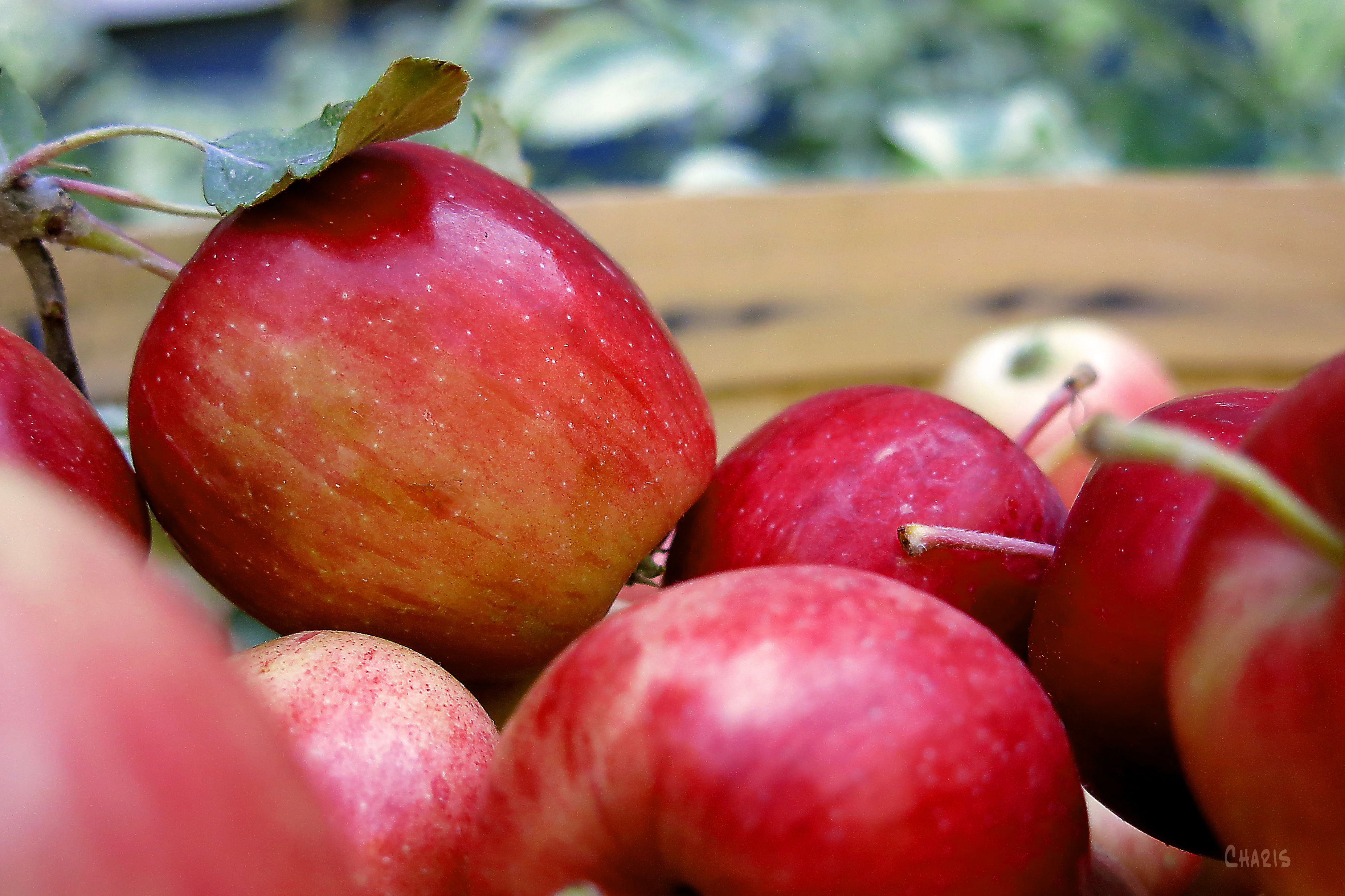
Like an apple tree among the trees of the forest is my beloved among the young men.

Joseph's Creek IMG_2342

I delight to sit in his shade, and his fruit is sweet to my taste.

(Song of Songs 2:3 ESV)


IMG_0332 ft steele knox window pew

I know your deeds, your tireless labor, and your patient endurance. I know you do not tolerate those who do evil. Furthermore, you have diligently tested those who claim to be emissaries, and you have found that they are not true witnesses. You have correctly found them to be false.  I know you are patiently enduring and holding firm on behalf of My name. You have not become faint.

However, I have this against you: you have abandoned your first love.  Do you remember what it was like before you fell? It’s time to rethink and change your ways; go back to how you first acted. (Revelation 2:2-5 The Voice)

pink rose jer 31 ch


If I speak with human eloquence and angelic ecstasy but don’t love, I’m nothing but the creaking of a rusty gate.

 If I speak God’s Word with power, revealing all his mysteries and making everything plain as day, and if I have faith that says to a mountain, “Jump,” and it jumps, but I don’t love, I’m nothing.

If I give everything I own to the poor and even go to the stake to be burned as a martyr, but I don’t love, I’ve gotten nowhere. So, no matter what I say, what I believe, and what I do, I’m bankrupt without love.

(1 Corinthians 13:1-7 The Message)

When I become so busy that I don’t have time to revel in God’s love, I have nothing left to give. Without knowing deeply how much he loves me and wants to spend time with me I become a performance-oriented, fear-based person who spews dire predictions instead of faith, cynical expectations in place of hope, condemnation rather than love. I hear God speaking about a better way. I hear him inviting me to return and lay my head against Jesus’ chest, until I can hear his heart beating for me. Everything good thing flows from there.

Light and Love

IMG_2100 sun on grass trees

“God is Light.” “God is Love.” That which professes to be light yet lacks love, is not of God; while that which calls itself love, but is not according to light is equally not of God.
– J. Charleton Steen

Fences Around Fences

fences mtn fade bw corel

Nothing is really lost in God’s economy. I learned a lot in my research for the novel I never finished.

I learned that anger is not a good motivator.

I learned that I can change my mind about a group I distrusted.

I learned that suffering is not the only way to gain Godly wisdom. If we pay attention to history and the wisdom gained by other people’s mistakes, we can move on down the road more quickly than if, like recalcitrant teenagers, we have to experience absolutely everything for ourselves.

I was following a discussion on purity and the courting/betrothal movement today. A couple of blogs pointing out some basic assumptions about purity and responsibility made me think.

One of my characters, who had been delivered to a medieval nunnery in my non-existent novel, questioned the high value placed on living without sexual experience as a basis for recognized sainthood for women ( I learned this after I spent a considerable amount of time reading about the lives of saints officially canonized.)

“Why is it,” the young girl asked, “that so many women are honoured for what they did not do instead of what they did do? Why is protecting your virginity until death of more value than raising loving, courageous children, or treating a difficult mother-in-law kindly?”

Even today, the emphasis on purity and “guarding one’s heart” against any undo or premature emotional, or especially sexual feelings, in order to avoid temptation, may seem like a good idea at first. Alas, as is often the case, when wisdom is hijacked by fear the result is usually more rules – fences around fences. For parents who fear that their kids might someday suffer the same negative consequences of giving into temptation like Mom or Dad did, control becomes the new temptation.

In medieval times it was thought that virgins had greater influence with God in their prayers, so families often designated one or two of their progeny to cover the sins of the rest of the gang by shipping them off (often against their will) to cloisters and monasteries. Enclosure behind high thick walls ensured the “purity” of their bodies, if not their hearts.

Some young people are still raised with the notion that any sexual feelings or attractions qualify as impure thoughts and uncontrollable lust, and that merely being alone in the presence of someone of the opposite gender can lead to “defrauding.”  Not only does this skip the opportunity to develop self-control, it often leads to young women feeling responsible for men’s lack of it. The crazy part is, once they are married (when a young man is brave enough to run the gauntlet and seek her father’s permission to formalize a conversation over a plate of nachos  – with a view to marriage) the young woman, who has been told for years that thinking anything other than no, no, no is “defrauding,” is now suddenly “defrauding” if she says anything other than yes, yes, yes. She goes from “You mustn’t!” to “You must!” without passing Go. Legalism can take the fun out of everything.

You can tell that grace is no longer a part of the equation when God’s permission has to be qualified with yeah-but disclaimers and words are re-defined. When impure means having a God-given sexual feeling and lust is merely being attracted to someone, or guarding your heart means shutting it down, fear is running the show. Self-control ( aka moderation) is a fruit that comes from Holy Spirit — whose love casts out fear.

The actions of Godly wisdom and of human fear may look the same for a while, but one leads to freedom and the other to more slavery (the whole point of Galatians). God sees the heart – and there’s a wideness in his mercy.

Love means respecting our own and others personal boundaries. Love means recognizing and respecting our own and others limitations when it comes to resisting temptations to indulge in practices that will not be in our best interest, whether eating, or overworking, or making out without making a commitment to care. The grace of Christ means we are no longer slaves to fear, nor to deliberate choices to act in ways that come from contempt for God, others or ourselves.

The gate may be relatively narrow, but it’s hard to dance on a tight rope of our own making. It is for freedom that Christ has made us free. Let’s not get tangled up in barbed-wire fence rules again.


And for those who can’t contain the yeah-buts, try this.“Do not put child in bag”