Be still before the Lord, and wait patiently for him. (Psalm 37:7)
One night in a dream I heard, “Creation, not reaction.”
Then, “It is the nature of God to create, not react.”
My first reaction to crisis is to want do something. I need to feel useful.
And maybe a little bit less out of control.
Frequently my running around trying to fix things or trying to solicit help, or at least sympathy, has just complicated matters.
Until we experienced a natural disaster via our son and family when they became homeless after a flood, we probably would have reacted the same way as many well-meaning folk who felt a need to “do something.”
Some of the truckloads of used clothing and household goods they worked so hard to gather and ship to the beleaguered areas ended up in a landfill. Where does a town put this all low priority stuff when buildings have been destroyed? Where does the manpower to sort and distribute come from when every available person is shovelling knee-deep mud out of the kitchen or dragging mattresses saturated with sewage to the street? What seemed like a good idea ended up adding to the pain of loss.
I was very impressed by the Mennonite aid agency. After the big name rescue agencies left and the cameras and talking heads moved on to another story the Mennonites erected a building they could work from. They knew from experience that restoration was a long term commitment. Their actions were well thought out. They had a creative long term plan.
In matters of immediate threat to life rescue is essential. But I find when I feel pressured to react to hypothetical crisis (“If this doesn’t happen soon it could be really bad,”) the sense of urgency often comes from a source other than God. Sometimes the hardest action to take is to wait on God.
God chooses when to move. He does not react to the enemy’s attacks that goad us into rash reactions to his terrorist threats. God is in charge of the timetable, not the one who comes to steal, kill and destroy.
His answers are creative and sometimes even shockingly counter-intuitive. Who sends a choir and marching band to meet an army hell-bent on your destruction? Who arranges for a prisoner accused of sexual assault to save an entire country from starvation? Who defends a people from genocide by setting up an orphan girl with an enemy king (a situation which in other times and places would have been called fraternizing)?
When our prayers are more about worrying at God (because he doesn’t seem to be taking the situation seriously enough) we are tempted to start dictating what he needs to do. Praying “precise prayers” without precise understanding of his intentions is trying to micromanage the Creator of the Universe. Good luck with that.
Jesus is never stops interceeding for us. With joy. How is he praying in your crisis?
Can you drop the frantic unproductive busyness, clear the noisy fearful voices from your head and wait patiently for the voice of peace to whisper to your heart? What is he wanting to create in you in the midst of all this? What is he wanting to create in your sphere of influence through you?
This way of seeing our Father in everything makes life one long thanksgiving and gives a rest of heart, and, more than that, a gayety of spirit, that is unspeakable.
– Hannah Whitall Smith
Photography as art is a way of seeing. A photographer’s outlook is revealed in the way she or he chooses to frame a photo, and which aspect of the scene before them they choose to focus upon. The position they take when capturing an image influences what others will see later.
Sometimes, when I am aware of being in deep shadow in my life I realize I need to get up and change my perspective before I will perceive the light. Intentional focus on aspects for which to be thankful and intentional praise for blessings past, present and future is a way of changing the angle and re-framing circumstances. Yes, there is shadow, but ah, the light!
“On another occasion, Jesus spoke to the crowds again.
Jesus: I am the light that shines through the cosmos; if you walk with Me, you will thrive in the nourishing light that gives life and will not know darkness.”
I have encountered enough narcissistic and sociopathic personalities in my lifetime that if a charming new acquaintance says, “Trust me,” I’m pretty sure I should do just the opposite.
In this time in history the Lord seems to be exposing hidden corruption in formerly trusted institutions. Whether revelations involve government, media, medicine, education, religion, or even dark family secrets mouldering away in too many basements, it is easy to become jaded.
When the foundations are crumbling, what can we do?
We are facing a national and international crisis of trust. Who do we believe? Who is not secretly self-serving? This is not limited to individuals who lack empathy. Special interest groups and even entire countries seem to be following a me-first narcissistic agenda.
Many people are shouting, “You’ve got to do something!” Few people have helpful suggestions.
As I face situations all around me which I cannot possibly fix and am tempted to go into over-responsible eldest child overdrive I hear my heavenly Father’s voice.
Trust Me.
I do, Lord. Mostly. I wish I could trust you more. I just don’t know how.
Grace.
Grace?
Grace not only allows you to see who I am, it reveals who I am not. My Grace trumps the world’s expectations.
I pondered this. My past experience taught me to expect punishment, criticism, disapproval, disappointment, nasty surprises, betrayal.
Then I watch the little grandchildren I have been caring for. They are so sweet. I don’t have to be fashionably attractive, or legally vetted, or financially well-endowed, or Good Housekeeping-approved to earn a genuine spontaneous hug. They trust me.
I make mistakes, and accidentally step on toes or forget which coloured bowl they prefer, but I adore them and would never intentionally do anything to harm them. They know that. They trust me to protect them, nurture them and have their best interests at heart. They take me at my word and don’t question my motives.
Jesus said, “If you, then, though you are evil, know how to give good gifts to your children, how much more will your Father in heaven give good gifts to those who ask him!” (Luke 11:13)
Our Father in heaven is not like the authority figures who have let us down. Not even close. A lot of the process of learning to regain child-like trust involves letting go of lies we have been believed about God.
A song from my childhood has been playing in my head this week.
“‘Tis so sweet to trust in Jesus Just to take Him at His word; Just to rest upon His promise, Just to know, “Thus saith the Lord.”
Jesus, Jesus, how I trust Him! How I’ve proved Him o’er and o’er! Jesus, Jesus, precious Jesus! O for grace to trust Him more!”
-Louisa M. R. Stead
Here’s the thing. Babies don’t trust parents because they have read a resume or done a performance evaluation or run a background check. Babies trust because they have no options. Becoming like a child is simply resting and letting God be who he is – someone who knows and loves every hair, every cell, every heartbeat.
Unlike our own parents he will never drop us on our heads or use us to serve his unmet needs. He will not place responsibilities upon us that are too heavy for our level of maturity, nor will he enable learned helplessness by restricting our freedom to grow.
I hear him say, “So you’re out of options. I’m not. Trust me.”
“But Jesus called the children to him and said, “Let the little children come to me, and do not hinder them, for the kingdom of God belongs to such as these. Truly I tell you, anyone who will not receive the kingdom of God like a little child will never enter it.” (Luke 18: 16,17 NIV)
Ponder anew what the Almighty can do,
If with His love He befriend thee.
(From translation of Lobe den Herren -Joachim Neander, 1680)
Sometimes I feel stuck. I go over and over a problem and come out the maze with the same inadequate solutions. It’s frustrating.
Today someone suggested that frustration might be a sign that the old solutions are inadequate. As a TV psychologist asks, “How’s that workin’ for ya?”
Well, thus far, it’s not.
The wisdom of the world is not up to the challenge.The wisdom of the world says prepare for sad surprises because this sort of thing never turns out well.
But the wisdom of the world does not take into account the One who can do more than we ask or think. In Christ we have a Friend whose love is beyond measure.
We need to ask bigger questions. We need to think bigger thoughts.
I’m going down to sit by the creek and ponder anew.
Some blog posts are written in crayon and some in blood. The process was not easy for this one. It was years in the making but full of reward. Blogging at Ishshah’s Story this week.
I’ve learned to pay attention when unusual co-incidences occur in my life. When the same book or the same topics pop up in random conversation and unexpected places I tend to wonder if there is a reason. The recurring topic this week was about people who have been deeply wounded by experiences in the church; the name that popped up is that of a man I haven’t thought about in years.
I was a naive sixteen-year old when I met him. He was the youth program director at church.
It was many years ago and I have long since forgiven, although forgiveness was not an easy or quick process. True forgiveness requires acknowledgment of the seriousness of the offense and I was in denial for a long time. I stumbled around until I found trustworthy people who could help.
Let’s just say he was not the person he wanted people…
Well, this was unexpected. Who knew I would spend my 63rd number-changing day (as my little granddaughter calls it) in the throes of puberty, or reverse menopause (I’m not sure what to call it).
I’m on short-term intense hormonal therapy to try to fix a girl problem, well, okay, an older lady problem. And that’s all I have to say about that (which is probably too much.)
The result is a person, already subject to strong emotions, now awash in feelings. Irritability is the most … irritating. Having giggle fits with my adolescent granddaughter (also awash in hormonal emotion) may be the most fun.
It’s temporary and I can hang on for a few more weeks as long as I avoid political bait and debate and my husband doesn’t do anything worthy of inciting a riot, like chewing his popcorn too loud at the movies or humming The Marseillaise in a minor key.
I’ve been thinking about emotion and it’s place in our lives. I wonder if emotion is the response our soul makes when its nerve endings are touched. Some areas of our souls seem to be more sensitive than others. Some people just seem to feel emotion more intensely than others. It’s like having a high or low pain/pleasure threshold.
Some emotional stimulation feels wonderful and some feels absolutely horrid. The temptation is to either become addicted to “feel-good” triggers, wallow in the feel-bad triggers, or shut them all off as much as possible.
Alas, in the way people without pain receptors tend to lose limbs, people without emotion receptors tend to lose chunks of their souls. Compassion is often the first to go.
I love the Psalms because they are full of intense emotion, yet grounded in the reality of God’s sovereignty. David and the other writers shamelessly express feelings, yet they eventually submit them to God’s perspective and will.
Emotions are like scouts who bring reports back to headquarters. They are vital, but don’t let them make the final decisions. They tend not to see the entire picture.
David writes about highs and lows and our tendency to lose sight of God in our running about.
Can I go anywhere apart from Your Spirit? Is there anywhere I can go to escape Your watchful presence?
If I go up into heaven, You are there. If I make my bed in the realm of the dead, You are there.
If I ride on the wings of morning, if I make my home in the most isolated part of the ocean,
Even then You will be there to guide me; Your right hand will embrace me, for You are always there.
Even if I am afraid and think to myself, “There is no doubt that the darkness will swallow me, the light around me will soon be turned to night,”
You can see in the dark, for it is not dark to Your eyes. For You the night is just as bright as the day. Darkness and light are the same to Your eyes.
For You shaped me, inside and out. You knitted me together in my mother’s womb long before I took my first breath.
I will offer You my grateful heart, for I am Your unique creation, filled with wonder and awe. You have approached even the smallest details with excellence; Your works are wonderful; I carry this knowledge deep within my soul.
You see all things; nothing about me was hidden from You
(Psalm 139: 7-15 The Voice)
Anyway, I just want to say on this day, that for all the pain and all the joy feeling intense emotion has brought me, thank You, Lord. You surround me and You ground me and You lift me up. Best of all You like what you created when You made me. Today, on my birthday, I celebrate You.
Twice this week I heard this question: What makes you angry?
Both times the men posing the question suggested paying attention to the circumstances that raise a flood of righteous indignation.
“It could be a clue to your calling.”
I didn’t have to think long. What makes me angry? When the cries of the victims of injustice, when the wounds of the abused, when the silent tears of those imprisoned in mental anguish or in circumstances they cannot control are ignored or downplayed by people who have the capacity to help, I feel rage rising. When people who brag about leading a loving community misuse their power by exploiting their charges, I am livid.
Recently I read a rant by a popular writer who can obviously relate to my anger. He blasted away at hypocrisy and corruption and cover-up within the institutional church.
“Wow, Lord! This is good. I totally agree. This guy is absolutely right.”
God’s still small voice response shook me.
“So was Absalom.”
“Absalom? The son who rebelled against his father the king?” I asked.
“Beware the man who calls victims of injustice to follow him saying, ‘If I were in charge…’”
I re-read the story of Absalom in 2 Samuel 13 to 18.
Absalom was right about injustice and corruption being covered up within the kingdom. He had first-hand knowledge of this. The prophet Nathan exposed King David’s crime of taking what was not his – Bathsheba, the daughter of one of his valiant friends and the wife of Uriah, who was out fighting for him. It couldn’t have been easy for a faithful servant to tell the king that his decision to cover up his sin by committing a greater one, arranging Uriah’s murder, would have serious consequences in his family for a very long time. David admitted fault. Psalm 51 records his feelings of deep remorse, but there were still consequences set in motion by his acts.
Later David’s eldest son, Amnon, also abused his power when he took what was not his. He raped his half-sister, Tamar, Absalom’s full sister. David was very angry, but he did nothing that gave the appearance of justice being done on behalf of his daughter.
Some say David couldn’t act because Amnon and his cousin/adviser made sure there were no witnesses, and in those days, and often in these, a mere woman’s testimony was not enough. Some suggest David did not take action because he was still in the throes of depression over his own sin. Some pose that Amnon, as first-born, was in a position of privilege, and even though God continually broke the expectations of society by choosing a younger son for a task, David was still intimidated by primogeniture culture (the eldest son inherits everything) – and because Amnon was still his boy.
Maybe David hoped that if he ignored it someday the whole thing would just go away.
It didn’t go away. It became worse. Absalom took things into his own hands. He arranged for Amnon’s murder. Then he fled.
David mourned for two sons.
The story of David and Absalom’s uncomfortable estrangement, and eventual quasi-reconciliation is told in 2 Samuel 14. By this time, Absalom was a full-fledged manipulator. He used appearance, charm, popularity, intimidation — whatever it took– to move himself toward a position of power. He sat at the gate and listened to people’s complaints of unjust treatment, something the king had apparently been failing to do. Injustice was piling up like garbage in the dark corners of Jerusalem. The failure of authorities to listen to the common people and deal with injustice is fuel for rebellion. How many times is this lesson repeated in history?
Absalom began to build an army of malcontents.
But wait? Didn’t David do the same after he fled from Saul? He did, but there was a difference. Although he wailed loud and long about unjust treatment, David never took justice into his own hands. He would not touch God’s anointed. He honoured the office, even when King Saul was reduced to a dangerously unbalanced giant wounded ego. David knew he himself was more popular. He could have made a bid for the hearts of the people to back him up in military take-over. But he waited for God to hand him the scepter. He honoured the position of the king who was trying to kill him.
Absalom couldn’t wait. Absalom dishonoured the king who disappointed him. Absalom led a rebellion. Absalom publicly shamed the women in David’s household. The victim turned perpetrator. Absalom died. He fell victim to his own symbol of beauty and by the hand of the man who once took up his cause.
I can relate to the popular writer who is dismayed by the lack of love or fairness. The repeated reports of willingness to hide corruption in church leadership is infuriating. I haven’t been in a place where I felt unsafe in years, but I know from the past what it is like to see women and children’s stories of abuse dismissed or “re-framed” to benefit someone’s hold on power.
I have seen a pastor badger a woman on staff of a Christian organization to confess her part in seducing the elder who raped her violently, even though she had been beaten. She lost her job. There were no serious consequences for the man.
I have hidden victims of incest in my home who were coerced to change their stories because they were told it would be their fault if the family broke up and the step-father was subject to ridicule or prosecution.
I have seen men falsely accused by bitter ex-wives who knew how to garner sympathy, but still neglected emotionally and physically the children now kept away from their daddies.
I have seen men on the verge of bankruptcy because another member of the congregation cheated them out of weeks of wages. After the issue was brought before the elders, nothing happened to the thief. The victims were told it was their responsibility to forgive.
I have seen teenagers thrown out of the house when they told a someone they were gay or that they had an abortion.
I have seen people become slaves to cult leaders with bad, bad, bad theology who prey on spiritual vulnerability motivated by a personal need for power.
I know what it is to cry myself and not be heard, and I know what it is to be loved, healed and restored by people who cared.
But I’ve also known the horror of feeling I had to betray a friend’s confidence because she chose to protect her husband’s reputation over her child’s well-being. I know the utter agony and extreme pain of hearing someone I cared deeply about screaming that I had ruined her life as the police took him away. All these years later I cry just thinking about it.
As a teacher, foster mother, and friend, I have heard stories that make me want to cover my ears and scream, “Don’t tell me! I don’t want to know!! Shut up! Just shut up! Shut up because now I am obliged to do something about it and I know how this goes!” But I listen and I act on the children’s behalf. I think I understand how the prophet Nathan may have felt when God told him what King David had been doing.
I know it is worse to leave the garbage festering where the next generation plays than to deal with unpleasantness. Hidden corruption in the church is threatening our ability to live and breathe and unite in trust and love for each other. God is exposing it for a reason. He loves us. Love without truth is mere indulgence. God’s love is also just.
I can relate to the popular writer’s rants, and I can relate to the pastors and staff who don’t want to know about hidden sin, because taking proper measures can cause years of building to crumble and wound bystanders. In the end, as painful as it is, we must stand up to protect vulnerable lambs in the flock while still seeking rehabilitation and restitution for offenders.
I also know the sickly sweet voice of the enemy entreating, “Are you angry? I can help you with that.”
I hear the warning that is also an encouragement from Abba, my heavenly Father, “There is a higher way.”
He tells me not to partner up with an army of angry, invalidated, unheard, unhealed victims as a force for reform.
“Unless you are part of the process of honesty, repentance, forgiveness, and restoration you are not working for the kingdom. You are working only for yourself. And that never ends well.”





 “But Jesus called the children to him and said, “Let the little children come to me, and do not hinder them, for the kingdom of God belongs to such as these. Truly I tell you, anyone who will not receive the kingdom of God like a little child will never enter it.” (Luke 18: 16,17 NIV)








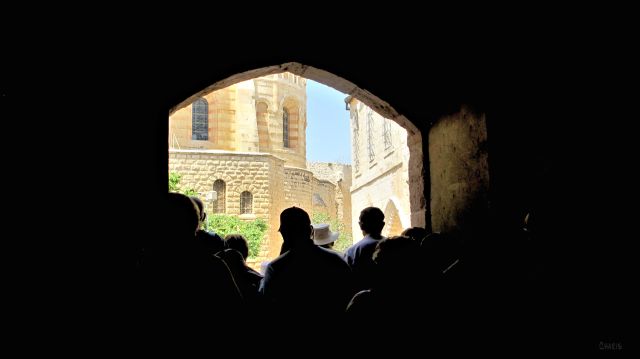
 Absalom was right about injustice and corruption being covered up within the kingdom. He had first-hand knowledge of this. The prophet Nathan exposed King David’s crime of taking what was not his – Bathsheba, the daughter of one of his valiant friends and the wife of Uriah, who was out fighting for him. It couldn’t have been easy for a faithful servant to tell the king that his decision to cover up his sin by committing a greater one, arranging Uriah’s murder, would have serious consequences in his family for a very long time. David admitted fault. Psalm 51 records his feelings of deep remorse, but there were still consequences set in motion by his acts.
 Injustice was piling up like garbage in the dark corners of Jerusalem. The failure of authorities to listen to the common people and deal with injustice is fuel for rebellion. How many times is this lesson repeated in history?
 Charis: Subject to Change