“I am leaving you with a gift—peace of mind and heart. And the peace I give is a gift the world cannot give. So don’t be troubled or afraid.” -Jesus
Jesus’ peace is not dependent on circumstances. When Holy Spirit lives in us, His peace is in our hearts, no matter what. So don’t let your heart -or your mind- be troubled. The voice that troubles, and makes you think you are not good enough for God to love, is not His.
I wait for the Lord, my soul waits, and in his word I hope; my soul waits for the Lord more than watchmen for the morning, more than watchmen for the morning.
The voice of the Lord is over the waters; The God of glory thunders; The Lord is over many waters. The voice of the Lord is powerful; The voice of the Lord is full of majesty. (Psalm 29:3,4)
Let the rivers clap their hands in glee! Let the hills sing out their songs of joy before the Lord
(Psalm 98)
I suppose it’s what we are accustomed to. I do feel sympathy for the people who move here from hot countries and who need to don layers of warm clothing, even in the summer. I have lived in a cold place most of my life, and my body is not happy with heat. My husband loves to bask in the hot sun. Me? I look for relief. You can always put more clothes on, but there is a limit to how many you can take off.
This has been an unusually hot summer, with temperatures in the 32-39 C degree range for weeks (in the 90’s F). Since heat waves usually do not last more than a week or so in this part of the world, few people have air conditioning. This week I was able to sit in the forest beside a beautiful stream as it tumbled its way down the mountainside to join Kootenay Lake. The water was cold, and a refreshing breeze calmed my over-cooked soul.
I rested in the coolness of the forest and joined the waters in a song of joy before the Lord.
Our inclination is to show our Lord only what we feel comfortable with. But the more we dare to reveal our whole trembling self to him, the more we will be able to sense that his love, which is perfect love, casts out all our fears.
– Henri Nouwen
In the theatre, I have seen some marvelous sets -the kind that made the audience gasp, once when the curtains opened and the lights went up, and twice when the scrim rose later. As one who stood nervously trembling in the wings, waiting for my cue, I know what the other side looks like. It was dramatically different from what the audience saw. But often, for the actors and crew, the backstage camaraderie could be the best part of a production.
There are parts of ourselves we have learned to keep in the dark. (Well some of us have. What is it with boys and bodily function humour?)
God is not shocked by our imperfections and half-formed concepts, nor is He fooled by smoke and mirrors.
In His presence, unashamed, without make-up and costumes. That’s where we know we are truly loved.
Well, it’s the season of my number-changing day, as my little granddaughter calls it.
This time of life has potential to be depressing for some of us. The question that crops up in this decade is, “What have I done with my life?”
This blog is about change, and I often write about leaving the past behind and pressing on to become who we are meant to be. In spite of many deeply regrettable choices I have made in the past, I am learning to say, “It’s grace that has brought me safe thus far.”
Sometimes it’s easier to forgive others than it is to forgive ourselves, but moving forward also means letting go of the debt accrued against ourselves by ourselves. In the same way that forgiving others means letting go of the expectation that they will somehow, someday, make up for things they stole or failed to provide, forgiving ourselves means letting go of the expectation that our past selves can ever make up for offenses against our future selves. I’m not talking about not taking responsibility; I’m talking about recognizing the futility of the task of trying recoup lost years by striving, and instead emptying our hands of false coping skills, so that God can provide the love and acceptance we still so desperately need.
I thought about Paul, the writer of so many letters to young, struggling believers. I wonder how he lived with the fact that he hated followers of Jesus so much that he had them dragged out of their homes, imprisoned, and even, in the case of Stephen, executed. He called himself “the chief of sinners” for what he had done. And yet, with the weight of that knowledge, he was also able to grasp the reality of God’s forgiveness. He knew he was loved, not just for the person he was going to become, but for the person he was at that very moment -for the person who had not yet “attained.” He could say, “By the grace of God I am what I am.”
I asked the Lord for a word from Him that would show me where I am and give me a sense of direction. I feel like I’m so far behind where I should be. I lost so many years to sympathy-addiction and depression that I have felt a kind of desperate need to make a difference in the world while I still have a bit of time left. I want to get busy and do something important for God.
The word I feel he is giving me for this year is “simplify.” The words of this song describe my feelings:
What can I do for You?
What can I bring to You?
What kind of song would you like me to sing?
‘Cause I’ll dance a dance for You
Pour out my love to You
What can I do for You beautiful king?
‘Cause I… can’t thank You enough.
…
All of the words that I find… and I can’t thank You enough.
No matter how I try… I can’t thank You enough.
Then I hear You sing to me: “You… don’t have to do a thing
Just simply be with me and let those things go
‘Cause they can wait another minute
Wait… this moment is too sweet
Would you please stay here with Me
And love on Me a little longer
I’d love to be with you a little longer
‘Cause I’m in love with you
(from “A Little Longer” by Jenn Johnson)
I’ve spent a lot of years wading through good and bad doctrine and theology, healthy and unhealthy forms of church structure and methodology, and proper and improper ways to express worship. If I were to classify my relationship with churchianity on Facebook it would be “complicated.” Today, if you were to ask me for my personal statement of faith, it might simply be:
Jesus Christ, Son of God, crucified, buried, raised from the dead and coming again. And this Jesus, who showed us who God really is, loves me. Holy Spirit tells me so. In the cross of Christ, offensive to the self-made, and foolish to the logical, is all my expectation.
By the grace of God, I am what I am. Present tense.
If that’s good enough for the Creator of the Universe, it’s good enough for me.
It’s fire season in the mountains, and we have been in a prolonged heat wave. Yesterday, as I was walking in the woods I felt a drop of rain on my head. Rain!
I am learning that thankfulness attracts God’s favour.
Soon the forest leaves dripped with beautiful rain.
For every drop of kindness, I thank you, Lord.
Let my teaching fall on you like raindrops; let what I say collect like the dew, Like rain sprinkling the grass, like showers on the green plants. I will proclaim the name of the Eternal; I will utter greatness to our God.
(Deut 32:2,3)
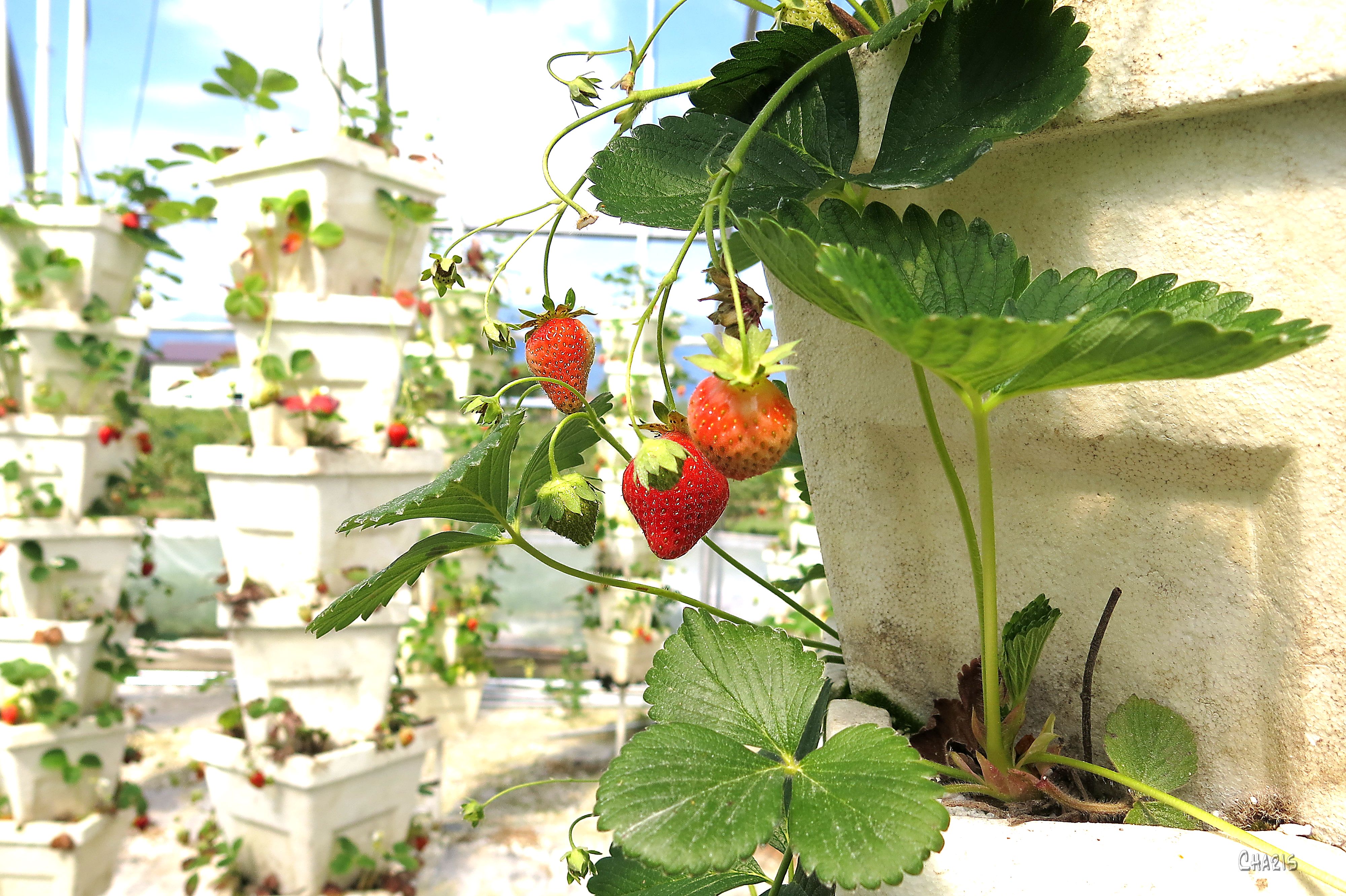
When he placed a bowl of fresh strawberries in front of me at the breakfast table, I knew I was in the home of a truly wealthy person. I was about ten-years old and our family was visiting an old friend who had inherited a grand Edwardian home in Vancouver. The previous owner kept it exactly the way it looked when his wife died in the twenties. It was a fine house with servant’s quarters, and call bells, inlaid parquet floors, and portraits of important-looking people peering down from the walls around the grand staircase. Our host gave me my own room with a four-poster bed and a Romeo and Juliet balcony -and strawberries on fine china for breakfast. I felt like a princess.
I don’t think my grandchildren believe me when I tell them that we didn’t have nectarines, or kiwis, or sushi, or even pizza when I was a kid. Pizza was a new fad when I started Jr. High school -and let’s just say it had not yet been perfected. We never had fresh green vegetables that didn’t come straight from the garden in the summer. We ate canned peas, corn and green beans and boiled carrots most of the year. Spinach was this vile black stuff in a yellow and red can that even Popeye would be loath to touch. Fresh Mandarin oranges, wrapped in green paper, only showed up at Christmas; peaches, nestled in wooden boxes, came off the back of a truck from the Okanagan in August; and strawberries, ah, beautiful strawberries, came in little woven baskets at the end of June. Strawberry season was so special that church ladies had strawberry teas just to celebrate. And we had strawberry shortcake with piles of whipped cream, or strawberry and rhubarb pie, or strawberries and ice cream for dessert until the season was over about a month later – but always at the end of the last meal of the day, after we had earned it by dutifully downing our mushy canned peas or yucky spinach.
But strawberries for breakfast? I had never tasted anything so good. Who has dessert first thing in the morning?
I was thinking about Jesus’ first public miracle when he changed the water into wine at Cana. When he chose to replace the water with wine and to use the six giant stone vessels that held water for religious purification rites, he was deliberately messing with some folks’ idea of decently-and-in-order. He provided a taste of the wine to come (which, in Biblical metaphorical language, represented The Messiah’s blood ) in a display that was just like His over-the-top grace. It was His job to show us what God, his Father, is really like, so He did. When the banquet manager tasted it, he was amazed that it was better than the wine the crowd was already a little tipsy on (because, as he noted, that they probably wouldn’t appreciate it properly by this point.) Like God’s grace, it’s quality was better than required.
At the wedding that marked the beginning of his public ministry, Jesus was giving a taste of the goodness of the Father, a filled-to-the-brim abundance of provision, to people who had no appreciation for its significance. John says he revealed his glory there – and he offered his family and friends a taste of the glory to come.
In God’s economy we do not have to strive to earn His favour. Like strawberries for breakfast, His goodness is served up for people who do not realize it is merely a taste of the glory to come.
Taste of His goodness; see how wonderful the Eternal truly is. Anyone who puts trust in Him will be blessed and comforted. (Psalm 34:8)
This week I had strawberries for breakfast -with sushi.
Each day holds a surprise. But only if we expect it can we see, hear, or feel it when it comes to us. Let’s not be afraid to receive each day’s surprise, whether it comes to us as sorrow or as joy. It will open a new place in our hearts, a place where we can welcome new friends and celebrate more fully our shared humanity.
Mine was not a huggy family. We didn’t slap people on the back, or stand up and shout at hockey games, or let anyone see us cry. And we were definitely not gushy. Words of affection were neatly tucked inside greeting cards and shared only at the appropriate times. Dancing was forbidden; even toe-tapping was unseemly in church, and laughter was contained in decently-and-in-order decorum.
And yet there was love, and affection, and enthusiasm, and sorrow, and always a deep emotional connection with music. We just didn’t express it physically. Blame on culture, or a fear of vulnerability, I don’t know, but being demonstrative does not come naturally to me. I’ve had to work at it. Music has been my main vehicle for expressing that which I cannot show, but when I lost my voice due to health problems, so many feelings became stuck inside me. That’s when I turned to art and writing.
Someone asked me recently how I plan to increase my worship of God. We agreed that worship can easily become a duty or routine without involving our whole hearts and requires a conscious effort to enlarge our expression. Can I admit a bit of panic? I assumed this meant they expected me to step out of my English stiff-upper-lip, German resolve, and Scottish stoicism and make myself do something horribly uncomfortable, like perform cartwheels in the aisle or give eloquent impromptu prayer speeches in Shakespearean English over a microphone.
I understand the importance of praise and the way it causes us to focus on God and his character. It’s not that He is a narcissistic megalomaniac needing constant approval and emotional boosting before He can get around to answering our requests. He is the source of love and only by spending time looking to the author and finisher of our faith can we ever hope to live in the power of that love. Worship makes us conscious of His Presence. I get it. Sometimes I am overwhelmed by His love and goodness and I run out of words. How many times can you say Praise the Lord or Hallelujah or Glory before the words lose meaning like gum that has been chewed for hours loses its flavour? Giving physical expression by raising hands, or bowing or kneeling -or doing cartwheels- makes perfect sense, for those who have not divorced this part of themselves. Until those actions become flavourless routine, as well.
It was while on this journey that I felt Him say something else about worship. Jesus repeated the scripture in Isaiah that talks about praise being on people’s lips while their hearts were far away. He was not impressed. He also said, “If you love me you will keep my commandments.” At this point we often make assumptions about what’s on the list of commandments so we can check them off. But what are His commandments?
Jesus answered, “The most important is, ‘Hear, O Israel: The Lord our God, the Lord is one.
And you shall love the Lord your God with all your heart and with all your soul and with all your mind and with all your strength.’
The second is this: ‘You shall love your neighbor as yourself.’
There is no other commandment greater than these.”
I like the music of the Piano Guys. I came across this video the other day which combines Bach’s Jesu, Joy of Man’s Desiring, with Extreme’s More Than Words. The song grabbed my attention and answered my question about how to increase my worship. I know the Extreme song referred to a physical expression of love between two people but there was a deeper meaning for me. The old marriage vows used to include the promise, “With my body I thee worship.” That could mean sexual affection or it could mean getting off the couch to make a cup of tea -or move the couch for the loved one. At the heart of this vow is the importance act of paying attention and listening to the desires of the other. This is also called “worship.”
For me that has meant a season of coming aside and learning to listen to His voice, even though that action has not made sense to others. It has meant dropping involvement a lot of activities which I always assumed to be good, to obey and follow Him to a place of solitude and quiet where I can learn to separate His voice from all the others. For other people, following Him might mean pouring themselves into a construction project. or barrel racing – or doing cartwheels in the aisle. Maybe that will be part of my expression someday too, but for now I hear Him say:
More than words is all I ever needed you to show Then you wouldn’t have to say that you love me ‘Cause I’d already know

















 Charis: Subject to Change