“And if we truly believe that God the Father is love, then we must therefore believe that He, as a Father, is patient, kind, and gentle. He doesn’t envy, He isn’t proud, He’s not rude, He’s not self-seeking, He’s not easily angered, He keeps no record of wrongs. He doesn’t delight in evil, but rejoices with the truth. He always protects, always trusts, always hopes, always perseveres. He never fails.”
― Darren Wilson, Filming God: A Journey From Skepticism to Faith
Sometimes my young friends like to post snippets of lyrics to songs in the status box on Facebook. My first reaction is often, “Are you OK, honey?” Then I figure it out – a song has spoken to their heart.
But it has not spoken to mine, and out of context it sounds, well, a little weird. Since I don’t know the song and have no emotional connection to it, the words are often just an interesting record of something that means something to somebody else. Thanks for sharing.
Photos can be like that too. I have my grandmother’s photos here, black and white records of her unnamed friends standing in front of grey rose bushes long since scattered in the wind. I can appreciate that they had deeper meaning to her than they do to me, and I suppose I kept them around out of respect for the things that were important to her, but now I’m paring them down and storing the more interesting ones in waterproof boxes.
For many years I was surrounded by people who told me about the wonderful things God has said. The Bible records them. I read them for myself. But for many years when someone quoted a verse of scripture it felt like reading lyrics to somebody elses favourite song.
Then I heard the Singer. I heard the Song.
The difference between studying the Bible and hearing the Voice of the Lord for oneself is like the difference between reading the lyrics and hearing the song.
John, the disciple who rested his head on Jesus’ chest, understood. Jesus came, not as more lyrics, but as the song. He told the religious people who studied the puzzling snippets of lyrics they had, that they were about Him, and that there was more to a song than written words. But they had to let go of their “expertise” to hear -and for many that was troubling.
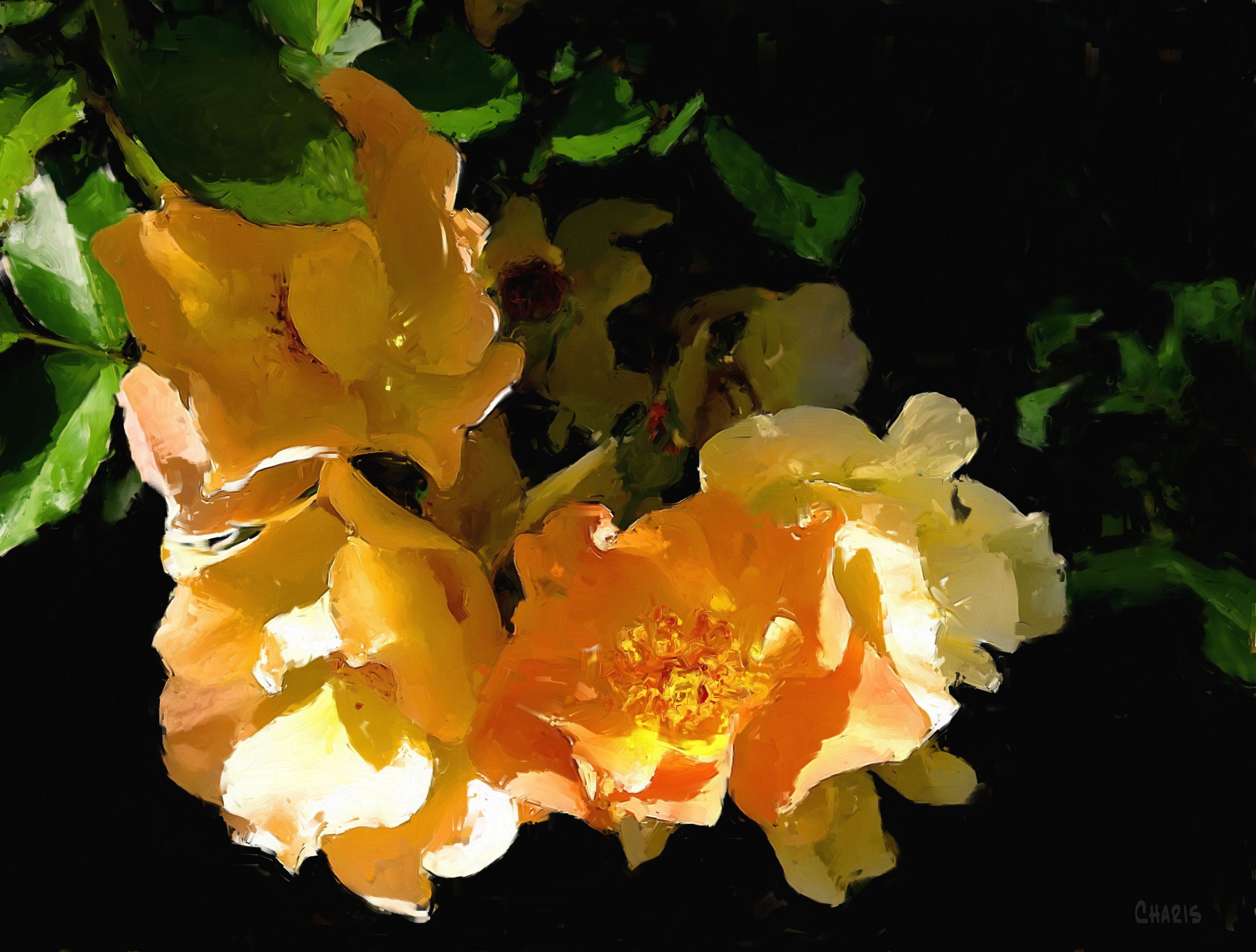
There is more, so much more, to this relationship with God. The difference between reading about the King of the Universe and going for a walk with him is like the difference between looking at photo of the memory of grey roses and actually touching and smelling colourful living roses.
John understood the lyrics when he heard the Voice sing the song:
Before time itself was measured, the Voice was speaking.
The Voice was and is God. This celestial Word remained ever present with the Creator; His speech shaped the entire cosmos. Immersed in the practice of creating, all things that exist were birthed in Him. His breath filled all things with a living, breathing light— A light that thrives in the depths of darkness, blazes through murky bottoms. It cannot and will not be quenched.
(The good news of John, chapter one, The Voice)
The Bible is a divinely inspired record of wonderful lyrics. But lyrics alone are not the Song our hearts long to hear. What is He singing over you?
My trusted friend learned the value of living simply by growing up in a military family subject to frequent moves. She has offered to help me de-clutter my house. Then I discovered that she considers our many books and dvd’s to be clutter. Um… this might not work. We have three walls of floor-to-ceiling shelves crammed with books — and perhaps a pile or two in the bedroom. And my home office. And maybe the living room… and the deck. I tried to tell her they make an excellent extra layer of insulation. She rolled her eyes.
I do cull regularly (my husband’s stuff is much easier to part with for some reason) and I do avoid second-hand bookstores, and clearance tables in the mall, so there are fewer books coming in. But now I’m having to worry about clutter on my computer since I have a Facebook friend who lets me know about free e-book promotions on Amazon -and he has great taste.
So, I am trying to be freer with what I part with, and more discerning about what I let in. Now I’m researching authors and their works more before buying. I realized something about book reviews and reviewers today. I’m more likely to be attracted to a book with a few bad reviews than pages of gushing changed-my-lifes. Is it bad that I take some book reviewer’s negative online critiques as recommendations? Self-appointed heresy-hunters have panned some of the best books I’ve read. I’m beginning to recognize their names. Thanks, guys.
Do you remember video rental shops? One thing my husband and I discovered was that if the blurb on the box said, “HILARIOUS!!!!” we would probably hate it. It’s not that we are humour-challenged, it’s just that, after a while, humour that comes at the expense of someone’s dignity begins to lose it’s appeal. We also found certain popular critics had very different ideas of what constituted an entertaining evening than we did. If they disliked something, we might just pick it up.
We’re weird that way. Popular not only does not know our address, it has never even wandered down our street. And we don’t mind.
The same author’s name popped up in a few places recently. I decided to check him out; he seems to say some rather radical things. Most of the reviews of his latest book on Amazon were over the top five star best-thing-I’ve-ever-read stuff, which I immediately dismissed as friends’ or relatives’ or groupies’ kind attempts at helping sales. Four and three star reviews tend to mention possible flaws (which all the best authors have.) Then I skipped down to the one and two star stuff. There weren’t many, but one of the reviewers, who was very witty because angry people can be quite funny, hated the book, the author, and everyone on his friends list. Thankfully, the reviewer clearly delineated why he hated it, and in the process revealed his own character flaws and the thinking that led to his disgruntled attitude.
Love it. I’m getting the book. The very things that offended him are in areas where I have also been offended, and where I realize I need to change.
I read a quote from a Christian author and teacher who listed his four favourite theologians, then stated he didn’t completely agree with any of them. Love it. Nobody has the entire picture, although some of the parts they do have are excellent.
We can learn, and grow, and change when we are willing to toss out some old books (or ideas) to make room on the shelf for ones we haven’t considered yet, knowing that Holy Spirit will continue to teach us discernment and refine our thinking in the process of renewing our minds.
Now, if you will excuse me, I have to make room on the shelf.
Well, it’s the season of my number-changing day, as my little granddaughter calls it.
This time of life has potential to be depressing for some of us. The question that crops up in this decade is, “What have I done with my life?”
This blog is about change, and I often write about leaving the past behind and pressing on to become who we are meant to be. In spite of many deeply regrettable choices I have made in the past, I am learning to say, “It’s grace that has brought me safe thus far.”
Sometimes it’s easier to forgive others than it is to forgive ourselves, but moving forward also means letting go of the debt accrued against ourselves by ourselves. In the same way that forgiving others means letting go of the expectation that they will somehow, someday, make up for things they stole or failed to provide, forgiving ourselves means letting go of the expectation that our past selves can ever make up for offenses against our future selves. I’m not talking about not taking responsibility; I’m talking about recognizing the futility of the task of trying recoup lost years by striving, and instead emptying our hands of false coping skills, so that God can provide the love and acceptance we still so desperately need.
I thought about Paul, the writer of so many letters to young, struggling believers. I wonder how he lived with the fact that he hated followers of Jesus so much that he had them dragged out of their homes, imprisoned, and even, in the case of Stephen, executed. He called himself “the chief of sinners” for what he had done. And yet, with the weight of that knowledge, he was also able to grasp the reality of God’s forgiveness. He knew he was loved, not just for the person he was going to become, but for the person he was at that very moment -for the person who had not yet “attained.” He could say, “By the grace of God I am what I am.”
I asked the Lord for a word from Him that would show me where I am and give me a sense of direction. I feel like I’m so far behind where I should be. I lost so many years to sympathy-addiction and depression that I have felt a kind of desperate need to make a difference in the world while I still have a bit of time left. I want to get busy and do something important for God.
The word I feel he is giving me for this year is “simplify.” The words of this song describe my feelings:
What can I do for You?
What can I bring to You?
What kind of song would you like me to sing?
‘Cause I’ll dance a dance for You
Pour out my love to You
What can I do for You beautiful king?
‘Cause I… can’t thank You enough.
…
All of the words that I find… and I can’t thank You enough.
No matter how I try… I can’t thank You enough.
Then I hear You sing to me: “You… don’t have to do a thing
Just simply be with me and let those things go
‘Cause they can wait another minute
Wait… this moment is too sweet
Would you please stay here with Me
And love on Me a little longer
I’d love to be with you a little longer
‘Cause I’m in love with you
(from “A Little Longer” by Jenn Johnson)
I’ve spent a lot of years wading through good and bad doctrine and theology, healthy and unhealthy forms of church structure and methodology, and proper and improper ways to express worship. If I were to classify my relationship with churchianity on Facebook it would be “complicated.” Today, if you were to ask me for my personal statement of faith, it might simply be:
Jesus Christ, Son of God, crucified, buried, raised from the dead and coming again. And this Jesus, who showed us who God really is, loves me. Holy Spirit tells me so. In the cross of Christ, offensive to the self-made, and foolish to the logical, is all my expectation.
By the grace of God, I am what I am. Present tense.
If that’s good enough for the Creator of the Universe, it’s good enough for me.
Mine was not a huggy family. We didn’t slap people on the back, or stand up and shout at hockey games, or let anyone see us cry. And we were definitely not gushy. Words of affection were neatly tucked inside greeting cards and shared only at the appropriate times. Dancing was forbidden; even toe-tapping was unseemly in church, and laughter was contained in decently-and-in-order decorum.
And yet there was love, and affection, and enthusiasm, and sorrow, and always a deep emotional connection with music. We just didn’t express it physically. Blame on culture, or a fear of vulnerability, I don’t know, but being demonstrative does not come naturally to me. I’ve had to work at it. Music has been my main vehicle for expressing that which I cannot show, but when I lost my voice due to health problems, so many feelings became stuck inside me. That’s when I turned to art and writing.
Someone asked me recently how I plan to increase my worship of God. We agreed that worship can easily become a duty or routine without involving our whole hearts and requires a conscious effort to enlarge our expression. Can I admit a bit of panic? I assumed this meant they expected me to step out of my English stiff-upper-lip, German resolve, and Scottish stoicism and make myself do something horribly uncomfortable, like perform cartwheels in the aisle or give eloquent impromptu prayer speeches in Shakespearean English over a microphone.
I understand the importance of praise and the way it causes us to focus on God and his character. It’s not that He is a narcissistic megalomaniac needing constant approval and emotional boosting before He can get around to answering our requests. He is the source of love and only by spending time looking to the author and finisher of our faith can we ever hope to live in the power of that love. Worship makes us conscious of His Presence. I get it. Sometimes I am overwhelmed by His love and goodness and I run out of words. How many times can you say Praise the Lord or Hallelujah or Glory before the words lose meaning like gum that has been chewed for hours loses its flavour? Giving physical expression by raising hands, or bowing or kneeling -or doing cartwheels- makes perfect sense, for those who have not divorced this part of themselves. Until those actions become flavourless routine, as well.
It was while on this journey that I felt Him say something else about worship. Jesus repeated the scripture in Isaiah that talks about praise being on people’s lips while their hearts were far away. He was not impressed. He also said, “If you love me you will keep my commandments.” At this point we often make assumptions about what’s on the list of commandments so we can check them off. But what are His commandments?
Jesus answered, “The most important is, ‘Hear, O Israel: The Lord our God, the Lord is one.
And you shall love the Lord your God with all your heart and with all your soul and with all your mind and with all your strength.’
The second is this: ‘You shall love your neighbor as yourself.’
There is no other commandment greater than these.”
I like the music of the Piano Guys. I came across this video the other day which combines Bach’s Jesu, Joy of Man’s Desiring, with Extreme’s More Than Words. The song grabbed my attention and answered my question about how to increase my worship. I know the Extreme song referred to a physical expression of love between two people but there was a deeper meaning for me. The old marriage vows used to include the promise, “With my body I thee worship.” That could mean sexual affection or it could mean getting off the couch to make a cup of tea -or move the couch for the loved one. At the heart of this vow is the importance act of paying attention and listening to the desires of the other. This is also called “worship.”
For me that has meant a season of coming aside and learning to listen to His voice, even though that action has not made sense to others. It has meant dropping involvement a lot of activities which I always assumed to be good, to obey and follow Him to a place of solitude and quiet where I can learn to separate His voice from all the others. For other people, following Him might mean pouring themselves into a construction project. or barrel racing – or doing cartwheels in the aisle. Maybe that will be part of my expression someday too, but for now I hear Him say:
More than words is all I ever needed you to show Then you wouldn’t have to say that you love me ‘Cause I’d already know
Out of the ivory palaces, Into a world of woe, Only His great eternal love Made my Savior go.
You don’t hear many bass baritones in popular music (or sopranos for that matter). I have a theory that involves people being most comfortable with voices that fit into cheap radios without too much distortion, but now that the quality of sound systems is improving it is probably time for a greater variety of voice types to appear. Bobby McFerrin said, “Listening to only one kind of music is like insisting on living in only one room of your home your entire life.” I would say the same about listening to one type and range of voice -tenors and alto belters. I have pretty eclectic tastes. Admittedly, sometimes I have to shut off the music critic in me to hear the heart of the singer rather than the style, but I can hear it. I do long for freedom in my culture for a wider expression of praise in worship music though.
I remember listening to recordings of George Beverly Shea when I was a child. I loved the richness and power and fatherly comfort of his voice. I remembered him yesterday as I listened to another beloved baritone (with an incredible extension into tenor range) -Josh Groban. I don’t know if it was intentional, but so often I hear something in his songs on a spiritual level that causes me to pause and pay attention. Yesterday it was a connection to the song “Out of the Ivory Palaces” by George Beverly Shea. This connection was about more than range. The Josh Groban song was “So She Dances” and the line that stood out to me was “And I’m giving up this view just to tell her…”
It’s a romantic song, but it reminded me of the Divine Romance, when the King left the ivory palaces, and laid down his rights so he could allure the one he loved and win her to himself. (Though he [Jesus] was in the form of God, [he] did not count equality with God a thing to be grasped,but emptied himself, by taking the form of a servant, being born in the likeness of men. Phil. 2:6,7)
The Church becomes the Bride of Christ in the great metaphor. It reminds me of the metaphor of Lover and Bride in the Song of Solomon. It reminds me that the Bible talks about a great wedding feast at the end of the age when the King of Kings comes for his Bride. It reminds me of the great sacrifice Jesus made just to dance with us.
With just one glance the Bride captured his heart. He laid down His life to clothe her in garments of gladness and purity. In His eyes His Bride is beautiful.
Only His great eternal love made him give up His view just to tell her He loves her.
You are the object of God’s desire, and you are beautiful.
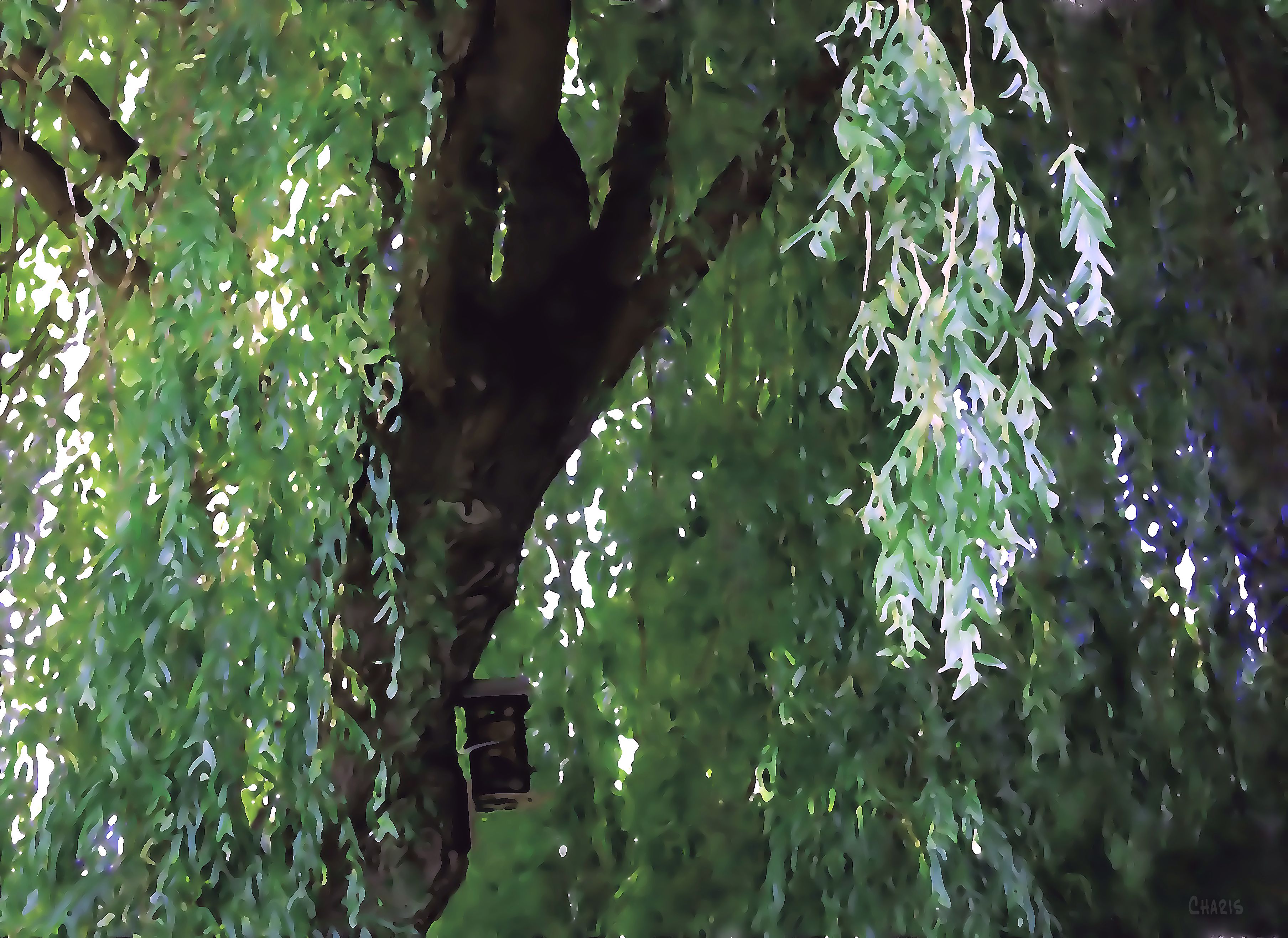
The place where my family vacationed when I was a child is the place where I now live. I remember being amazed by the mountains and tall fir and pine tress with their wonderful scent, but I had seen those before. This is the first place where I remember seeing a weeping willow tree. They don’t grow on the prairies in Canada.
One hot July day, many years ago, while Mom fried potatoes and bacon on the little green Coleman camp stove, and Dad set up the tent, I cooled my feet in the brook that runs through the campground in the center of town. I watched the breeze play with the long trailing branches of the willow trees. They dripped down to the earth like luxuriant overflowing green fountains. On a hot day their shade was satisfying to my soul. I remember declaring out loud, “Someday I am going to live here.”
And now I do.
And I still love weeping willow trees. They remind me of the goodness of God.
For I will pour water on him who is thirsty, And floods on the dry ground; I will pour My Spirit on your descendants, And My blessing on your offspring; They will spring up among the grass Like willows by the watercourses.
There need not be in religion, or music, or art, or love, or goodness, anything that is against reason; but never while the sun shines will we get great religion, or music, or art, or love, or goodness, without going beyond reason.















 Charis: Subject to Change