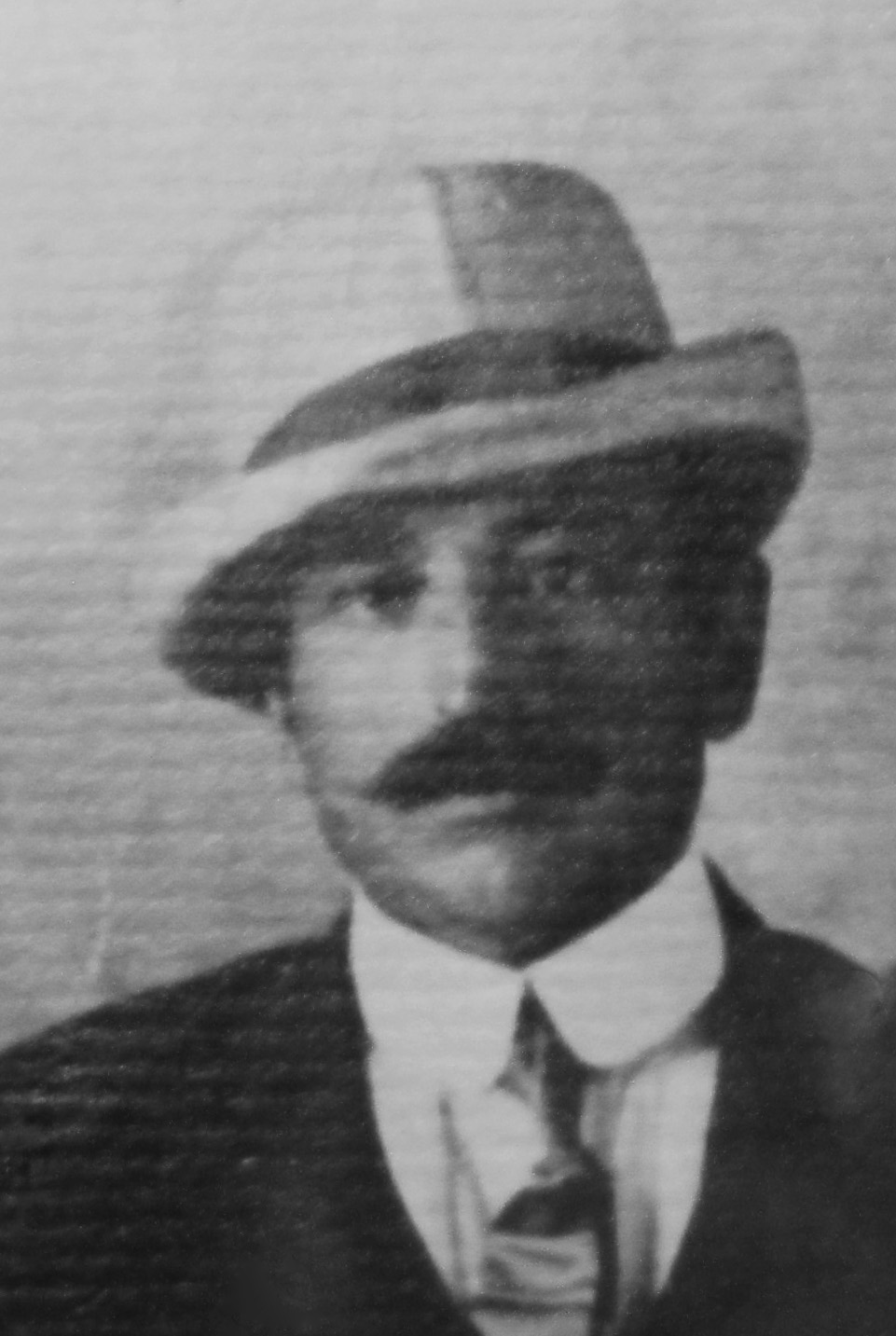
Honouring the Noble Broken Generation

This is a week of remembering. Yesterday would have been my Dad’s birthday. His birthday came at the same time as the end of the school year. There was always a picnic. Today is the anniversary of my Mom’s passing. My husband’s mother also died this time of year. The picnics those years became “refreshments” in hushed community halls instead. It’s a season of contrasts.

I’ve been thinking about our parents’ lives. I am grateful for them and the generation that rose from the ashes of poverty and famine in the 1930’s and World War in the 1940’s. They knew tough times.

Poverty brought poor nutrition and lack of medical care. Poverty meant that when Dad was five-years old two of his siblings died of illnesses easily treat now. Poverty left him as an only child of grieving parents for several years. Grandma told me that one day she found him playing in the dirt. He was burying matchboxes like the boxes they buried his little brother and baby sister in. He would bury them and dig them up repeatedly telling them to wake up.

My Dad was bullied for being the only boy from an English-speaking family in a school where the other children were refugees from persecution in Russia. The family lost the farm after another crop failed and his father became too ill to carry on. As an 18-year-old my father was preparing to go to war when armistice brought an end to conscription. Lots of young men from the area had already died, so he knew what it meant to be sent overseas.

When Mom was five-years old, her mother died. The family could not afford a doctor. They had already lost several children to diphtheria and other childhood diseases. The crops had failed that year and the money-lender took several sacks of what little wheat they had managed to glean to feed the family over the winter. They were also grieving the news from the Red Cross that no friends or family left behind in The Crimea had survived Stalin’s cruelty. In his grief, her father turned to alcohol. Later, my mother and her younger brothers suffered bullying at school for coming from a German-speaking family in a country that was at war with Germany even though their older brother was fighting for the allies in the Netherlands.

My husband’s parents also grew up in harsh environments. His father lived with immigrant parents in a tar-paper shack on a farm during the dust-bowl famine years. He joined the air force when he was old enough and flew reconnaissance in enemy territory at an age when kids now go to college.

My husband’s mother’s house in Rangoon was bombed by the Japanese and she and her mother and sister barely escaped being sent to a concentration camp by fleeing to India. She spent her teen years inside the walls of a compound there because the people on the outside hated her kind. Since she was a biracial child in the East, she lived in fear as she experienced soul-crushing racism from both sides.

Our parents, and many others of that generation, had amazing perseverance, but they also had deep scars. It’s hard not to dismiss the influence of either the noble or the broken side of the previous generation on our generation (or the trickle down effect on the next). We see the good side or the bad. We tend to idolize or denigrate. I don’t think we can properly honour our parents (or grandparents or great grandparents) without acknowledging how far they came in their lifetimes. That means both the acknowledgement of how devastating the circumstances of the times could be on mental health and the acknowledgement of how hard they worked toward building a better future for their children.

By the time they passed, both my parents and my husband’s parents had faith that God loved them. They were trusting Jesus to finish the healing that began here. It will be wonderful when we are all together and we are all completely well.

I honour them and say thank you for having a vision that extended beyond your lifetime. Thank you for your sacrifice.

Peace

“I leave behind with you—peace; I give you my own peace and my gift is nothing like the peace of this world.” – Jesus (in John 14:27, Phillips paraphrase)

Most people think of peace as the absence of hostilities or of war. Even when we talk about personal peace, we often mean the absence of things like annoying interruptions, chaos, lack of resources, or worries that something will interfere with our priorities. I wonder if the peace that Jesus offers is not like that. I wonder if his peace is not the absence of something but the presence of something.

What if peace is more like completeness? What if the peace he left us means having all the tools necessary for a task, or being so convinced that God will provide everything we need that we can not only survive storms, but walk into them with assurance that it’s going to be alright?

What if this perfect peace creates an appreciation of divine priorities. What if this peace that passes understanding comes with complete trust that God loves us and allows us to engage with him in his purposes? What if we become aware of perfect peace flowing through us and allow it to help us to perceive the direction of the wind of the Holy Spirit?

What if the peace that is nothing like the peace of the world means Christ has made more available to us than we ever imagined?

Arise


But all things become visible when they are exposed by the light, for everything that becomes visible is light.  For this reason it says,

“Awake, sleeper,
And arise from the dead,
And Christ will shine on you.

So then, be careful how you walk, not as unwise people but as wise, making the most of your time, because the days are evil. (Ephesians 5:13-15 NASB)

It’s becoming more obvious to many people that we live in perilous times where evil abounds. More people, despite great efforts to remain in the denial that surrounds their personal peace and prosperity like a white picket fence, are waking up. Evidence of evil piling up on street corners and in graves around the world is becoming more difficult to ignore.

Some leaders, trying their best in the face of suffering, can offer only a cruel compassion, with more tools of destruction, with a flip of victim/oppressor roles, or even with medically induced death marketed as a solution.

The scripture doesn’t say “Arise and panic,” or “Arise and shoot back,” or “Arise and declare evil the winner.”  This passage calls the listener to arise from deep sleep and orient to the Light of Christ.

In Isaiah 61 the phrasing is, “Arise, shine; for your light has come, and the glory of the Lord has risen upon you.For behold, darkness will cover the earth and deep darkness the peoples; but the Lord will rise upon you and His glory will appear upon you.

Those who follow the light of Jesus Christ are meant to reflect his light, to be the opposite of darkness. Reflecting more darkness is rather pointless. If, instead of focusing on evil, we focus on Christ we will reflect his beautiful light, the light that seems counterintuitive to our “normal.” We will hear the Holy Spirit’s words of wisdom. Oh, how we need wisdom! Don’t be afraid to ask for wisdom.

But if any of you lacks wisdom, let him ask of God, who gives to all generously and without reproach, and it will be given to him. (James 1:5)

Walk carefully, but walk in the Light.

Creative Meditations for Lent, Prompt word: Arise

The Torch: Be Yours to Hold It High

When I was a young bride far from my family in the days before easy communication, four elderly women who lived together in a heritage house  extended themselves to become family. Rhea and Kathleen, the sisters who inherited the house, showed me how to can fruit, and frame artwork.  They invited us to important events and introduced us to influential people. Dorothy, a retired college principal, recommended excellent books and engaged us in thought-provoking conversations. Mavis, a retired English nanny, became my much-appreciated resource when our first baby was born. I loved these women.

Something made me wonder though. They were outstanding women of character, intelligence, and grace. Old photos showed them as once attractive, fashion-conscious girls and young women. Why were they all single?

Finally, I asked Kathleen, “Did you ever think about getting married?”

“Of course,” she said. “But my young man died in the war.”

“Oh Kathleen! I’m so sorry. I never knew. What was his name?”

“I don’t know,” she shrugged. “He died before I met him.”

She told me this with the mischievousness of someone who had lighted upon an answer that served her well for many years. There was also a sting of truth to it I had not considered before.

Her sister explained, “When we reached the age to consider marriage, we realized many of the young men we had known never came home after the first world war. There was a severe shortage of men. Frankly, neither of us met anyone who shared our interests and passions and we didn’t care to compromise. Between our careers and caring for our parents as they grew older, we filled our time well enough and were content. We learned how to create family in other ways.”

Each Remembrance Day we honour those who fought for freedom from oppression. We sing songs, recite poems, lay wreaths, and invite school children to submit artwork and essays to express thanks to those who served in the military. This year, as I remember the old house and the ladies who showed us how to celebrate each day as a gift, I would like to honour those who bore the heavy burden of war as bereaved parents, widows, fatherless children, and young women whose lovers died before they had a chance to meet. They were the ones who picked up the torch and held it high.

To you from failing hands we throw

    The torch; be yours to hold it high. 

– John McCrae

The Courage to Not Take Up Arms

grandfather hauk 2011 06 24 121

On Remembrance Day, amid all the photos posted on social media of grandfathers who fought in the wars, I would like to honour my grandfather, the deserter. He held some sort of minor rank in the Russian army that allowed him to see early that the Czar was sending troops out horribly under-equipped for war. He sent his men home and fled the country with a price on his head.

Remember that scene in Dr. Zhivago? It’s just drama, of course, but somewhere in there is a story like my grandfather’s.

Twice now I have seen a TV show about ancestry with interviews of famous people who were ashamed to find out their forefathers chose not to join “the Patriots” who won the violent conflict that established the direction their nation took. Instead their great great great grandpappies (or their surviving families) also fled to Canada. The famous peoples’ reactions upon discovering this news puzzled me. In Canada their forefathers’ choices are not a source of shame. They are called United Empire Loyalists. In Canada they are heroes, ancestors who are honoured, not sources of embarrassment.

That’s the way it is with war. Often you can’t tell heroes from villains, loyalists from rebels, patriots from deserters, until the history books are written, and even then it depends on who writes them.

Grandfather’s son grew up to fight in WWII in the Netherlands. Uncle was overwhelmed by their genuine expressions of gratitude when he visited Europe 40 years later. He knew he had done the right thing.

Sometimes courage is fighting for the King or for the President, and sometimes courage is laying down your arms in the midst of a stupid, pointless conflict and dismissing your men, even if it means risking standing in front of a firing squad yourself. The man in the photo spent the rest of his life looking over his shoulder, but he also knew he had done the right thing.

Thank you, Grandfather.