
The best and sweetest flowers of paradise God gives to His people when they are upon their knees. Prayer is the gate of heaven.
– Thomas Brooks


Look, as a painted man is no man, and as painted fire is no fire, so a cold prayer is no prayer. -Thomas Brooks
The Spirit of God not only maintains this hope within us,
but helps us in our present limitations.
For example, we do not know how to pray worthily as sons of God,
but his Spirit within us is actually praying for us
in those agonizing longings which never find words.
And God who knows the heart’s secrets understands, of course,
the Spirit’s intention as he prays for those who love God.
(Romans 8:26-27 Phillips)
Advent begins
Long lay the world, in sin and error pining…
And know this: in the last days, times will be hard. You see, the world will be filled with narcissistic, money-grubbing, pretentious, arrogant, and abusive people. They will rebel against their parents and will be ungrateful, unholy, uncaring, coldhearted, accusing, without restraint, savage, and haters of anything good. Expect them to be treacherous, reckless, swollen with self-importance, and given to loving pleasure more than they love God.
Even though they may look or act like godly people, they’re not.
They deny His power.
I tell you: Stay away from the likes of these.
(2 Timothy 3:1-5)
Apathy is not peace.
Pleasure is not joy.
Control is not order.
Tolerance is not love.
Self-sufficiency is not sufficient.
I ask no other sunshine, than the sunshine of Your face, oh Lord. Oh come, oh come, Emmanuel!
 If we rely on the Holy Spirit, we shall find that our prayers become more and more inarticulate; and when they are inarticulate, reverence grows deeper and deeper. -Oswald Chambers

I was surprised when I first dared to tell people about some of the answers to prayer I have seen. I expected a negative reaction from people whose worldview doesn’t give them a grid for things that don’t fit into an observable/measurable/repeatable frame. Frankly most people who demand evidence will usually dismiss or ignore it when you do go to the trouble of fetching documentation anyway. At best they may grudgingly offer a “not-yet-explained.” Fine. Not my job.
The people who surprised me were the church-type folk or nominal Christians who accepted the possibility of miracles, in theory, but became suddenly angry when told of something way beyond the norm that happened — to someone else. They brought up examples, either personal or involving poor children elsewhere, which ended tragically. One person said, “What kind of God would heal a sick, rich Canadian kid when thousands of poor kids die in third world countries every day?” Then the real issue, “Why did he answer your prayer and not mine? I guess God shows love -but not for me.”
The temptation at this point is to jump in and try to defend God’s reputation.
Not my job.
Who knew God’s love could be so offensive? Millions of words, written by thousands of people more credentialed than I, attempt to address this topic of disappointment with God. I have only three words: I don’t know.
We can say, “It doesn’t hurt to ask,” but yes, sometimes it does. Asking raises the possibility of risking hope and even the Bible says that hope deferred makes the heart sick. One of our greatest fears is the fear of disappointment.
For some reason this week I met several people whose hearts long for a soul mate. Some suffered enormous disappointment when the one who swore to love them abandoned them. Others are tired of being overlooked because they don’t fit society’s ideal standards of beauty, or status, or the mystery “it” factor. A lot of great people can relate to the classic Gershwin song, sung by Eileen Farrell, “They’re playing songs of love -but not for me.”
Now there are some obvious factors that could be blocking romantic love, but when lovely unmarried friends ask, “Why am I still alone when I have prayed and prayed?” I have to say — I don’t know.
I do think God cares more about our character than our comfort, but he is not opposed to giving his children good gifts like health and loving embraces by someone with skin on. To say someone is not receiving an answer because they haven’t cooked up enough faith, or because they have some character flaw he can only fix by throwing something nasty at them, is just cruel, in my opinion. On the other hand, it doesn’t take much faith or hope, or perseverance to look around and see pain or suffering or loneliness or poverty. When I talk about the good things I have seen I am not oblivious to pain and suffering. It does require effort to look at God’s marvelous actions and not be offended by them. It would be easy to sing, “They’re playing songs of miracles –but not for me,” but those kind of thoughts focus only on our pain. They keep us from raising our hopes.
All I can say is that I know God is good and that I have noticed that people who doggedly pursue a relationship with him, believing he is good, who are not offended when he answers someone’s pleas and not their own -but rather who genuinely thank God for his goodness to them, see more of his active intervention in their worlds than those who don’t pick up the broken bits of hope and push through the pain of disappointment to find the treasure beyond the valley of trouble. I realize that talking about things I have seen and experienced may cause some people pain, but I have to give glory to God for what he has done. My intent is to offer hope.
I was struck by Paul’s prayer in Ephesians 3 this week.
I pray that from his glorious, unlimited resources he will empower you with inner strength through his Spirit. Then Christ will make his home in your hearts as you trust in him. Your roots will grow down into God’s love and keep you strong. And may you have the power to understand, as all God’s people should, how wide, how long, how high, and how deep his love is. May you experience the love of Christ, though it is too great to understand fully. Then you will be made complete with all the fullness of life and power that comes from God. (vs. 17-19 NLT)
Jesus admitted he was a stone of offense to some people. It takes strength and power to be able to perceive and receive his love and not be offended by it. He doesn’t play by our rules. He wants relationship. He wants us to ask him the hard questions. We can pound on his chest in our pain and frustration and he won’t love us any less -or any more.
God is still love. May your roots go deep.
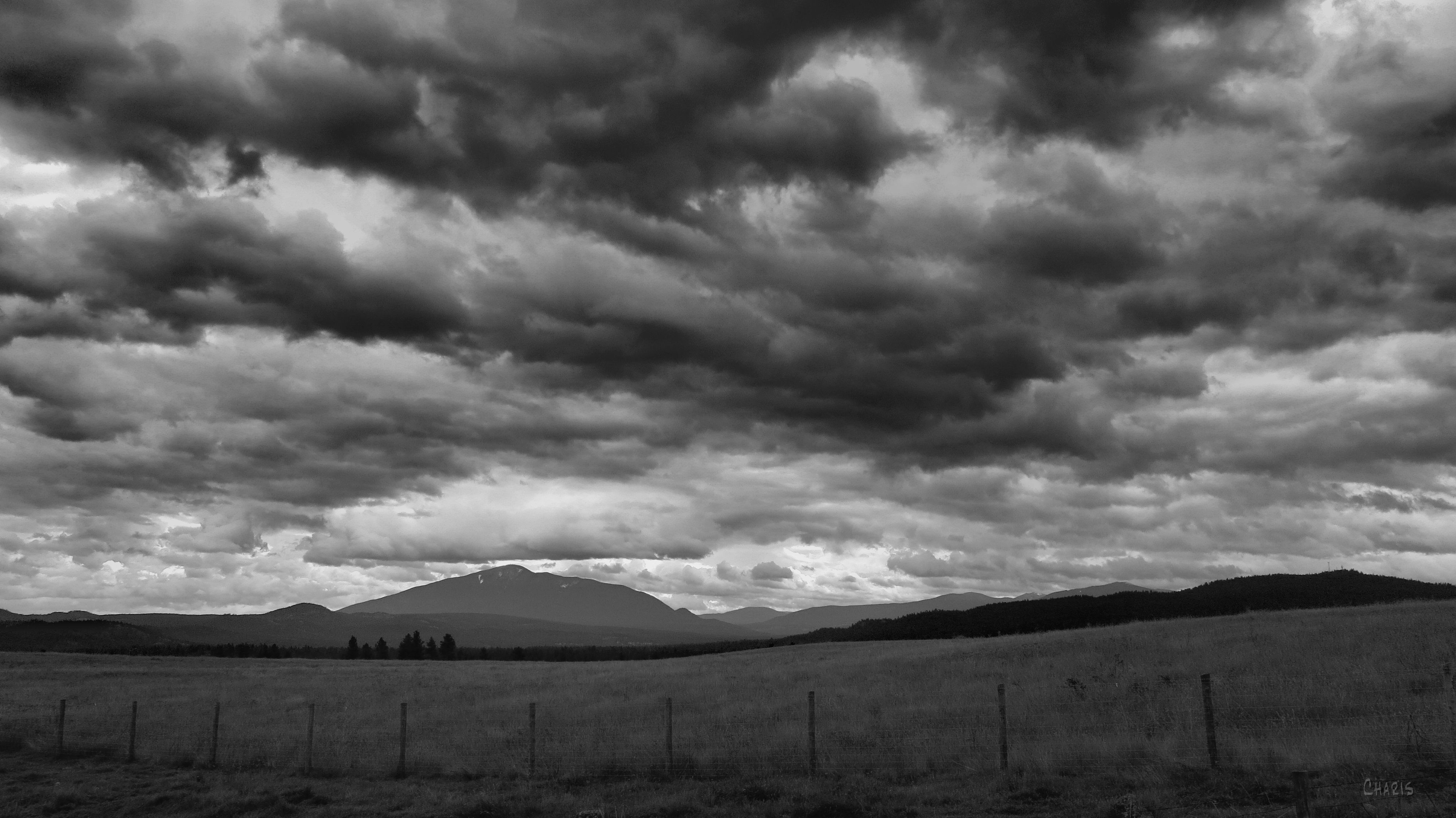
God of our life, there are days when the burdens we carry
chafe our shoulders and weigh us down;
when the road seems dreary and endless,
the skies grey and threatening;
when our lives have no music in them,
and our hearts are lonely,
and our souls have lost their courage.
Flood the path with light,
run our eyes to where the skies are full of promise;
tune our hearts to brave music;
give us the sense of comradeship with heroes and saints of every age;
and so quicken our spirits that we may be able to encourage
the souls of all who journey with us on the road of life,
to Your honour and glory.
-Augustine of Hippo

Since, then, I heard of this faith of yours in the Lord Jesus and the practical way in which you are expressing it towards fellow-Christians, I thank God continually for you and I never give up praying for you; and this is my prayer. That God, the God of our Lord Jesus Christ and the all-glorious Father, will give you spiritual wisdom and the insight to know more of him: that you may receive that inner illumination of the spirit which will make you realise how great is the hope to which he is calling you—the magnificence and splendour of the inheritance promised to Christians—and how tremendous is the power available to us who believe in God.
That power is the same divine power which was demonstrated in Christ when he raised him from the dead and gave him the place of supreme honour in Heaven—a place that is infinitely superior to any conceivable command, authority, power or control, and which carries with it a name far beyond any name that could ever be used in this world or the world to come. (Ephesians 1:15-21 Phillips)
No one has ever accused me of being overly meticulous when it comes to housework. In fact one day I was telling my adult daughter about how, when I was a kid, we used to sit in the station wagon packed with camping equipment waiting up to two hours for mom to wash her way out of the house (because she couldn’t stand the thought of someone seeing anything but a spotless house should she die suddenly and not return from the trip.)
My daughter said, “Mom, if your house is spotless after you die we’ll know for sure someone was tampering with the evidence.”

That’s probably true. But since my house has yet to express gratitude or show any signs of willingness to improve without my constant intervention I do what is necessary and then go get a life.
There are times, however, when lack of attention to detail is definitely a fault. Can I admit fear of the unknown when it comes to plastic storage container caskets of leftover food in the back of the fridge? Sometimes I don’t want to know what’s in there.
“Mom, I think the mystery meat is talking to itself. It seems to be alive,” said my son, “It’s expanding. What is this substance?” he asked gingerly prying off the lid.
My rule is, “If you can’t identify it, don’t eat it.” Seems simple enough.
“Whew!” he exclaimed when the scent of the offensive substance reached his nose. “Sorry, Ma. I’ve gotta throw the whole thing out,” and he tossed the entire container in the garbage can.
I was thinking today (anything to avoid housework) about substance. The Bible says in Hebrews 11:1 that faith is the substance (hypostasis) of things hoped for, the evidence of things not seen.
Hmmm… Could it be that unbelief is not merely a lack of faith but also a substance itself, an offensive substance, the evidence of disappointing things seen (or smelled)?
A young man told me about a vision he had driving toward a city on the prairies. He said it was so real he had to ask his wife to grab the wheel. What he described (as nearly as I recall) was something like this: He saw a dull golden coloured metal dome over the city. In the center was a hole with something like incense or smoke or a ray of hazy light rising up through the hole. Then he saw objects, some of them wrapped in lovely paper, some of them with bows, some of them too big for decoration, coming down from the sky and landing on top of the dome but not going through it.
He said he understood the smoke/ray going up to represent prayer and the things coming down to be answers to those prayers but this dome was stopping them from reaching the place where people lived. I asked him if the dome was brass coloured. He said it could have been.
“Have you ever heard people say that when they pray it feels like the heavens are made of brass and God doesn’t answer them?” It clicked with him.
Today I wonder if that brass ceiling is made up of the substance of unbelief. I wonder if unbelief can clog the pipes, block off God’s still small voice, or rust the valves shut against his goodness. I wonder if unbelief is more than a dearth of faith, but almost like an entity that stands in opposition to faith.
One time when Jesus was in Nazareth he apparently did few miracles there “because of their unbelief.”
And they took offense at him. But Jesus said to them, “A prophet is not without honor except in his hometown and in his own household.” And he did not do many mighty works there, because of their unbelief. (Matthew 13:57, 58)

I’ve always wondered about that. If Jesus was God could he simply not blast through the unbelief and give the townsfolk an I’ll-show-them? Could it be that it is not a merely lack of faith that hindered what he wanted to do, but this thing unbelief, this substance, this entity, that somehow kept people from receiving what he wanted to give them? What they saw was not the Messiah, but the carpenter’s son from the ‘hood. Could unbelief be the substance of things seen by mere physical eyes –things which caused them to take offense that he would have the audacity to think he was better than them and work miracles?

I was also wondering why giving thanks and worshiping is so strongly connected to prayer.
Do not be anxious about anything, but in everything by prayer and supplication with thanksgiving let your requests be made known to God. (Philippians 4:6 for example)
Before this year of challenges the Lord spoke to me a lot about not being hard-hearted as at Meribah (when the children of Israel tested God in the wilderness.) They forgot what he had done for them. They complained and neglected to give thanks for the fact that he miraculously supplied daily bread (manna) and that their clothes and shoes never wore out.
They felt entitled. Then they felt offended.
There is a connection between unbelief and being hard-hearted and unable to receive. Afterward he appeared to the eleven themselves as they were reclining at table, and he rebuked them for their unbelief and hardness of heart, because they had not believed those who saw him after he had risen. (Mark 16:14)
We are just now learning that when our son-in-love was critically ill the people who had the most problem praying for him, and who admit they never phoned or talked to his wife because they “knew” he was bleeding out and was going to die, were some of the medical professionals amongst friends and family. They were too familiar with the evidence seen and had watched this scenario play out too many times before. It must be very hard for them to get up and go to work everyday when they live with so many sad stories of disappointment and loss. It must be difficult for them not to steel themselves against all that pain. But some prayed anyway, telling God, “I believe. Help me with my unbelief.”
And God was good –so good. Our son-in-love is in excellent health, back at work, back playing with his children, and praising the Lord for his infinite mercy. Our daughter continues to teach us why thankfulness is essential in prayer. The evidence of her faith in the unseen is now seen –the glory of God made manifest- in her beloved partner’s restored body and her restored family and restored faith for so many who joined in prayer for him.
(Can I just say another thank You, thank You, thank You, Lord!!! here?)
We are taught in our culture to make choices from a list of evidence-based options, but we tend to forget the evidence of every-day provision of God. Lack of gratitude leads to a sense of entitlement. Thankfulness makes us take our eyes off the lack of water in the desert and reminds us that the God who parted the sea and gives us bread and shoes will surely supply all our needs. He got us this far. It’s obviously not his desire for us to shrivel up and blow away now. When freely and joyfully we give thanks (and sometimes for answers to others people’s prayers before we have seen our own answered) I think it starts to break down that steely hardness of heart. When we are offended a tough layer of unbelief goes back up between us and God’s goodness again.
When we tell God stories (testimonies) and thank God and remind each other how He rescued us from the last cliff-hanger, when we remember his goodness, we remember and recognize blessings – evidence of the unseen. When we praise God we focus on Him and his nature. Could this be the faith that shatters the brass ceiling of unbelief and allows the answers to prayer piling up there to start to drop on our heads? Could this be what helps to unclog the gunk-jammed pipes that keeps His goodness from flowing into our lives?
I wonder if our Western naturalistic worldview, the one that tells us that God doesn’t intervene, that miracles don’t happen (or at least not anymore) and that there must be an explanation for the unexplained somewhere – even when a miracle is dropped in our lap – I wonder if this creates a brass ceiling over our country. I wonder if years of rehearsing the stories of our disappointments and unforgiven injustices allows the substance of unbelief to molder away and grow into a a foul-smelling entity like the mystery meat in the fridge. I wonder if it clogs the pipes that would bring fresh water of revival? I wonder if it’s like rust that keeps the valves shut tight and unable to receive the flow of the Holy Spirit?
I wonder if the massive prayer effort on behalf of one ordinary man in a small city hospital in Canada was a gift to us to demonstrate the type of corporate effort of prayer with thanksgiving it takes to break through large-scale unbelief?
It seems to me the more impossible a situation looks, the more we need to make the effort to give thanks for everything we can think of. I wonder if instead of pooling our unbelief, we put our tiny portions of faith together and pray, giving thanks for everything –I mean absolutely everything- that the Lord has blessed us with…
At the end of the young man’s vision, he saw the dome crack, then break, and all the good things piled up there start to fall on the city. Breakthrough.
I wonder if prayer with thanksgiving might bring down that offensive substance that forms brass ceilings and open the floodgates of heaven.
I wonder.


Oh, send out Your light and Your truth!
Let them lead me;
Let them bring me to Your holy hill
(Psalm 43:3)




 Charis: Subject to Change