
Grace is the offer of God’s ceaseless presence and irrational love that cannot be stopped.
-John Ortberg

Grace is the offer of God’s ceaseless presence and irrational love that cannot be stopped.
-John Ortberg

Foster Daughter
Sadie tied her hair with twine;
Helen wore high heels in a snow storm.
Sadie whistled to the birds in the willow tree;
Helen bought a budgie at Simpson Sears.
Sadie sat on a stump scraping hides with a blade;
Helen sat on a lawn chair spraying the grass with Raid.
Helen placed rose-shaped soaps on the toilet tank;
Sadie hung rusty traps on the kitchen door.
Helen served eclairs for tea;
Sadie served Spam for dinner.
Helen read Chekhov and Dickens to me;
Sadie asked me to read the mail to her.
And now, my two mothers,
I sit here on the steps,
jewelled watch on my wrist,
beaded moccasins on my feet,
and wonder who I am.
I wrote this poem after fostering several children from Indigenous families. Some were “status” and some were not, even though they were half-siblings. I wondered what this move back and forth between cultures was like for them.
But this was also my own experience. When people read this poem they assume “Helen” was the foster mother. In my case, “Sadie” was more like the substitute mother I spent the most time with. My mother alternated between working long hours and recovering from frequent illness. I went to live with my grandmother as an infant before my mother was released from the hospital and I bonded with her. Grandma was my main caretaker in early childhood and after I started school our extended multi-generational family lived together until I was 16.
Grandma grew up in the area now known as Algonquin Park, miles from the nearest road. Her formal education ended when the school burned down after she attended sporadically for two or three years. Reading remained a struggle for the rest of her life.
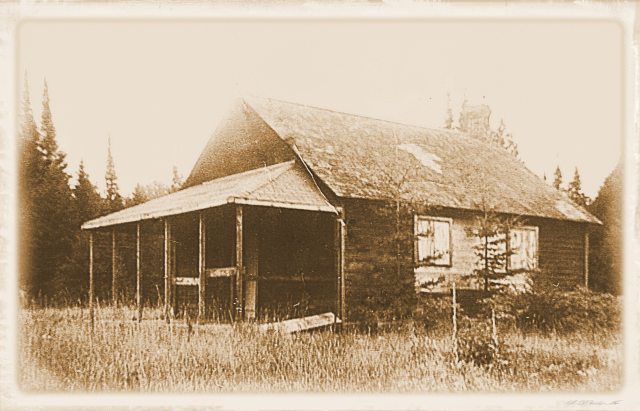
Her father hunted and trapped to support his family. He met her mother in an aboriginal village. We always assumed she was of indigenous extraction. Great Grandma taught my grandmother how to live off of the land, the importance of community and imparted to her a deep reverence and connection with creation.
My father told me stories of how his grandmother chewed hide to make moccasins for all her grandchildren, how she was a crack shot, and how she knew every plant and every sound in the forest. She raised ten children to adulthood without access to modern medicine, relying on herbs, raw honey, and prayer.
Dad learned that her father, a logger who spent months in the bush himself, abandoned her after her mother died. She was sent to live with a foster family in New York who treated her, as many unclaimed children were treated in those days, as a slave. She slept in the barn and did chores instead of attending school with the other children. She never did learn to read.
Ethel didn’t talk much about her early childhood, but something about her mistreatment prompted her to take the risk of running away. With only her dog as a companion, she set out to look for her father. All she knew was that he lived in northern Ontario.
She must have been a resourceful kid because she lived for several months on her own in the northern woods before some Algonkin people found her, took her in and raised her as one of their own. Eventually, when she was a young woman, she met my grandfather when he came into the camp carrying a buck over his shoulders to share. His size, strength, and generosity impressed her. She left with him, but the ties to the community remained and their way of thinking and doing life was passed on to the woman who shared in raising me.
On a whim, I searched for Great Grandmother’s birthplace when I was labeling old photos for my father. I was shocked to learn that not only was she entirely white, but she was a descendant of American royalty – the first Pilgrims in Massachusetts. I’m not part native Canadian after all. My straight dark hair and high cheek bones came from elsewhere, but I still have a deep love and respect for Indigenous people and the role they played in our family history.
I wonder if Canadians are less prone to put more weight on individual concerns than community concerns than American culture does because of the stronger positive influence of indigenous connection in early days. It made no sense whatsoever to my grandmother or great grandmother to see perfectly good food thrown away when people were hungry, for example. It would be like one person feasting alone after a successful hunt while hungry villagers looked on. In a harsh environment, community is essential to survival. It’s called caring.
Grandma felt the same way about possessions. She never understood why everyone on the block needed to own a ladder when she never saw more than one person at a time using a ladder. She just helped herself to “the” ladder when she needed it. The fact that it was stored in the neighbour’s garage turned out to be problematic – more for the neighbour than Grandma. She had no problem with friends and neighbours using whatever she had and didn’t understand why they were so stingy. She was incredibly generous and sheltered anyone who needed help. Her boarding house in Calgary became a community itself.
I think Grandma could hear the trees weep and the rivers wail when short-sighted resource-gathering practices hurt them. Even when she was in her 80s she begged my dad to set up his trailer in the middle of nowhere so she could revive herself in nature on a solo retreat. He argued it wasn’t safe, so she went to work as a camp counselor instead.
One day she taught her cabin of girls how to track by circling around and following the search and rescue people who had been sent out to look for them when they failed to return on time. “On time” was another problem. She was as likely to show up hours early as hours late.
My mother was definitely European. She was accustomed to excelling in competitive environments and creating order out of chaos. Grandma thrived in let-it-be chaos. In fact, she was often the source of it.
Growing up with two mothers who thought differently and had different priorities and values confused me at times, but I learned early there is more than one way to perceive a situation and that love overcomes a multitude of misunderstandings so people can honour each other’s strengths and live in harmony. I am richer for that inheritance.
Today on National Aboriginal Day (and soon to be known as Indigenous People’s Day) I thank the First Nations people who fostered my disadvantaged grandmother and enriched my life as a result. You laid stepping stones for us all and I am grateful.

Some days you win by standing, not by advancing. Some days your endurance is your victory because to overcome through endurance means that you get to make the enemy weary. You get to give him a heavy heart. You get to make him tired. You get to make him depressed. You get to overcome him just by standing and just by looking into the face of Jesus. That’s a priceless victory right there!
-Graham Cooke(from The Way Of The Warrior [Studio Version])

True worship doesn’t put on a show or make a fuss; true worship isn’t forced, isn’t half-hearted, doesn’t keep looking at its watch, doesn’t worry what the person in the next pew is doing. True worship is open to God, adoring God, waiting for God, trusting God even in the dark.
-N. T. Wright

“This is all that I’ve known for certain, that God is love. Even if I have been mistaken on this or that point: God is nevertheless love.”
– Soren Kierkegaard

You called
You cried
You shattered my deafness
You sparkled
You blazed
You drove away my blindness
You shed Your fragrance
and I drew in my breath
I pant for You
-St. Augustine

I will gladly rejoice because of Your gracious love
because You recognized the sadness of my affliction.
You felt deep compassion when You saw the pains of my soul.
You did not hand me over to the enemy,
but instead, You liberated me
and made me secure in a good and spacious land.
(Psalm 31:7-8 The Voice)
There’s a difference between sympathy and compassion.
Sympathy says, “Aw, you poor thing. That’s too bad. You really have it hard. But I guess it is what it is.”
Compassion says, “I see your pain. I know it’s hard, but I will walk with you until you see “the instead.”
Jesus Christ goes beyond powerless sympathy. He has suffered everything we have and knows what it feels like, but he goes beyond sympathy to compassion that brings us into wide open meadows of freedom.
He came to set the captives free, not to merely sympathize with their pain.

At the beginning God expressed himself.
That personal expression, that word, was with God, and was God, and he existed with God from the beginning.
All creation took place through him, and none took place without him.
In him appeared life and this life was the light of mankind.
The light still shines in the darkness
and the darkness has never put it out.
(John 1:1-5 Phillips)
I’ve heard that glory is however God chooses to express himself.
When the light of Jesus shines in dark places, when forgotten dreams and shattered hopes spring to life, when love flickers in a heart grown cold, when the beauty of creation glows in unexpected places, he is showing us his glory.

Ideas have consequences. What we truly believe plays out in action when our guard is down. Finding out we have some shifting sand foundations is an unsettling feeling, but I have discovered that when the Lord points out areas of wonky thinking he makes provisions ahead of my questions — and he has something to do with the circumstances that make me frustrated enough to ask questions.
The recent frustration that has pushed me to examine my thinking is my lack of self-discipline, or self-control. I call myself a divergent thinker. I’m usually reading a dozen books and working on a dozen projects simultaneously. I like collecting clues and making connections, but I have a hard time getting things done. If I was organized enough to run a business I could call it Rabbit Trails Are Us.
 I’ve been learning about the fruit of the Spirit: love, joy, peace, patience, kindness, goodness, faithfulness, gentleness, and self-control. One of the big clues that these are virtues that characterize the Holy Spirit’s interactions with us and come from God is Jesus’ statement that the peace he gives is different from the peace we try to make ourselves.
“Peace I leave with you; My peace I give to you; not as the world gives do I give to you. Do not let your heart be troubled, nor let it be fearful.” (John 14:27)
I came to the horrible realization years ago that, on my own, I am incapable of loving some people. Tried. Tried hard. Can’t do it. Years of depression taught me that I cannot pull myself up by my bootstraps and fake joy for more than a few hours. And peace? I could talk about peace, but many 3:30 a.m. wide-eyed ruminating sessions proved I didn’t have a grasp on that either. The same for the rest of the list.
That’s depressing. I went into a major funk. What kind of Christian was I if I couldn’t be a great witness to people with my superior behaviour as a major selling point? (Being just a bit sarcastic here.) I was sure God needed to fire me from his P.R. team. Then I was afraid he would, so I scraped up some willpower and self control and got up to do the stuff again.
Willpower works – until I’m tired, or hungry, or in pain, or angry, or bored, or feeling guilty, then willpower is not sufficient.
I was raised in an evangelical tradition where the will seemed to be the only aspect of the soul that escaped being tainted by the fall. Will-oriented verbs featured largely in every sermon application: decide, determine, choose, act, achieve, purpose, volunteer, engage, carry out, serve, and do. Do, do, do. “Faith without works is dead,” I heard over and over. (Somehow the fact that works without faith is as winsome as last week’s leftover potluck casserole was overlooked.)
The other side of the discussion came in the form of don’t, don’t, don’t. The don’ts, spoken and unspoken, loomed as large as a dirty snow avalanche bearing down on people who are constantly reminded they are sinners. We placed fences around fences in an effort to avoid that which we thought we were powerless, as sinners, to consistently resist. We apologized a lot, then flagellated ourselves emotionally in the self-punishing guise of self-discipline.
 The Lord has been teaching me that it is possible to love others because He loved us first. When we know we are the recipients of his love, and that there is plenty more where that came from, we can start to give out of the abundance the Holy Spirit pours into us.
This has been a huge revelation to me. The fruit of the Spirit is His joy, His peace, His faithfulness, His kindness etc. We cannot give what we have not received. But we do need to open our hearts to all He has for us.
So far, so good. Then I got to the fruit at the end of the list: self-control. Everything came to a screeching halt. Suddenly I felt responsible for producing this fruit in my life via willpower and following rules again.
This doesn’t make sense. It’s frustrating! And frustration forces me to ask questions.
I searched for articles on self-control. Most of them talk about saying no to lust for sex or lust for sleep or lust for brownies. Seriously. Brownies – especially fudge brownies– seem to be the greatest temptation North American evangelicals are willing to admit they face.
A recent article in a popular publication talked about the science of saying no and the means to work with willpower weakened by excessive demand. The author suggested techniques to develop better habits, thus lowering stress on the willpower muscle. That’s useful information if the problem is failure to exercise or resist the urge to eat too many – you guessed it – brownies.
Of course, we need to learn the benefits of delayed gratification, healthy habits and consideration of others. This is the kind of self-control we dearly hope our kids have picked up by the time they leave home. It’s the kind of self-control we demand other drivers display. This is also the kind of self-discipline that can be natural to some personality types (often first manifesting as stubbornness or even OCD). But still, I wonder. The fruit of the Spirit has got to be more than something available to anyone determined to put in effort.
I looked up the Greek word in Galatians 5:23. Enkrateia. The root, krat, is found in demokratia (democracy) meaning “government by the people.” Akrasia means chaos, a disorganized leaderless mess. Kratos means power or strength or dominion and in the scripture nearly always refers to a characteristic of God.
Be strong in the Lord and in the power (kratos) of His great might. (Ephesians 6:10)
Enkrateia means self-governance. Governing is about being in the position to make wise choices in the best interests of the governor’s charge, in this case, oneself.
Greek philosophers used the word in the context of having authority or power to choose well. That’s when I began to see it differently. What if the self-control of the fruit of the Spirit is not about the obligation to say no to all the things we have been told are bad or could be the first step on a slippery slope that will dump our sorry backsides in perdition? What if self-control, enkrateia, is supernatural empowerment to choose well, beyond the natural ability one might expect?
 The Bible says we were formerly slaves to sin. (Romans 6) When Christ lives in us he empowers us with His enkrateia – his authority, power, and strength to govern ourselves well, to make good choices based on love. It’s a manifestation of freedom!
What if self-control is not about concentrating on saying no to sin?
What if self-control is about shifting our concentration from what we do not want to do to realizing we are now empowered to see better alternative choices?
What if self-control is about having our eyes opened to possibilities and opportunities to express his goodness, his kindness, his gentleness, his faithfulness, or his love by saying yes?
What if self-control is all about saying no to both depressing slavery to sin and oppressive rule-keeping by saying yes to delight in the majesty of God?

Therefore do not let sin reign in your mortal body so that you obey its lusts, and do not go on presenting the members of your body to sin as instruments of unrighteousness; but present yourselves to God as those alive from the dead, and your members as instruments of righteousness to God. For sin shall not be master over you, for you are not under law but under grace. (Romans 6:12-14 NAS)

Compared to all his delights, last week’s mouldy hamburger and macaroni casserole looks like a woefully sad choice.
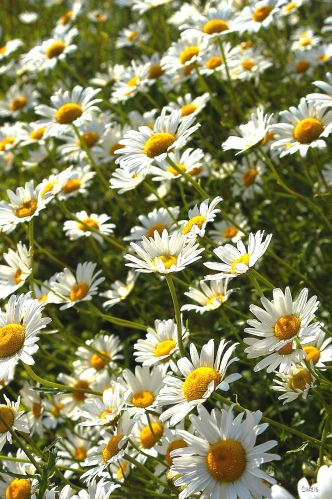
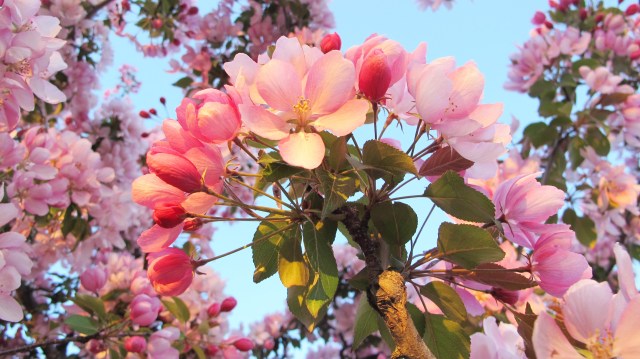
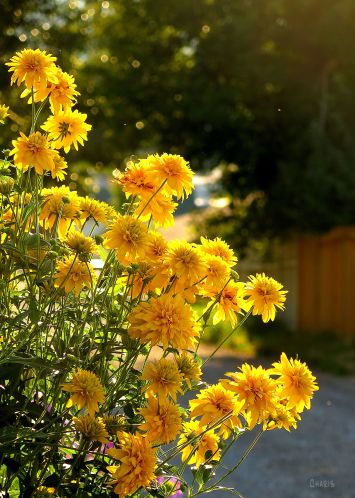
I’m including photos that remind me of the abundance of God’s goodness today. I am choosing, with the authority he has given me to choose, to see self-control in the context of an abundance of beauty symbolizing his grace upon grace upon grace.



 Charis: Subject to Change