
Woot! Woot!
*Now get outta my way, let me praise my Jesus! Get outta my way! If I don’t praise him the rocks are gonna cry out, “Glory and Honour! Glory and Honour! I ain’t got time to die.*
–American Spiritual

Woot! Woot!
*Now get outta my way, let me praise my Jesus! Get outta my way! If I don’t praise him the rocks are gonna cry out, “Glory and Honour! Glory and Honour! I ain’t got time to die.*
–American Spiritual

Mourning
I cry, Oh God! Oh Christ! Oh Jesus!
Where are you when the ones who say
they speak for you –those who squeeze us,
press in on every side, demand
that we respect authority,
obey their rules, come (cash in hand)
to hear their words, as only they
have got the regulations straight at last?
Where are you when the weak are hurt,
aggrieved and stumbled in your name?
Don’t you see what they have passed?
I sit entangled with the chords
of bitterness around my feet.
A plant blows over on the boards
that fence me off from outside world.
The petals scatter on the grass
and now the gust of wind that swirled
their frail wings in electric air
becomes a greater blast of rage
that showers ashes in my hair.
Flash tears the sky –breath rent apart,
and splits the veil of one who mourns,
with lightning striking to the heart.
Deep groaning rolls across the vale
from craggy peak to worn down ridge
and rains pours down –beats down in hail.
The sun withdraws beneath a cloud.
and saplings hang their weeping heads
as thunder rails against the proud,
who dare to claim the earth their own,
–and in the woods from hill to hill
creation echoes back the moan.
My tears obscure the sky from view.
Oh God! I cry. God! Where are you?
My child, I hear. I weep with you.
(written during the struggle)

And Forgive Us our Debts
Nothing left to give.
Look into my empty sack,
my empty jar.
See my cold black torch.
How am I to live?
I cannot pay back what I owe
‘til I get payback for my lack.
And they took it.
They squandered it.
They spent my joy on riots.
They spent my innocence on games.
They threw my peace on the bonfire
and danced around it.
Let go
I’ve squeezed my eyes until they bled,
I’ve held my breath
until my heart pounded on death’s door —
still I cannot disappear
into the disheveled dirt bed
And here you are
–and you want more.
How dare you?
How dare you, God?
How dare you?
How dare you shove
your saber hand into my chest
and divide spent spirit from sullied soul
to reach the hissing python.
Let go
I can’t let go!
It’s only anger —
it’s only hate
that coiled around my crooked spine
enables me to stand up straight
and curse them!
Let go
Aren’t you gentle Jesus
meek and mild?
Go take your love to some purer child.
And stop that!
You’re hurting me!
Let go
They poached my song!
They caught my rhyme!
They raped my soul!
They took my time!
They grabbed my mind
and jammed it on a fearsome pike –as a warning.
They took my gates forever.
I’ve damned the light
and sealed the sash
with dark green plastic meant for trash.
What good are thickened walls of stone
when the door’s been burned to ash.
Let go
The bill’s right here;
I have kept track.
My hands will tighten ‘round their necks.
My hands are strong —
they’ll not be slack
‘til I get everything I lack.
Give it back!
Give it back!
Give it back!
Let go
You let go!
I’m offended by this “loving hand”
that feels more like a gunshot wound.
Let go
I can’t let go!
I won’t let go!
I don’t want to let go!
They owe me!
Let go
Help me.
Let go
You know if I let go it will kill me.
I know
It’s hard.
I can’t fill your hands until you empty them.
Who is going to help me?
I am.
(This poem was written about one of the toughest steps in healing from chronic depression –forgiveness. To me forgiveness is about letting go of legitimate debts owed me and allowing God to supply my needs.)
Someone asked me recently, “What is the difference between heartache and depression?” Having known both I could answer, “Heartache causes you to cry out, in your pain, to the God of hope; depression causes you to lose sight of hope.”
I do not believe that humankind faces any greater pain than the loss of hope. I’ve had a lot of painful physical problems in my life, but none so bad that I wanted to die just so the pain would stop. Depression made me want to die.
I was familiar with the sense that the dark clouds were again descending and feeling helpless to stop the storm that sucked all the colour out of my life. If you understand what I mean by this, I urge you to keep your eyes on the sliver of light on the horizon, and when it disappears, to cling by faith to the memory and certain hope that light is indeed still there and will again arise in the dark. And if that fails, cling to someone who can carry faith for you.
 The psalmist understood this pain.
As a deer longs for streams of water,
so I long for You, God.
I thirst for God, the living God.
When can I come and appear before God?
My tears have been my food day and night,
while all day long people say to me,
“Where is your God?”
I remember this as I pour out my heart:
how I walked with many,
leading the festive procession to the house of God,
with joyful and thankful shouts.
Why am I so depressed?
Why this turmoil within me?
Put your hope in God, for I will still praise Him,
my Savior and my God.
I am deeply depressed;
therefore I remember You from the land of Jordan
and the peaks of Hermon, from Mount Mizar.
Deep calls to deep in the roar of Your waterfalls;
all Your breakers and Your billows have swept over me.
The LORD will send His faithful love by day;
His song will be with me in the night—
a prayer to the God of my life.
I will say to God, my rock,
“Why have You forgotten me?
Why must I go about in sorrow
because of the enemy’s oppression?”
My adversaries taunt me,
as if crushing my bones,
while all day long they say to me,
“Where is your God?”
Why am I so depressed?
Why this turmoil within me?
Put your hope in God, for I will still praise Him,
my Savior and my God. –Psalm 42
There is no pain or humiliation that Jesus does not understand.
There is hope! After 40 years of seeing that darkness descend again and again I am finally free. I am so happy -yes happy- to be alive! The God of hope is faithful to his promises. He is so good! He is so very, very good and I praise him with all my joyful heart!
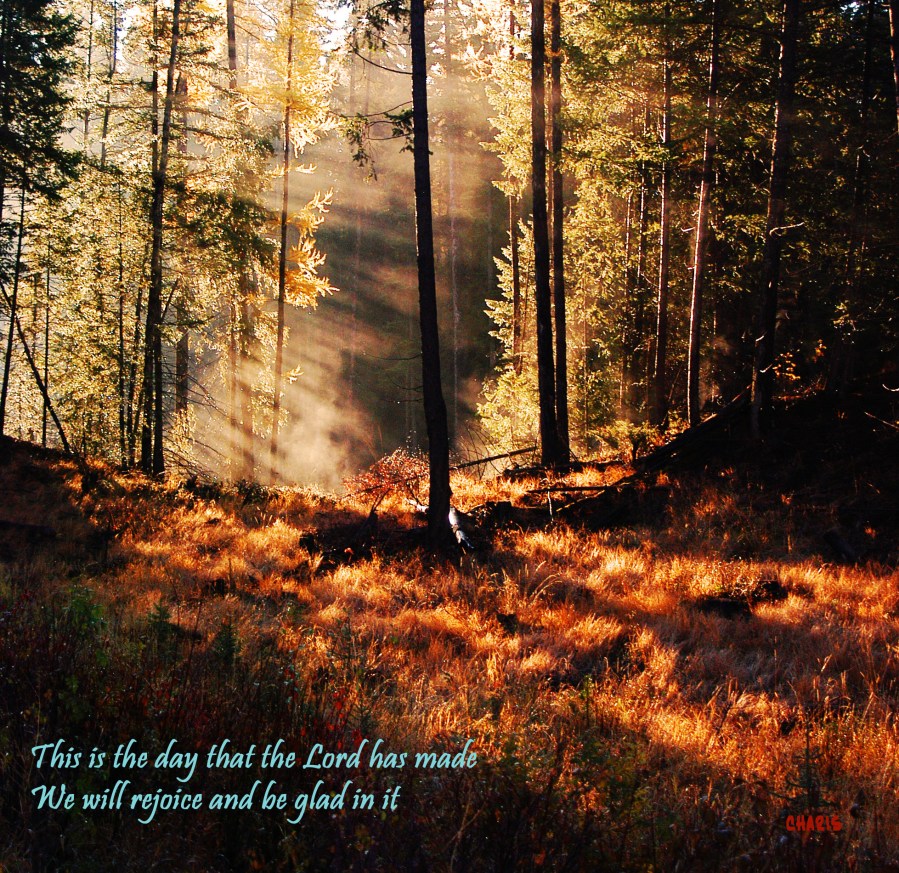
We frail humans are at one time capable of the greatest good and, at the same time, capable of the greatest evil. Change will only come about when each of us takes up the daily struggle ourselves to be more forgiving, compassionate, loving, and above all joyful in the knowledge that, by some miracle of grace, we can change as those around us can change too.
-Mairead Maguire

I hope to keep this blog a bash-free zone, not that it comes easily to me. Change will require effort. I have been known to wield an acid pen and in the past have taken far too much delight in humour that comes at the expense of another’s dignity. Sorry ‘bout that.
I just read this: Now if you feel inclined to set yourself up as a judge of those who sin, let me assure you, whoever you are, that you are in no position to do so. For at whatever point you condemn others you automatically condemn yourself, since you, the judge, commit the same sins. God’s judgment, we know, is utterly impartial in its action against such evil-doers. What makes you think that you who so readily judge the sins of others, can consider yourself beyond the judgment of God? Are you, perhaps, misinterpreting God’s generosity and patient mercy towards you as weakness on his part? Don’t you realise that God’s kindness is meant to lead you to repentance? (Romans 2 Phillips translation.)
I do believe we all harbour bash-worthy thoughts and practices in our lives. I also think that most of us are perfectly aware of them. We can make excuses and try to camouflage them from ourselves for a while, but when the spirit of stupid takes up residence in our lives it produces a mound of garbage no amount of room deodorizer can disguise.
There is a difference between offering critique and being critical (“helpful” or otherwise). One is requested and delivered in private with respect by a person who has proven themselves to be trustworthy; the other slops all over the place. Proper loving critique improves, encourages and builds one up. Judgmental criticism is published on Facebook and blogs, broadcast in the media, gossiped at coffee shops, preached from the pulpit and whined at the breakfast table. Condemning judgment (as opposed to wise discernment or encouraging assessment) effectively hits every target but the intended one. (We all know “open letters” are read by everyone except the person to whom they are addressed.) Frequently the purpose of such judgment is to dismiss or even eliminate perceived competition.
Strangely the very issues that trigger our pontifications are often the same besetting temptations we shove back in the closet. You know it is the kid who inherited your own character flaws who most drives you up the wall. When we attempt to parent the whole world those same weaknesses fuel our urge to flame. When momma taught us the dangers of playing with word matches, the fascination with that power didn’t disappear for many of us; we just blow-torched the personal refuse bin of someone at a distance instead.
The problem is that fire spreads.
Chapter three of James says: The human tongue is physically small, but what tremendous effects it can boast of! A whole forest can be set ablaze by a tiny spark of fire, and the tongue is as dangerous as any fire, with vast potentialities for evil. It can poison the whole body, it can make the whole of life a blazing hell.
Yes, but what if somebody on the internet is wrong?
Have they asked to be set right? Are you in authority over them? Then they’re probably not listening anyway.
It was God’s kindness that drew me to him. Years of striving and putting in my best efforts and failing to follow even my own moral code led to discouragement. His loving kindness led to encouragement. He poured into me the courage to go on when all I wanted to do was quit. He knows the plans he has for me.
I like the lyrics from Stuart Townend’s song:
Come all you vagabonds,
Come all you ‘don’t belongs’
Winners and losers,
Come, people like me.
Come all you travelers
Tired from the journey,
Come wait a while, stay a while,
Welcome you’ll be.
Come all you questioners,
Looking for answers
And searching for reasons
And sense in it all;
Come all you fallen,
And come all you broken,
Find strength for your body
And food for your soul.
Come those who worry
‘Bout houses and money,
And all those who don’t have
A care in the world;
From every station
And orientation,
The helpless, the hopeless,
The young and the old.
Come all believers
And dreamers and schemers,
And come all you restless
Just searching for home;
Movers and shakers
And givers and takers,
The happy, the sad
And the lost and alone.
Come self-sufficient
With wearied ambition,
And come those who feel
At the end of the road.
Fiery debaters
And religion haters,
Accusers, abusers,
The hurt and ignored.
Come to the feast,
There is room at the table.
Come let us meet in this place
With the King of all kindness
Who welcomes us in
With the wonder of love,
And the power of grace.
The Woman at the Well
My soul longs for you as a parched land.
The memory of honeyed smiles crumbled
and caught by the wind of too-many-words
has scattered among the freeze-dried roses.
Dust fountains, flowing with artificial love
choke the living well,
and like the foreign woman
I have poured buckets of dirt into cracked clay pots.
Sir, give me this water,
this living water,
that I might not have to
come here again
to lower my craving
into the dark well
alone.

Jesus often chose to reveal profound truths about himself to women first. He ignored a lot of cultural taboos. The revelation of his true identity to a lone woman at a well in Samaria is one example. I’ve heard so many sermons about this woman and her five husbands and the one she was shacked up with who was not her husband. Across the centuries she is still judged as being promiscuous -and probably seductive.
I knew a woman who had been married five times. I admit to some curiosity as to how she managed to snag five men when I had lovely, talented, caring, single friends in their forties and fifties who had not yet managed to snag one.
Then I met her fifth.
Well, let’s just say anyone could catch one of those. Most people with sense would have taken him off the hook and thrown him back in.
The thing about the cultural norms Jesus was defying is that they were different from many of ours. We don’t realize how revolutionary his relationships with women were unless we understand how disrespected and powerless they were in that place, at that time. Women could not choose to divorce. Men chose to divorce. A provision for divorce was made in the Jewish law so a rejected woman would not starve. A divorce allowed another man to claim her as property so she wouldn’t languish in poverty like many widows in India used to, for example.
If the woman at the well had five husbands and another guy, it’s because she was either widowed or rejected five times. The most common cause for rejection was sterility, a source of shame in a place where women were treated like cattle. The likely reason for her to be at the well alone in the heat of the day was not that others considered her a tart, but that she considered herself as damaged, rejected goods. The guy who was not even her husband was probably at the end of a line of very poor options.
Her astounding boldness demonstrated by running back into the town to tell everyone about the man who told her everything about her life at her Messiah encounter speaks of the change of identity Jesus is able to impart. He is not unaware of our reality; he does not reject us for it, but he offers us a better one.
Encounters with Jesus, the real Jesus, the living water, cause us to see ourselves differently. When we understand who he sees us to be, we can leave the craving for identity behind, run in new freedom and make a difference in the world.
I had a good friend, the adult son of a pastor, who told me he perceived God as saying, “Love me or die.”
Then he added, “I’d rather die.”
Yes, he was the son of a pastor and spent many hours sitting in a pew hearing the words about God — but he also had a parent who put a knife through his hand rather than have him use his considerable musical talent to “play worldly music.” To him (and to many others) God was a sad construct of his abusive parents. We do tend to create God, if not in our own image, in the image of authority figures we have known, good and bad, from detached irresponsible fathers who went away to physically and emotionally abusive mothers to indulgent Santa Claus-type grandfathers.
I think the way we hear words someone says depends on how we view the person who speaks them. For most of my life I heard God’s words as disapproval and laying down impossible expectations.
These same words, “Do what I tell you or you will die,” have completely different meanings dependng on whether you perceive the person speaking them to be a rapist with a knife or a rescuer hanging by a rope from a helicopter.
For years reading the Bible, at best, felt like reading a phonebook from a city I had no intention of visiting –meant for someone else. At worst it felt like reading court documents listing the charges against me.
What I never realized was that the judge loved me enough not only to hang from a helicopter to get me out of a certain death situation, he hung from a tree. He said, “I love you so much I’d rather die than be without you.” So he did –and then conquered death so we could be together forever.
I am adored by the King of the Universe who wants a relationship with me. He invented love. Heady stuff. I hear his words differently now.





 Charis: Subject to Change