“No one has ever been deeply changed by an act of the will.
The only thing that can re-forge and change a life at its root,
is love.”
― Timothy Keller

“No one has ever been deeply changed by an act of the will.
The only thing that can re-forge and change a life at its root,
is love.”
― Timothy Keller
For the beauty of the earth,
For the beauty of the skies,
For the love which from our birth
Over and around us lies,
Lord of all, to thee we raise
This our grateful hymn of praise.
– Folliot S. Pierpont

What is beauty? How do little children know what beauty is and why do they respond to it? Why do we create it and spend time and money looking for beauty and surrounding ourselves with it?
My little three-year old granddaughter sat on my lap as we checked out ballet dancing clips on YouTube. She has moved to music since she gained control of her tiny arms and legs. As soon as one video started she exclaimed, “Dass so boodeefo! So boodeefo!” She recognized the music. “Oh! Dass Cara and the Nutcacker! Dass so boodeefo! Again! Again!” She only got down off my lap so she could dance to the music herself. She is so boodeefo.
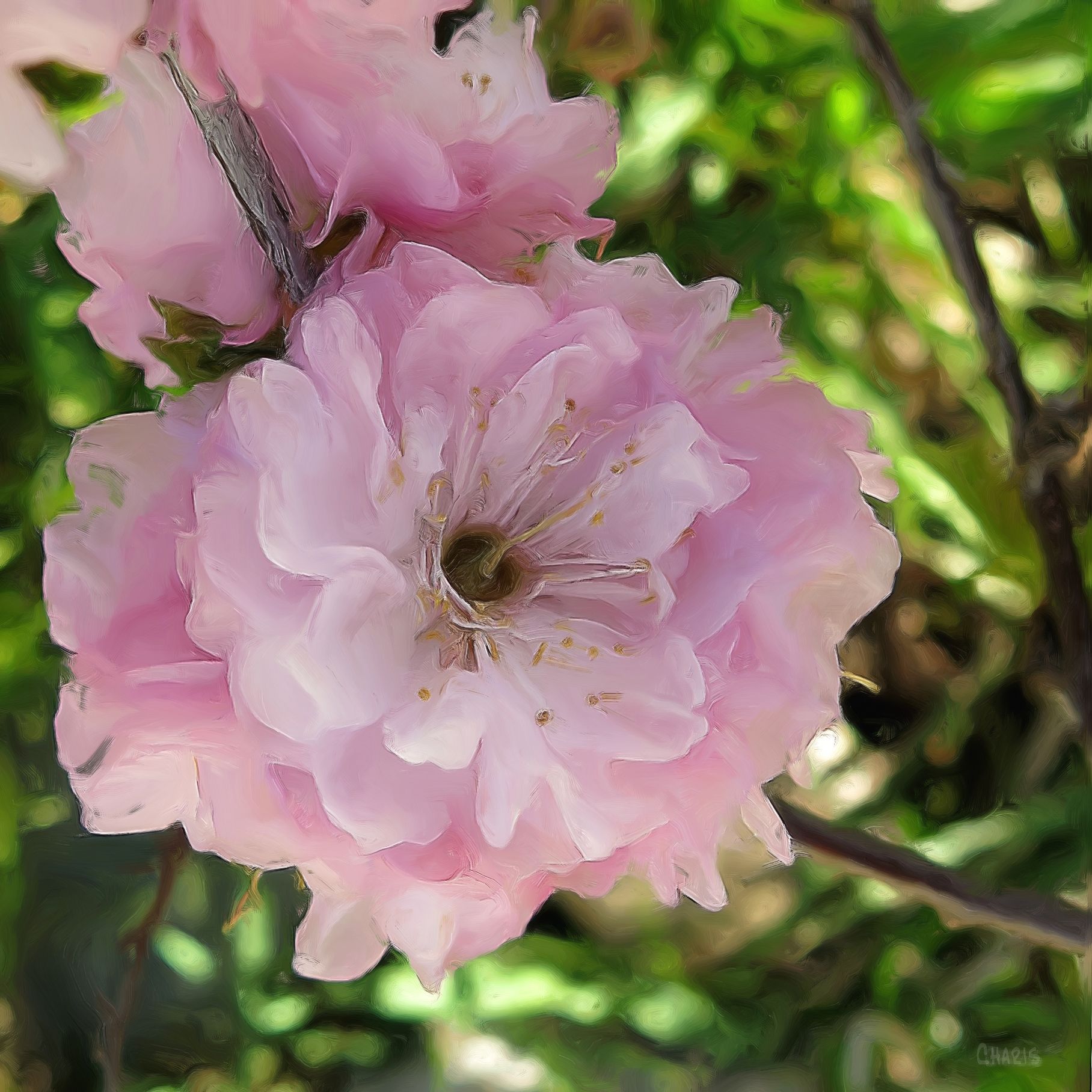
I took a shortcut around the back of the hotel while I was out for a walk on our recent trip to California. Near the garbage/trash/rubbish bins I saw a magnolia tree in bloom. They don’t grow here in the Canadian Rockies and I was amazed to see such beauty hiding in such an undignified location. Like my little granddaughter’s dancing it’s blooming was not an effort to seduce me into giving it something, or serving it. It just was, and I could see the generosity of my Creator’s hand -as well as the hand of whoever planted it there.
A friend of mine, a classical pianist with a beautiful heart, left his comfortable home and career and went to Cambodia to help people recover from the horrors they had experienced during the Pol Pot regime. He asked what they needed most and was surprised when they answered, “Music!” Once their immediate needs for food and shelter had been taken care of the thing they desired most was the beauty of music. He was just the man for the job.
One of the qualities of Christ is his beauty. For most of us it’s not seen with physical eyes, not usually, unless you count his reflection in the beauty of nature. Those who have come to know him in experience rather than theory are enthralled by his beauty, the beauty they see with their spiritual eyes. The Psalmist wrote: I am pleading with the Eternal for this one thing, my soul’s desire: To live with Him all of my days— in the shadow of His temple, to behold His beauty and ponder His ways in the company of His people. (Psalm27:4 The Voice)
Somehow we recognize beauty and respond to it. Beauty is who we are meant to be and who we are meant to be with. There is within us a discontent with the ugliness of garbage. Our hearts long to be restored back to the garden. Beauty gives us hope.
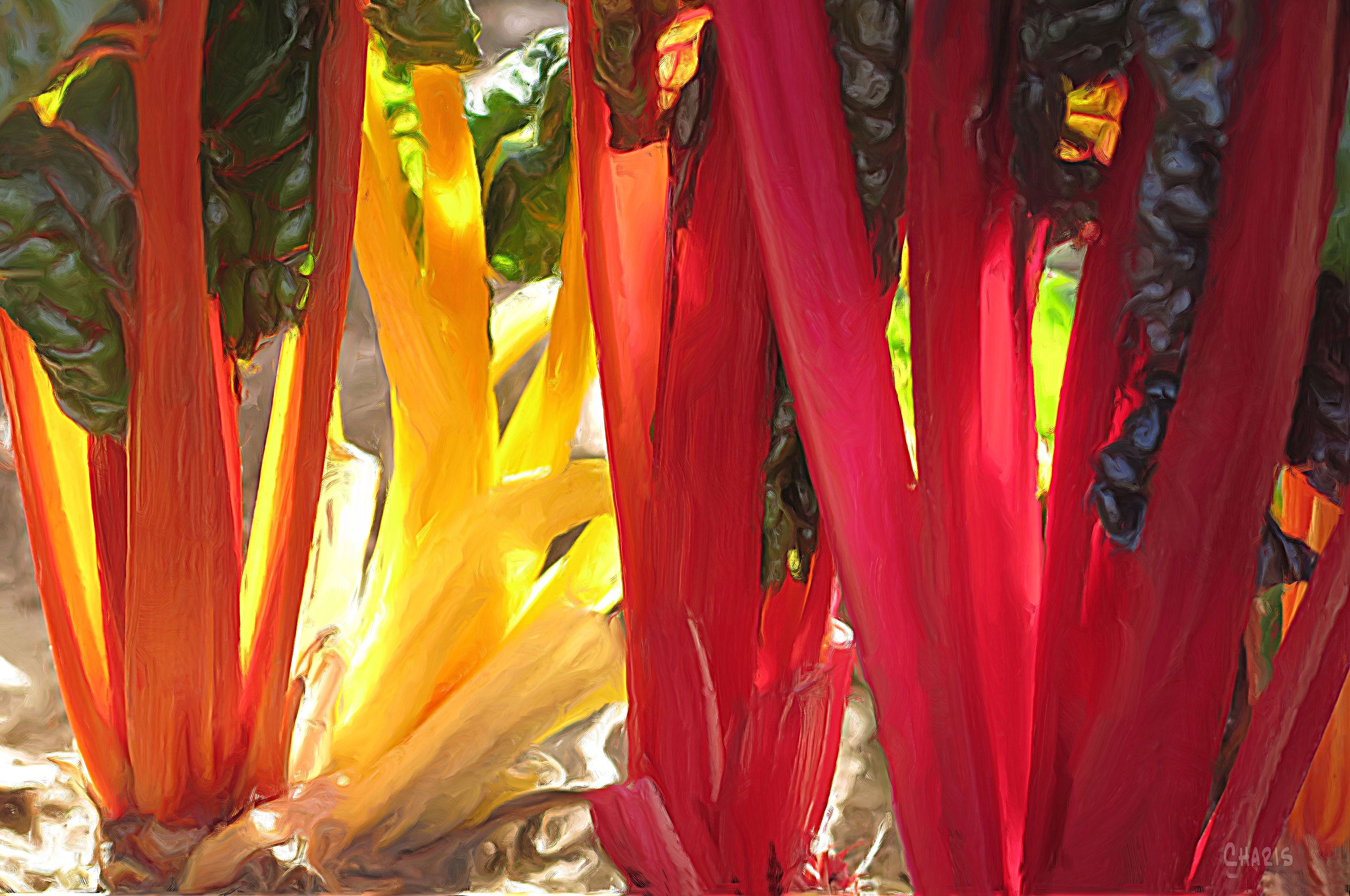
A heavy frost has already finished off most of the plants in the gardens at Fort Steele Farms, but I was surprised to see a row of Swiss chard (or “squished hard” as one of my grandchildren calls it) glowing in the sunlight. It was the inspiration for this work. It was also the inspiration for remembering this scripture:
Trust in the Lord and do good;
Dwell in the land and cultivate faithfulness.
Delight yourself in the Lord;
And He will give you the desires of your heart.
(Psalm 37:3,4)
Cultivating faithfulness with joyful, trusting vulnerability leads to the freedom to become who God knows you to be, full of life and delightful colour long after others have given up in adversity. Perseverance builds hope -the kind of hope that does not disappoint.

The best and most beautiful things in the world cannot be seen or even touched – they must be felt with the heart.
— Helen Keller

When my grandfather retired he became the gardener for the property he and Grandma and my parents shared. This was a good arrangement until the signs of early dementia cropped up. The problem was that Grandpa was a farmer at heart, and not a gardener. As recent memories turned into dust in the wind, he returned to old painful memories and began to see mother’s flowers as weeds that competed for resources with the precious grain crops he fought so hard to grow during the dusty 30’s in Saskatchewan. Before Mom’s prize dahlias had a chance to bloom he hacked them down with his hoe.
Mother was not pleased. She was a farm girl too, and admired waves of wheat in an open field, and vegetable patches dripping with peas and beans as much as anyone, but she also appreciated “impractical” flower gardens that produced nothing more than visual pleasure.
When there is not enough to go around, survival comes first. The problem is that many of us return to familiar barrenness of past pain, and live our lives in fear of want, as if God is on a budget and there is not enough to go around. Without new memories our relationship with him can be one based merely on survival (what do I need to do to be saved?) and neglect appreciation of his beauty and abundance. Francis Frangipane wrote:
“Indeed, Jesus frequently drew revelation about the Father from the observable world around Him. He told His disciples to “consider the lilies” (Luke 12:27) and spoke of God’s love and care, even for the sparrows (v. 6). He saw miracles of life contained within the power of a simple seed, and He made this revelation a centerpiece of His teaching (Matt. 13).
Indeed, many of the Lord’s greatest sermons were presented, not in the temple or behind the pulpit of a local synagogue, but in the cathedral of creation, at lakesides and hilltops.
We think of Gethsemane as the place where Jesus sweat blood in prayer, and so it was. But Gethsemane was a garden, and the Bible tells us that Jesus “often met there with His disciples”(John 18:2). I love the fact that the Lord routinely found joy among flowers and landscaping, and that He “often” brought His disciples there to teach them.
Yet not only was the setting of a garden a familiar place for Jesus while He was alive, but even in death His tomb was set in the midst of a garden (John 19:41). In fact, when He rose from the dead, a distressed Mary thought Him to be the gardener (John 20:15).
Jesus obviously saw the creation as an echo of the Father’s heart. He found in nature a place, a quiet place, to seek and find communion with God. Beloved don’t deny yourself this exquisite pleasure.”
There is more beauty, so much more beauty, in Jesus Christ than we yet know.
I’m holding on to hope
I’m holding on to grace
I’m fully letting go
I’m surrendered to Your ways
For some reason these lines from the song, Anchor, have been stuck in my head for a couple of weeks.
Perhaps letting go of anything that does not glisten with hope, or float with grace is surrendering to God’s ways.
Grace gives us permission to move and explore like an unsteady toddler who is anchored to a loving Daddy’s finger…
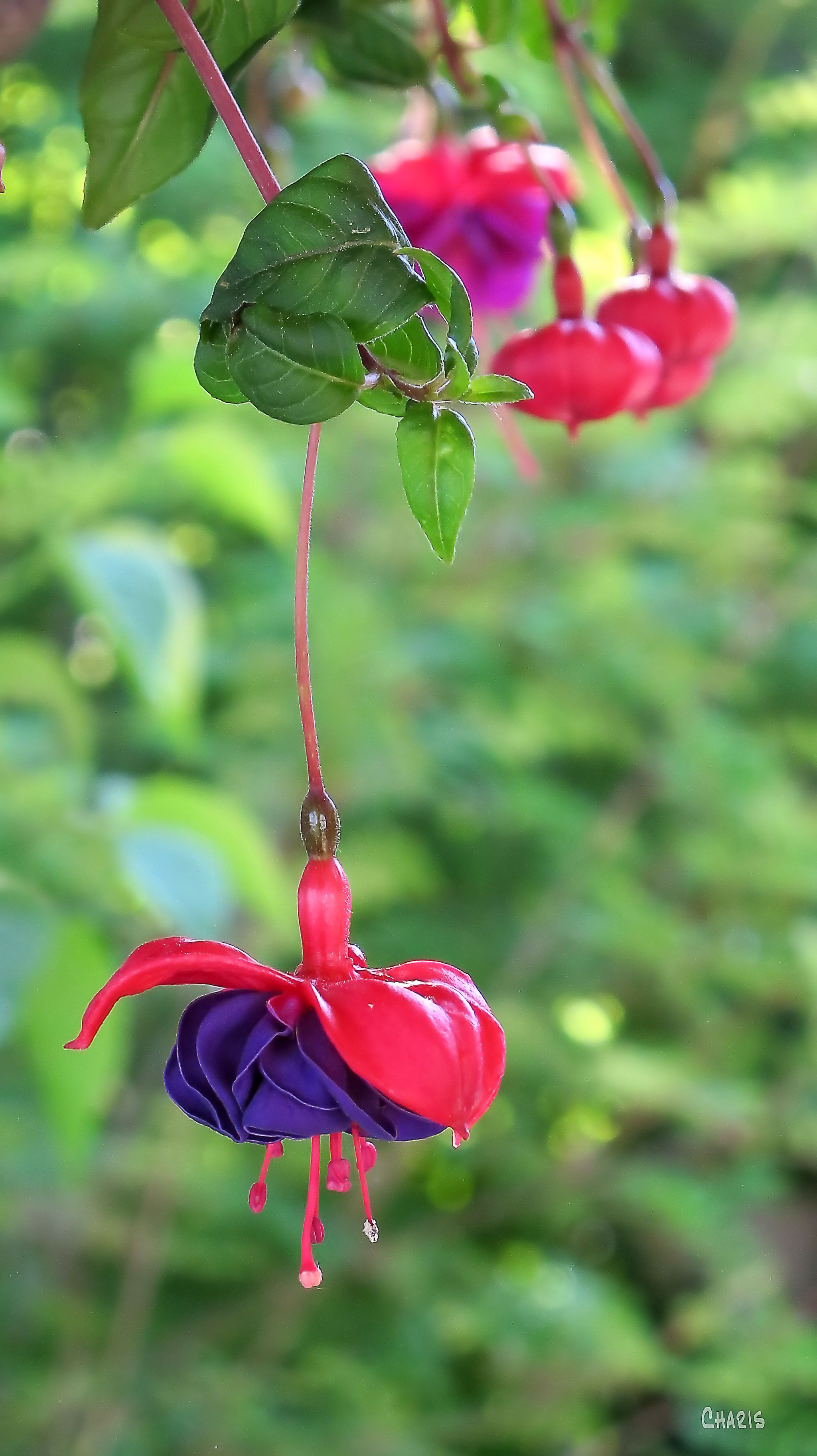
or like a pretty fushia in her ballet skirt, dancing in the breeze, yet nourished and sustained by a connecting stem.


 Charis: Subject to Change