I stood on my bed and looked out at the moon shining through colour-tipped clouds and told God I wanted to ask Jesus into my heart because I didn’t want to be left behind in a world without my family with evil people dropping atom bombs and doing whatever it was they did in Sodom and Gomorrah. (I thought it was smoking cigarettes and drinking wine and running around in their underwear.) I think I was about nine. I was very afraid.
Later I went to a youth event excited at the prospect of watching a “film” (actual movies in movie theaters were forbidden.) The film was about people who hadn’t prayed the prayer to ask Jesus into their hearts and were left behind in crashing planes (now sans pilot) and chaotic freeways (now sans bus and truck drivers). Those who changed their minds and realized they had made a mistake by not believing in time ended up standing in line at a guillotine waiting their turn to lay down their lives (now sans Holy Spirit because He apparently had left with the bus drivers) in martyrdom. I was very afraid.
I heard many sermons in my young life presenting prophetic constructs designed to keep sheoples in line with a stick of fear and carrot of rapturous zapping or death (preferably by martyrdom) where finally everything would be okay. They wouldn’t be horrible sinners anymore. I was well-acquainted with the verse that said, “It is a fearful thing to fall into the hands of the living God.” And I was afraid. I was so afraid of an angry God and so convinced I would never win his approval that at the age of 40 I ran away.
But He allured me. He waited quietly while I poured out my anger. He sat in the wilderness with me and made no sudden or threatening moves until I finally realized he was not who they said he was. He waited, and waited, until I chose, like a bird with a broken wing, to hop into his hand hoping for either healing or a quick crushing death rather than live in hopeless disconnection. That’s when I learned that it is his kindness that leads to transformation. It was the joy set before him that was his motivation and that joy can also be mine.
I had heard all sort of dire predictions about the significance of the four blood moons occurring on Jewish Feast Days of Passover and the Feast of Tabernacles in the next 2 years. Some folks are saying this means war or calamity and the approach of the day of missing pilots and bus drivers and the world-wide President/Anti-Christ’s guillotine. In my younger years I would have thought about stocking the bomb shelter. (My husband, upon hearing the hype, pointed out that since all lunar eclipses occur on full moons and that the Jewish calendar is a lunar calendar and certain holy celebrations always fall on full moons, this was not all that unexpected.) Instead I took photos from my front porch with my little point-and-shoot last night and praised God for His goodness and grace. I had my iPod for company and a song was playing: I Fear No Evil with You.
Any eschatology (study of future events) that ignores the character of Jesus Christ (who showed us what the Father is like) and removes hope from the world He loves so much is due for a reformation of thought, in my opinion. Fear is a poor motivator.
I’m sure the guys with the photo gear will post much better quality photos, but these are from my night on the porch with God. I just wanted to share.
The first lone crocus I saw this year was not in a forest clearing but in the middle of a construction zone. At the end of every winter I go out looking for signs of life. I have a lot of photos of crocus flowers in my stash because they give me such hope. When I was a child I picked bunches of them to bring inside, but they soon flopped over the side of the jam jar. A wild crocus is not easily domesticated; it is meant to be out in the dead cold field poking its optimistic head through patches of snow. It is a forerunner of better things to come.
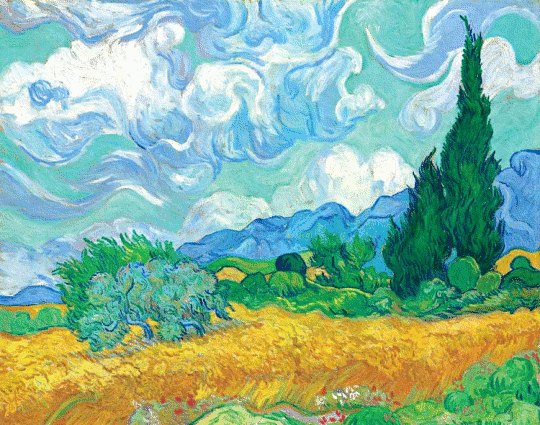
I was thinking about forerunners the other day, those people who can see what is coming next before anyone else does. Hawk-eyes, scouts, prophets, innovators, preparers-of-the-way. In the art world Van Gogh was one of these. In his lifetime he never sold a painting, never received recognition, never found a place where he “fit.” That boy was “different.” It wasn’t until many years later his paintings sold for millions. Forerunners don’t run to be popular.
John the Baptist was a forerunner. He was also “different.” He didn’t have a complete picture of the One who was to come, forerunners seldom do, but he knew with certainty in his heart that there was a change coming, and his assignment was to prepare hearts for change. Like a farmer who prepares the field for planting he set about tearing out obnoxious weeds that had been there so long folks had accepted their presence as part of the landscape. He preached the message of repentance. Repentance is not the same thing as penance, (trying to make up for wrongs done by some sort of demonstration of self-administered punishment or public humiliation, although, for some making public apologies and announcements of plans to repay what they stole may be an indication of their intent to change.) Repentance often involves grief, but primarily repentance (metanoia in Koine Greek) means change. Repentance is admitting our thinking has been off and coming into agreement with God that we have missed the mark he set (hamartia, the Greek word for sin means just that -missing the mark.) Repentance means having a better thought and adjusting our aim. Repentance means leaving the past behind and doing things differently.
The basic mission of forerunners like John is to poke a finger into embarrassingly sensitive, and often hidden, parts of our lives and ask the question, “And how’s that workin’ for ya?”
There are forerunners amongst us now, folks with an antsy sense that change is imminent, but who don’t know exactly what that change will look like. They go through life awkwardly, never really fitting in anywhere, annoying themselves and others with their inability to find contentment with accepted ideas and practices that don’t quite line up with both the Holy Spirit’s whisperings and with Scripture. They are not easily domesticated, and often pop up in places where dormancy is “normal.” They stand out because they are different and the light shines through them in colours we haven’t seen for a long time.
Yet somehow we are drawn to them. They are messengers of hope.
This duck can glide smoothly through what looks like turbulence because the water is actually calm. The peaceful surface of the water merely picks up the image of the atmosphere around it.
Sometimes I fail to enjoy the peace the Lord has granted me because I am caught up in the turbulence of the lives of people I care about. It’s a hazard for empathic people whose sensitivity causes them to pick up other people’s emotions. The Bible calls it the gift of mercy. It can be a useful tool, but it is a tool, not a reward, and it needs to be used with skill and wisdom. One of the great frustrations in my life has been the seemingly callous attitudes of people who are oblivious to the pain of others. Nothing stirs up my self-labeled righteous indignation more than non-compassionate people who shrug in the presence of suffering and say, “Not my problem.” It makes me furious!
James 2:14-17 says it’s a useless faith that walks past suffering and says, “Go in peace; keep warm and well-fed,” or as Dickens wrote, “Are there no workhouses?”
But this week the Lord has been smacking me upside the head (ever so lovingly) about misaligned compassion that is actually a lack of faith on my part.
I have discovered 1 Corinthians 12:9,10 to be true in my life.
“My grace is sufficient for you, for my power is made perfect in weakness.” Therefore I will boast all the more gladly of my weaknesses, so that the power of Christ may rest upon me. For the sake of Christ, then, I am content with weaknesses, insults, hardships, persecutions, and calamities. For when I am weak, then I am strong. ” (1 Corinthians 12:9,10)
It’s not a matter of self-imposed martyrdom or false humility, but I am learning that it is in the areas where I have been, quite frankly, an utter failure that God is most able to communicate his goodness through me. His goodness amazes me and I love to talk about it. But this is where he called me up on the carpet this week.
“Why, when you have experienced My goodness, do you think that I am not able to do the same thing for others?”
“When did I say that?”
“When you keep jumping in to fix things for people. How will they learn to call on Me when they can call on you? Why do you assume I don’t care? Maybe I’m allowing some of the troubles in their lives for a purpose. I want them to ask Me, to know Me. I’ve called you to pray, to intercede. I want you to stand in the gap, not stand in the way.”
I admit, I’m bad at the whole boundaries thing. I was an over-responsible eldest child and had my personal boundaries violated so often I don’t have an innate sense of when I need to step back and let God be God. (Yes, Lord, I realize that is an explanation and not an excuse.) I’m still learning.
I noticed that parents of my students who applied “tough love” as their go-to position used it on teens who had known precious little “gentle love” in the first place. I felt agony for overachiever-types who were locked out of the house for being five minutes late for a 10 p.m. curfew. On the other hand I have also seen far too many young people grow up with a sense of learned helplessness when their parents ran defense for them with excuse after excuse for their kid’s lack of self-discipline. I’ve also been caught, more than once, pouring more effort into changing someone’s circumstances than they themselves put into changing the habits that got them there. I’ve seen people who haven’t been tempered by adversity presume on the grace of God with a sense of entitlement that reveals a shallow unloving relationship where the Creator of the universe is viewed as their personal Santa Claus. Someone told me the sin of presumption David recognized as a problem in Psalm 19 is assuming God is here to serve your agenda, instead of you being here to serve God’s.
But God forgive me, sometimes I’ve been the enabler, and it’s been the result of my own lack of faith.
Like everyone else I tend to hear what I want to hear. The folk who easily gravitate to “tough love” need to hear the message “Whoever closes his ear to the cry of the poor will himself call out and not be answered.” (Proverbs 21:13) and the folk who rush in, striving to fix the world themselves need to hear, ““I am the Lord, the God of all mankind. Is anything too hard for me?” (Jeremiah 32:17)
The last one is me. One couple I admire who have cared for thousands of orphans and fed the hungry and healed the sick and introduced millions to the goodness of God is Heidi and Roland Baker of Mozambique. Heidi repeats, “God is God. I am not.”
This is what I am learning: God gives plentiful grace for our own circumstances. He has grace in overabundant supply for anyone who asks Him. He does not necessarily give me grace to deal with problems that are not mine. When I am overly influenced by the turbulent atmosphere all around me I lose my peace and when I am worried or afraid I can’t move. I’m no help to anyone. My joy becomes forced and my ability to love is limited to my own willpower. I need to be on solid ground myself before I can throw a lifesaver to a drowning person. I need, like this duck on the lake, to appreciate the peace that is mine in Jesus Christ and move on that.
Sorry, Lord. Give me discernment to stand with you and not for you. Your grace is sufficient for all the people I care about as well. I trust you.
“You know what, Nana? Leaders need helpers. A leader needs helpers cuz if they don’t have helpers they don’t have anyone to lead.”
I was playing dolls with my four-year old granddaughter when she said this out of the blue. I don’t know where it came from; perhaps she was processing what it meant to have a turn being “the helper” at preschool, but knowing the Lord’s love of revealing wisdom to children he may have just been joining us on the living room floor.
I have myself been processing what leadership and helpership mean in the context of learning to submit to one another (Ephesians 5:21).
Am I the only one who has images of whips and ridiculous leather costumes or Inquisitor’s tools pop unbidden into my less than pure mind when I hear the word “submission?”
Am I the only one who is embarrassed by what non-Christians must see when they look at competitiveness and ambition between “ministries” seeking more bums in seats?
Am I the only one who tires of authoritarian-style leadership where the gulf between platform people and audience people grows wider?
Am I the only one who groans at the disrespect and harsh criticism of people in the public eye lobbed by self-labeled experts who have no actual relationship with those they seem to need to fix?
Am I the only one who cringes when I hear another stern message that lords anatomy over character and calls for people making up half the population of the world to sit down and shut up without mentioning their own obligation to submit to one another and to love sacrificially like Jesus?
Am I the only one to sigh with disappointment when members of that population lob scathing incendiaries right back?
Am I the only one who tires of arguments about who merits the role of leader -or leader of leaders- in a hierarchical system that places official credentials above the ability to love -or on the other hand, the ability to demonstrate well-intended kindness above both knowledge of the scriptures and the character of God in an intimate relationship with the Holy?
Who is a leader in the big C Church?
Perhaps a leader is someone who helps his or her helpers.
No doubt there is a need for leadership. In the days of Judges when everyone “did what was right in their own eyes” not many people “did right” by others and me-first divisions resulted in all sorts of nastiness. Paul wrote that not many should strive to become teachers realizing that a higher degree of accountability would be applied to teachers, but implied that some definitely should become teachers like Priscilla and Aquila whom he honoured. He also gave lists of qualities to look for in leaders and the kind of gifts needed in leadership (none of which were of any use without the essential qualification of the ability to love). The Bible states clearly that consideration, honour and respect (including, in some cases, financial respect) ought to be given to leaders.
I heard a recognized leader (one who promotes others above himself) say that all sorts of people from unexpected (usually anti-Christian) backgrounds were showing up at their gatherings. His response? “Everyone is welcome! Not everyone gets to preach.”
A man I admire asked me to proof-read his resumé when he applied for a position as lead pastor of a church. I was impressed that he said, essentially, “These are my gifts, and these are not.”
“When it comes to [one area in particular],” he wrote light-heartedly, “I believe in the priesthood of believers and raising up others ready to use their gifts.” He went on to say, “I do not own the pulpit and if someone in the congregation is demonstrating a gift for building up others through public speaking, I will encourage them to do so.” Then he added, “I believe in the priesthood of all believers, but not in the leadership of all believers -until they are equipped.”
Who determines when leaders are ready? A board of examiners from the school for hoop-jumpers? Well for some this might be the process God chose for them to learn to give up their own desires and to go the second mile. For others such methods become a way to disqualify those not intellectually-oriented enough to attend seminary, but who still have a lot of wisdom to share. While recognizing and respecting a dire need for teachers with the calling to study and to teach accurately, I seriously wonder if the Lord meant leadership to be confined to those with the ability to be sermonizers.
I don’t know who said this (care to help me here?) but I love this quote: A man who leads when no one follows is going for a walk.
I wonder if a true leader is chosen by those who, by a willingness to help him or her, demonstrate the willingness to follow. I wonder if a willingness to both lead and follow is the result of the willingness to be helped. I wonder if recognizing a leader is recognizing in someone the ability to raise others up to become leaders themselves by helping to develop whatever gifts God has placed in them.
My little granddaughter taught me to play a new game I was not familiar with. I helped her set up the board and the cards when she showed me where they went. She had no problem respectfully correcting me when I did something wrong. I had no problem submitting to her leadership. She was the expert here. When we were finished the game, she submitted to my expertise and helped set the table to get ready for a meal featuring her favourite entré , macaroni and cheese. Helpers helping helpers. Leaders submitting to each other.
A little child shall lead them.
Thank you, Abba, that You reveal yourself in whomever You choose. No wonder Jesus did a happy dance when He saw You do this.
At that moment Jesus himself was inspired with joy, and exclaimed, “O Father, Lord of Heaven and earth, I thank you for hiding these things from the clever and the intelligent and for showing them to mere children! Yes, I thank you, Father, that this was your will.” (Luke 10:21 Phillips)
“We need to be trued,” she said.
“Trued?” I asked.
“Trued,” she said. “It’s an old construction word meaning everything has to be in line before you can build on it.”
I called a dear older friend yesterday to tell her an event had been re-scheduled. She has just come back from spending several weeks alone, resting in the Lord.
“I’m so glad you called! Let me get my notebook. I thought this was just for me, but the Lord said it’s for more than me. It’s for you. It’s for His church.”
When she came back and picked up the phone this is part of what she said:
“We are the temple. We are the living stones and Christ is the cornerstone, yes? Well, we need to be careful that our foundations are true to the cornerstone. We all need to be in alignment with Jesus Christ. It won’t do to get in line with whatever stone you are near hoping they are true. Every stone must be trued with the cornerstone.”
“He is talking to me about stones,” she went on, “About cobble stones, about building stones, about precious stones, about polished and engraved stones, about prospecting for gold nuggets the size of eggs. This is a season of building. Personal building first — then building together — but we must become true to the cornerstone and nothing but the cornerstone.”
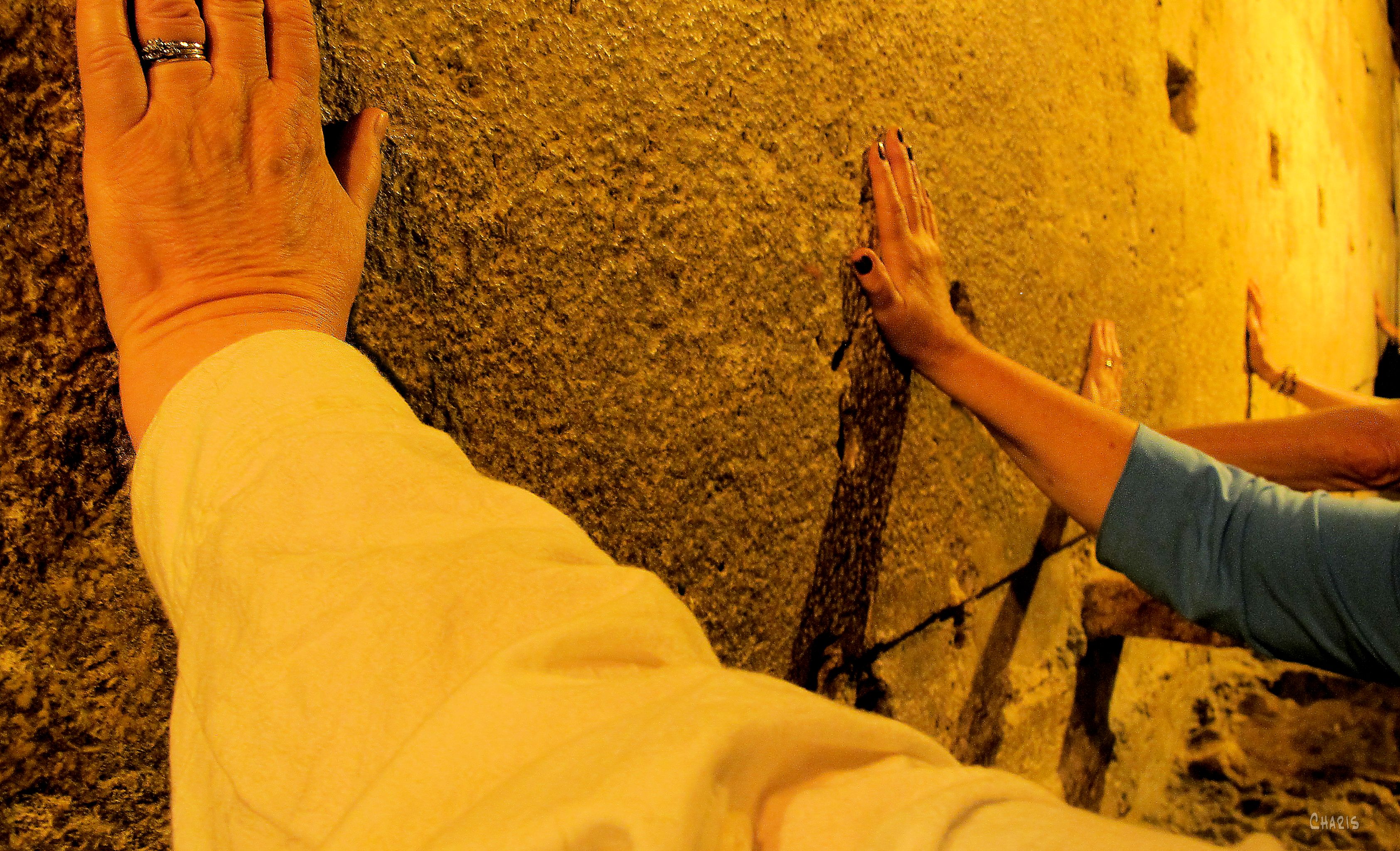
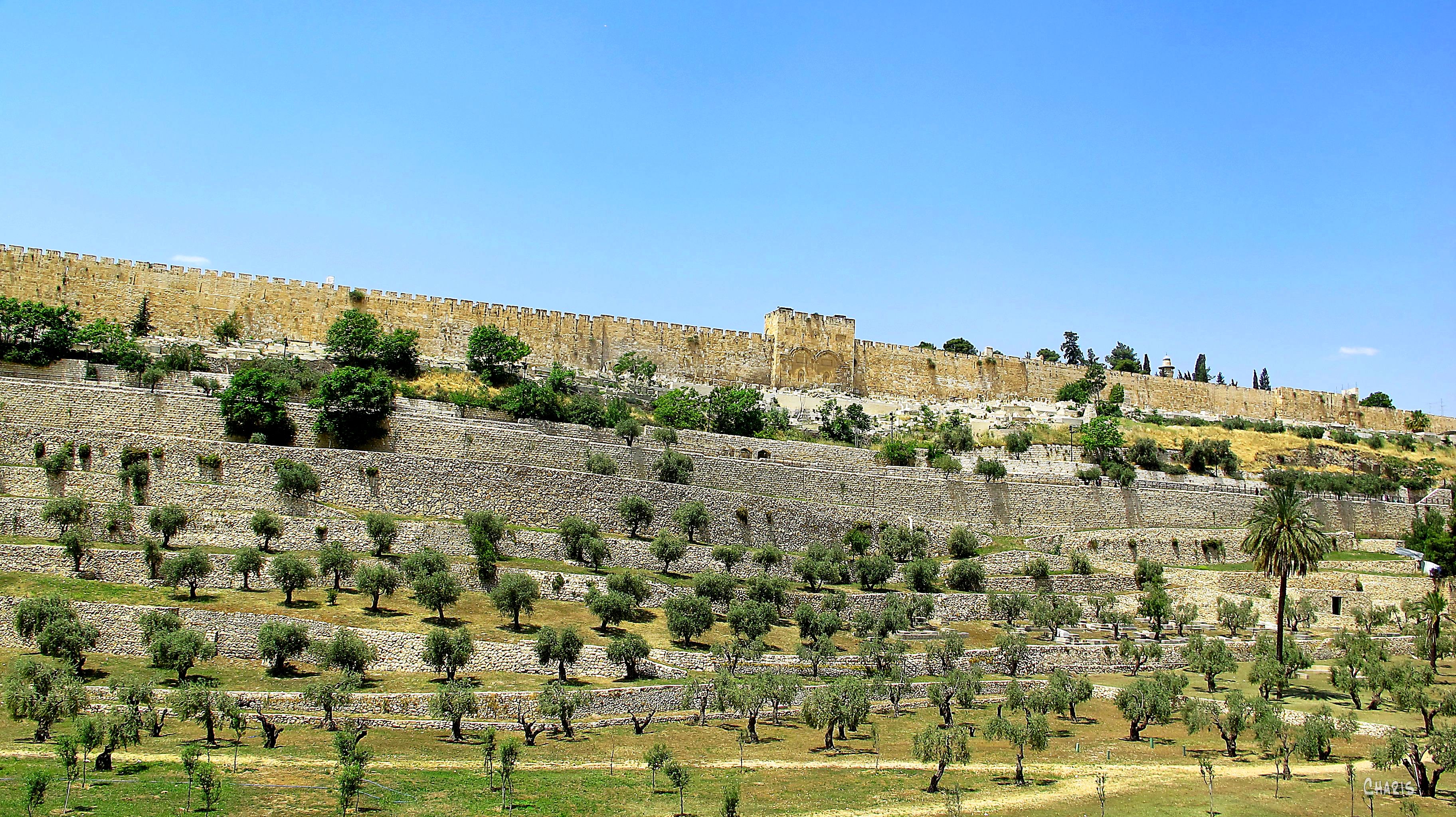
I remember a hugely impressive stone I saw a few months ago. We stood in a tunnel under the Temple Mount in Jerusalem and touched an enormous stone about 11 1/2 feet high and 41 feet long. They called it a “master course stone” and it was a foundation stone for the western wall of the temple area where Jesus was brought as a baby, where his parents found him talking to the learned men while still a child, where he drove the money-changers and merchants out, where he taught, and where he wept when he saw its future. This stone was so perfectly dressed, with every tiny bit of extraneous rock chiseled off, that no mortar was needed to hold the massive walls and buildings together (we were told the temple was probably three times taller than the Dome of the Rock which dominates the Temple Mount now) but this also made it possible for the Romans to dismantle the temple in 70 A.D. just as Jesus predicted. The old temple was torn down within a generation of his resurrection. God doesn’t live there anymore; the dwelling place of God is now in mankind -his adopted sons and daughters.
The stone we stood beside sat on bedrock and was almost as big as a bus, but when it was laid even this giant master course foundation stone had to be moved and adjusted until it was in perfect alignment with the cornerstone.
Another illustration of being in alignment came through Susanne who commented on an earlier post this week. She included this quote:
“Has it ever occurred to you that one hundred pianos all tuned to the same fork are automatically tuned to each other? They are of one accord by being tuned, not to each other, but to another standard to which each one must individually bow. So one hundred worshipers met together, each one looking away to Christ, are in heart nearer to each other than they could possibly be, were they to become ‘unity’ conscious and turn their eyes away from God to strive for closer fellowship.”
― A.W. Tozer, The Pursuit of God
These words written by Mr. Tozer reminded me of this story:
I once sang with an amateur orchestra made up of members with widely varying skills. (It included a gracious group of experienced musicians who mentored young players.) At rehearsal I found the tuning somewhat disorienting. As I walked across the stage in front of the orchestra pit (it was a concert of scenes from opera) I could hear the pitch gradually rise slightly from one side to the other. This was the problem: the young musicians tuned to each other rather than to the piano which was on stage right. (Since a piano was included in the work and its pitch cannot be easily changed, the instruments needed to tune to it rather than the oboe this time.) At any rate, the concert master rushed in, having arrived late, and picked up the problem with a discerning ear honed by years of experience. He supervised the re-tuning of the instruments and everything was back in order.
Both stories give the same message. When the stones are all lined up with the cornerstone the building has integrity and stability. When the instruments of the orchestra, which all have their unique qualities, are tuned to the same pitch, even though each instrument plays a different part, the result is harmonious unity. When the Church, the universal Church, is in alignment with Jesus Christ, our cornerstone, we are in alignment with each other. We are in tune with each other. We are one in the Spirit. We are one in the Lord.
The Church is not a man-made edifice, nor is it a group of people aligned to a particular doctrinal emphasis or administrative style or methodology or personality. The Church is the body of Christ with all of its members intact. The Church is me and the Church is you trued to Jesus Christ.
The Church is Christ in me and Christ in you, the hope of glory.
The Church is made up of living stones with Christ as its head -an organic, breathing, growing and moving force of love against which the gates of hell cannot prevail.
You are coming to Christ, who is the living cornerstone of God’s temple. He was rejected by people, but he was chosen by God for great honor.
And you are living stones that God is building into his spiritual temple. What’s more, you are his holy priests. Through the mediation of Jesus Christ, you offer spiritual sacrifices that please God.As the Scriptures say,
“I am placing a cornerstone in Jerusalem, chosen for great honor, and anyone who trusts in him will never be disgraced.”
Yes, you who trust him recognize the honor God has given him. But for those who reject him,
“The stone that the builders rejected has now become the cornerstone.”
And,
“He is the stone that makes people stumble, the rock that makes them fall.”
They stumble because they do not obey God’s word, and so they meet the fate that was planned for them.
But you are not like that, for you are a chosen people. You are royal priests, a holy nation, God’s very own possession. As a result, you can show others the goodness of God, for he called you out of the darkness into his wonderful light. ( 1 Peter 2:4-9)
We are obviously not in unity of the faith yet. We need each other, because going it alone is a sure way to lose perspective. We need the concert masters who are part of the orchestra (and not soloists!) who can keep us tuned to the Maestro/Master Musician and in time with Him, so we will be in tune and in time with each other. We need the whole orchestra playing together without rivalry over which section is the greatest. We need the builders who keep their eyes on Christ and help us stay true and in line with Him, (and not themselves!) because Jesus showed us who the Father really is.
And he gave the apostles, the prophets, the evangelists, the shepherds and teachers, to equip the saints for the work of ministry, for building up the body of Christ,until we all attain to the unity of the faith and of the knowledge of the Son of God, to mature manhood to the measure of the stature of the fullness of Christ,so that we may no longer be children, tossed to and fro by the waves and carried about by every wind of doctrine, by human cunning, by craftiness in deceitful schemes.Rather, speaking the truth in love, we are to grow up in every way into him who is the head, into Christ,from whom the whole body, joined and held together by every joint with which it is equipped,when each part is working properly, makes the body grow so that it builds itself up in love. (Ephesians 4:11-16) (emphasis mine)
Then in my vision I heard the voices of many angels encircling the throne, the living creatures and the elders. There were myriads of myriads and thousands of thousands, crying in a great voice, “Worthy is the Lamb who was slain to receive power and riches and wisdom, and strength and honour and glory and blessing!”
Then I heard the voice of everything created in Heaven, upon earth, under the earth and upon the sea, and all that are in them saying, “Blessing and honour and glory and power be to him who sits on the throne, and to the Lamb, for ever and ever!”(Revelation 5: 11-13)
Mother and Child Hooked rug by Margaret Forsey of Newfoundland
Mary did you know that your baby boy will one day walk on water?
Mary did you know that your baby boy will save our sons and daughters?
Did you know that your baby boy has come to make you new?
This child that you’ve delivered, will soon deliver you.
Mary did you know that your baby boy will make a blind man see? Mary did you know that your baby boy will calm a storm with his hand? Did you know that your baby boy has walked where angels trod? And when you kiss your little baby, you have kissed the face of God.
The blind will see, the deaf will hear and the dead will live again. The lame will leap, the mute will speak, the praises of the lamb.
Mary did you know that your baby boy is Lord of all creation? Mary did you know that your baby boy will one day rule the nations? Did you know that your baby boy is heaven’s perfect Lamb? This sleeping child you’re holding is the great I am.
I try to be positive. I really do. I usually appreciate any attempt at singing. Song is a free gift that can be enjoyed by anyone. But to me some songs are sacred, holy, set apart and meant to glorify God. They are not meant to be recorded by pop singers with no sense of phrasing, or breath control, who have inadequate diction and obviously no emotional connection to the lyrics, and then piped through the aisles of Stuffmart to create background noise for harried shoppers who don’t give a damn. I’ve threatened to go postal if I hear Santa Baby in the produce aisle one more time -but that’s just irritating. It’s hearing one of the greatest hymns/carols of all time massacred over and over that makes me want to plop down on the floor by the gift boxed baubles and weep.
(Rant over)
When I taught singing my students often asked if they could work on “Oh Holy Night.”
“Not for a few years yet,” I told most of them. “And when you do it will in the original language.”
“Why?”
“Because your voice isn’t ready and because you have heard it so often in English you can’t hear the words anymore. Most versions drop half the lyrics anyway. I want you to study it, to translate it, to concentrate and savour every note and every word.”
Like songs that are sung year after year and have lost their flavour like chewing gum on the bedpost overnight, we can become so familiar with the goodness of God we cease to grasp the depth and height and width of it. We fail to comprehend the massiveness of His love. We take it for granted. We develop a sense of entitlement, as if God owes us freedom, and deliverance from slavery to sin. We fail to pay attention.
Translations that have to fit the meter and accents of a set piece of music are never entirely accurate, but here is another English translation of Minuit, Chretien. Listen to the words again.
Midnight, Christians, it is the solemn hour, When God as man descended unto us To erase the stain of original sin And to end the wrath of His Father. The entire world thrills with hope On this night that gives it a Saviour.
People kneel down, wait for your deliverance. Christmas, Christmas, here is the Redeemer, Christmas, Christmas, here is the Redeemer!
May the ardent light of our Faith Guide us all to the cradle of the infant, As in ancient times a brilliant star Guided the Oriental kings there. The King of Kings was born in a humble manger; O mighty ones of today, proud of your greatness,
It is to your pride that God preaches. Bow your heads before the Redeemer! Bow your heads before the Redeemer!
The Redeemer has broken every bond: The Earth is free, and Heaven is open. He sees a brother where there was only a slave, Love unites those that iron had chained. Who will tell Him of our gratitude, For all of us He is born, He suffers and dies.
People stand up! Sing of your deliverance, Christmas, Christmas, sing of the Redeemer, Christmas, Christmas, sing of the Redeemer!
Attend ta Délivrance
From the English version:
Christ is the Lord! Then ever, ever praise we, His power and glory evermore proclaim! His power and glory evermore proclaim!






















 Charis: Subject to Change