 The Gate
I am the gate; whoever enters through me will be saved. They will come in and go out, and find pasture.
-Jesus
 The Pasture

I am the gate; whoever enters through me will be saved. They will come in and go out, and find pasture.
-Jesus




Sometimes change means being willing to let all our accomplishments of the past season fall to the ground and die.
Sometimes change means letting God be God even when we don’t understand what he is doing.
Sometimes change means remembering his faithfulness year after year.
Sometimes change means embracing winter.
Sometimes a rest is as good as a change.
Photo: Winter begins its descent

I will lift up my eyes to the hills—
From whence comes my help?
My help comes from the Lord,
Who made heaven and earth.
(Psalm 121:1,2)

Cross Fire
Sometimes I feel like I’m caught in the crossfire. That’s the problem with eschewing labels; when people are not sure if you are one of us or one of them you are apt to catch shrapnel from all sides.
My grandparents were ethnic Germans who lived in an area claimed by the Russians at that time. Grandfather Johann was apparently fluent in seven languages, not because he was a scholar, but because it was expedient, and sometimes necessary for survival. He was no fan of the Czar who sent him and his men into war horribly under-equipped, but after he escaped to Canada with his wife and child, the situation became much worse for family left behind. Stalin killed most of them for being Germans, and Hitler killed the remnant for being Russian. My grandmother never recovered from hearing the Red Cross report that said they could find no trace of anyone she knew and loved in the old country. But that’s another story…
 Photo: My grandmother at the time of the exodus from The Crimea
From the vantage point of time and reconciliation we can see the error on both sides. My mother, with her roots in The Crimea married my father, the great grandson of a Scot who received an endowment of land in Canada in appreciation for his service to the Queen in The Crimea. My ancestors could very well have faced each other on the battlefield.
Eventually everything worked out and produced –me (and my siblings).
Anyway, I find myself in a similar position between groups of people who regularly lob incendiary criticisms at each other. My goal is to stand in the gap and facilitate peace, not to serve as a meddlesome target. If you are firmly entrenched on either side I ask you to hold your fire until you have prayed about this (and give me time to duck).
I’m talking about the big C Church and our understanding of the filling of the Holy Spirit, or what some call the baptism of the Holy Spirit.
For a long time I’ve had questions about role of the Holy Spirit and the place of the gifts of the Holy Spirit (especially the list given in 1 Corinthians 12 – words of wisdom, words of knowledge, faith, gifts of healing, working of miracles, prophecy, ability to distinguish between spirits, and the ability to speak languages one has not studied). Most of my life I have been told either that such things ceased when the New Testament became available to the literate (often clergy), or that most of the time they are demonstrations of satan’s powers to deceive, or that if they do exist they are very rare and only for the purposes of impressing jungle people somewhere as a type of introductory business card, or are so divisive they are better off ignored. On the other hand, I’ve run into people who teach that if you didn’t experience them (especially the last one) in the same way they did, you are not really filled with the Holy Spirit and therefore a lesser Christian.
After a brief encounter back in the Jesus People days, someone convinced me that I had been deceived and that if I ever did anything like that again, terrible things could happen to my children. (Crazy, I know, but I was a fearful person –maybe you had to be there.) My stance after that was “There is no shortcut to holiness,” and I went back to work on my road to burnout.
A few years ago I read a book by John White, “When the Spirit Comes in Power.” (My motive for reading it was fear that my daughter was getting involved in some sort of cult.) I respected John White as a scholar (he was a professor in the department of medicine), a serious Christian (former missionary) and an excellent writer. (I met him once and quoted John White to John White, not knowing who he was – but that’s another story.)
He was asked to examine the Vineyard movement, led by John Wimber, for Biblical soundness and signs of manipulative “brain-washing” type behaviour. He acknowledged that he thought some of the “manifestations” were the result of these activities attracting histrionic personalities, but he was also convinced that most were genuine experiences. Something he said really stood out to me; when Jesus spoke about the seriousness of blasphemy against the Holy Spirit it was in the context of religious leaders attributing miraculous works He did to the evil one. John White came to the conclusion that it was more dangerous to pronounce that something not understood was of satan than it was to let something questionable go by and let it be tested by time and the fruit produced to see if it actually was of God. He was impressed enough to eventually join the movement himself.
Not long after that, after a period of learning to forgive some people, Holy Spirit showed up unexpectedly in power in my life, in ways I had never experienced before. I know it was Him because everything that happened led to the praise and glory of Jesus Christ and a greater hunger for a deeper relationship with Him. That would have been a pretty stupid move on satan’s part if it was his doing.
Now here was my dilemma: On the one hand I saw, with my own eyes, the gifts of 1 Corinthians 12 in operation, and experienced some of them myself, yet I saw, to my shock, some of the people with the most dramatic supernatural giftings had, how shall I say this nicely, um.. major character flaws, moral blind spots and egos bigger than all outdoors.
On the other hand I knew many dear saintly people who had never experienced any of these things, who worked very hard to bring the good news of Jesus Christ to the world, but who saw very little in the way of results. They either tended to become more insular, protecting themselves and their tribes from “worldly influence,” or went to the other extreme becoming increasingly less attached to acknowledgment of the Bible as the word of God and relied more and more on personal effort and political solutions to ease the pain of a hurting world, than they did on God.
Here is what I have learned that has helped me bridge the no man’s land between these two paradigms. (Many, many thanks to Brad Long for this teaching.)
There is more than one word for the filling of the Holy Spirit in the new Testament.
There are two meanings covered by one English phrase. We also have only one word for “love” when the Greek has four (agape, eros, storge and phileo).
The Holy Spirit comes in two different ways (well, three if you count “Paraclete”, the One who comes along side).
The Greek words for filling from within, pleroo /pleres, refer to the indwelling of the Holy Spirit.This word is used when the Scripture talks about men like Stephen and Barnabas who were “full of the Holy Spirit and faith and wisdom.” It’s like the welling up of an internal spring. It’s there all the time, in season and out of season. “But you are not in the flesh but in the Spirit, if indeed the Spirit of God dwells in you. Now if anyone does not have the Spirit of Christ, he is not His.”( Romans 8:9) “For you did not receive the spirit of bondage again to fear, but you received the Spirit of adoption by whom we cry out, ‘Abba, Father.’ The Spirit Himself bears witness with our spirit that we are children of God.” (verses 15 &16) 1 Cor. 12:3 says: “Therefore I make known to you that no one speaking by the Spirit of God calls Jesus accursed, and no one can say that Jesus is Lord except by the Holy Spirit. Jesus breathed on his disciples and said “Receive the Holy Spirit,” (John 20:22) but Jesus also said, “Wait in Jerusalem until you are clothed with power from on High.” (Luke 24:29). So did the first impartation not take –or is there another Holy Spirit experience?
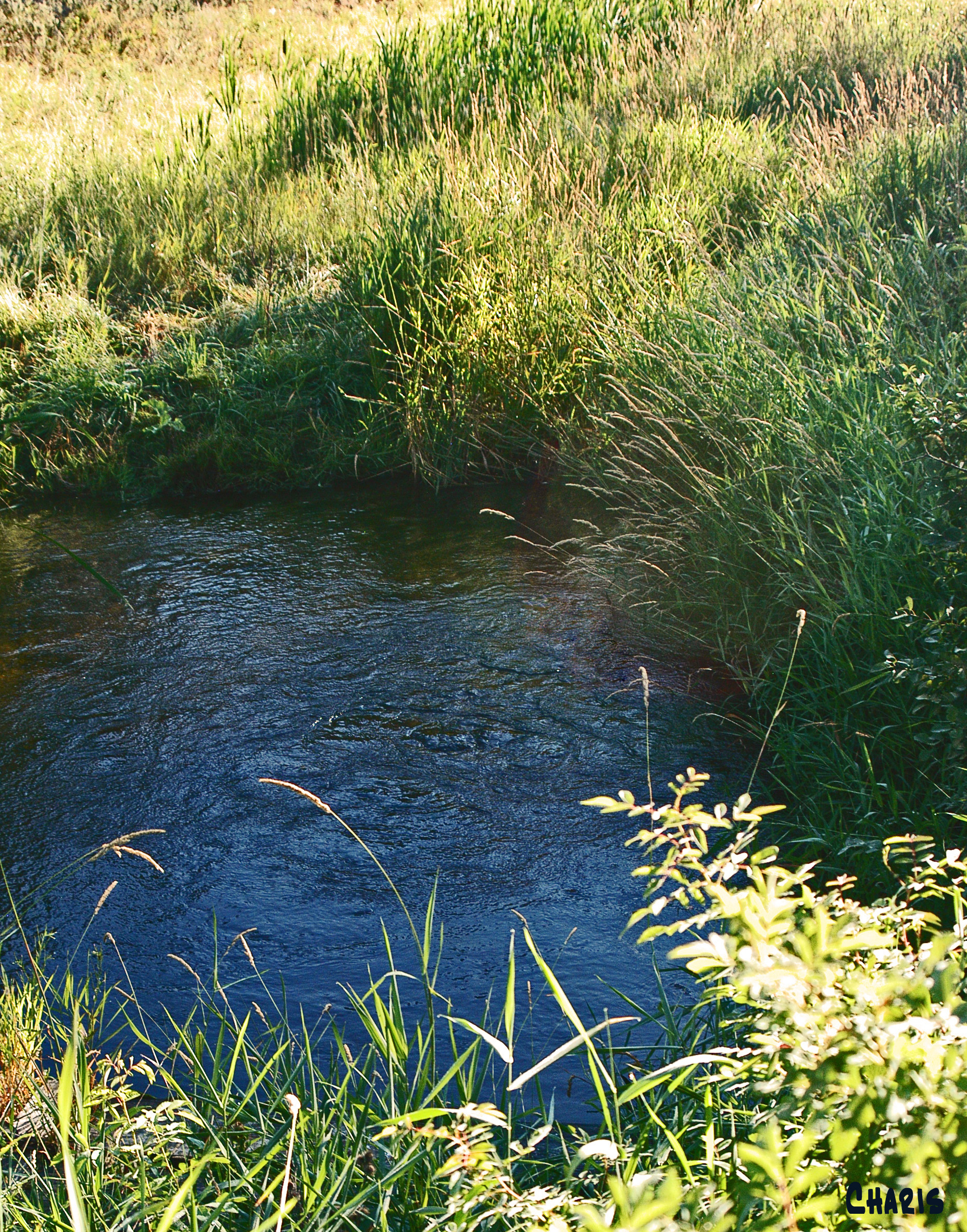
 Photo: Spring-fed pond on Haha Road
The Greek words pletho /pimplemi refer to the Holy Spirit coming upon a person, like oil is poured or smeared on, or clothing is put on or the wind comes on a windmill empowering the blades to move. It is episodic, that is, it happens more than once and often comes in dramatic encounters with Holy Spirit in which one is touched and sometimes overcome by His power. (This is when the weird stuff sometimes happens, like trembling or falling over, especially when one does not have a grid for it and one’s physical system is overwhelmed. Toppling over or feeling great heat etc. is a side-effect, not a goal or something to brag about and especially not a sign of spiritual superiority. For those with reserved tendencies who eschew display it’s a humbling experience.) This “coming upon” also occurred in the Old Testament to people like Samson, Saul at Gibeah and others like Gideon or Elijah and Elisha. It is not a sign of superior holiness, but God does what He will and chooses whomever he wishes for the purposes of demonstrating His power and equipping for assignment. This is the word used in Luke 1 when Elizabeth’s baby leaped in her womb when meeting pregnant Mary and when Zechariah prophesied and when the believers acted drunk and spoke in other languages in Acts 2.
Acts 1:8 also uses it in the promise, “But you shall receive power when the Holy Spirit has come upon you; and you shall be witnesses to Me in Jerusalem, and in all Judea and Samaria, and to the end of the earth.”

Photo: Windmill which moves the Calgary public transit system
[Lest this turn into an entire book I recommend using something like the Blue Letter Bible online and doing a search of all the uses of pletho/pimplemi (Strong’s 4130) and pleroo/pleres (Strong’s 4137).]
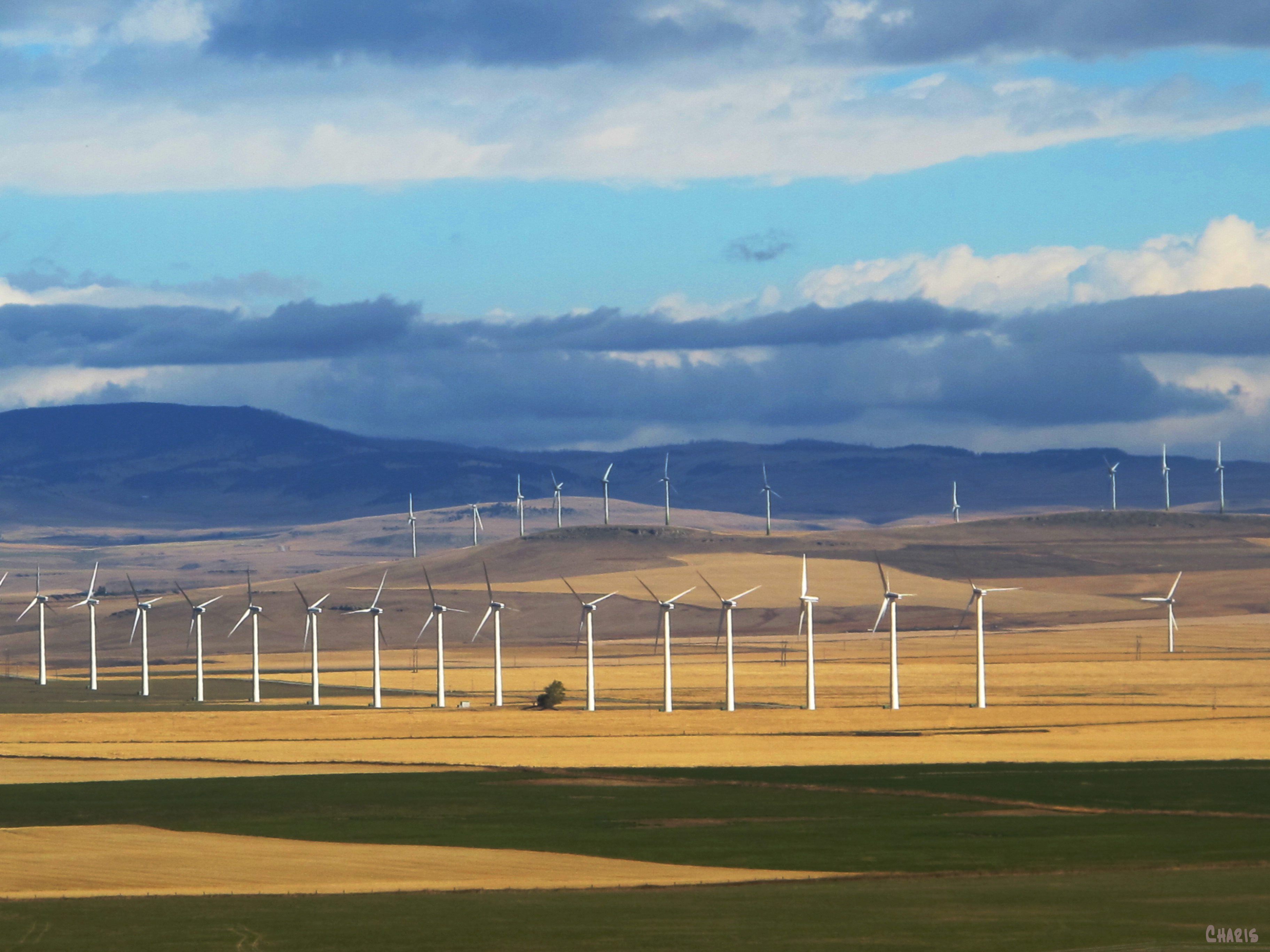 Photo: a congregation of windmills doing what windmills are meant to do
So we have the Holy Spirit within and the Holy Spirit upon. Both. But what happens when one type of filling is emphasized to the exclusion of the other?
When pletho (upon) is more important, the result can be evidence of the Holy Spirit showing up in power (some call this “anointing”), with great works being seen, but a sometimes accompanied by a dearth of fruit of the Spirit, or a lack of discipline in reading and meditating on the Bible, and tainted by immaturity or character development that hasn’t kept up with the level of ministry. (How many “anointed” people have crashed and burned due to moral failures or poor understanding of solid doctrine?) In a church it shows up as competitiveness, envy, divisiveness and spending the supernatural provisions of God on one’s own pleasures. (James 4 “What is the source of quarrels among you…”) Sadly in the public forum it can be misused on self-aggrandizement.
When pleroo (within) is chosen to the exclusion of pletho we see developing character, but ineffective fulfillment of the great commission instruction to make disciples. Burnout comes as a result of lacking the right tool for the right job. A handsaw can eventually chop down a tree, but a powerful chainsaw is much better. We also see a lack of freedom to move in faith and a sense of having to carefully budget meager resources. Sometimes we see a theology based on ways to cope with disappointment with God.
When both kinds of filling are present, (the people in Acts 10 seemed to get a package deal) honoured, and acted upon we see people seeking and surrendering to God’s will, using the power from God in love to build up and encourage the church and for witness and to demonstrate the goodness of God’s love in the world. This church will also grow in knowledge of the Scriptures, in understanding the nature and character of God, as well as in wisdom, revelation and spiritual discernment. We will see both the gifts of the Spirit and the fruit of the Spirit. We will see growth in relationship with God and understand genuine worship. There are more churches becoming like this and I thank God for them.

Abba, enable us to be filled with all the fullness of your Holy Spirit. We want to be the people you created us to be, doing the things you created us to do. We want to grow in grace and in the knowledge of our Lord Jesus Christ and in relationship with each other. Then the world will know that You are good and know that we are Christians –by our love.
Painting: Reserved

(The stream that flows out of this reservoir is called St. Joseph’s Creek. It flows through the town below, out into the countryside and across a First Nations Reservation where it joins the St. Mary’s River just before it’s confluence with the Kootenay River. After a brief sojourn across the border, the Kootenay turns north, back into Canada, and waters a wide valley where fruit is grown commercially.)
Reflection on the Reservoir
Idle in the wild
the waters
reserved by earthen dam
wait
Welling up over the wall
the outpouring spills
to thirsty valley
surging gushing rushing
on its pilgrimage
to freedom
babbling ecstatic companions
overturn hapless pebbles
and undercut established banks
between soccer and tennis scores
beside disciplined lawns
through sweet barbeque smoke
under red painted bridges
inside covert culverts
behind rainbow-puddled gas stations
over destitute shopping carts
past sitting walkers
around rusted wrecks
amid static mobile homes
Without reserve they flow
through Reserve
until St Joseph pouring at last
into St. Mary’s joy
is carried by her abundance
to greater confluence
and wide hillsides of heavy orchards
In the reservoir
the congregation of waters
held back in saturated bed of clay
deep in stillness
dark in secrets
ceases striving
and reflects
ruby opulence
in golden autumnal glory
Lord
I have watched
waiting
in saturated bed of tears
eager for my turn
to burst over damming reserve
to bring tribute to tributary
to whirl and dance in eddies of joy
to shout the songs
of sky-glittered brook
to journey to ripened fruitful fields
Lord
here
subdued in the secret depth
where you make
your thoughts known
still my heart
that might I reflect
your glory
Photo: I waited all through a dark, dreary, rainy day to be able to go out for a walk. Finally, in the early evening, the sun broke through.

This is going to sound weird because, well, it is weird.
About 4 ½ years ago we had a particularly difficult week in our family. We received three bits of bad news, any one of which meant a change in lifestyle –and all of them negative. Two were diagnoses of incurable degenerative diseases and one was about a business my husband put a lot of effort and time into, which literally went south.
Then I had a strange experience. I awoke hearing a voice with a BBC accent saying, “Follow 228 ban our tires.” It sounded like a commercial that adds a voice-over saying, “For further information go to www dot…”
It was so clear I grabbed a pen and pad and wrote it down, like it was a phone message.
In the morning I looked at it and felt rather silly. What an odd thing to write down. I never told anyone, but secretly, later in the day I googled it.
Nothing. I put the experience down to stress.
The next day I was thinking about the strange note to self when I remembered the voice had a British accent and in the UK tires is spelled tyres.
I googled it again using the “proper” spelling.
This time I followed the trail to a British bicycle shop site selling tyres which were featured in a click-able box at the top. On the side of the page was a box with an advertisement for Ray Ban glasses. Featured in the center was a photo and description of a head lamp for a racing bike. It must have been for very serious bikers because it cost 228 pounds.
Here’s the odd thing. The lamp was an LED Vision lamp made by the Hope company and called the Endurance model. What jumped out at me when I looked at the page was this:
Hope: Vision-LED Endurance.
As a person who suffered from depression for many years I know that living without a sense of hope is hell, but I wasn’t sure what hope really was. I knew it didn’t mean “a dream is a wish your heart makes” or “any dream will do”. I believe God was giving me a puzzle to solve in which the answer was a definition of hope, “vision-led endurance.” The Bible says without a vision (I believe the word there is a God-given active rhema word) the people perish. Hope means endurance that is attached to a promise from God. Hope gives a reason to live and a purpose with which to fight discouragement.
God is faithful. Those three problems which loomed so large that week are no longer big problems. One was healed out-right, quite miraculously, shortly afterward; one became less threatening when God had an unusual creative solution and is much improved, (hubs is not wheel-chair bound, in fact, he jogs six kilometres nearly every day); and the project is back on the rails –with much more reliable partners this time.
Jesus never ceases to amaze me.

I just finished wrapping up some gifts for our grandson’s number changing party. His number is changing from a 2 to a 3. That’s a big deal when you’ve only ever had two numbers before –and only one in reliable memory. I remember one of my kids on his third number changing day singing, “I’m free, I’m free, and then I be four.”
Free-year olds love to open gifts. It’s all about the wrapping paper, so I buy one major toy and a few little things, a few practical things, and wrap them all. When wee ones have wee siblings I wrap up something for the competition too, thus the pink paper. (Why is sharing one of the toughest things for humans to learn?)
Recently I heard someone use the expression, “Those people are seeking the gift and not the Giver. If your faith is solid you don’t need those kind of things.”
They were, of course, speaking of the gifts of the Spirit, especially the dramatic ones like prophecy, healing, miracles and signs and wonders (aka things that make you go ‘huh?’)
I know three-year olds. Will this one seek the gift and not the giver? You betcha. He’s only three. When the pile of gifts from friends and family, which can’t be opened until after the birthday cake ritual, cause him to vibrate in anticipation, who-gave-what will not be the first thing on his mind. When the paper goes flying I expect some of the practical presents will be dropped, perfunctorily, on the floor –socks, jeans, and pyjamas sliding under the coffee table for retrieval by parent later. Anything associated with his obsession with Thomas the train will be proudly displayed and put to immediate use. Daddy will probably have to assemble and explain other gifts –or at the very least spend 20 minutes extricating them from the packaging. He will also lay down the rules for using them safely.
One of the little guy’s gifts this year will be a Lightning McQueen fold-down portable toilet seat small enough to fit into mommy’s bag. Since he announced last week that diapers are just fine with him, and he will not be re-considering his position on the matter until his number changes to twelve, the giver, his Grandma, does not expect effusive thanks for this one. But she knows he can make good use of it someday. She loves him and knows that growing up means learning to deal with his crap. (It’s interesting that in Christian dream interpretation bathroom dreams often symbolize confession, forgiveness and cleansing –an elementary teaching in spiritual growth.)
Some gifts God gives us are fun and some are practical. Some we have dared to ask for and some are surprises. Some gifts are powerful tools we will need in the future to do the tasks he has in mind for us to do. When we open these boxes the response can be, “What do I need with this? Oh dear, if I am going to use it I will need to change the way I do things or even the way I think. It means an increase in the level of responsibility required of me –and I don’t know that I want to put all the effort to work out the kinks. It is easier to say, “No. I don’t need it. Things are working well for me just as they are, thank you very much.”
I was thinking also about how the God the Giver must feel when His gifts are rejected. It gives me great pleasure to look for gifts that suit each child. I do believe that our heavenly Father delights in his children and along with instruction and correction gives them wrapping paper and toy trains. If they ask for a piece of birthday cake will he give them a rock? If they ask for toast will He give them a snake? (It’s true that bad men also offer delightful tasty treats and children need to be able to recognize that and learn to say NO! and run away from the wrong voice.)
Our older grandchildren recognize that gifts come from people who care. They don’t need to be prompted to say thank you. They may share the gift with their friends months later and say, “My Grandma and Grandpa gave me this.” Part of the reason (though certainly not all) is because we have a history of listening to them and trying to understand their personalities and encouraging potential talents. We’ve also learned that some gifts are inappropriate and some more valued the longer the wait for them, so we also withhold in love. The kids have learned, over time, to say thank you on their own.
To seek the gifts and not the Giver is immature but to seek the Giver and reject his gifts is not seeking the Giver. Imagine a young woman accepting a proposal of marriage and then rejecting a carefully chosen, custom-designed engagement ring as being unnecessary because she has faith that the young man will observe his verbal contractual obligation (which may imply she already has doubts about his ability to support a family.) Rejecting the Giver’s gifts is actually rejecting the Giver and replacing Him with a god of our own making — a task master, a disciplinarian, a judge, a distant person who does not enjoy us or derive pleasure from our pleasure – someone who is on a strict budget. How that must grieve him.
That was me for many years. I thought God only taught through tribulation and suffering and that gifts come after the finish line, when the race is done and I am dead. (Silly girl. The gift of healing, for example, is kind of useless in heaven. There are no sick people there.)
I guess I choose to say, “Thank you, Abba. You are good. Your gifts are amazing! And thank you for the potty seat, even if it means that I need to grow up and make changes in my life.”
Photo: Highway 3

Lots of young people have asked me, “How do I find God’s direction for my life? How do I know God’s perfect will for me?”
My standard answer now is, “Put yourself in gear and get out of the driveway.”
I learned to drive on my Dad’s old Merc. It did not have power steering and sometimes it was ridiculously hard to turn the wheels on that thing when it was at a standstill. Sometimes I thought, in the process of learning to park that land-locked boat, it would have taken less effort to get out and push it sideways into a parking spot. Getting it back out of a tight spot was just as hard. It’s tough to steer a stationary vehicle. Just start moving. Sometimes God’s directions are simply, “Go. Move already.”
Like many people I have wanted to understand the eternal ramifications of every decision before I made it. What if I went to College A and the person I was supposed to marry went to College B -or Q or U. What if I missed God’s perfect will for my life because I took a job in Moose Jaw and destiny awaited in Tuktoyuktuk? What if it was God’s will for me to study Hebrew and I studied Greek? What if I missed my calling while I was on the phone talking to my friend about paint colours for the bathroom? To be honest I even hated not knowing which lane I needed to be in 200 km.s down the road.
Even after I learned to give God credit for being a little more flexible than I was. I stewed over things like travel plans, wanting to have a carefully thought out printed itinerary and reservations in place months before I packed far too much just-in-case stuff in my suitcase.
It may be a sign of how much work God has done on me that my idea of a vacation now is a blank calendar and an open road. This is what I have learned: God is creative and not reactive. He is relentlessly kind and seeks to communicate with us and show us how to become the people he created us to be. He is the God of endless possibilities. Destiny is not fate; you can mess it up and cause delay if you don’t pay attention, but neither is destiny a one-shot thing.
Was it God’s will for David to dally around with Bathsheba? Was adultery part of Plan A? No. Was God stymied by a horrible situation? No. In fact after David expressed his deep remorse and repented his and Bathsheba’s son became the next king, and God blessed him. God not only has a plan B but many more letters of the alphabet at his disposal.
Proverbs 3:5-6 says:
Trust God from the bottom of your heart;
don’t try to figure out everything on your own.
Listen for God’s voice in everything you do, everywhere you go;
he’s the one who will keep you on track. (The Message paraphrase)
The more time we spend with God, the easier it is to hear his voice. Sometimes an inconvenient detour is exactly the direction he is leading us in. We may have everything planned out and can see our goal ahead when He says, “Chasm ahead. Now would be a good time to turn left.”
It’s never too late to change direction and follow Jesus Christ. Brilliant opportunities await.
For those willing to surrender their own agendas, it just gets better. It can be a wild ride sometimes, but I know who is crowned the winner at the end of this race. (I read the ending.)
Isaiah 30:20-22:
Cry for help and you’ll find it’s grace and more grace. The moment he hears, he’ll answer. Just as the Master kept you alive during the hard times, he’ll keep your teacher alive and present among you. Your teacher will be right there, local and on the job, urging you on whenever you wander left or right: “This is the right road. Walk down this road.” You’ll scrap your expensive and fashionable god-images. You’ll throw them in the trash as so much garbage, saying, “Good riddance!”






 Charis: Subject to Change