It’s so easy, on a grey snowy day that comes too soon, to trudge from point A to point B, hood pulled partway over my face to keep the snowflakes from landing on my glasses. I hate rain or snow on my glasses. I can’t see clearly. It’s so easy to keep my eyes on the ground, resigned to disappointment.
But then I hear a voice that reminds me to look up.
When I showed these photos to a friend she was angry.
“Why didn’t they pick them?” she demanded, “Why didn’t they at least let a poor person pick them?”
Perhaps, like me, the people who owned this tree were too busy trudging through life to look up and remember the benefits that were theirs.
I think blessings are like that. We need to let go of a compromised theology based on disappointment. We need to look up to see these benefits. We need to stretch as we reach to grab hold of them. Sometimes they are just beyond our ability to grasp on our own; we might need the help and support of others who can hold a ladder of faith for us, people with clearer vision, before we can taste and see that the Lord is good.
I wonder how much unclaimed provision is up there?
Bless the Lord, oh my soul. Bless the Lord and forget not all His benefits. (Psalm 103:1)
I’ve gone through seasons in my life when I felt like I could have danced naked on a table whilst waving a red flag, and no one would have noticed. These were the times when clerks asked the person standing behind me in line if they could help her. I’ve even had people ask if I was at a certain event when I had been one of the performers on stage, then they go on to tell me about the great song they heard (which I sang.)
In times like this, these times of hiddenness (aka chopped liver days), we see promotions go to less qualified people, we are asked to sign birthday cards for others –on our birthday (but don’t get one ourselves), we sit in meetings while others receive credit for our ideas and watch family drive past us as we struggle home with bags of groceries.
It’s weird.
I’ve learned in times like these that if I complain to the Lord, (“What am I? Chopped liver?”) he is likely to say, “Hey you! Eyes here! I am the only one you need to be looking to for approval right now.”
This is a strange verse:
For he will hide me in his shelter in the day of trouble;
he will conceal me under the cover of his tent; he will lift me high upon a rock. (Psalm 27:5,6)
He will lift me high up on a rock and hide me?
Yes, we can be hidden in plain sight sometimes. It can feel like an invisibility cloak (for our good deeds -not for hiding sin!).
Sometimes we are set up high enough to take us out of the way of attacks of accusers and critics. They can see us but they can’t bring us down.
Sometimes we are concealed in tents to protect us from our own egos.
I think these times are about developing virtue, excellence and faithfulness.
Jesus said this in a story he told about money and responsibility: “His master said to him, ‘Well done, good and faithful servant, you have been faithful over a little; I will set you over much. Enter into the joy of your master.’” (Matthew 25:21)
And also:
“One who is faithful in a very little is also faithful in much, and one who is dishonest in a very little is also dishonest in much.” (Luke 16:10)
In the Psalm that encourages us to forsake fretting when others seem to be getting ahead we read, “Trust in the Lord, and do good; dwell in the land and befriend faithfulness.” (Psalm 37:3)
In God’s hiring system the best candidates for positions of great responsibility are those who have proven themselves faithful by serving him reliably in seemingly small things without rewards or accolades -sometimes for a very long time.
But when he promotes, he promotes.
“The first came before him, saying, ‘Lord, your mina has made ten minas more.’ And he said to him, ‘Well done, good servant! Because you have been faithful in a very little, you shall have authority over ten cities.’
That’s the equivalent of being promoted from a stock boy who tends the shelves well to vice president in charge of marketing. It’s like moving from the position of mother of four on a tight budget to finance minister for the province.
Self-promotion is not nearly as effective as God-promotion.
Among the large number who had become believers there was complete agreement of heart and soul. Not one of them claimed any of his possessions as his own but everything was common property. The apostles continued to give their witness to the resurrection of the Lord Jesus with great force, and a wonderful spirit of generosity pervaded the whole fellowship. Indeed, there was not a single person in need among them. (Acts 4)
Sometimes I feel like I’m caught in the crossfire. That’s the problem with eschewing labels; when people are not sure if you are one of us or one of them you are apt to catch shrapnel from all sides.
My grandparents were ethnic Germans who lived in an area claimed by the Russians at that time. Grandfather Johann was apparently fluent in seven languages, not because he was a scholar, but because it was expedient, and sometimes necessary for survival. He was no fan of the Czar who sent him and his men into war horribly under-equipped, but after he escaped to Canada with his wife and child, the situation became much worse for family left behind. Stalin killed most of them for being Germans, and Hitler killed the remnant for being Russian. My grandmother never recovered from hearing the Red Cross report that said they could find no trace of anyone she knew and loved in the old country. But that’s another story…
From the vantage point of time and reconciliation we can see the error on both sides. My mother, with her roots in The Crimea married my father, the great grandson of a Scot who received an endowment of land in Canada in appreciation for his service to the Queen in The Crimea. My ancestors could very well have faced each other on the battlefield.
Eventually everything worked out and produced –me (and my siblings).
Anyway, I find myself in a similar position between groups of people who regularly lob incendiary criticisms at each other. My goal is to stand in the gap and facilitate peace, not to serve as a meddlesome target. If you are firmly entrenched on either side I ask you to hold your fire until you have prayed about this (and give me time to duck).
I’m talking about the big C Church and our understanding of the filling of the Holy Spirit, or what some call the baptism of the Holy Spirit.
For a long time I’ve had questions about role of the Holy Spirit and the place of the gifts of the Holy Spirit (especially the list given in 1 Corinthians 12 – words of wisdom, words of knowledge, faith, gifts of healing, working of miracles, prophecy, ability to distinguish between spirits, and the ability to speak languages one has not studied). Most of my life I have been told either that such things ceased when the New Testament became available to the literate (often clergy), or that most of the time they are demonstrations of satan’s powers to deceive, or that if they do exist they are very rare and only for the purposes of impressing jungle people somewhere as a type of introductory business card, or are so divisive they are better off ignored. On the other hand, I’ve run into people who teach that if you didn’t experience them (especially the last one) in the same way they did, you are not really filled with the Holy Spirit and therefore a lesser Christian.
After a brief encounter back in the Jesus People days, someone convinced me that I had been deceived and that if I ever did anything like that again, terrible things could happen to my children. (Crazy, I know, but I was a fearful person –maybe you had to be there.) My stance after that was “There is no shortcut to holiness,” and I went back to work on my road to burnout.
A few years ago I read a book by John White, “When the Spirit Comes in Power.” (My motive for reading it was fear that my daughter was getting involved in some sort of cult.) I respected John White as a scholar (he was a professor in the department of medicine), a serious Christian (former missionary) and an excellent writer. (I met him once and quoted John White to John White, not knowing who he was – but that’s another story.)
He was asked to examine the Vineyard movement, led by John Wimber, for Biblical soundness and signs of manipulative “brain-washing” type behaviour. He acknowledged that he thought some of the “manifestations” were the result of these activities attracting histrionic personalities, but he was also convinced that most were genuine experiences. Something he said really stood out to me; when Jesus spoke about the seriousness of blasphemy against the Holy Spirit it was in the context of religious leaders attributing miraculous works He did to the evil one. John White came to the conclusion that it was more dangerous to pronounce that something not understood was of satan than it was to let something questionable go by and let it be tested by time and the fruit produced to see if it actually was of God. He was impressed enough to eventually join the movement himself.
Not long after that, after a period of learning to forgive some people, Holy Spirit showed up unexpectedly in power in my life, in ways I had never experienced before. I know it was Him because everything that happened led to the praise and glory of Jesus Christ and a greater hunger for a deeper relationship with Him. That would have been a pretty stupid move on satan’s part if it was his doing.
Now here was my dilemma: On the one hand I saw, with my own eyes, the gifts of 1 Corinthians 12 in operation, and experienced some of them myself, yet I saw, to my shock, some of the people with the most dramatic supernatural giftings had, how shall I say this nicely, um.. major character flaws, moral blind spots and egos bigger than all outdoors.
On the other hand I knew many dear saintly people who had never experienced any of these things, who worked very hard to bring the good news of Jesus Christ to the world, but who saw very little in the way of results. They either tended to become more insular, protecting themselves and their tribes from “worldly influence,” or went to the other extreme becoming increasingly less attached to acknowledgment of the Bible as the word of God and relied more and more on personal effort and political solutions to ease the pain of a hurting world, than they did on God.
Here is what I have learned that has helped me bridge the no man’s land between these two paradigms. (Many, many thanks to Brad Long for this teaching.)
There is more than one word for the filling of the Holy Spirit in the new Testament.
There are two meanings covered by one English phrase. We also have only one word for “love” when the Greek has four (agape, eros, storge and phileo).
The Holy Spirit comes in two different ways (well, three if you count “Paraclete”, the One who comes along side).
Inside or within–for the development of character growth/sanctification and the fruit of the spirit. (“But the fruit of the Spirit is love, joy, peace, longsuffering, kindness, goodness, faithfulness, gentleness, self-control.”(Gal. 6:22-23) “for the fruit of the Spirit is in all goodness, righteousness, and truth.” (Eph. 5:9)
Outside or upon –for the equipping with power through the gifts of the Holy Spirit and actions that advance the Kingdom of God.
The Greek words for filling from within, pleroo /pleres, refer to the indwelling of the Holy Spirit.This word is used when the Scripture talks about men like Stephen and Barnabas who were “full of the Holy Spirit and faith and wisdom.” It’s like the welling up of an internal spring. It’s there all the time, in season and out of season. “But you are not in the flesh but in the Spirit, if indeed the Spirit of God dwells in you. Now if anyone does not have the Spirit of Christ, he is not His.”( Romans 8:9) “For you did not receive the spirit of bondage again to fear, but you received the Spirit of adoption by whom we cry out, ‘Abba, Father.’ The Spirit Himself bears witness with our spirit that we are children of God.” (verses 15 &16) 1 Cor. 12:3 says: “Therefore I make known to you that no one speaking by the Spirit of God calls Jesus accursed, and no one can say that Jesus is Lord except by the Holy Spirit. Jesus breathed on his disciples and said “Receive the Holy Spirit,” (John 20:22) but Jesus also said, “Wait in Jerusalem until you are clothed with power from on High.” (Luke 24:29). So did the first impartation not take –or is there another Holy Spirit experience?
The Greek words pletho /pimplemi refer to the Holy Spirit coming upon a person, like oil is poured or smeared on, or clothing is put on or the wind comes on a windmill empowering the blades to move. It is episodic, that is, it happens more than once and often comes in dramatic encounters with Holy Spirit in which one is touched and sometimes overcome by His power. (This is when the weird stuff sometimes happens, like trembling or falling over, especially when one does not have a grid for it and one’s physical system is overwhelmed. Toppling over or feeling great heat etc. is a side-effect, not a goal or something to brag about and especially not a sign of spiritual superiority. For those with reserved tendencies who eschew display it’s a humbling experience.) This “coming upon” also occurred in the Old Testament to people like Samson, Saul at Gibeah and others like Gideon or Elijah and Elisha. It is not a sign of superior holiness, but God does what He will and chooses whomever he wishes for the purposes of demonstrating His power and equipping for assignment. This is the word used in Luke 1 when Elizabeth’s baby leaped in her womb when meeting pregnant Mary and when Zechariah prophesied and when the believers acted drunk and spoke in other languages in Acts 2.
Acts 1:8 also uses it in the promise, “But you shall receive power when the Holy Spirit has come upon you; and you shall be witnesses to Me in Jerusalem, and in all Judea and Samaria, and to the end of the earth.”
Photo: Windmill which moves the Calgary public transit system
[Lest this turn into an entire book I recommend using something like the Blue Letter Bible online and doing a search of all the uses of pletho/pimplemi (Strong’s 4130) and pleroo/pleres (Strong’s 4137).]
Photo: a congregation of windmills doing what windmills are meant to do
So we have the Holy Spirit within and the Holy Spirit upon. Both. But what happens when one type of filling is emphasized to the exclusion of the other?
When pletho (upon) is more important, the result can be evidence of the Holy Spirit showing up in power (some call this “anointing”), with great works being seen, but a sometimes accompanied by a dearth of fruit of the Spirit, or a lack of discipline in reading and meditating on the Bible, and tainted by immaturity or character development that hasn’t kept up with the level of ministry. (How many “anointed” people have crashed and burned due to moral failures or poor understanding of solid doctrine?) In a church it shows up as competitiveness, envy, divisiveness and spending the supernatural provisions of God on one’s own pleasures. (James 4 “What is the source of quarrels among you…”) Sadly in the public forum it can be misused on self-aggrandizement.
When pleroo (within) is chosen to the exclusion of pletho we see developing character, but ineffective fulfillment of the great commission instruction to make disciples. Burnout comes as a result of lacking the right tool for the right job. A handsaw can eventually chop down a tree, but a powerful chainsaw is much better. We also see a lack of freedom to move in faith and a sense of having to carefully budget meager resources. Sometimes we see a theology based on ways to cope with disappointment with God.
When both kinds of filling are present, (the people in Acts 10 seemed to get a package deal) honoured, and acted upon we see people seeking and surrendering to God’s will, using the power from God in love to build up and encourage the church and for witness and to demonstrate the goodness of God’s love in the world. This church will also grow in knowledge of the Scriptures, in understanding the nature and character of God, as well as in wisdom, revelation and spiritual discernment. We will see both the gifts of the Spirit and the fruit of the Spirit. We will see growth in relationship with God and understand genuine worship. There are more churches becoming like this and I thank God for them.
Abba, enable us to be filled with all the fullness of your Holy Spirit. We want to be the people you created us to be, doing the things you created us to do. We want to grow in grace and in the knowledge of our Lord Jesus Christ and in relationship with each other. Then the world will know that You are good and know that we are Christians –by our love.


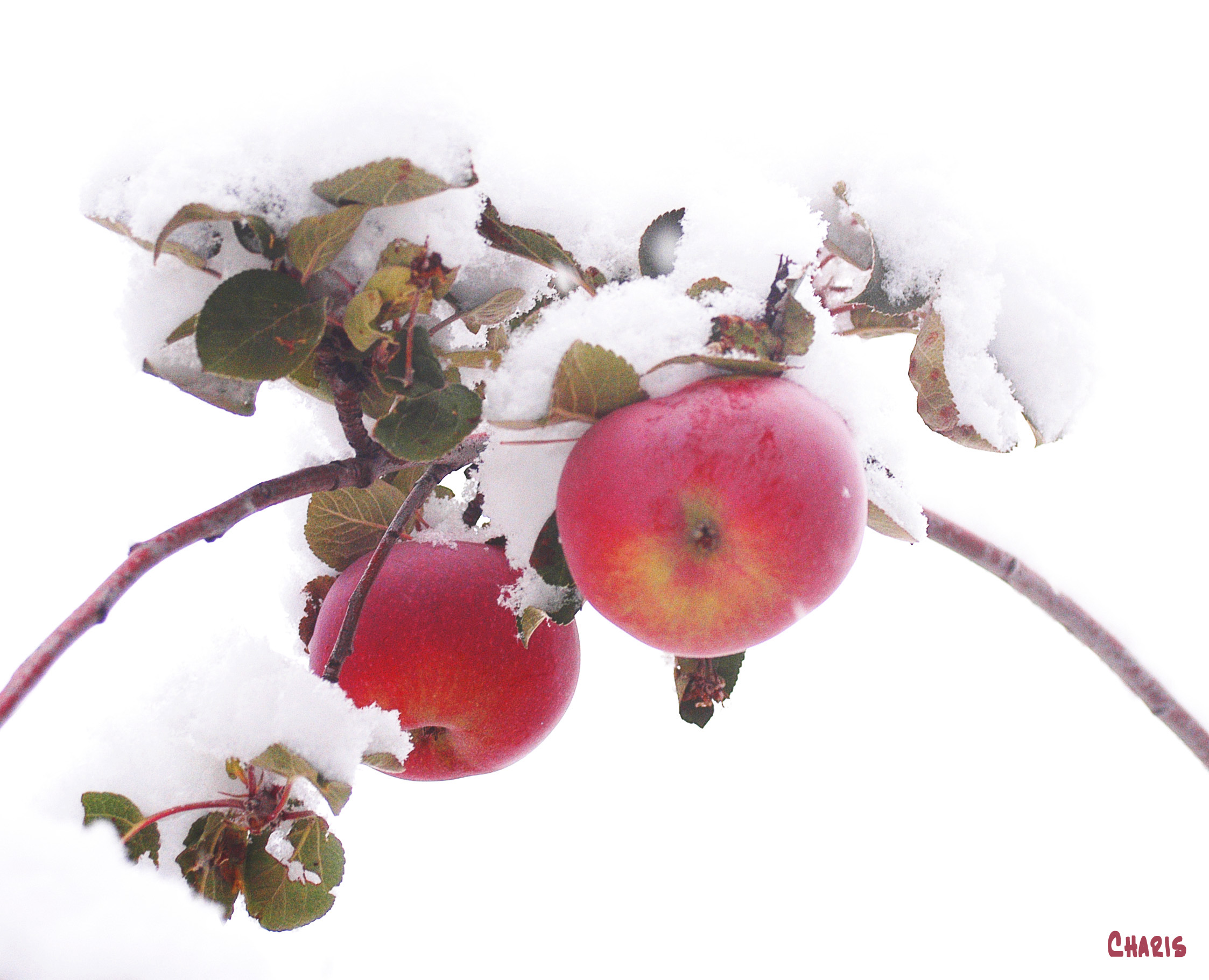




















 Photo: My grandmother at the time of the exodus from The Crimea
 Photo: Spring-fed pond on Haha Road