Can I be honest? For many years if I were to be asked who my least favourite Bible character was, it would have been that impossible “excellent wife” of Proverbs 31. She runs a perfect household, makes clothing for her family and half the town; she weaves her own bed linen, dabbles in real estate and farming and still has time to exercise and watch her husband collect accolades. It says she never let her lamp go out at night. Well, she’d have to stay up all night with a workload like that. At the time, when I was in a place where this scripture was used like a trudgeon by workaholic “ladies’ teachers” (the modern equivalent of Pinterest super-achievers) who said we could do it all if we were organized and disciplined enough, I was lucky if my kids’ socks matched and we could arrive anywhere within the same hour an event was scheduled to begin.
Finally one day, an older woman (with the teaching of kindness on her tongue) laughed at me when I went on a rant about the dreaded Proverbs 31 woman.
“She didn’t do it all in one day, dear! That was a life-time achievement award kind of speech. Relax. If God grants you health, life is not over when the kids go to college.”
Now that my children are grown I understand better. Those years with little ones and acting out teenagers seemed like they would always be my whole life. They were important years, and I beg young mothers to realize they go so fast and children can’t wait until you have time for them. They do come to an end (and I cried when they did). You don’t have to accomplish your life’s work before you are 45. You don’t have to do everything on the same day, or even in the same decade! Leave something to look forward to. Relax once in a while. Take time to enjoy your life where it is right now. Be thankful for matched socks.
I have the time and freedom to pursue creative interests now. Instead of depression and exhaustion there is gladness because I am old enough to see how God delivered us from so many cliff-hanger episodes before. I can smile at the future.
And my light doesn’t go out at night -so I can find the bathroom.
I will instruct you and teach you in the way you should go;
I will counsel you with my eye upon you.
Be not like a horse or a mule, without understanding,
which must be curbed with bit and bridle,
or it will not stay near you.
(Psalm 32:8,9)
I heard someone ask once, “What are the minimum qualifications for being a Christian? What is the least I must do or believe to get “in”? I had trouble answering that question. It felt like a young man asking a friend’s advice on a relationship with a woman who expressed her love for him, by asking, “What is the minimum required of me to be married to her?”
I would be tempted to say, “Run, girl!”
Jesus answered a similar question in Mark 10.
And as he was setting out on his journey, a man ran up and knelt before him and asked him, “Good Teacher, what must I do to inherit eternal life?” And Jesus said to him, “Why do you call me good? No one is good except God alone.You know the commandments: ‘Do not murder, Do not commit adultery, Do not steal, Do not bear false witness, Do not defraud, Honor your father and mother.’”And he said to him, “Teacher, all these I have kept from my youth.”And Jesus, looking at him, loved him, and said to him, “You lack one thing: go, sell all that you have and give to the poor, and you will have treasure in heaven; and come, follow me.”Disheartened by the saying, he went away sorrowful, for he had great possessions.
In other words, he wants your whole heart.
When first introduced to the God of power in the desert, the one who showed up on the mountain in a sound and light show beyond description, the children of Israel said, basically, “Moses, this God is too scary. Tell you what, you talk to him, get his demands in writing, and when you have it in black and white we’ll have our people look at it and get back to you.” Thus a relationship with rules and a book (and experts on rules and the book as intermediaries) became the norm. The question they were asking was, “What is the minimum we need to do to get what we want and keep this God from being mad at us and making our lives miserable?”
A minimum marriage requires signatures in black and white on a marriage certificate. A true marriage requires a husband to lovingly lay down everything for his wife, the way Christ laid down his life for the church, and for a wife to respond to that love by offering him everything she has in return. The Bible often uses the metaphor of the Bride of Christ for his chosen church, the ones who have responded to his call.
Being a Christian is all about relationship. And yes, God does communicate with his beloved with more than rules and a book. He has already given everything. She just has to come to him.
High River, Alberta is still under a cloud. It may not be the same dark heavy rain cloud that dumped more water than the Highwood River could hold on that horrible day in June, but it’s a cloud. And even though there is light on the horizon, for many people living with the consequences of the first day of summer disaster, it is still dark and heavy. The children will tell you.
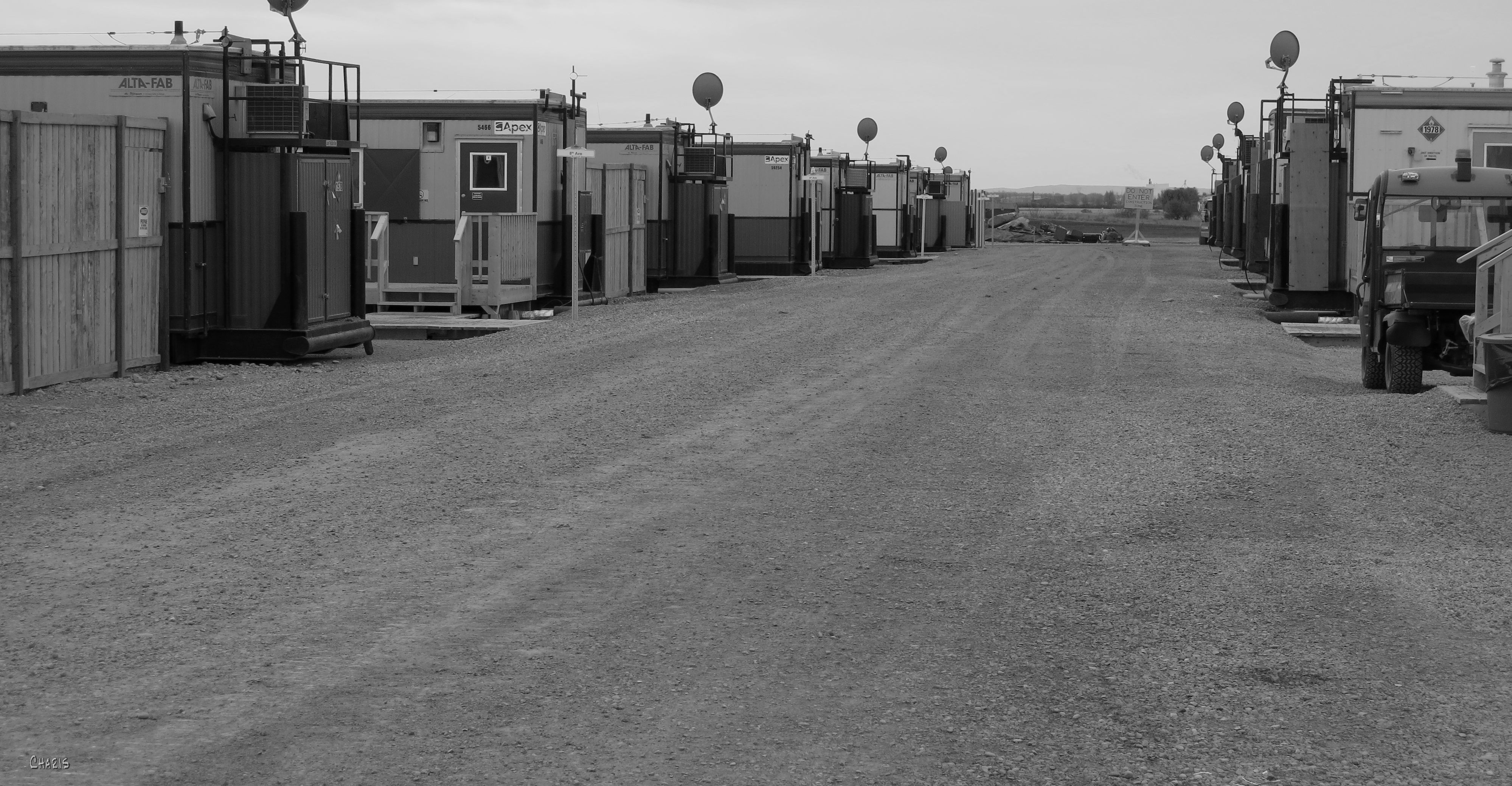
I stayed in Saddlebrook camp this week, caring for my grandchildren while their parents were away on business. Saddlebrook is the trailer town out in the country on the road to Okotoks built to house those whose homes are not habitable. There are many kind, encouraging, generous people there –especially in the food service areas (residents are not permitted to use the unconnected stoves). Visitors to the camp are strongly discouraged, but as a substitute parent I was permitted to stay (after paper work and getting photo I.D.) The government has generously provided housing to those still affected by the flood, but due to logistics problems there are often a lot of rules and regulations that communicate a big brother/victim disparity in such situations. (I’ve noticed that when people who already feel a loss of control are treated like incapable victims, they start to act like helpless victims –and angry victims need someone to blame. Just sayin’.)
Saddlebrook
I cannot possibly understand what it is like to suddenly lose everything but the mortgage. I don’t really know what it is like to wait, fill out forms, and wait some more and still not have answers. All I can do is listen –and pray.
I listened to where-were-you-when stories. I listened to you-think-that’s-bad stories. I listened to survivor guilt stories from folks who didn’t have much damage. I listened to a job list a mile long from an exhausted young father who sat on the front steps of his broken house, too tired to put one foot in front of the other anymore. There is so much to do in his “spare time” before winter.
The gardenWatermarksThe front doorThe kitchen
I listened to a young mother who longed to correct her children in private when they misbehaved at the dinner table in the café at Saddlebrook. “Don’t misunderstand. I’m very grateful,” she said. “The food is good, but it is not what I would choose to make for my toddlers. I just want to go home and cook for my family again. It’s hard to explain.”
Someone told me, “People have been really kind and have wanted to give us things, but we have nowhere to put them. And I sound awful and l hate myself for it, but I don’t want your stuff! I want my stuff! I liked my stuff! I want my baby pictures. I want my Grandma’s teapot. I want my old music. I want to go home!”
I think my granddaughter expressed it best when she was telling me about children on the school bus arguing over who was most deserving of sympathy: the ones who lost everything, the ones who knew people who died, the ones who lost their school and still don’t have classrooms and are trying to study en masse with other traumatized kids and teachers in a single chaotic banquet hall room without an outside play area, the ones who don’t have dads to help them fix their houses, the ones living in a fenced refugee camp with security guards checking their every move….
She stomped her foot and cried, “They don’t understand! You don’t understand! Nobody understands!” then plopped on her bottom bunk bed in the tiny “kitchen” and pulled a blanket over her head because that’s as close as she can get to running to her room and slamming the door.
She’s right. Every heart has its own sorrow. And this was definitely not the time to remind her of Syrian refugees or Pakistani Christians being blown up in their churches. She can’t understand their sorrow any better than they understand hers.
Only the heart can know its own resentment; likewise no stranger can experience its joy.(Proverbs 14:10)
I admit I feel my own rage rising and want to stomp my foot and scream every time I read another heartless online comment about “the foolishness of people who build on a flood plain and then want the government to pay for their stupidity.” Our son’s house is more than two kilometers from the river in an area that is still marked on the maps as being far outside any risk for flood. They are hard-working responsible people who checked before buying. This flood was way beyond anything a prudent planner could have predicted. The history of this country is that nearly all towns and cities are built on waterways. According to the maps millions in this country are at greater risk of flood than they were. Do we blame people for building in areas where tornadoes, or forest fires, or earthquakes, or blizzards or ice storms or tsunamis occur? I guess my heart has its sorrow too and I’ve got some forgiving to do. No, these know-it-alls don’t understand –and why should they? If a person has never faced adversity or experienced feeling out of control of their circumstances it is easy to maintain the illusion of being sufficient unto oneself. They don’t know what it is like for others –not really.
I saw signs of recovery though –like a chinook arch of clear sky rising on the horizon. People were trimming hedges and mowing lawns or raking leaves in some areas of town. Businesses were re-opening. Folks were discussing the choosing of new paint colours and flooring options for re-builds. My grandson was thrilled with a patch of grass in the camp big enough for him to practise throwing his new football. There is talk of an off-leash dog park going up nearby -somewhere near the beep beep beep sounds of backing-up earth movers.
I saw people laughing.
I saw kids showing off donated clothes and backpacks.
I saw a group of loving people whose church building was not damaged. They moved their own service to less-than-convenient early hours on Sunday to make room for others to use their building for the rest of the day.
I saw grateful tears in the eyes of an older woman as she clutched a handmade quilt my friend sent. (Rose gave a dozen of her gorgeous handcrafted quilts to the folks in High River).
Quilts
“I waited until the families took what they needed,” she said. “But I’m so glad this one is still here. It’s so beautiful. You don’t know what it’s like to lose everything and have to start again at my age. It means so much to have something this nice!”
No, sweet lady, I don’t know what it’s like. But I see joy in your face and you give me hope.
I dare to believe that most of the people of High River will not only survive, but that this beautiful windy mountain-edged prairie town will thrive and remember the sorrow of this tough season without bitterness. They will also remember the joy. My prayer is that they will know what it is to need help and how to give help in a way that preserves dignity. They will use this opportunity to develop the skills that untangle red tape; they will know from experience how to plow through unwieldy bureaucracy, how to organize volunteers, how to establish a grass-roots just-folks-helping-folks attitude that can stand firm when disaster hits another Canadian town. They will know how to be grateful, thoughtful, helpful and compassionate because, unlike the nasty commentators on the sidelines, they get it. Right now they are hurting and need more time to heal, but they will rise up again.
They will rise up.
It’s people like these beautiful folks, the ones trained by adversity, who build up this country. They are the wise ones. They are the strong ones.
I believe when the dark cloud blows away, the town will see it has a purpose and a higher calling in the grand scheme of things.
Higher Calling
High River will be a city of refuge, of peace, of caring –and of love.
He consoles us as we endure the pain and hardship of life so that we may draw from His comfort and share it with others in their own struggles. (2 Corinthians 2:4)
“To say that worship is either about glorifying God or finding personal satisfaction is to put asunder what God has joined together. His glory and your gladness are not separate tracks moving in opposite directions. Rather His glory is in your gladness in Him.” -Sam Storms.
In my life I’ve been part of different denominations within the big C Church. Each of them seemed to emphasize their favourite part of the heart –the lebab– and each were willing to jettison a part another group cherished. Some, admittedly on the extreme edge, said the will is pretty much vetoed by God’s sovereignty, that he is going to do whatever he is going to do with or without our participation or input, thank-you-very-much. Some told me the mind is a source of pride and that serious study is an exercise in distraction. Some taught the emotions are untrustworthy, misleading, and a hindrance to disciplined devotion.
I’ve never managed to successfully ignore any part of my heart for any length of time. When, under pressure, I tried to set aside emotions, for example, in order to please someone else, the conflict without became the conflict within. When a God-given part of our souls is ignored for too long a person experiences, well, some craziness –at least some major stress. At least I sure did. And when it erupted out of me, it was not pretty.
At some point in my past I have been told I am too emotional, I am too intellectual and I try too hard. At some point I have been advised to shed all of these parts of my heart –not all at once of course. The first to go was those old unreliable emotions.
Parallel
I spent many years forging on without the caboose of emotion, wondering why it never caught up. The faith life was a joyless drudge of duty and responsibilities. One day I finally realized that caboose thing was not even on the same track. I think I left it in a switching yard someplace. My soul needed my caboose. Without it I was lacking the discernment that comes from feeling something is off or the joy in the Lord that is my strength.
I see the same thing happening with some folks who have been bullied by academics. They tend to react by praising anti-intellectualism and raise feeling/sensing or engaging the will to a higher level. Some of these folks have told me I think too much. I am too much in my head. But God gave me a brain for a reason, and if I leave it on the hook with my jacket I also give up one of the tools for discernment –and the joy of discovery whilst chasing a rabbit trail through a genealogy.
I’ve also been told I try too hard, that I should “let go and let God” (whatever that means). It would seem that some of those who have lived under the oppression of legalistic attack are tempted jump to the ditch on the other side of the road and use grace as an excuse for not taking responsibility for the fruit that comes from stupid unwise choices. But when I disengage my will my jeans don’t fit anymore, I seldom get around to telling people how good God is –and frankly, I start to feel more like God’s victim than his beloved adopted child with a role to play in the family business.
I am not suggesting any merit in being led by wilfulness, argumentative king-of-the-hill theological debate nor unfettered emotionalism. Apart from the transforming love of Jesus any gift of God is perverted when it serves selfish ego and it all becomes a gong show. Our minds, wills, and emotions need to come together in submission to Christ in spirit and truth .
But that’s why Jesus the good shepherd came –to restore our souls.
This is what integrity means to me – Jesus helping me get my stuff together and having it all head in the same direction at the same time on the same tracks. My prayer is that the Lord unites my heart to fear His name. I choose to study the scripture because it points to Jesus Christ and he just makes me feel good and want to join in on his plans. I want to put everything in happy submission to the Creator who made me and wants me to use and enjoy every gift he gives to his glory –and my gladness.
Abba, with my whole heart I offer You my praise! Thank you for every good gift and for making me the way you made me.
Teach me your way, O Lord,
that I may walk in your truth;
unite my heart to fear your name.
I give thanks to you, O Lord my God, with my whole heart,
and I will glorify your name forever. (Psalm 86:11, 12)
I will sing of steadfast love and justice;
to you, O Lord, I will make music.
I will ponder the way that is blameless.
Oh when will you come to me?
I will walk with integrity of heart
within my house. (Psalm 101:1,2)
And as for you, [Solomon] if you will walk before me,
as David your father walked,
with integrity of heart and uprightness,
doing according to all that I have commanded you,
and keeping my statutes and my rules,
then I will establish your royal throne over Israel forever…
No one has ever accused me of being overly meticulous when it comes to housework. In fact one day I was telling my adult daughter about how, when I was a kid, we used to sit in the station wagon packed with camping equipment waiting up to two hours for mom to wash her way out of the house (because she couldn’t stand the thought of someone seeing anything but a spotless house should she die suddenly and not return from the trip.)
My daughter said, “Mom, if your house is spotless after you die we’ll know for sure someone was tampering with the evidence.”
Mystery Meat
That’s probably true. But since my house has yet to express gratitude or show any signs of willingness to improve without my constant intervention I do what is necessary and then go get a life.
There are times, however, when lack of attention to detail is definitely a fault. Can I admit fear of the unknown when it comes to plastic storage container caskets of leftover food in the back of the fridge? Sometimes I don’t want to know what’s in there.
“Mom, I think the mystery meat is talking to itself. It seems to be alive,” said my son, “It’s expanding. What is this substance?” he asked gingerly prying off the lid.
My rule is, “If you can’t identify it, don’t eat it.” Seems simple enough.
“Whew!” he exclaimed when the scent of the offensive substance reached his nose. “Sorry, Ma. I’ve gotta throw the whole thing out,” and he tossed the entire container in the garbage can.
I was thinking today (anything to avoid housework) about substance. The Bible says in Hebrews 11:1 that faith is the substance (hypostasis) of things hoped for, the evidence of things not seen.
Hmmm… Could it be that unbelief is not merely a lack of faith but also a substance itself, an offensive substance, the evidence of disappointing things seen (or smelled)?
A young man told me about a vision he had driving toward a city on the prairies. He said it was so real he had to ask his wife to grab the wheel. What he described (as nearly as I recall) was something like this: He saw a dull golden coloured metal dome over the city. In the center was a hole with something like incense or smoke or a ray of hazy light rising up through the hole. Then he saw objects, some of them wrapped in lovely paper, some of them with bows, some of them too big for decoration, coming down from the sky and landing on top of the dome but not going through it.
He said he understood the smoke/ray going up to represent prayer and the things coming down to be answers to those prayers but this dome was stopping them from reaching the place where people lived. I asked him if the dome was brass coloured. He said it could have been.
“Have you ever heard people say that when they pray it feels like the heavens are made of brass and God doesn’t answer them?” It clicked with him.
Today I wonder if that brass ceiling is made up of the substance of unbelief. I wonder if unbelief can clog the pipes, block off God’s still small voice, or rust the valves shut against his goodness. I wonder if unbelief is more than a dearth of faith, but almost like an entity that stands in opposition to faith.
One time when Jesus was in Nazareth he apparently did few miracles there “because of their unbelief.”
And they took offense at him. But Jesus said to them, “A prophet is not without honor except in his hometown and in his own household.” And he did not do many mighty works there, because of their unbelief. (Matthew 13:57, 58)
“The Leap,” traditional site on outskirts of Nazareth where it is said the people took Jesus to throw him off
I’ve always wondered about that. If Jesus was God could he simply not blast through the unbelief and give the townsfolk an I’ll-show-them? Could it be that it is not a merely lack of faith that hindered what he wanted to do, but this thing unbelief, this substance, this entity, that somehow kept people from receiving what he wanted to give them? What they saw was not the Messiah, but the carpenter’s son from the ‘hood. Could unbelief be the substance of things seen by mere physical eyes –things which caused them to take offense that he would have the audacity to think he was better than them and work miracles?
Modern Nazareth
I was also wondering why giving thanks and worshiping is so strongly connected to prayer.
Do not be anxious about anything, but in everything by prayer and supplication with thanksgiving let your requests be made known to God. (Philippians 4:6 for example)
Before this year of challenges the Lord spoke to me a lot about not being hard-hearted as at Meribah (when the children of Israel tested God in the wilderness.) They forgot what he had done for them. They complained and neglected to give thanks for the fact that he miraculously supplied daily bread (manna) and that their clothes and shoes never wore out.
They felt entitled. Then they felt offended.
There is a connection between unbelief and being hard-hearted and unable to receive. Afterward he appeared to the eleven themselves as they were reclining at table, and he rebuked them for their unbelief and hardness of heart, because they had not believed those who saw him after he had risen. (Mark 16:14)
We are just now learning that when our son-in-love was critically ill the people who had the most problem praying for him, and who admit they never phoned or talked to his wife because they “knew” he was bleeding out and was going to die, were some of the medical professionals amongst friends and family. They were too familiar with the evidence seen and had watched this scenario play out too many times before. It must be very hard for them to get up and go to work everyday when they live with so many sad stories of disappointment and loss. It must be difficult for them not to steel themselves against all that pain. But some prayed anyway, telling God, “I believe. Help me with my unbelief.”
And God was good –so good. Our son-in-love is in excellent health, back at work, back playing with his children, and praising the Lord for his infinite mercy. Our daughter continues to teach us why thankfulness is essential in prayer. The evidence of her faith in the unseen is now seen –the glory of God made manifest- in her beloved partner’s restored body and her restored family and restored faith for so many who joined in prayer for him.
(Can I just say another thank You, thank You, thank You, Lord!!! here?)
We are taught in our culture to make choices from a list of evidence-based options, but we tend to forget the evidence of every-day provision of God. Lack of gratitude leads to a sense of entitlement. Thankfulness makes us take our eyes off the lack of water in the desert and reminds us that the God who parted the sea and gives us bread and shoes will surely supply all our needs. He got us this far. It’s obviously not his desire for us to shrivel up and blow away now. When freely and joyfully we give thanks (and sometimes for answers to others people’s prayers before we have seen our own answered) I think it starts to break down that steely hardness of heart. When we are offended a tough layer of unbelief goes back up between us and God’s goodness again.
When we tell God stories (testimonies) and thank God and remind each other how He rescued us from the last cliff-hanger, when we remember his goodness, we remember and recognize blessings – evidence of the unseen. When we praise God we focus on Him and his nature. Could this be the faith that shatters the brass ceiling of unbelief and allows the answers to prayer piling up there to start to drop on our heads? Could this be what helps to unclog the gunk-jammed pipes that keeps His goodness from flowing into our lives?
I wonder if our Western naturalistic worldview, the one that tells us that God doesn’t intervene, that miracles don’t happen (or at least not anymore) and that there must be an explanation for the unexplained somewhere – even when a miracle is dropped in our lap – I wonder if this creates a brass ceiling over our country. I wonder if years of rehearsing the stories of our disappointments and unforgiven injustices allows the substance of unbelief to molder away and grow into a a foul-smelling entity like the mystery meat in the fridge. I wonder if it clogs the pipes that would bring fresh water of revival? I wonder if it’s like rust that keeps the valves shut tight and unable to receive the flow of the Holy Spirit?
I wonder if the massive prayer effort on behalf of one ordinary man in a small city hospital in Canada was a gift to us to demonstrate the type of corporate effort of prayer with thanksgiving it takes to break through large-scale unbelief?
It seems to me the more impossible a situation looks, the more we need to make the effort to give thanks for everything we can think of. I wonder if instead of pooling our unbelief, we put our tiny portions of faith together and pray, giving thanks for everything –I mean absolutely everything- that the Lord has blessed us with…
At the end of the young man’s vision, he saw the dome crack, then break, and all the good things piled up there start to fall on the city. Breakthrough.
I wonder if prayer with thanksgiving might bring down that offensive substance that forms brass ceilings and open the floodgates of heaven.
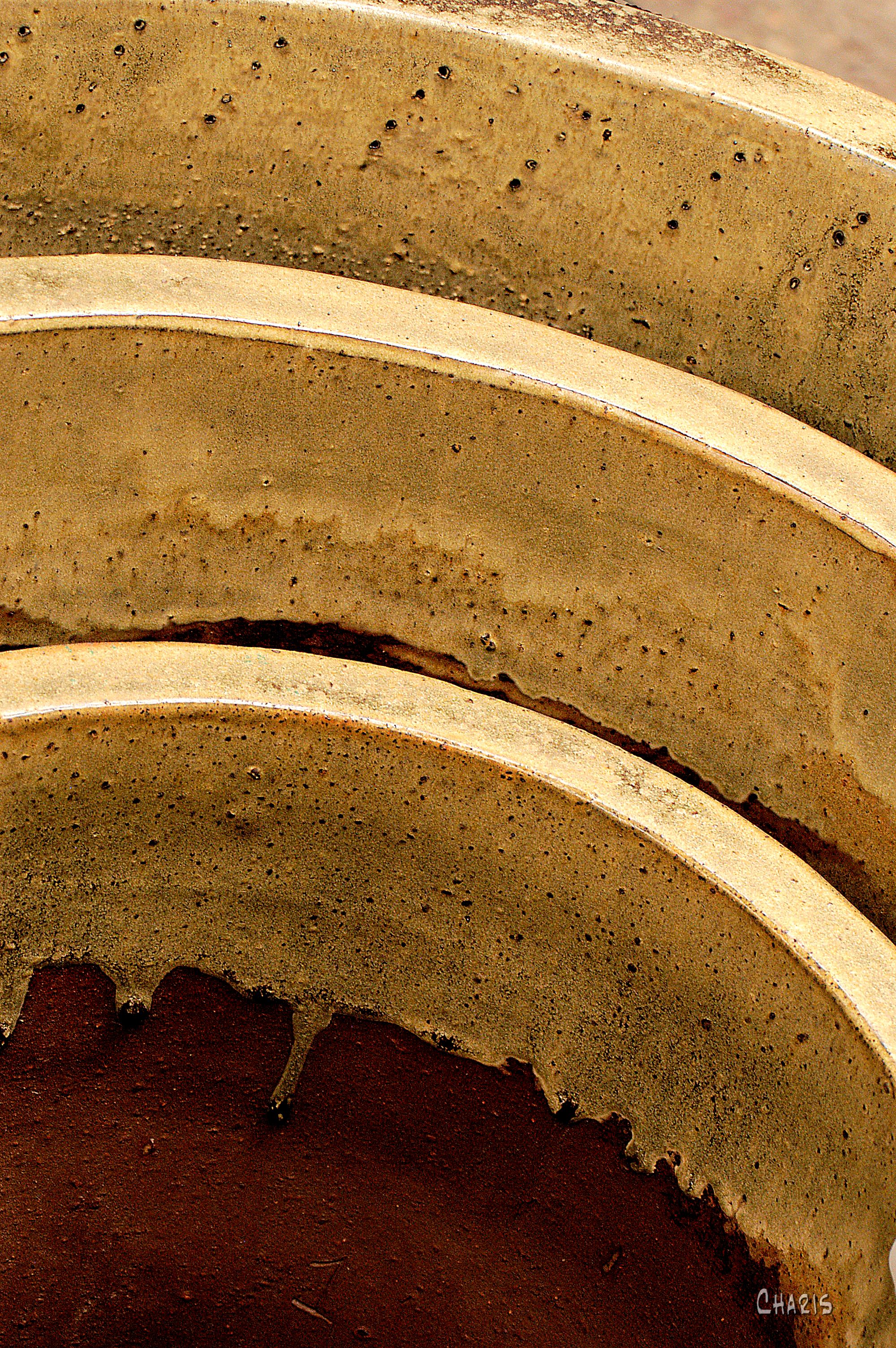
I saw these clay pots tossed in a wooden bin under the counter in a shop catering to tourists in Jerusalem. The good ones stood decently and in order on a clean glass shelf. These were chipped and dust-laden, but nevertheless not discarded. They spoke to me.
I am often bewildered and have so many questions. I keep getting to take the same tests over and over and I still haven’t got it right. I have chips and dents and scars from the poor choices I have made in times of challenge, but it absolutely amazes me that God chooses to use cracked pots like me. Unlike many organizations which worry about public image He doesn’t discard the wounded. It’s broken-ness that proves God’s goodness, because if I had any power in myself, believe me I am the first person I would fix. His grace amazes and humbles me.
But this beautiful treasure is contained in us—cracked pots made of earth and clay—so that the transcendent character of this power will be clearly seen as coming from God and not from us. We are cracked and chipped from our afflictions on all sides, but we are not crushed by them. We are bewildered at times, but we do not give in to despair. We are persecuted, but we have not been abandoned. We have been knocked down, but we are not destroyed. (2 Corinthians 4:7-9)
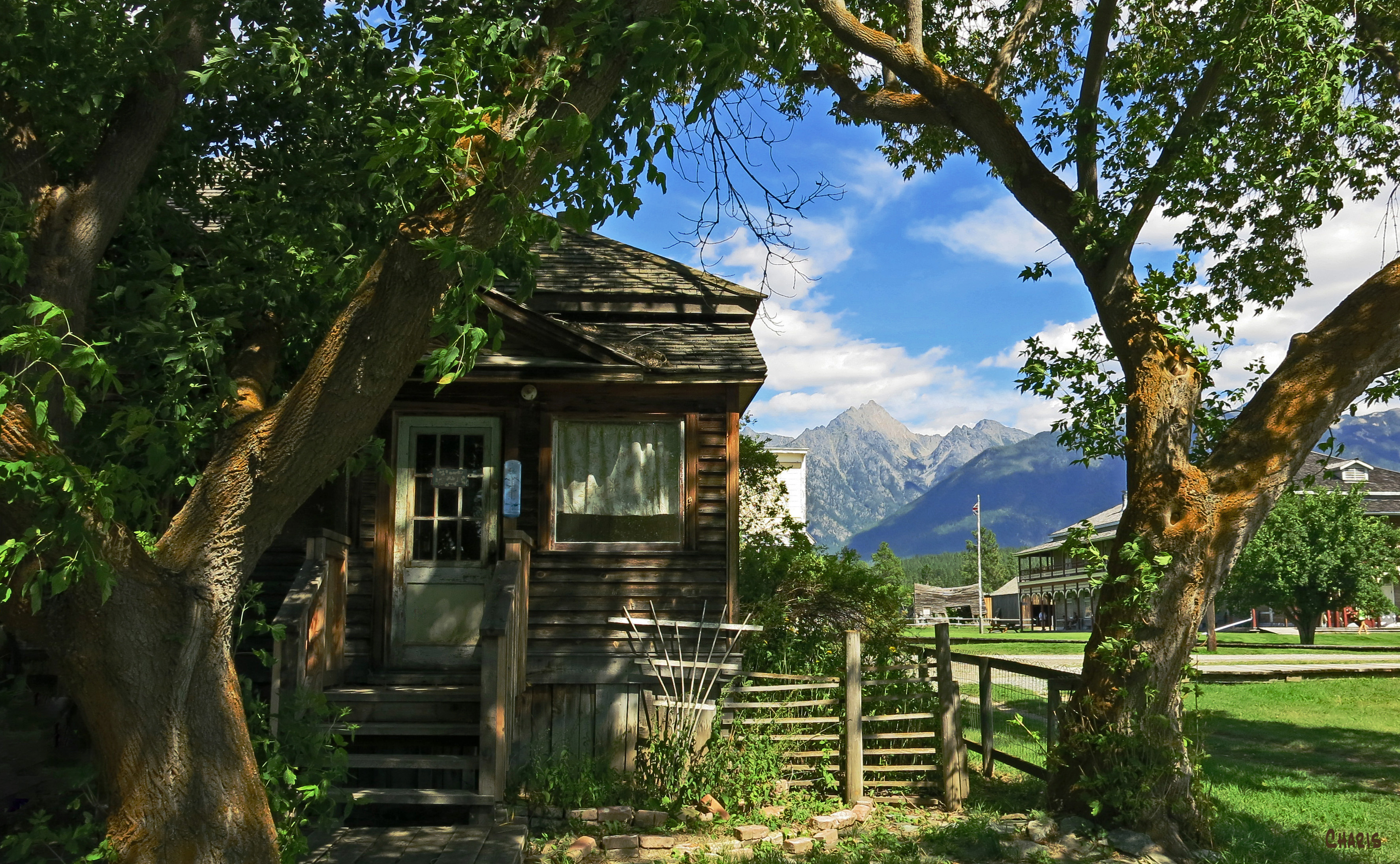
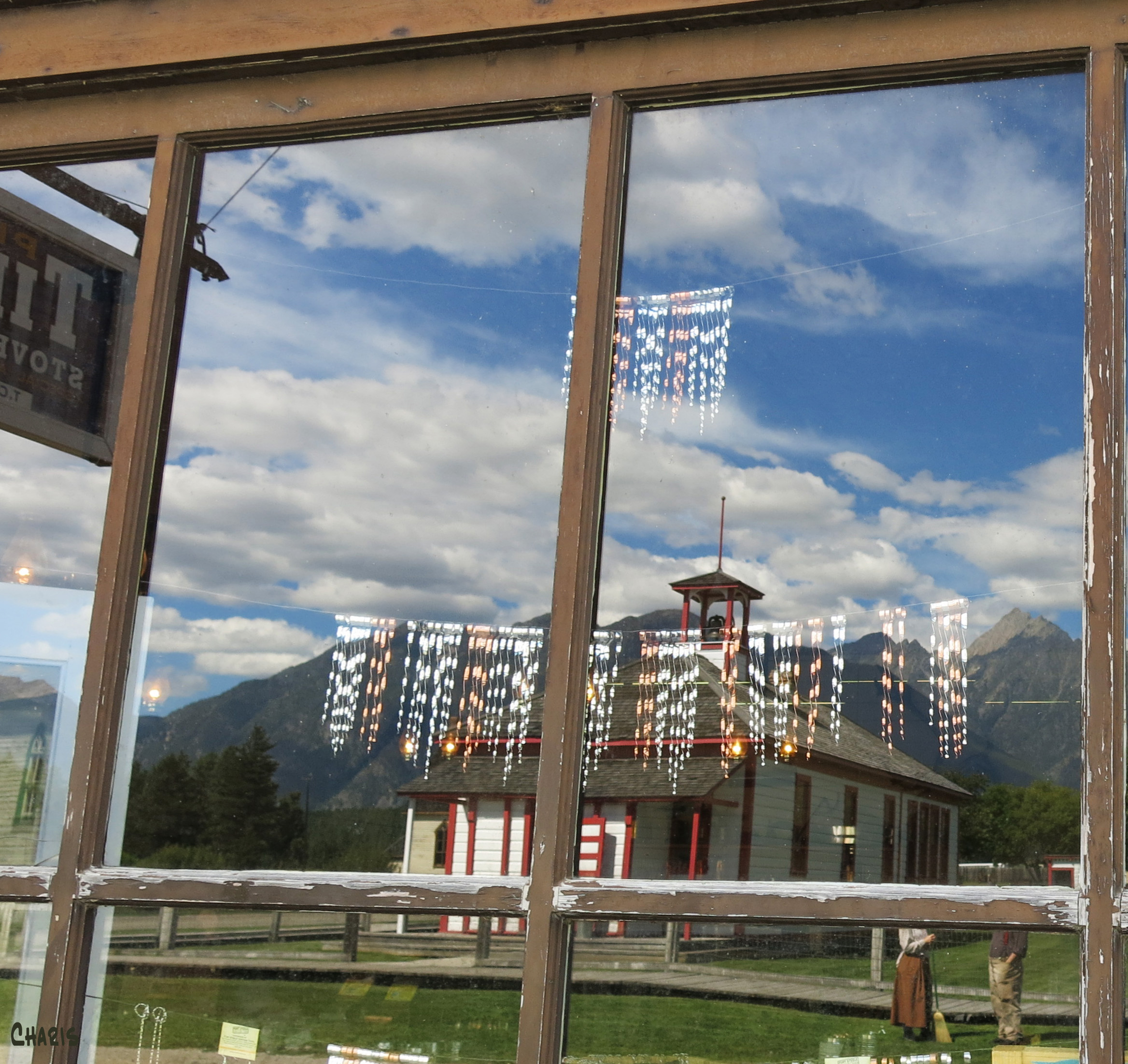
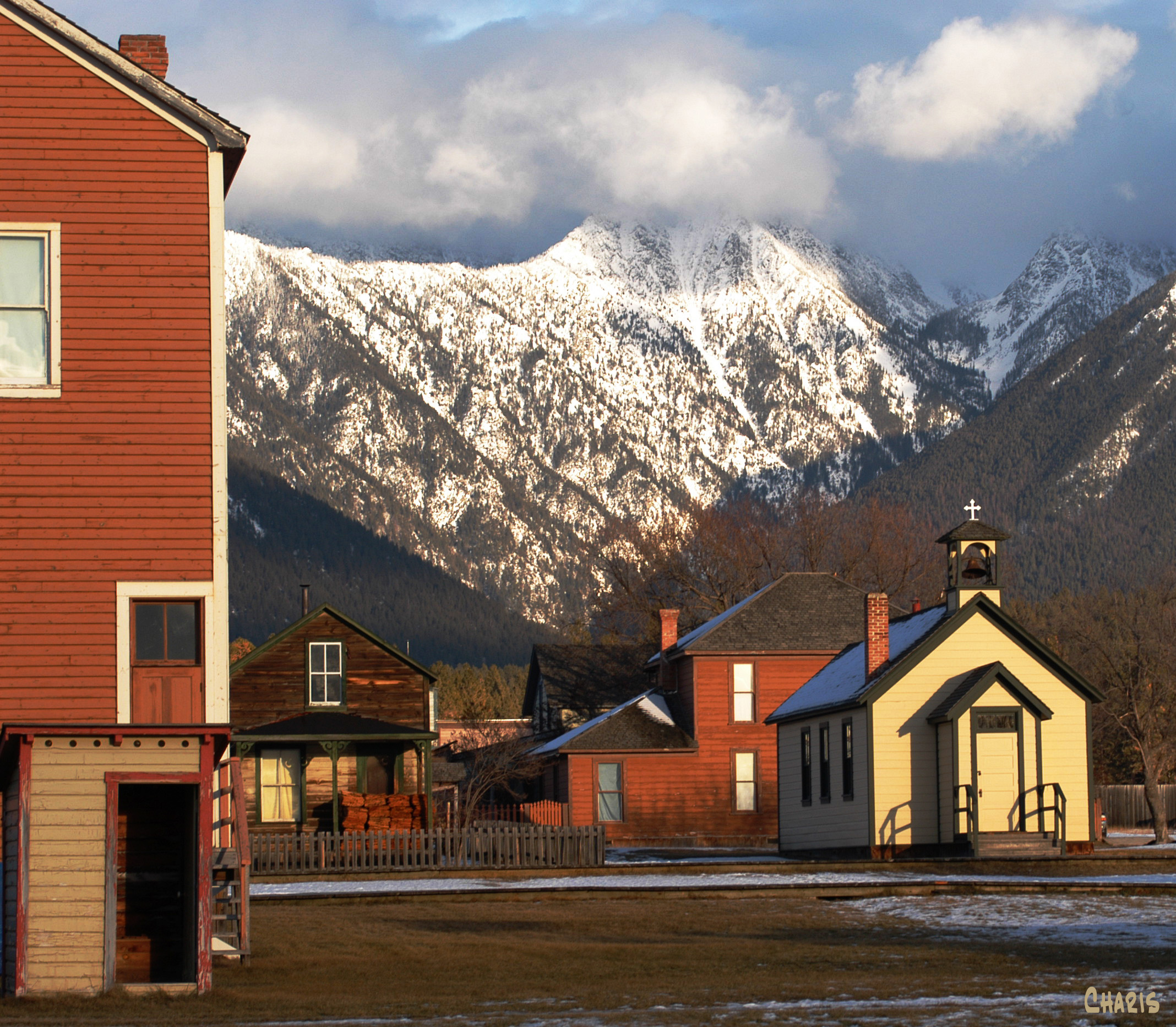
Every day its streets bustle with activity, but as the sun sets the tinker lays down his tools, the blacksmith’s forge goes cold, Miss Bailey balances her bell and pointer and dunce cap on the stool in the corner. The Northwest Mounted Police recruit drops his British accent and hangs his red serge on the costume rack. The inhabitants of Fort Steele leave via the employees exit to the parking lot and carpool home to the next town, because no one actually inhabits in this one.
It’s dead.
Tinsmith Shop Window, Fort Steele
Open
When pioneers built the livery and school and churches and hotel and shops Fort Steele glistened with the promise of wealth. Since gold had been discovered in the nearby Wildhorse Creek all sorts of adventurous trail-blazing men streamed in, and after a tense situation with the first dwellers in the area was settled without violence, the abundant beauty and riches of the valley convinced them to invite their wives and children to join them.
The town of Fort Steele, named in honour of Superintendent Sam Steele of the Northwest Mounted Police who settled the uprising, basked in potential. Second sons and peasant entrepreneurs who left Europe behind prospered. But prosperity has a way of being usurped and the man who represented the town’s interests in parliament, retired British army officer Colonel Baker, had a way of also representing his own interests. The promised railway changed course. The station was built on Colonel Baker’s property instead, too far away to serve a town in horse and buggy days. Eventually people started moving to be closer to the railroad life-line. Eventually shopkeepers and trades people followed.
The result was an abandoned ghost town turned living history museum fifty years later.
Fort Steele after the tourists go home
When we first moved to this area, when our children were young, we often visited the town. We warned the kids not to barge into the house in the photo at the top because someone still lived there. Now no one lives there.
This week I was reading in the book of Revelation about the church of Sardis.
“To the angel of the church in Sardis write: These are the words of him who holds the seven spirits of God and the seven stars. I know your deeds; you have a reputation of being alive, but you are dead. “
This reminded me of Fort Steele and the fun events we attend there, going to marvelous concerts in the old theatre, sharing potlucks around a pot-bellied stove in the NWMP barracks in the deep cold of winter, attending weddings seated around the huge gazebo in the hot summer sun, celebrating Thanksgiving in the garden produce-bedecked Presbyterian Church followed by a groaning table feast in the hotel. The place is full of activity –but no one lives there. It’s all an act.
No one is born there, or moves there, or grows up there, or grows old there.
This is the rest of the message to the church at Sardis: Wake up! Strengthen what remains and is about to die, for I have found your deeds unfinished in the sight of my God. Remember, therefore, what you have received and heard; hold it fast, and repent. But if you do not wake up, I will come like a thief, and you will not know at what time I will come to you.
Fort Steele Presbyterian Church
I wonder if it isn’t easier, when we are in churches that have become monuments to past moves of God, churches whose congregations are dwindling, to either practise willful blindness toward creeping death or abandon them to follow the newest thing. The church in Sardis was not given either option. They were not told to pick up and move to Philadelphia where the church was living love. They were told to wake up, strengthen what remained, hold fast, turn from deadly thinking and change. A remnant –an uncompromised scrap of the fabric that once made up this church remained to help them.
Yet you have a few people in Sardis who have not soiled their clothes. They will walk with me, dressed in white, for they are worthy. The one who is victorious will, like them, be dressed in white. I will never blot out the name of that person from the book of life, but will acknowledge that name before my Father and his angels.
When folks in the big C church at large choose to pronounce death before the Lord does (and He does do this when a group is so far gone it becomes toxic) they could be cutting off those few who still walk in victory, who faithfully live worthy of their callings right where they are, without denying the seriousness of conditions of those around them. They are beacons of hope, worthy of our prayers and support. Revival is about breathing life into that which once was thriving, but is now dying.
God is still able to revive and restore. Our part is to let go of our reputations and change our ways to match His. Jesus knows all about resurrection.
Whoever has ears, let them hear what the Spirit says to the churches. (Revelation 3:6)


























 Charis: Subject to Change