
Sometimes you need to get away from people, not because you don’t care, but because you do.
Jesus repeatedly left the crowds, though, stealing away into the wilderness to pray. (Luke 5:16)

Sometimes you need to get away from people, not because you don’t care, but because you do.
Jesus repeatedly left the crowds, though, stealing away into the wilderness to pray. (Luke 5:16)

I used to tell my singing students “I would rather you didn’t practise your songs at all than to drill them mindlessly. All you will do is reinforce your mistakes. There is no benefit to routine unless you are thinking about what you are doing. All that work is in vain if we have to spend your lesson time blasting a wrong note or rhythm out of the setting concrete that is habit.”
The benefit of routine is that it keeps you from having to think. As my husband reminds me, if I put my keys in exactly the same place every time I won’t have to think about where I left them. Routine saves time and brain space. Repetition and tradition reinforce important basic concepts and give us patterns for instant responses when we don’t have time to think. Practice and repetition are essential to learning, but when worship and prayer become mere repetitive routines, we are no longer engaged in a truly conscious way, mentally, physically, emotionally or even spiritually.
Jesus warned us not to be lulled into feeling super-spiritual by the number of words we repeat to try to impress God. “Vain repetition” the ancient King James version called it.
But thou, when thou prayest, enter into thy closet, and when thou hast shut thy door, pray to thy Father which is in secret; and thy Father which seeth in secret shall reward thee openly. But when ye pray, use not vain repetitions, as the heathen do: for they think that they shall be heard for their much speaking. (Matthew 6:6-7)
I love worship music from the heart. Sometimes the tunes that carry my deepest love for the Saviour may be no more complex than nursery songs and when the heart is engaged can be sung over and over as a profound offering of praise.
And sometimes repeated simple choruses with iffy theology are like singing Ninety-nine Bottles of Beer on the Wall -endlessly.
If God is worthy of our praise he is worthy of our best, thoughtful, skilled, creative, heart-felt praise. Today people with God-given talent like the composers Brahms or Vivaldi or artists Rembrandt or Durer or poet/lyricists Charles Wesley or Isaac Watts often have to go outside the church to find a place where they can praise with their whole beings and where they won’t be accused of “showing off.” Even accounting for the difference in communication styles and artistic vehicles many of us have lost sight of the concept of excellence as a higher form of worship.
No matter the tradition we come from we all have our forms of repetition. Praying differently, mindfully, listening carefully to Holy Spirit as we do so, can be less than placating sometimes.
Lord, be with him…
I never left him.
Comfort her…
She doesn’t need more comfort. She needs to give up the role of perpetual victim and start acting like the brave overcomer I already told her she is.
Let the meeting run smoothly…
There are some old infected wounds that need to be excised first.
Provide for their needs…
You’ve got a fifty in your wallet.
Oh Lord, you are worthy of far more than we tend to give you. Thank you for your forgiveness. Thank you that you are turning our hearts of stone into soft, living beating hearts of love. Thank you that you continue to invite us to fully engage with you with every good thing you have placed in us.

But when I am afraid,
I will put my trust in you.
I praise God for what he has promised.
I trust in God, so why should I be afraid?
What can mere mortals do to me?
(Psalm 56:3,4 NLT)
One night after praying, I heard, “If I show you where I am going with this, it removes the element of faith.”
I read the great faith chapter in the book of Hebrews today, the one that starts with, “Now faith is the substance of things hoped for, the evidence of things not seen.” (11:1) It goes on to list many faithful people who trusted in God’s promise. It lists what they accomplished by faith. Toward the end of the chapter it says:
And what more shall I say? For time would fail me to tell of Gideon, Barak, Samson, Jephthah, of David and Samuel and the prophets— who through faith conquered kingdoms, enforced justice, obtained promises, stopped the mouths of lions, quenched the power of fire, escaped the edge of the sword, were made strong out of weakness, became mighty in war, put foreign armies to flight. Women received back their dead by resurrection.
Yes! I thought, Look at what was accomplished by faith in people who were born before Jesus Christ died and rose again to conquer sin and death once and for all. Imagine what kind of things God plans for His church to do now that Christ indwells us and is our hope of glory! Jesus said “Greater works shall you do…
Then I read the next part: Some were tortured, refusing to accept release, so that they might rise again to a better life. Others suffered mocking and flogging, and even chains and imprisonment.They were stoned, they were sawn in two, they were killed with the sword. They went about in skins of sheep and goats, destitute, afflicted, mistreated— of whom the world was not worthy—wandering about in deserts and mountains, and in dens and caves of the earth.
SAY, WHAT?
Then I remembered the verse in Revelation 12:11 I mentioned in an earlier post, that says “They over came him [the accuser, the evil one] by the blood of the Lamb, by the word of their testimony and they loved not their lives even unto death.” In Philippians 3:10 (a theme verse for my life) Paul wrote that He longed to know Christ and the fellowship of his sufferings. I would prefer to gloss over those parts, but I can’t. Knowing Christ on a deeper level involves suffering.
Persecution is real and sharing suffering is part of knowing Christ. As Graham Cooke says, “God allows in His wisdom what He could easily prevent by His power.”
A good father will allow his child to face increasingly difficult challenges that strengthen him. A good friend will allow you to share their suffering -and their joy- with them.
When my close friend was dying of cancer she sent many acquaintances away with a cheerful wave, but she gave me the privilege of staying with her through all the ugly parts of her suffering until the end. The last thing she said to me was, “My angel is singing to me.” Jesus told his disciples they were more than servants; they were friends.
But do we need to live in fear?
I was terrified of childbirth. My mother had many complications and I heard the story of how horrible my birth was over and over. The result was a fear of not only labour and delivery but, eventually, of even visiting anyone in hospital. I was steeped in a culture of fear. But after my son was born, which I admit was no picnic, I learned that I was much stronger than I thought, that fear of physical pain did not need to set limits on my happiness. I could endure because I knew the joy that came afterward. (And as I tell young women who are as fearful as I, if the pain was all that bad would so many of us choose to bear more children after the first? Even my mother, who had every complication in the book, chose to have another baby after me.)
If we back up and see the big, BIG picture we can see that eventually, for the believer, all tears end when we are face to face with our Lord -even for the ones sawn in two. There is more to come. Fear of pain, emotional or physical, need not set the limits of our joy. It was for the joy set before Him that Christ endured the cross and despised the shame heaped on Him. We can trust Him to give us the grace we need for the assignments He has for us. I do not have the grace for a hypothetical trial right now, because, like a train ticket to Novosibirsk, I don’t need it right now. Jesus’ promise to never leave or forsake me means that I can trust that when I do, He will provide it. It would be silly to fret over not having a ticket I don’t (and may never) need.
A lion’s roar is meant to be intimidating. Roaring lions are territorial. The enemy manipulates with fear. Peter warns:
Humble yourselves, therefore, under the mighty hand of God so that at the proper time he may exalt you, casting all your anxieties on him, because he cares for you. Be sober-minded; be watchful. Your adversary the devil prowls around like a roaring lion, seeking someone to devour. Resist him, firm in your faith, knowing that the same kinds of suffering are being experienced by your brotherhood throughout the world. And after you have suffered a little while, the God of all grace, who has called you to his eternal glory in Christ, will himself restore, confirm, strengthen, and establish you.
Fear not. God is good.

I donned my water-proof boots and headed back up to the woods yesterday. The tall grasses of last summer slumped over in wadded tangles of faded brown. Between the puddles patches of green moss, kinnikinnik, Oregon grapes and half a dozen mosses and lichens proudly prove that they endured yet another winter, remaining faithfully green underneath a thick blanket of snow.
March and April mean the time spring blossoms in many parts of the world. March and April, in most of southern Canada, and especially here in the shadow of the Rockies, is when the snow may or may not start to melt and when the detritus of winter is no longer covered with pristine blankets of glowing white snow. A lot of garbage and dead plant life from last summer clutters the landscape and piles of accumulated snow morph into piles of dirty sludge. It’s not very pretty. If the temperature rises suddenly and the snow withdraws quickly droppings from pets and farm animals may thaw on the same day and the winds of early spring are not such a sweet thing, believe me. The deer left plenty of unpleasant evidence behind that they chose our front garden as their bed this winter.
Spring is a welcome season of stirring hope, but for people like loggers, who work outside, break-up means going home and waiting for the ground to dry until they can work again. In the tourism trade it’s called the shoulder season -too wet (or too dangerous due to avalanche hazard) to hike, too warm to ice fish or outdoor skate or to ski the lower hills, too cold to boat or swim. Out of season. It’s a good time to tend to tools that need repair.
Paul wrote to his young protegé, Timothy, that making disciples of Jesus is ongoing. True there are seasons when many new believers are born into the family of God and seasons when the Church experiences rapid growth in maturity, but there are also seasons when growth is hidden. Sometimes it looks like nothing is happening, but when the cold and dark season gives up its hold the warming light reveals that which has endured. The mosses and lichens have been busy breaking down dead trees and hard rocks to prepare the soil for another season of growth. Seeds that have lain dormant will soon take root and shoot up.
You know, we never know what is going on in the hearts of people who appear to be cold and hard. We are just called to love faithfully -in season and out of season.

I urge you, Timothy, as we live in the sight of God and of Christ Jesus (whose coming in power will judge the living and the dead), to preach the Word of God. Never lose your sense of urgency, in season or out of season. Prove, correct, and encourage, using the utmost patience in your teaching. (2 Timothy 4:1,2 Phillips)
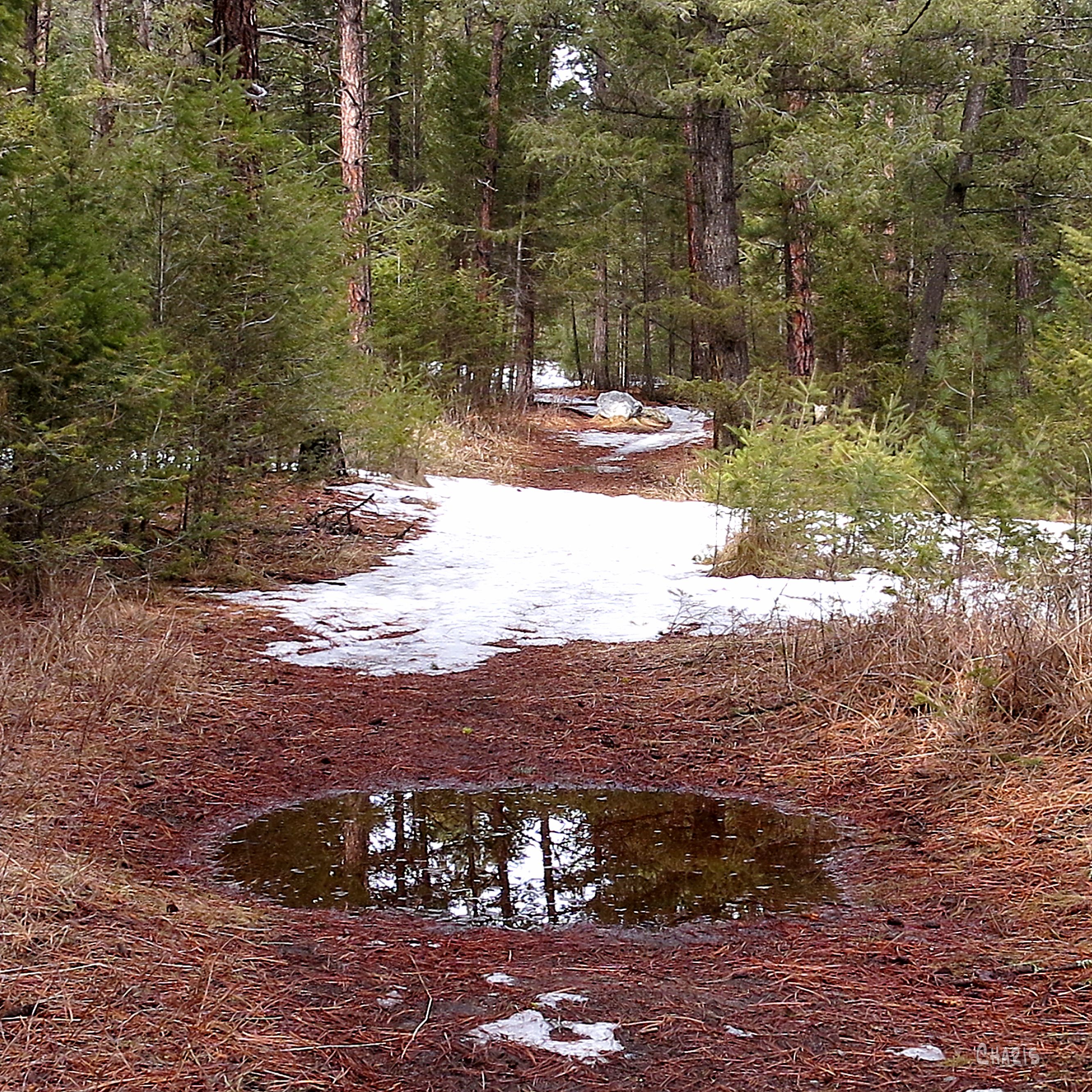

‘Tis grace has brought me safe thus far, and grace will lead me home.
One of the most common commands given thoughout the Bible is “Fear not.” One of the most common promises, repeated over and over in the Bible, is the promise of God’s goodness. The Hebrew word checed, variously translated as goodness, kindness, mercy, favour, grace or steadfast love is used over 240 times in the Old Testament alone. We don’t have a word in English that combines the ideas of strength, steadfast love and generosity, so we have to make do with several words or a word combination. Lovingkindness is one of them.
Praise the Lord. Give thanks to the Lord, for he is good; his love [checed] endures forever. (Psalm 106:1)
The New Testament word charis is usually translated as grace.
And God is able to make all grace [charis] abound toward you, that you, always having all sufficiency in all things, may have an abundance [perisseuo] for every good work. (2 Corinthians 9:8)
The word translated “abound” here, persisseuo, means abundant, overflowing, exceeding a fixed number, excelling, exuberant, extremely rich, over and above, hyper. What is grace that is not “hyper?” Almost enough grace? Barely adequate grace? Scratch-and-dent grace? OK, but you’d better watch it next time grace? Is there anything about God’s grace that is less than amazing?
Can we honestly give God too much credit and not be overwhelmed with thankfulness and praise for every good thing He gives? Can we dare to freely join his His big picture plan with abandon?
Can we stop blaming God for the consequences of our own sinful choices? And can we please stop attributing to Him the works of the evil one, the thief who comes to steal kill and destroy? What is it that overcomes the evil one’s accusations and constant messages of fear and doom and the oldest doubt in the world, “Did God really say?” Is it not by the power of the blood of Jesus Christ, by telling our God-stories, and being willing to voluntarily love Him back with everything He has given us, including our very lives?
And they overcame him by the blood of the Lamb and by the word of their testimony, and they did not love their lives to the death. (Revelation 12:11)
God knows we seem to need to hear both messages a lot –Fear not, and His lovingkindness endures forever. The assurance of checed is given 240 times in the Old Testament alone. Strangely I find both messages stir up a deep anger in many people who consider themselves to be dutiful Christians. I’m always surprised when stories of God’s goodness in times of trouble when we rely on him, and times of need when we expect Him to give us provisions for the tasks he assigns us, elicit angry responses of “Yeah, but….”
Still, I can’t condemn them when at times I find myself worrying about the future. I hear the Lord asking me, So what has brought you through troubles and tribulations so far?
Grace. Your lovingkindness.
Then don’t be afraid.
Grace, abundant, amazing, overflowing, steadfast, loving, kind, merciful grace will continuously be with you, because I have promised to never leave you, and checed and charis are part of My character. I don’t lie. I don’t change. I AM love. I give abundant grace.
I promise. That’s why I gave my only Son. That’s why my Holy Spirit lives in you. I AM love.
And you can take that to the bank.

I will lift up my eyes to the hills—
From whence comes my help?
My help comes from the Lord,
Who made heaven and earth.
He will not allow your foot to be moved;
He who keeps you will not slumber.
Behold, He who keeps Israel
Shall neither slumber nor sleep.
The Lord is your keeper;
The Lord is your shade at your right hand.
The sun shall not strike you by day,
Nor the moon by night.
The Lord shall preserve you from all evil;
He shall preserve your soul.
The Lord shall preserve your going out and your coming in
From this time forth, and even forevermore.
(Psalm 121)

I was driving down a familiar road yesterday when I saw this warning sign. I had a choice to keep going and see if I could find a way through, or change my plans, turn around and go back to the start of this road. I stopped to consider my options. A couple a big trucks with high clearance passed me and plowed through on the left shoulder of the road.
I turned back.
I’ve been praying about a personal problem that keeps recurring in my life (weight gain and loss and gain and loss and gain… if you really must know). I’m tired of it, (way beyond frustrated, as a matter of fact) but I haven’t seen any solution but to buckle down and try harder and go down the same dieting [self-imposed starvation] road yet again. As I drove back these thoughts came to mind.
“And how’s that working for ya? Working harder, I mean. Re-doubling your efforts?”
Well, it hasn’t worked in the long run yet. In fact every time I put in maximum effort, within a year or two it’s worse and I get more discouraged.
“And how long has this pattern been going on?”
Decades.
“Maybe it’s time to re-think. Maybe the problem is not the problem. Maybe the problem is only here to reveal the real problem. Maybe it’s time to quit plowing through and go back to the beginning.”
We can choose, determine, will, discipline ourselves, make an effort, decide, toil… and as soon as another crisis requires focused willpower, we realize that character quality is a limited quantity in us. We can’t try any harder.
For many years I was taught, “Love is something that you do,” and “Love is a choice.” I suppose that applies to doing right by myself as much as doing right by others and doing right by God. But is that really love? Or is that a burden?
In the story of the Prodigal Son, when the younger brother spent his inheritance and returned, humbled, to his father to ask for a job as servant, the elder brother was thrown into a crisis. When his father accepted his brother back without punishment (or a five-year disciplinary waiting period in which he proved he was willing to submit and work harder at earning trust and paying back what he owed) the elder brother was forced to question the basis of his relationship with his Father. He was crushed and angry. He realized his years of faithful service, his choice to put duty ahead of pleasure, his sense of entitlement based on job performance and “doin’ it right the first time” brought him no more love and reward than his wayward brother received. The crisis revealed his own loveless heart and fragile relationship with both his father and brother.
There are times when the feelings aren’t there, when maintaining a relationship (even with oneself) is a matter of choosing to do things consistent with the way a loving person would act. A relationship based on willpower is a rocky one though. When a crisis demands a re-direction of energy the truth comes out. Marriage counselors often ask the question, “What was it that attracted you to your mate in the first place?” Sometimes we forget, and we need to go back and remember the nights when we talked on the phone for hours because we didn’t want to be the first to hang up. Sometimes we need to remember those feelings when no one else mattered, when we thought of nothing else but what would please our loved one and the giddy joy it gave us when they smiled, or when their knock on our door thrilled our hearts.
The people in the church at Ephesus looked like they had a marvelous relationship with God. They did everything required of them, and more. They worked hard, they maintained high moral standards, they weeded out false influences, they patiently endured, they were loyal and unwavering in their application of will-power. But it wasn’t good enough. Their heart just wasn’t in it anymore. They had somehow lost their passionate emotion-engaging love for Christ.
Through the prophet Isaiah God warned a people who He said praised Him with their lips, but whose hearts were far from Him, that the days of doing the right things for the wrong reasons would soon be over. He was blocking that path. He sent the same message through the angel who spoke to John about the church at Ephesus:
Write down My words, and send them to the messenger of the church in Ephesus. “These are the words of the One who holds the seven stars in His right hand, the One who walks and moves among the golden lampstands: “I know your deeds, your tireless labor, and your patient endurance. I know you do not tolerate those who do evil. Furthermore, you have diligently tested those who claim to be emissaries, and you have found that they are not true witnesses. You have correctly found them to be false. I know you are patiently enduring and holding firm on behalf of My name. You have not become faint.
“However, I have this against you: you have abandoned your first love. Do you remember what it was like before you fell? It’s time to rethink and change your ways; go back to how you first acted. However, if you do not return, I will come quickly and personally remove your lampstand from its place… ” (Revelation 2 The Voice)
For a group that would pass many people’s criteria on what a healthy church looks like this is a pretty harsh word. I think removing the lampstand meant removing the light that they didn’t want hidden under a basket. It was the light that attracted people. Loss of the lampstand meant loss of influence.
It’s hard for those who have worked hard to spread the gospel, guard against heresy, and maintain standards to see those who have lived carelessly welcomed, accepted, honoured and given gifts beyond anything they have ever known. (I suppose it’s like the way nothing makes me madder or more resentful than the way people who have never struggled with weight issues, or spent years dieting, offer weight-loss advice as they freely enjoy a sandwich with bread on both sides.) I do believe we will soon see an influx of “fringe people” returning to experience the gracious forgiveness and generosity of the Father. It will be a time of crisis that reveals many church-type people’s hearts though. Older brothers (and sisters) need to hear the message now: Everything in the Father’s house is already yours. It is not reserved for some day in the distant future after you go to heaven and receive your inheritance. God sees and appreciates your hard work. The right words and actions are there, but the heart has long been cold. The heart is what really matters. He cares enough to post a brightly coloured message that continuing to go down this road is not going to work.
Rethink.
Go back.
Find your first love.

If you are a big fan of the book and have read and re-read it, you will be disappointed (as all fans are when they see a movie of “their” book). However, taking artistic license into consideration, the essentials are there, and for people who are not familiar with the story, it’s a great movie. My hope is that it will make them want to read the book.
This is how Paul described the essentials of the good news of the Kingdom of God story: “For I delivered to you as of first importance what I also received: that Christ died for our sins in accordance with the Scriptures, that he was buried, that he was raised on the third day in accordance with the Scriptures, and that he appeared to Cephas [Peter], then to the twelve. Then he appeared to more than five hundred brothers at one time, most of whom are still alive, though some have fallen asleep. Then he appeared to James, then to all the apostles. Last of all, as to one untimely born, he appeared also to me.” (1 Corinthians 15:3) Except for showing the 500 and the Apostle Paul those elements were all there.
There were a number of times in the film when I had to shut my inner critic off, much the way my husband has to learn to shut his bad science alarm off, my sister-in-law has to shut her bad medical practice alarm off, and I also have had to turn my bad singing technique alarm off -or at least way down- if we wish to see the story of the film or TV show director wants us to see. Most people who are not familiar with the factual details of a well-known story, like complete dialogue or setting and chronology, are not bothered by their absence. But since Twitter didn’t exist and Jesus and the boys (and the women who followed as well) didn’t leave dated moment by moment accounts of their activities there are a great many details the great editor decided were not necessary for us to know in order to grasp the essentials of the life and mission of Jesus Christ either (or Yeshua ha Meshiach from which we also get the name Joshua.) We know he was not an extremely good-looking European with amazing dazzling white teeth. Isaiah wrote that the Messiah had no extraordinary physical attributes that we should be attracted to him on that basis. People were probably shorter in those days, but I have a feeling if a 4’9″ 33-year old Woody Allen look-alike with a very, very dark tan and nasally voice were cast in the role western audiences would have just as much trouble relating. John, his beloved close friend, wrote at the end of his account of Jesus’ life: “Now Jesus did many other signs in the presence of the disciples, which are not written in this book; but these are written so that you may believe that Jesus is the Christ, the Son of God, and that by believing you may have life in his name.”
If the purpose of the film was to create interest in Jesus Christ for those who have not heard, that they might believe, then I’m good with that. I am not part of the target audience, so I will not criticize it for not being all I would wish it to be.
There was one aspect of the film, however, that I had, until recently, accepted as accurate simply because I knew no better. Since childhood I have seen films of Bible stories set in Israel which depicted the land as a dusty barren desert where people picked their way through rocky paths in their sandalled feet. Frankly I wondered why anyone would call this the Promised Land. I often thought there are a lot nicer places in the world to fight over.
Then I went to Israel a few months ago. I was amazed when I saw rich green and golden fields, orchards and vineyards, forests, and, in the north, lush semi-tropical gardens and jungle-like greenery. We were so happy to be able go with a tour leader who was also a botany prof and who had lived in the area doing research on native plants for ten years. He told us that many areas closer to Jerusalem were de-forested and over-grazed during the era of occupation by the Ottoman Turks, but in the time of Christ the hills of the northern half of the country were probably covered with natural forests. It was more like Sherwood Forest than the planet of Dune. (Actually it reminded me very much of the Okanagan Lake area in British Columbia -if the lake was a lot wider and the climate warm enough to grow mangoes and dates.)
So, just in case, like me, you were also under the impression that Galilee was a large greenish puddle in the middle of a barren Moroccan landscape, I want to show you some photos of the area around the lake where Jesus spent most of his ministry. If you want to check on other details of the story, may I suggest you read the book? It’s been a best-seller for centuries.


I took this photo around the area on the north end of the lake which scholars believe is the most likely place for the Sermon on the Mount to have been preached since there is a natural bowl-type shape in the hill below this view.

If memory serves, this is a village near Migdal on the west side of the lake. Not exactly a barren collection of brown rocks.

Tiberias street in the morning.

This is what is left of Capernaum (Capher -house- of Nahum). The black stones are volcanic and are from the time of Christ. The third century synagogue with lighter stones was built on top of the black stones of the synagogue where Jesus taught and healed. Capernaum was a border town on the north side of the lake near the entry point of the Jordan River. The the wealthy Roman cities of the Decapolis were on the east side of the lake (now the Golan Heights). It is possible that the reason the Roman centurion who asked Jesus to heal his servant suggested that Jesus didn’t need to come with him because, just like today, crossing the border could be a hassle.

The north end of the lake where the river brings in nutrients that attract fish. This was likely the area where some of the disciples were fishermen since Peter’s mother-in-law’s house was in nearby Capernaum.

The view from the area known as Bethsaida.

Gardens. Not desert.
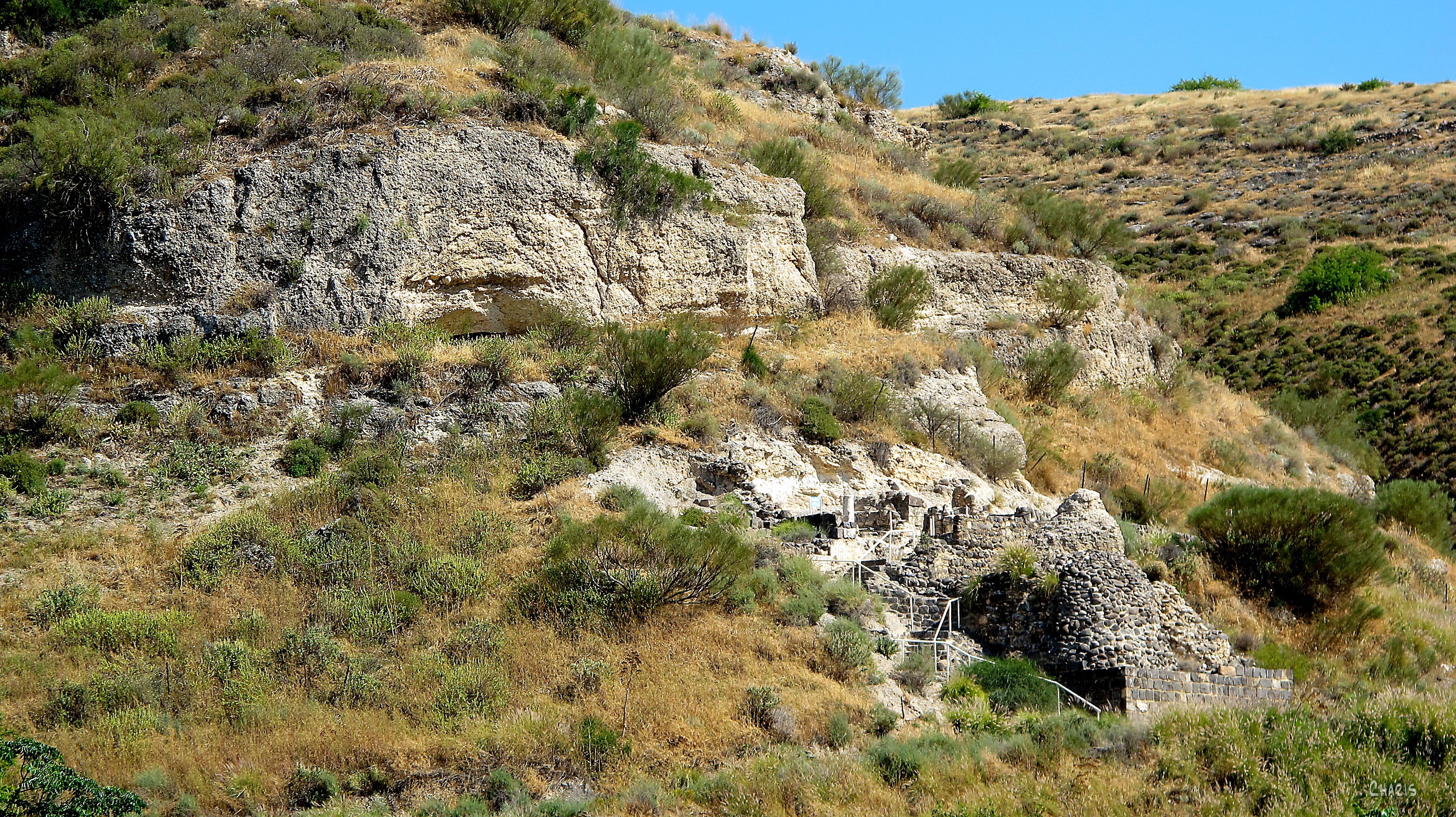
Kursi on the east side where scholars believe the demons left the Gadarene man to enter the swine that ran over the cliff.

Date farm

Dawn from Tiberias

This is not in the valley of the Galilee (Or Lake Kinneret as it is called now) It is actually a view from a hill on outskirts of Nazareth. It has a dramatic drop and would be a good place for shoving a person off if he offended you by saying Isaiah’s prophecy about healing the blind and lame and setting the captives free had been fulfilled in your hearing.

This is Caesarea Philippi, a significant journey north of the Galilee. It is a lush green area at the foot of the snow-topped Mount Hermon (which some say is also the most likely place for the transfiguration to have occurred). Springs at the base form the headwaters of one of the three tributaries that make up the Jordan River. This is where Jesus took the disciples to ask them, “Who do you say that I am?”
In the background you can see a cavern, which used to be part of the Roman temple to Pan. It partially collapsed after an earthquake, but in the time of Jesus it was a bottomless pit called, even then, “The Gates of Hell” where living sacrifices were thrown in. Caesarea Philippi was a Roman city with foreign architecture, culture and a religion imposed by a wealthy conqueror. It must have been an intimidating place for poor Jews to go, yet this is where Jesus took them to confirm his identity.
“Thou art the Christ, the Anointed One, Messiah.” said Peter
And Jesus said, “Upon this rock I will build my church and the gates of hell shall not prevail against it.”

He dispatches His word,
and the thaw begins;
at His command, the spring winds blow,
gently stirring the waters back to life.
(Psalm 147:18)
The creek is filled with water again. Sometimes the waters are gently stirred back to life, and sometimes spring happens suddenly and dramatically . Last week we shivered in the deep, deep freeze of winter. Some nights felt like the coldest nights of the season and snow fell upon mounds of snow. But a couple of days ago temperatures rose so rapidly that the snow turned to rain and the ice melted rapidly, turning streets into impromptu streams and lakes. Since the ground is still frozen the water is making a mess of our town -and a lot of it is pouring into people’s basements. Lots of pleas for plumbers and pumps and wet shop vacuum cleaners are going out on Facebook today. We have a small lagoon in the center of the family room ourselves.
So, the thing we have longed for, a break in the cold, is finally here, and it’s messy and inconvenient and costly – but the prospect of promise fulfilled feels so good.
Change is like that sometimes.

Hope deferred makes the heart sick, but a desire fulfilled is a tree of life.
(Proverbs 13:12)

When is a revival needed? When carelessness and unconcern keep the people asleep.
Author: Billy Sunday
Revival is the visitation of God which brings to life Christians who have been sleeping and restores a deep sense of God’s near presence and holiness. Thence springs a vivid sense of sin and a profound exercise of heart in repentance, praise, and love, with an evangelistic outflow.
Author: J.I. Packer
When the light shines, it exposes even the dark and shadowy things and turns them into pure reflections of light. This is why they sing, Awake, you sleeper! Rise from your grave, And the Anointed One will shine on you. (Ephesians 5:13, 14 The Voice)


 Charis: Subject to Change