
I would maintain that thanks are the highest form of thought, and that gratitude is happiness doubled by wonder.
– G.K. Chesterton

I would maintain that thanks are the highest form of thought, and that gratitude is happiness doubled by wonder.
– G.K. Chesterton
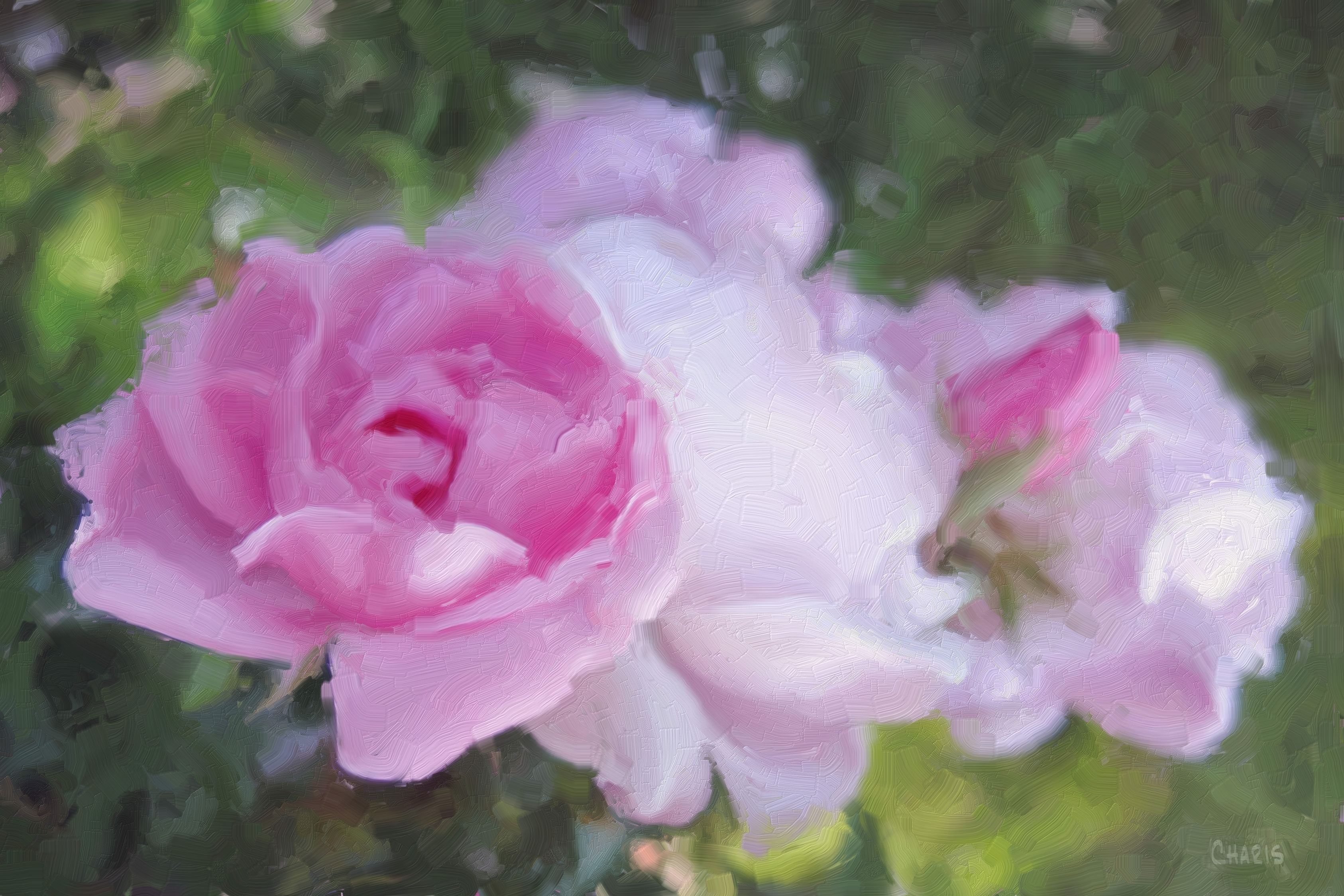
Well, it’s the season of my number-changing day, as my little granddaughter calls it.
This time of life has potential to be depressing for some of us. The question that crops up in this decade is, “What have I done with my life?”
This blog is about change, and I often write about leaving the past behind and pressing on to become who we are meant to be. In spite of many deeply regrettable choices I have made in the past, I am learning to say, “It’s grace that has brought me safe thus far.”
Sometimes it’s easier to forgive others than it is to forgive ourselves, but moving forward also means letting go of the debt accrued against ourselves by ourselves. In the same way that forgiving others means letting go of the expectation that they will somehow, someday, make up for things they stole or failed to provide, forgiving ourselves means letting go of the expectation that our past selves can ever make up for offenses against our future selves. I’m not talking about not taking responsibility; I’m talking about recognizing the futility of the task of trying recoup lost years by striving, and instead emptying our hands of false coping skills, so that God can provide the love and acceptance we still so desperately need.
I thought about Paul, the writer of so many letters to young, struggling believers. I wonder how he lived with the fact that he hated followers of Jesus so much that he had them dragged out of their homes, imprisoned, and even, in the case of Stephen, executed. He called himself “the chief of sinners” for what he had done. And yet, with the weight of that knowledge, he was also able to grasp the reality of God’s forgiveness. He knew he was loved, not just for the person he was going to become, but for the person he was at that very moment -for the person who had not yet “attained.” He could say, “By the grace of God I am what I am.”
I asked the Lord for a word from Him that would show me where I am and give me a sense of direction. I feel like I’m so far behind where I should be. I lost so many years to sympathy-addiction and depression that I have felt a kind of desperate need to make a difference in the world while I still have a bit of time left. I want to get busy and do something important for God.
The word I feel he is giving me for this year is “simplify.” The words of this song describe my feelings:
What can I do for You?
What can I bring to You?
What kind of song would you like me to sing?
‘Cause I’ll dance a dance for You
Pour out my love to You
What can I do for You beautiful king?
‘Cause I… can’t thank You enough.
…
All of the words that I find… and I can’t thank You enough.
No matter how I try… I can’t thank You enough.
Then I hear You sing to me: “You… don’t have to do a thing
Just simply be with me and let those things go
‘Cause they can wait another minute
Wait… this moment is too sweet
Would you please stay here with Me
And love on Me a little longer
I’d love to be with you a little longer
‘Cause I’m in love with you
(from “A Little Longer” by Jenn Johnson)
I’ve spent a lot of years wading through good and bad doctrine and theology, healthy and unhealthy forms of church structure and methodology, and proper and improper ways to express worship. If I were to classify my relationship with churchianity on Facebook it would be “complicated.” Today, if you were to ask me for my personal statement of faith, it might simply be:
Jesus Christ, Son of God, crucified, buried, raised from the dead and coming again. And this Jesus, who showed us who God really is, loves me. Holy Spirit tells me so. In the cross of Christ, offensive to the self-made, and foolish to the logical, is all my expectation.
By the grace of God, I am what I am. Present tense.
If that’s good enough for the Creator of the Universe, it’s good enough for me.

Mine was not a huggy family. We didn’t slap people on the back, or stand up and shout at hockey games, or let anyone see us cry. And we were definitely not gushy. Words of affection were neatly tucked inside greeting cards and shared only at the appropriate times. Dancing was forbidden; even toe-tapping was unseemly in church, and laughter was contained in decently-and-in-order decorum.
And yet there was love, and affection, and enthusiasm, and sorrow, and always a deep emotional connection with music. We just didn’t express it physically. Blame on culture, or a fear of vulnerability, I don’t know, but being demonstrative does not come naturally to me. I’ve had to work at it. Music has been my main vehicle for expressing that which I cannot show, but when I lost my voice due to health problems, so many feelings became stuck inside me. That’s when I turned to art and writing.
Someone asked me recently how I plan to increase my worship of God. We agreed that worship can easily become a duty or routine without involving our whole hearts and requires a conscious effort to enlarge our expression. Can I admit a bit of panic? I assumed this meant they expected me to step out of my English stiff-upper-lip, German resolve, and Scottish stoicism and make myself do something horribly uncomfortable, like perform cartwheels in the aisle or give eloquent impromptu prayer speeches in Shakespearean English over a microphone.
I understand the importance of praise and the way it causes us to focus on God and his character. It’s not that He is a narcissistic megalomaniac needing constant approval and emotional boosting before He can get around to answering our requests. He is the source of love and only by spending time looking to the author and finisher of our faith can we ever hope to live in the power of that love. Worship makes us conscious of His Presence. I get it. Sometimes I am overwhelmed by His love and goodness and I run out of words. How many times can you say Praise the Lord or Hallelujah or Glory before the words lose meaning like gum that has been chewed for hours loses its flavour? Giving physical expression by raising hands, or bowing or kneeling -or doing cartwheels- makes perfect sense, for those who have not divorced this part of themselves. Until those actions become flavourless routine, as well.
It was while on this journey that I felt Him say something else about worship. Jesus repeated the scripture in Isaiah that talks about praise being on people’s lips while their hearts were far away. He was not impressed. He also said, “If you love me you will keep my commandments.” At this point we often make assumptions about what’s on the list of commandments so we can check them off. But what are His commandments?
Jesus answered, “The most important is, ‘Hear, O Israel: The Lord our God, the Lord is one.
And you shall love the Lord your God with all your heart and with all your soul and with all your mind and with all your strength.’
The second is this: ‘You shall love your neighbor as yourself.’
There is no other commandment greater than these.”
I like the music of the Piano Guys. I came across this video the other day which combines Bach’s Jesu, Joy of Man’s Desiring, with Extreme’s More Than Words. The song grabbed my attention and answered my question about how to increase my worship. I know the Extreme song referred to a physical expression of love between two people but there was a deeper meaning for me. The old marriage vows used to include the promise, “With my body I thee worship.” That could mean sexual affection or it could mean getting off the couch to make a cup of tea -or move the couch for the loved one. At the heart of this vow is the importance act of paying attention and listening to the desires of the other. This is also called “worship.”
For me that has meant a season of coming aside and learning to listen to His voice, even though that action has not made sense to others. It has meant dropping involvement a lot of activities which I always assumed to be good, to obey and follow Him to a place of solitude and quiet where I can learn to separate His voice from all the others. For other people, following Him might mean pouring themselves into a construction project. or barrel racing – or doing cartwheels in the aisle. Maybe that will be part of my expression someday too, but for now I hear Him say:
More than words is all I ever needed you to show
Then you wouldn’t have to say that you love me
‘Cause I’d already know

Out of the ivory palaces,
Into a world of woe,
Only His great eternal love
Made my Savior go.
You don’t hear many bass baritones in popular music (or sopranos for that matter). I have a theory that involves people being most comfortable with voices that fit into cheap radios without too much distortion, but now that the quality of sound systems is improving it is probably time for a greater variety of voice types to appear. Bobby McFerrin said, “Listening to only one kind of music is like insisting on living in only one room of your home your entire life.” I would say the same about listening to one type and range of voice -tenors and alto belters. I have pretty eclectic tastes. Admittedly, sometimes I have to shut off the music critic in me to hear the heart of the singer rather than the style, but I can hear it. I do long for freedom in my culture for a wider expression of praise in worship music though.
I remember listening to recordings of George Beverly Shea when I was a child. I loved the richness and power and fatherly comfort of his voice. I remembered him yesterday as I listened to another beloved baritone (with an incredible extension into tenor range) -Josh Groban. I don’t know if it was intentional, but so often I hear something in his songs on a spiritual level that causes me to pause and pay attention. Yesterday it was a connection to the song “Out of the Ivory Palaces” by George Beverly Shea. This connection was about more than range. The Josh Groban song was “So She Dances” and the line that stood out to me was “And I’m giving up this view just to tell her…”
It’s a romantic song, but it reminded me of the Divine Romance, when the King left the ivory palaces, and laid down his rights so he could allure the one he loved and win her to himself. (Though he [Jesus] was in the form of God, [he] did not count equality with God a thing to be grasped, but emptied himself, by taking the form of a servant, being born in the likeness of men. Phil. 2:6,7)
The Church becomes the Bride of Christ in the great metaphor. It reminds me of the metaphor of Lover and Bride in the Song of Solomon. It reminds me that the Bible talks about a great wedding feast at the end of the age when the King of Kings comes for his Bride. It reminds me of the great sacrifice Jesus made just to dance with us.
With just one glance the Bride captured his heart. He laid down His life to clothe her in garments of gladness and purity. In His eyes His Bride is beautiful.
Only His great eternal love made him give up His view just to tell her He loves her.
You are the object of God’s desire, and you are beautiful.
“I’m an old man and have known a great many troubles, but most of them never happened.”
– Mark Twain
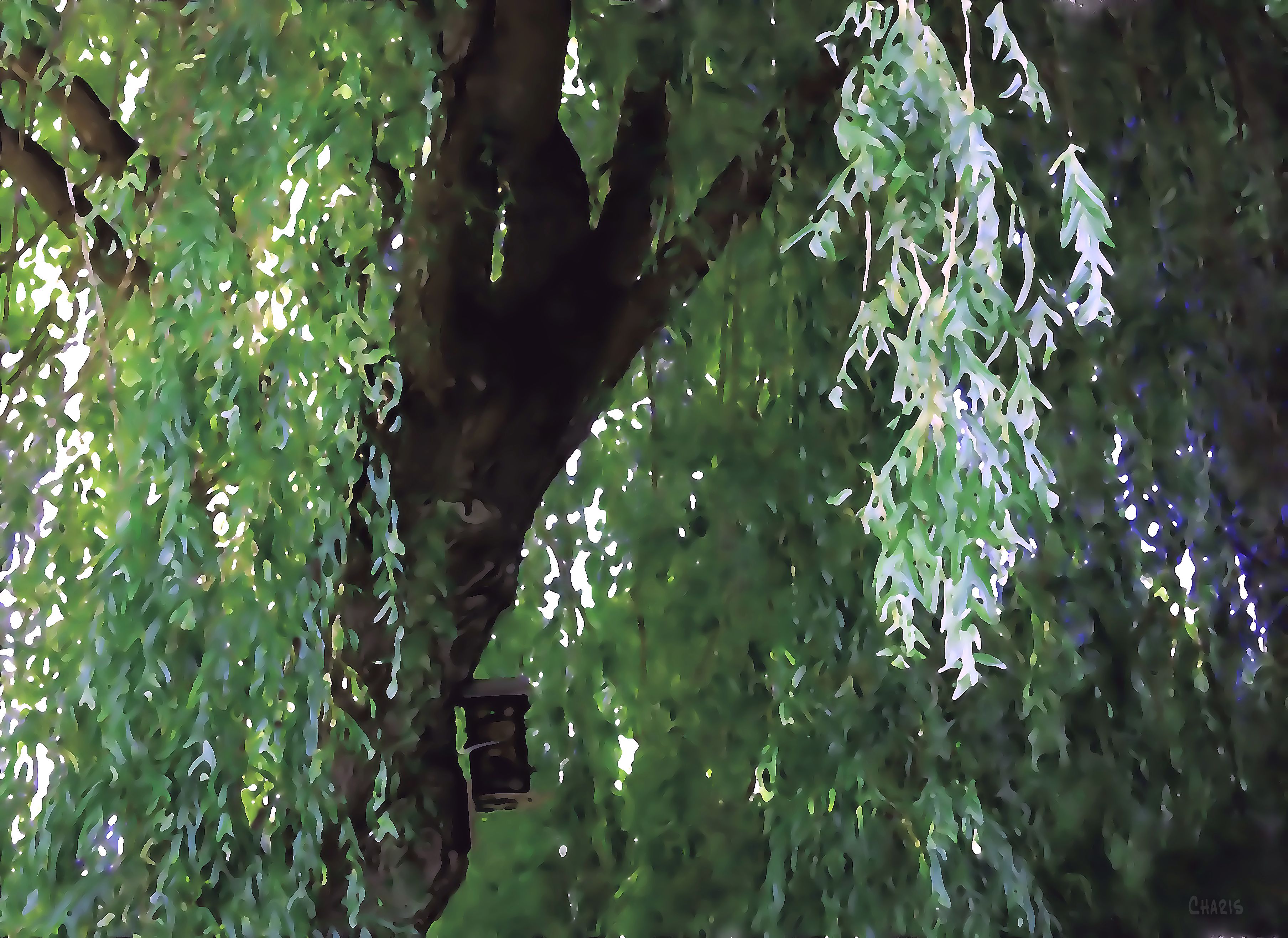
The place where my family vacationed when I was a child is the place where I now live. I remember being amazed by the mountains and tall fir and pine tress with their wonderful scent, but I had seen those before. This is the first place where I remember seeing a weeping willow tree. They don’t grow on the prairies in Canada.
One hot July day, many years ago, while Mom fried potatoes and bacon on the little green Coleman camp stove, and Dad set up the tent, I cooled my feet in the brook that runs through the campground in the center of town. I watched the breeze play with the long trailing branches of the willow trees. They dripped down to the earth like luxuriant overflowing green fountains. On a hot day their shade was satisfying to my soul. I remember declaring out loud, “Someday I am going to live here.”
And now I do.
And I still love weeping willow trees. They remind me of the goodness of God.
For I will pour water on him who is thirsty,
And floods on the dry ground;
I will pour My Spirit on your descendants,
And My blessing on your offspring;
They will spring up among the grass
Like willows by the watercourses.
(Isaiah 44:3,4)

There need not be in religion, or music, or art, or love, or goodness, anything that is against reason; but never while the sun shines will we get great religion, or music, or art, or love, or goodness, without going beyond reason.
– Harry Emerson Fosdick

June is the usually rainiest month in this part of the world. Combined with melting snow pack in the mountains it can be a dangerous season. When dire predictions of more flooding were broadcast on various media this week part of this song started playing in my head:
If the sky above you should turn dark and full of clouds
and that old north wind should begin to blow,
keep your head together and call My name out loud.
Soon I will be knocking upon your door.
You just call out My name, and you know where ever I am
I’ll come running to see you again.
Winter, spring, summer, or fall, all you have to do is call and I’ll be there.
Hey, ain’t it good to know that you’ve got a Friend?
People can be so cold.
They’ll hurt you and desert you.
Well, they’ll take your soul if you let them,
oh yeah, but don’t you let them.
You just call out My name, and you know where ever I am
I’ll come running to see you again.
Winter, spring, summer, or fall,
all you have to do is call, “Lord!”
I’ll be there, yeah, yeah,
you’ve got a Friend.
You’ve got a Friend.
Ain’t it good to know you’ve got a Friend.
Ain’t it good to know you’ve got a Friend.
Oh, yeah, yeah, you’ve got a Friend.
(You’ve got a Friend by James Taylor and Carole King)
There is more than one kind of storm. Sometimes people have no idea of the kind of storms that rage inside our hearts. A line in another old song talks about “fightings within and fears without” and yet, “just as I am, I come” to the Lover of my soul.
Calling out for help is not always easy, particularly for those of us who don’t want to admit we need help.
I looked at the dark clouds. I called. He answered.
The rain was heavy, and there was some flooding, but nothing as serious as was predicted.
I looked at the raging storm within. I called. He answered.
Peace returned.
Yes, it’s good to have a Friend.
Thank you.

Over the years, I have become convinced that in the Christian life at least two things are certain: God never changes, and we are always changing.
Our lives as Christians are a continual transition from one place to another, one level to another, one understanding to another. The purpose of spiritual light is to bring us into change and growth. The more light we have, the more change we experience; and the more we change (for the better), the more we are brought into higher levels of glory. Unless we are in constant transition, we will stop somewhere along the way and settle down. The Christian life is a frontier. God did not call us to be settlers, but to be pilgrims and pioneers.
-James Goll

I’ve known many pianists, but very few excellent accompanists. It’s a rare and beautiful talent that not only requires skill, but also outstanding sensitivity and a willingness to put someone ahead of oneself. It’s not fair, but that’s the way it works. As I thought about it I realized that good accompanists demonstrate servant leadership.
The topic came up for me as I stumbled upon a Youtube video in which a famous conductor was playing piano accompaniment for an equally famous singer. It was a great performance including several of my favourite lieder by Brahms (and became even better when another famous conductor made a brief appearance as page turner.) When I listened a second time to the song, Von Ewiger Liebe (Of Eternal Love), I could hear the accompanist’s ego asserting itself as he kind of dragged the singer along during a display of passionate virtuoso playing. Brahms is not easy to play, and if I could do it I would probably take off with the music too, but as a singer I remember what it feels like to be in competition with an accompanist who is bounding for the finish line ahead of me.
The worst accompanist I ever had will remain nameless. The event planners hired him and assured me he was a competent musician who played professionally. I sent the music on weeks in advance. Travel delays and bad directions meant we only had half an hour to rehearse.
“So how does it go?” he asked, sitting at a piano with no music in sight.
“You did get the music, didn’t you?” I said with a sense of panic about to introduce itself. “I sent it to you weeks ago.”
“I don’t read music,” he stated, seemingly without concern. “Just sing a few bars and I can pick it up.”
Now I appreciate jazz and most other forms of music, but with classical music one simply does not “pick it up.”
OK. Change of plan.
“Um…. how about a spiritual?” I was grabbing at whatever came to mind. “Sometimes I Feel Like a Motherless Child?” I did feel rather like crying for my mommy at that point. “It is slow and sad …it has a kind of blues feel,” I added just trying to be helpful, which it turns out was not.
We worked it out and added some more well-known music and rushed to the venue. I admit I was nervous and could have handled it with more aplomb had I any inkling that this guy’s professional piano experience was playing blues in a bar. I sang three verses of a two verse song and he kept playing, improvising…and improvising…and improvising. If this had been in his bar I could have enjoyed the two drink minimum while he did his thing without me, but instead I just stood around trying not to look surprised or fifth-wheelish and waited for an opportunity to jump back in. Eventually I rushed in and sang a big ta-da ending to a song which is meant to fade into a pianissimo -just to let the guy know that I, at least, was done.
At the end of the evening I took my compliments and my check and checked out.
Apparently the group invited him back for another gig. They didn’t invite me. (Although I did sing in a sold-out concert hall in that city later, with an orchestra which was too cumbersome to just “pick it up.”)
Once, when I was only about fourteen and singing in a large church I accidentally aspirated some saliva and choked right at my entry of the second verse -in front of God and everybody. The woman at the piano acted as though she heard nothing amiss as I coughed and cleared. She skilfully raced to the finish line without me. I slunk sheepishly off the stage swearing I would never do that again. (Thank God for an older gentlemen who encouraged me later when everyone else was too embarrassed to say anything.)
Here’s the thing. I did not feel honoured by either of those pianists because neither of them were listening. The only part that mattered was theirs.
Years later, to my horror, the same choking thing happened -and in front of folks who actually paid real money. This time my accompanist (who I freely admit was a superior musician) circled around, adding an improvised passage in a style consistent with the song to give me time to recover, and then modulated back into the introduction again. He swooped by like a hero on horseback to scoop me up and we rode off together, most of the audience none the wiser.
Once when he and I were looking at potential pieces for a concert I showed him the music for a song I liked but explained it was too low for me. He sight-read and transposed the unfamiliar piece of music at the same time. My jaw dropped. Later, when this guy gave musical advice, I listened. He was not a singer, but he was full of great advice.
Accompanists are often better musicians than the “soloist” (loathe as we singers are to admit that.) Sometimes they are also coaches or conductors. They know all the parts, not just their own. Making music is a collaboration and rehearsals are the place for discussion and compromise, but in performance a good accompanist lets the singer take the lead and will cover for things like rhythm errors and memory glitches. In private they are not afraid to call them out and work through a problem area, though.
When I hired professional accompanists for students the inexperienced often complained privately that the accompanist had played the piano too slowly in a performance.
“That’s because he’s much better than I am,” I explained. “You’re used to a teacher making heavy suggestions from the keyboard. Not only does this guy play all the notes -and accurately- he is listening and breathing with you. He’s just a hair behind you because onstage you are the one who sets the tempo. If he’s playing too slowly it’s because you slowed down waiting for him to do everything.”
When I thought about this singer/accompanist relationship I made a connection with leadership in the church. Ministry is not about doing it right, or drawing attention to oneself. It is not without honour or respect and actually requires superior understanding, skill and sensitivity -even nice clothes- but the job of a minister (whether apostle, prophet, teacher, evangelist or pastor) is to raise other people up to their potential in their own service to the Great Composer. It’s not to draw attention to themselves, nor even to do everything “right” by constantly taking control because others are not up to their standards.
Gerald Moore was a well-known accompanist. His love of music was greater than his love of recognition, although he was not a shy person. He teamed up with some of the greatest artists in the past century. In some videos only his hands were in the frame. He deserved more respect. The singer or instrumentalist received (and still receives) top-billing. He made them sound good, but anyone who has ever worked with an accompanist knew this man was a giant among musicians.
May those who desire to lead in the church raise others up with the same spirit of excellence and confident humility.
This is an example of his work. Morgen is a setting of a poem by the German poet John Henry Mackay (a story in itself) by Richard Strauss with Janet Baker before she was a Dame. Somehow Moore makes us forget that the piano is a percussion instrument. The song is about the hope of seeing a loved one again in the morning.


 Charis: Subject to Change