The Road Back: Psalms of the Sons of Korah, Part II

All your waves and breakers have swept over me.

Thinking about hidden stories to be found in the genealogies of the Bible that I once thought boring (Part I) made me think about my own. Unexpectedly, I discovered research that someone else had done on my family’s ancestry. What a thrill when I opened a page full of the symbols of royal heraldry! Some ancestors were leaders and innovators and heroes. Some were not. I also found despots, drunks, and deadbeat dads.

Children are more perceptive than we realize. I picked up a sense of shame when I was a kid. Over time, I gathered clues to the unspoken story that leaked out in photo albums, overheard conversations, and hints like the fact my grandfather forbade the mention of his father’s name. Recently, with the help of archived newspapers online, I discovered the family fortunes took a drastic downturn after an incident of criminal negligence that resulted in the death of mothers, children, a fiancée, and shop workers heading home on Christmas eve. My great grandfather failed to attend to a safety matter on a tram system in a large eastern city. He was drunk. The family lost their big house, their wealth, and their status. Old photos no longer featured my grandfather as the child dressed in velvet and ruffles. He became the dirt darkened boy clad in worn overalls. Instead of the elegant brick house, his mother stood in front of an unpainted shack. Her husband was not with her.

My great grandfather’s father was the illegitimate son of someone with money in England who paid for him to go away. Like many others whose mere existence was an embarrassment, he was given cash and passage to the colonies when he was old enough. He wasn’t a good father either. When his wife died, he gave his children to someone else to raise.

We all carry inherited shame since our first forebearers chose to believe the serpent’s lies. Some are more aware of rejection and the mark of shame than others. In shame/honour societies like the culture of Biblical times, being kicked out of the tribe is the ultimate punishment. Until recently, western culture has been based on guilt and forgiveness. A person who has broken a law can be redeemed after anything from issuing an apology, or making restitution, to a fine, or serious jail time. It’s possible to come back after “paying his debt to society.” In a shame/honour society, there is no forgiveness, no yellow ribbon ‘round the old oak tree. There is only shunning.

One way to tell if you are still operating under the guilt/forgiveness system is if you find yourself being dismissed or “cancelled” and respond with, “But I didn’t do anything wrong!” In a shame/honour society you don’t have to be guilty of breaking any law to suffer rejection; you merely need to have said or done something that identifies you with other rejects. In this system once a person has “lost face,” especially in public, there is no coming back. In this system the outcasts didn’t just DO something wrong; they ARE something wrong – and so are their families and their dog.

But God’s plan for the outcasts is different.

Sometimes victims of injustice form new tribes like David and his Mighty Men – re-echoed in the story of Robin Hood and his Merry Men. Those who band together often maintain a common sense of being shamed, but still long for vindication and restoration. Perhaps this is why the Sons of Korah still carried their identity as the descendants of a traitor. Perhaps David learned something from being on the run.  In the rocky terrain of the desert he took physically gifted rejects from society and turned them into a band of warriors fighting for justice. Perhaps this is why, after his vindication, he took a band of artistically gifted poets and musicians and gave them a public position back in the tent of worship.

But it takes more than a new job and fancy clothes to change how a person sees themselves. Psalm 42 reveals that the Sons of Korah still struggled with discouragement and shame and depression. This psalm is a cry of longing for personal revival. It begins:

 As the deer pants for streams of water,
    so my soul pants for you, my God.
My soul thirsts for God, for the living God.
    When can I go and meet with God?
My tears have been my food
    day and night,
while people say to me all day long,
    “Where is your God?”

Jesus said in the Sermon on the Mount, “Blessed are the poor in spirit, for theirs is the kingdom of heaven.” Step one on the road back to a closer relationship with God is admitting that all is not well with one’s soul. It’s responding to the question “How’s that workin’ for ya?” with an honest assessment of, “Not very well. In fact, not well at all. I am consumed with longing to stop hiding in shame and walk with God again.”

Verse 4 says:

These things I remember
    as I pour out my soul:
how I used to go to the house of God
    under the protection of the Mighty One
with shouts of joy and praise
    among the festive throng.

We can be doing all the religious things but still feel like we’ve lost something. The joy of the Lord may feel illusive. We don’t want to stay like this.

Then the Sons of Korah take another step. They recognize their poverty of spirit but dare to hope. There is a moment between overwhelming waves of emotions of loss and despair when we start to take charge of them by declaring a truth we may not yet feel.

Why, my soul, are you downcast?
    Why so disturbed within me?
Put your hope in God,
    for I will yet praise him,
    my Savior and my God.

But the struggle is real. It’s a life and death back and forth battle in the heart between old lies and new truths.

By day the Lord directs his love,
    at night his song is with me—
    a prayer to the God of my life.

I say to God my Rock,
    “Why have you forgotten me?
Why must I go about mourning,
    oppressed by the enemy?”

The psalm ends with an act of faith by choosing to do what God has made them for and a repetition of the declaration.

Then I will go to the altar of God,
    to God, my joy and my delight.
I will praise you with the lyre,
    O God, my God.

 Why, my soul, are you downcast?
    Why so disturbed within me?
Put your hope in God,
    for I will yet praise him,
    my Savior and my God.

The journey back has begun.

By day the Lord directs his love. At night his song is with you, even if you can’t quite hear it yet.

The Road Back: Psalms of the Sons of Korah Part 1

I love the Psalms. I love them because they show us how to be real with our feelings, appreciate the colour they add to our lives, and still see self-governance (a fruit of the spirit) in operation instead of being ruled by them. 

I used to assume that most psalms were composed by David on the run, or David on the throne, or David in the tent of worship. It wasn’t until someone suggested I pay attention to the Psalms of the Sons of Korah that I started to notice other writers. The Sons of Korah have a story. Their psalms show us the way back from rebellion and an identity of inherited shame. How did these men move from sentiments like “I am counted among those who go down to the pit,” to “Better is one day in your courts than a thousand elsewhere?”

The story of Korah, and his co-conspirators Dathan, Abiram and On is hard for me to read. It messes with my theology and reminds me to keep asking questions. We find it in Numbers 16.

The Children of Israel had chosen to be more impressed with scary stories of giants than Joshua’s and Caleb’s good reports. Moses gave the grumbling people God’s message that although their children would see the promised land, they themselves would not. That’s when Korah and his friends (and the 250 men they convinced to join them) protested. They accused Moses of breaking promises and of wanting to make himself a prince over the people and use them like slaves.

Korah wanted a higher position, a greater place of honour than he had been assigned as a server in the tabernacle. Like satan, pride and ambition were his downfall. He argued it was not the people’s fault they were stuck in this desert. He insisted they were holy people and not disobedient complainers. Moses was wrong and it was his mismanagement causing the hardships and disappointments.

It’s not as if Korah and his friends had not seen God at work. The people witnessed the miraculous escape from Pharoah’s army, Moses’ face glowing after being with God, the shock and awe show on Mt. Sinai, a pillar of smoke by day and fire by night, miraculous provision of food and water, clothes that never wore out and many more events way beyond anything seen before. They had also witnessed the consequences of worshipping a golden calf and leprosy appear on Miriam when she and her brother Aaron tried to usurp Moses’ place as leader.  

Over time, people like Korah tend to shrug off such demonstrations of power. He wanted control. Moses accused the protestors of wanting to be priests like Aaron. There was a brief trial with God as judge. The consequence of the guilty verdict was that they and their families were separated from the others and swallowed by the earth.

I have questions. This messes with my picture of a God of love. All I’ll say about that for now is that Asaph, an associate musician who served one of the Sons of Korah, wrote this: But my people still would not yield to me, so I lifted my grace from off their lives and I surrendered them to the stubbornness of their hearts. (Psalm 81:11)

It’s recorded in Numbers 26:11 that “… nevertheless the line of Korah did not end.” Some must have separated themselves from Korah because there were survivors who, although perpetually identified with the shame of being descendants, show up later in a genealogy in 1 Chronicles 6:22-26. Samuel the prophet was one.

Samuel showed up at a time of transition in history and served in the tabernacle from a very young age. Eventually he was granted by grace the role his forefather tried to take by force. The era of judges was over. He anointed first Saul, then David as king.

David had a heart for God like few before him. He erected a tent of praise and appointed Heman, Samuel’s grandson and others from the Korah clan as musicians. They continued in that role when the temple was built by David’s son, Solomon.

Why would this group of poets call themselves the Sons of Korah? It would be like a contemporary praise and worship band calling themselves The Sons of Hitler in my culture. What were they showing us? Heman wrote the saddest psalm in the Bible.

In Psalm 88 we can read the words of a man raised in a shame/honour culture who still identifies with the rejection settled on his family line. It is an expression of their pain.

I am counted among those who go down to the pit;
    I am like one without strength.
I am set apart with the dead,
    like the slain who lie in the grave,
whom you remember no more,
    who are cut off from your care.

You have put me in the lowest pit,
    in the darkest depths
.

He ends with:

Your wrath has swept over me;
    your terrors have destroyed me.
 All day long they surround me like a flood;
    they have completely engulfed me.
 You have taken from me friend and neighbor—
    darkness is my closest friend.

In a shame/honour society (which many people in the west don’t realize ours is becoming) tribal identity determines destiny. He is rejected as one of those outsiders marked by the shame that labels his family. He cries to God for help, but his identity is still as a son of Korah.

This is the only psalm in which there is no expression of hope of relief at the end. That changes in other Psalms.

So why has my attention been drawn to the Psalms of the Sons of Korah? I believe we have come to another shift in history that requires a shift in mindset, a time of re-alignment. For some of us, that will require receiving a new identity and seeing ourselves as God sees us. It means exchanging shame for restoration and rejection for belonging in God’s family.

We can’t move on until we let go. The wilderness experience is about learning to change our mindsets and let go of the ways of Egypt. There is more to life in the Kingdom of God than we have known before, but it will take time and a willingness to cooperate in the process of letting the Holy Spirit change us.

We are about to learn, on a deeper level, how much Jesus Christ has done for us and how much we are loved as we travel the road back to where we belong.

My Heroes

The list of people I admire has changed. There are some names on that list you might be familiar with, but there are an increasing number who have escaped the hindrances of fame. Look-at-me people with great causes but shrill voices, are not making it onto the updated page. Obsequious, but prickly doormats remain where they dropped, still promoting and protesting victimhood in creative, but wearing passive/aggressive fashion. My current list is different than the list of approved heroes of my youth.

I admire strong but humble people, those who can both give and accept help, praise, and honour. I admire those who, enabled by God’s grace, can face their own weaknesses squarely, recognizing that the choice to act without grace is always there. Experience has taught them this. They have scars.

I appreciate those who can walk open-eyed into a mess with the vision of shalom peace, nothing missing, nothing out of place, and do it with cheerfulness. They smile before their tears have dried. Hope makes them fearless.

I am learning to listen to those who through consistent practice of the kind of risk-taking that faith requires, have gained an understanding of who to seek as their source of wisdom. They have a friendship with God that astounds me. They carry the scent of someone who has been in his presence.

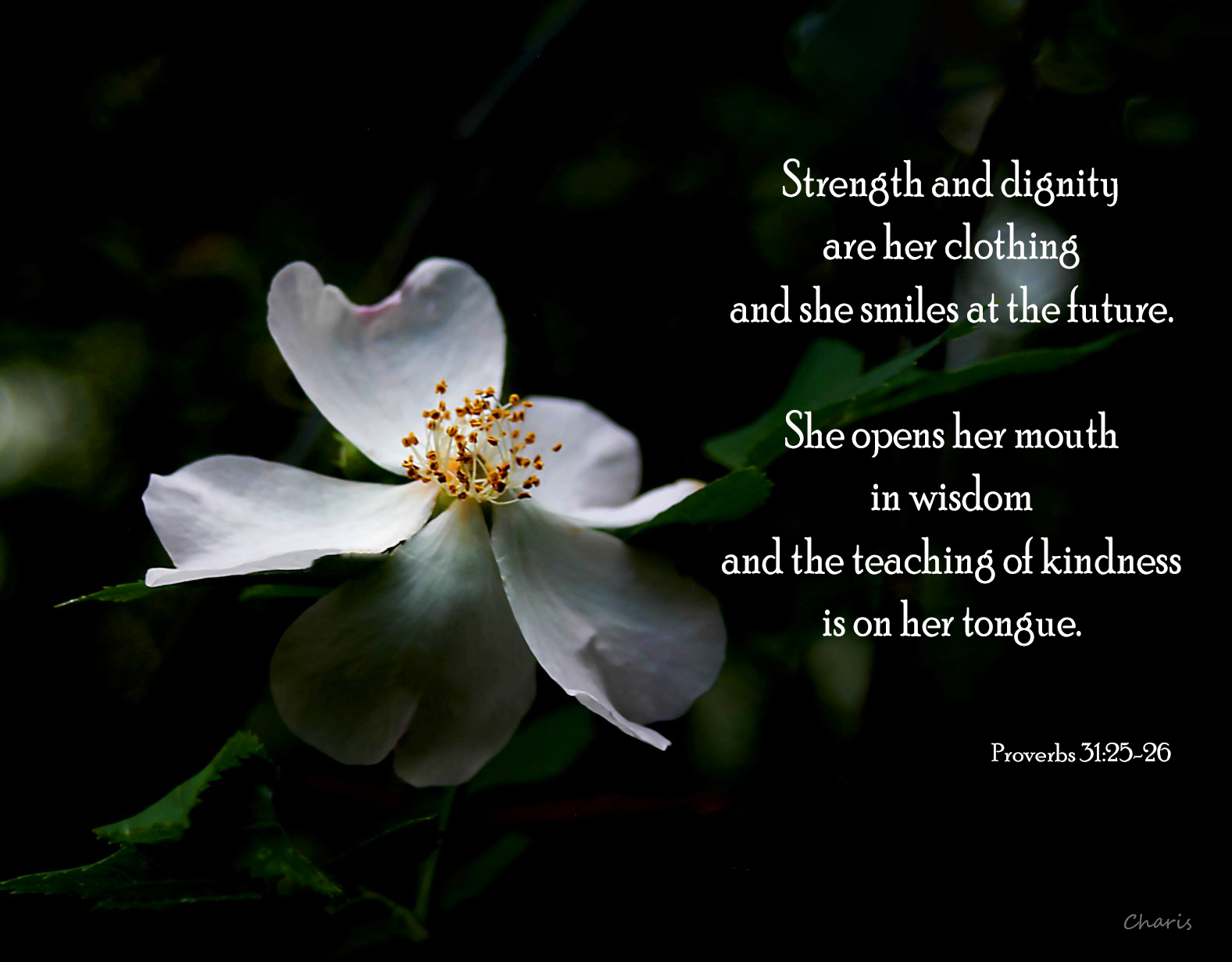
I am amazed by people who are still stinging from a tongue-lashing yet respond with kindness on their own tongues. It’s not that they can’t come up with a witty but cruel response. Defensive words are probably still the first weapons to appear, but they know how to lay down Saul’s armour and go into the cache of weapons God designed for just such moments. Their weapons bear the characteristics of the Holy Spirit. They know how to wield patience and goodness. Power wrapped in soft gentleness makes it easier to hear their words of wisdom.

When I was young, I wanted to be like the famous people who had gifts and charms they had never earned, like beauty, and intelligence, status, and talent. I admired those who led their followers on to greater exploits. Now, when I grow up, I want to be like those heroes who lead from behind, who say with kindness, “I can see who you are becoming. Your own methods have given you some problems. Get back up. Keep your eyes on Jesus. You can do it. He’s calling to walk with him. He absolutely adores you, you know.”

Do You Love Me?

It’s been about thirty years since I gave up. I gave up trying to please God, or perhaps more accurately, to please God according to the job list people who put themselves in charge of the Pleasing God Committee gave me.

I quit trying, but I quit with a question: So, God, if I don’t do any of this stuff, if I walk away from trying so hard, will you still love me, or is your love conditional?

I’m a slow and stubborn learner and I had erected a lot of self-protective barriers. Wounded people do that. But God has grace and patience beyond — way beyond — anything I could imagine based on what I could drum up myself.

Since that time, his kindness and faithfulness have won my heart. He met me in the desert. He wooed me, or as Hosea wrote about God’s actions toward the unfaithful wife symbolizing a nation that went after every pleasure but God, he “allured” me. Like the woman in the desert, I eventually responded with my own song of love.

Now, all these years later, I hear him asking me the question. “If I don’t give you what you want when you want it, will you still love me, or is your love conditional?”

There are a lot of things I want, and as the beloved of the King of Kings am entitled to. I want good health. I want financial security. I want my children and grandchildren to have easy lives and a great relationship with God. I want my city and my country to prosper. Most of all, I want to be understood.

As I ponder, I remember this is the question posed to many people in the Bible from Abraham with his precious promised son, to Job with his wealth and healthy family, to Solomon with his fine mind and reputation, to Jesus himself who laid down the right to the recognition and worship owed him.

Like Peter, I remember the night of denial. “Jesus is ok,” I said, “But I don’t trust God the Father not to use me, then throw me away.”

Like Peter on the beach with Jesus, with the scent of a charcoal fire in the air to remind him of the night of denial, I hear the question. “Do you love me for who I am and not just for what I give you?”

I know my weaknesses. I know how easily the rug is still pulled out from under me when I feel harshly criticized or misunderstood. I know that in my own strength I can’t say yes.

I also know that his strength is made perfect in weakness. I also know that he gives me his love so I have something to give back to him. Everything comes from him, and in him and through him I live and move and have my being.

Yesterday the words from a song sung by Celine Dion played in my dreams:

You were my strength when I was weak.
You were my voice when I couldn’t speak.
You were my eyes when I couldn’t see.
You saw the best there was in me.
Lifted me up when I couldn’t reach.
You gave me faith ’cause you believed.
I’m everything I am
Because you loved me

This morning I was singing a song in my spirit. The words come from Psalm 73 which, in the New Living Testament, reads:

Whom have I in heaven but you?
    I desire you more than anything on earth.
My health may fail, and my spirit may grow weak,
    but God remains the strength of my heart;
    he is mine forever.

Himself

If we are in Christ the whole basis of our goings is God, not conceptions of God, not ideas of God, but God Himself. We do not need any more ideas about God, the world is full of ideas about God. They are all worthless, because the ideas of God in anyone’s head are of no more use than our own ideas. What we need is a real God, not more ideas about Him.

-Oswald Chambers

Moment By Moment

The reality of living by faith as though we were already dead, of living by faith in open communion with God, and then stepping back into the external world as though we are already raised from the dead, this is not once for all, it is a matter of moment-by-moment faith and living moment by moment. This morning’s faith will never do for this noon. The faith of this noon will never do for suppertime. The faith of suppertime will never do for the next morning. Thank God for the reality for which we were created, a moment-by-moment communication with God himself.

-Francis Schaeffer

Things to Do

This may be the ultimate in lazy photography. I woke up and saw the sun shining through the window. I liked the way it looked, even without my glasses. I grabbed my phone and snapped a photo –still without my glasses. Who needs focus when the light is right?

Those flowers on the ledge were meant for someone else, but they started dropping petals before I could take them to her. They looked a little past their prime, but not dead yet, so I stuck them on my own window ledge with plans to get her something else. Then the sun lit them, and the whole room, a golden yellow.

I put my glasses on and sat on the edge of the bed. That’s when lines from a song by Kristene Demarco started playing in my head (and heart).

Let me show you what I see.
You can’t dream too big for Me.
So get up, get on your way.
We’ve got things to do today.
Fear not!
If I could say it any louder, I would!

I’ve been feeling discouraged lately. My body can’t keep up to the pace it used to. I’m behind schedule. I should be much further ahead in in spiritual and emotional maturity by now. People around me are excited about new projects and I feel like I’m still knee-deep in mop-up operations. There are things that have been the focus of my prayers for such a long time that are still a mess.

Then I remember that “dis-couraged,” like “dis-graced,” is description of lack, the removal of something that was once there. My heavenly Father no more deprives me of courage than he deprives me of grace. He is the source of courage as much as he is the source of grace — and I have already experienced his lavish grace in weakness.

Thank you, Lord for comfort in the form of a sunbeam and a song. Tears of joy come in the morning.

Invitation

We are confident that God is able to orchestrate everything to work toward something good and beautiful when we love Him and accept His invitation to live according to His plan. (Romans 8:28 NIV)

I’m not a morning person. I never have been. Lately, it’s becoming more difficult to get moving in the morning, but my husband needed me to drive him to an early meeting. On the way home, I impulsively decided to see if my favourite garden was open. It was, by a minute or two. The sun revealed colours I hadn’t seen on the gate before.

“Come away with me,” I heard.

I hadn’t planned to go. In fact, I was grumbling about pushing through the pain to get moving and accommodate another person’s agenda.

I heard the invitation.

I said yes.

It was so beautiful!

Every Movement of My Heart

Lord, you know everything there is to know about me.

You perceive every movement of my heart and soul,

and you understand my every thought before it even enters my mind.

You are so intimately aware of me, Lord.

You read my heart like an open book

and you know all the words I’m about to speak

before I even start a sentence!

You know every step I will take before my journey even begins.

Psalm 139:1-4 TPT

I took one of those personal trivia quizzes that pop up every once in a while on social media. Yes, I know they are designed to search for data that sells us (the product) to potential advertisers. They might think they know me, but they don’t. Not really.

The test asked about hidden talents. I wrote “invisibility.”

Not long before, I ran into some people I had grown up with. We were either in the same class at school or in the same Sunday School class or youth group for years. One person I had known well and spent time with a couple of times a week for sixteen or seventeen years, couldn’t remember me, although she remembered my cousin with the same surname who had only lived in the same town for two years. Another guy vaguely remembered me as the really quiet girl who was the friend of the really brainy girl. That was at the same school where a teacher insisted to my parents that I wasn’t in his class. When they pointed out my name on the register he said, “Well then, she ought to learn to speak up.”

I have learned to speak up, much to the chagrin of those who complain that now I talk too much. They are right, but my response to that criticism tends to be to want to put on the invisibility cloak of my childhood again and try to content myself with watching life from the shadows like I did before I let God heal the shame that held me there so long. Sitting in the dark singing another chorus of “Nobody Likes Me” is not nearly as uplifting as singing a chorus of “Jesus, Lover of My Soul.” It’s not a healthy response.

The truth is nobody but God really knows us; we don’t even know ourselves. The search for connection comes from the search for our Creator who knows everything about us and still loves us. He is not disappointed in us because he had no illusions about our state in the first place. It has always been his intention to save us from the messes we have made and the resulting consequences of guilt and shame.

To be known and understood and loved is joy. Without God we are in a constant state of looking to other imperfect people or inanimate things to fill our built-in need for love from someone all-knowing and totally trustworthy, someone who truly knows us, someone who sees the ugliness but moves to bring out the beauty he placed there.

Steffany Gretzinger sings about the joy and hope in being known and loved by Love Himself.

Today

There is something particularly precious about the last flowers in the garden at the end of the season. We know the frost will show up one of these nights.

Sometimes we can sense a change in the atmosphere, a shifting in the angle of light, a different scent in the air. Change is coming.

Change means we eventually may need to let go of the rewards of past efforts, but today we stop and admire the beauty in this moment. Today we thank God for his faithfulness. Today we sing.