“You have an odd concept of freedom,” my friend said.
Odd? It was the definition I grew up with –freedom is the ability to choose to obey.
“Can you disobey?” he asked.
“Not without suffering rejection and other dire consequences,” I answered.
“You have an odd concept of freedom,” he said.
Freedom, like grace, was a concept I struggled with during my much-delayed adolescence (that took me well into my forties). It took me a while to figure out that I had accepted mixed messages without question.
Mixed messages are crazy-making.
I just read a recipe that defines mixed message for me. It calls for a bowl full of lovely, fresh, healthy vegetables, sunflower seeds and green grapes. To this collection of organic goodness you add 1/2 a pound of diced fried bacon, eight ounces of grated cheese, and a salad dressing that crams the maximum number of calories possible in the form of fats and sugar into a measuring cup. Healthy with a death wish.
Some people who talk about grace will welcome you into their church and tell you that you cannot earn God’s love and that salvation is a free gift, that Jesus paid it all. They will point out the verses that say the purpose of the law was to demonstrate, like an impossible-to-please teacher who never gave out perfect marks, that you were never quite good enough. You could never obey all the rules perfectly, no matter how hard you tried. But now you are free; you are saved by grace through faith.
That’s it. They welcome you to the fold.
Then they remind you to pick up a copy of the new rules on the way out.
The new rules are book length and some of the pages written in ink so faint you need special secret decoder ring and spy glasses to read them. And guess who has the decoder ring and spy glasses?
Mixed messages are crazy-making. They’re like a green salad that will give you a myocardial infarction before you get to the gluten-free zucchini muffins.
Grace is not sin-consciousness; Grace is Saviour-consciousness. Grace is not about your failure; it’s about Jesus Christ’s success. Grace is not about who you were; it’s about who God sees you as.
And freedom? Freedom is permission to run toward that destiny – person you are becoming in Christ, unencumbered by fear of making mistakes, and being secure in the knowledge that you are cherished by the One who holds his arms open wide.
You are precious in his sight. He absolutely adores you, you know.
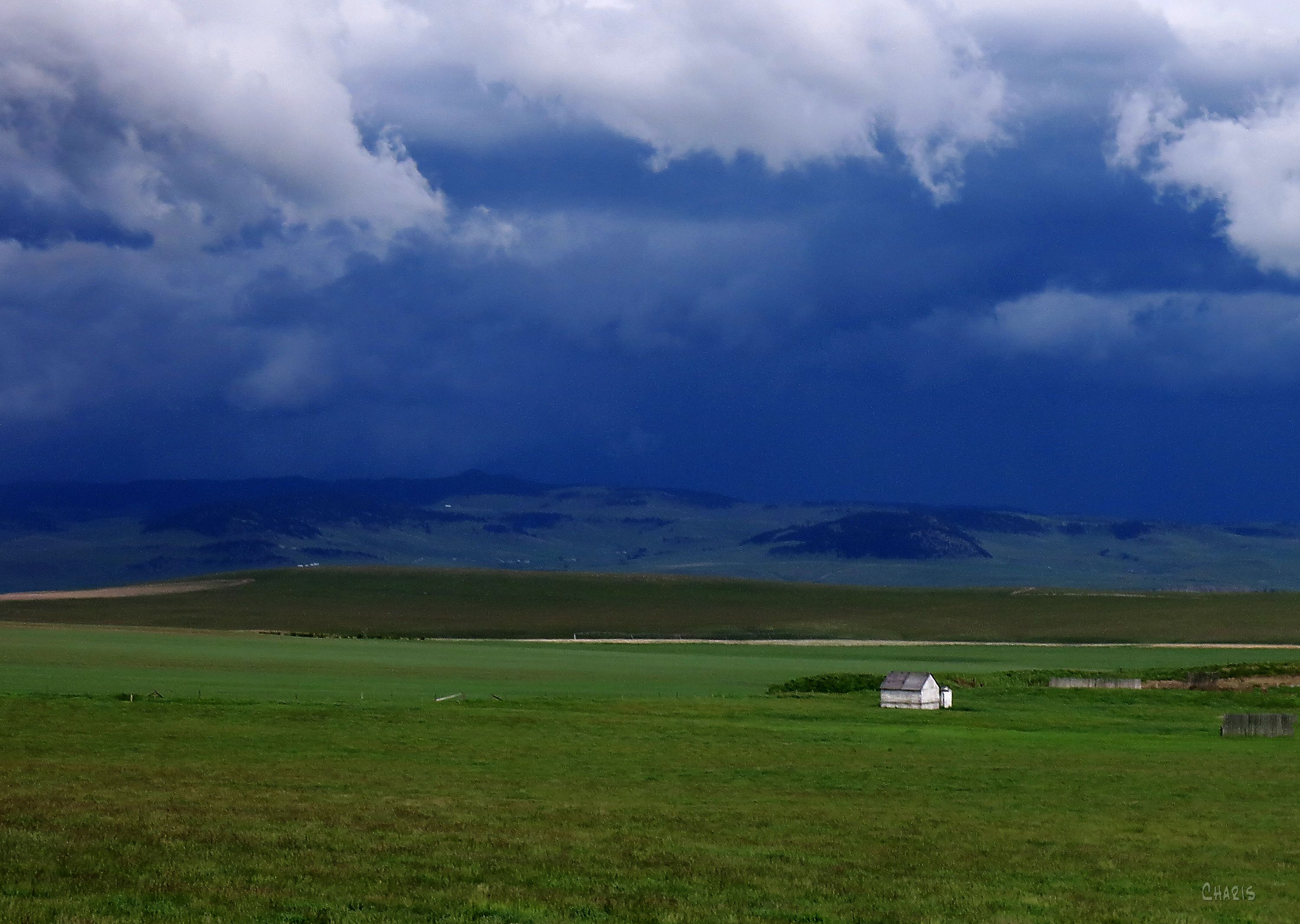
It’s been a year since the rains came down and the floods came up. Our son and his family are back in their house in High River, but it’s still a construction zone.
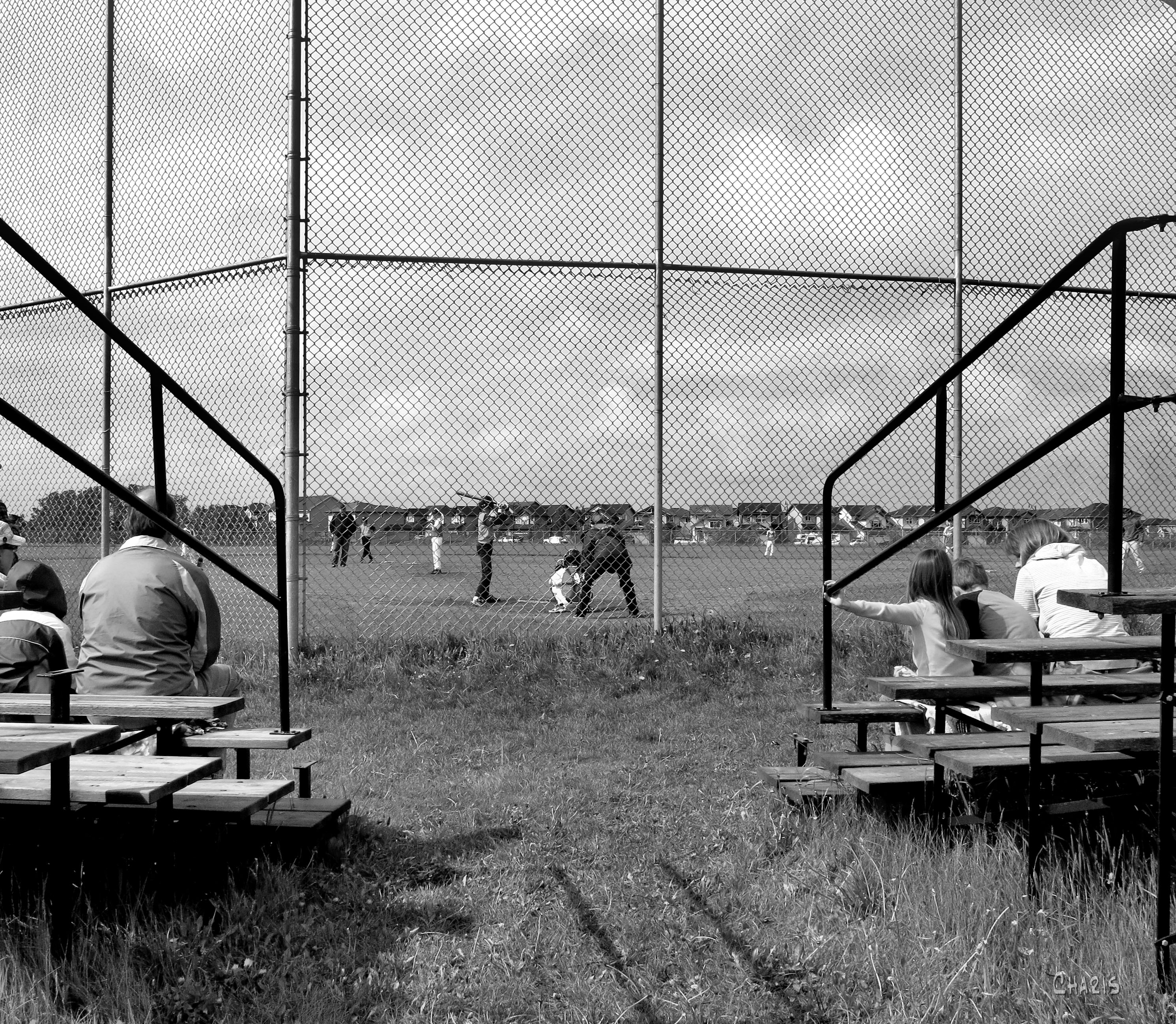
The kids are back playing soccer and baseball, but I see some of them watching the approaching rain clouds as much as they watch the ball.
The middle school band plays at an outdoor concert for an audience of proud parents, grandparents and siblings who step around puddles in the gravelled yard.
The temporary business structures beside the Saturday artisan’s tents have become the new downtown.
When I ask my granddaughter how her friends are doing she says everything is different , but different is kind of normal now.
Then she asks, “Do you think it’s going to rain like that again?”
There’s a greater maturity, but also something akin to a lost innocence in High River. I suppose that is what happens after any disaster, or after any change in the definition of normal. Whether it’s a flood, a tornado, a serious illness – or a betrayal, wherever we experience unexpected loss we can no longer say, “That would never happen.”
Now we know it can.
And now that we know we are left standing in the playing field on a Saturday morning in June checking the sky for signs of rain, wondering if it will happen again.
“Folks are a bit twitchy when the forecast is for heavy rain in the mountains,” a merchant/artist told me. “It’s understandable -especially for the kids.”
The thing about lost innocence is that it is one thing that can never be restored. You cannot un-see things. When I’m with my family it seems like half a dozen times a day I hear the phrase, “We had one of those, but it was lost in the flood.” My grandchildren don’t have bikes or outdoor toys because even though we offered to replace them, they don’t have anywhere to store them yet. The shed containing their old bikes and toys was also lost in the flood, and that image is still with them.
Innocence may not be restored but many other things can be. Bikes and sheds and houses can be restored. Purity can be restored. Faith can be restored. Respect, hope, joy, peace, confidence can all be rebuilt, but they require new firmer foundations than the absence of the experience of suffering.
I asked an older gentleman how he saw the town now, 365 days after the rushing water that poured down from the mountains changed everything.
“It’s the best thing that ever happened to this community, ” he said.
“Why do you say that?”
“We discovered what it means to be a community,” he answered. “We discovered what it means to have real friends, and who our real friends are. We discovered what it is to work together for more than our own comforts. We discovered the generosity of strangers. We discovered what it is to need help and give help. We discovered faith.”
He smiled sincerely when he said this. He had genuine joy.
“Not everyone is back in their homes yet and a lot of businesses are still in temporary quarters or not even up and running at all. We hope it doesn’t rain like that again, but you know, we also hope it does so we will know if the steps toward flood mitigation are working. We hope another disaster doesn’t happen anywhere in Canada, but we also hope the things we have learned here can be put to use if there is one – when there is one.”
Loss of innocence is being reconciled to the reality of sin in people around us and in ourselves. Loss of innocence is acknowledging that all is not right in the world. The Bible says all creation groans until things are put right again. For some who have survived disaster there lingers an increased fear and greater sensitivity to pain which results in anxiety that hums in the background like the drone of a machine that never shuts off . For some there grows a greater faith that seems to free them from fear of the future. I watched this gentleman in a crowd after church, smiling and greeting folks, shaking hands and giving hugs when he met someone he hadn’t seen for a while. After I took the kids home for lunch I remembered his words.
“The flood showed us that God is faithful and even though we have been down and bone-weary, we now know that with His help we are much stronger than we ever thought we could be.”
Another outstandlingly bright rainbow appeared over my garden this week. I put down my work and just reveled in its beauty for a while. After the three that showed up on the same day, (here) it was another over-the-top reminder of the keeper of promises.
We don’t need to give up our day jobs and permanently park at signs of beauty or grieve when they fade though. Signs point to something greater than themselves.
I heard a new musician lately -well, new to me. It seems a lot of worship groups are comprised of attractive, energetic young people with strong, healthy bodies, thick shiny hair and impressive orthodontic work. I appreciate a praise band made up of members who look like they’ve been around the block. There’s an authority there. Some young people get it, but usually only time spent in the trenches gives a singer/songwriter the right to sing about endurance and promises kept. I had been listening to Bob Book’s song, Relentless, when the rainbow showed up.
Sometimes I find myself down in the valley
And the shadow is hanging so low.
I can’t see my way to tomorrow.
There’s something I know:
There’s a deeper magic ,
There’s a higher truth than these eyes of flesh can see
And I’m holding on,
My hand in Yours,
You are the greater reality.
Relentlessly good,
Relentlessly kind,
Unendingly patient to the questions we find.
Even the bad can work for the good.
Relentlessly faithful,
even when You’re misunderstood.
In a world where nothing seems certain
Your love is relentless.
Oh my God, You’re relentless!
-Bob Book from Relentless, from the album A Divine Conversation
Have you ever read a brilliant quote –and were afraid to post it because the author has made other statements you don’t agree with?
I quoted someone I thought gave a delightfully pithy observation. Giving credit where credit is due, I named the the author, of course. Later someone contacted me saying, “I didn’t know you were a follower of McBarnacle! Are you aware of his eschatological position on the role of kumquats in the millennium, or his opinions on the Publicat party?”
OK. I made that up. But here’s my point: I do not worship human beings or consider any one of them to be right about everything –at least not as right as I am.
When my then three-year old grandson was visiting he asked me what I was making for supper. I told him chicken. He was quite excited because, as he said several times in a row, he reawy, reawy, reawy liked chicken.
When we sat down to eat he took a bite and yowled, “It gots bones! Why you put bones in it?”
Apparently until that point the boy had never eaten anything more challenging than chicken nuggets. Who knew? I tried to explain how to pick it up and eat around the drumstick, but for him, this was too much work and dinner was a massive disappointment.
I’ve also heard many people complain that they feel called to another fellowship because they are “just not being fed.”
I want to respond, “So pick up a fork.”
We want to be fed our comforting spiritual food in easily digested liquid form from denominationally-approved sterile 10-minute-devotional bottles.
It is written in Hebrews 5: About this we have much to say, and it is hard to explain, since you have become dull of hearing. For though by this time you ought to be teachers, you need someone to teach you again the basic principles of the oracles of God. You need milk, not solid food, for everyone who lives on milk is unskilled in the word of righteousness, since he is a child. But solid food is for the mature, for those who have their powers of discernment trained by constant practice to distinguish good from evil.
Ask any little kid. Teething is the pits. It makes you wonder if chewing is really worth it. Learning to avoid bones and spit out grizzle takes even more skill and diligence and often involves uncomfortable experiences with learning how to dispose of a hunk of gnarly weirdness with enough decorum not to embarrass your mother. If our tummies are full of warm sweet milk, or our hunger is satisfied by pre-masticated mechanically de-boned breaded fried chicken blobs, drumsticks will hold no thrill.
Just the thought of spiritual whole fish (or pomegranates) can send some people on a google search of heresy hunter sites.
I wonder if God is silent on some questions we desperately want answers to because he’s waiting for us to be motivated enough to chew on something for a while. Yes, the young need milk, but not forever. I’ve heard people worry aloud that some writers/teachers/leaders include just enough truth to get you to trust them, but if you do you are certain to be deceived.
Well, if you plan to swallow everything, yes –but not if you use your God-given discernment, developed by constant use, to chew the nourishing bits and spit out the bones.
So, if I quote someone, it’s because that particular statement resonated with me, and not because I plan to sell the homestead and move into a commune where we all wear purple, drink koolaid, and shout “Heil McBarnacle!”
Our first place of victory [over fear] is in believing the truth concerning our relationship with God. Paul tells us that, “having been justified by faith, we have peace with God through our Lord Jesus Christ” (Rom 5:1). We reject the lie that insists God is our enemy. We come to believe He is our Helper in the healing of our souls!
One of my favourite lines from the film Awakenings is spoken by Dr. Sayer in a job interview scene. He was describing his research history.
SAYER
It was an immense project. I was trying to extract a decigram of myelin from four tons of earthworms.
DIRECTOR
Really?
SAYER
I was on it for five years. I was the only one who really believed in it. The rest of them said it couldn’t be done.
KAUFMAN
It can’t.
SAYER
Well, I know that now.
I proved it.
The writer of Ecclesiastes came to this conclusion after a lifetime of research:
“Everything is meaningless,” says the Teacher, “completely meaningless.”
I don’t often read Ecclesiastes. It feels like spending an afternoon with a gouty old curmudgeon who will extinguish your dream with a cynical grunt. Today I saw it a little differently.
I heard of a famous physicist who announced to his esteemed colleagues that after 30 years of research he came to the conclusion that his hypothesis was wrong. I was impressed. How often do you see that? (May I admit a secret admiration for writers and speakers who freely admit their failures?)
Although many people worship scientists as unbiased seekers of truth anyone who has been caught in the craziness of ego wars in academia will tell you that they are wounded humans like the rest of us. Sometimes political blockades in the form of withheld research approval only come down with the demise of those in positions of power. But maybe that’s just my disillusioned curmudgeonly side coming out. But, you know, science is not the only field where disillusionment has dented trust. There’s religion, politics, arts, media, sports, romance….
The writer of Ecclesiastes lists the areas in which he spent a lifetime of research. His hypothesis was that these pursuits would bring meaning. His conclusion was that they were all futile (or in King James English “Vanity, vanity…”:
-The pursuit of pleasure (thoroughly investigated)
-Wisdom vs. madness
-Work and professional accomplishment
-The pursuit of justice (in a world of corrupt courtrooms and oppression)
-Companionship
-Political power, respect, and honour
-Striving to please God
-Wealth
No wonder he was in a bad mood. He spent a lot more than five years trying to extract myelin from worms; he spent a lifetime proving that human reasoning and effort alone is not sufficient to comprehend the big, even massive, picture of meaning on this earth, let alone in the universe.
I read a bumper sticker somewhere that said something like, “Perhaps the purpose of your life is to serve as a warning to others.”
Perhaps.
Perhaps that is why the stories of tragic drama stay with us longer than happy-ending comedies. The essential moment in a tragedy is that point when the leading character has a flash of insight that allows him to say: This is where I went wrong. That moment gives them the authority to lay the diamond of wisdom at the feet of the audience: This is where you can do it differently. This is where you can repent of my mistakes and change the way you think.
In the final chapters of Ecclesiastes the writer offers us the distilled, refined wisdom of a lifetime that was a process of elimination in the search for meaning. He has earned the right to speak. We need to pay attention.
In my search for wisdom and in my observation of people’s burdens here on earth, I discovered that there is ceaseless activity, day and night.I realized that no one can discover everything God is doing under the sun. Not even the wisest people discover everything, no matter what they claim.
Don’t let the excitement of youth cause you to forget your Creator. Honor him in your youth before you grow old and say, “Life is not pleasant anymore.” Remember him before the light of the sun, moon, and stars is dim to your old eyes, and rain clouds continually darken your sky. Remember him before your legs—the guards of your house—start to tremble; and before your shoulders—the strong men—stoop. Remember him before your teeth—your few remaining servants—stop grinding; and before your eyes—the women looking through the windows—see dimly.
Remember him before the door to life’s opportunities is closed and the sound of work fades. Now you rise at the first chirping of the birds, but then all their sounds will grow faint.
Remember him before you become fearful of falling and worry about danger in the streets; before your hair turns white like an almond tree in bloom, and you drag along without energy like a dying grasshopper, and the caperberry no longer inspires sexual desire. Remember him before you near the grave, your everlasting home, when the mourners will weep at your funeral.
Yes, remember your Creator now while you are young, before the silver cord of life snaps and the golden bowl is broken. Don’t wait until the water jar is smashed at the spring and the pulley is broken at the well. For then the dust will return to the earth, and the spirit will return to God who gave it.
Lord, how can man preach thy eternall word? He is a brittle crazie glasse: Yet in thy temple thou dost him afford This glorious and transcendent place, To be a window, through thy grace.
(from The Windows by George Herbert (1593-1633)
It’s amazing that silicon (the dust of the earth) ground, fired, broken, pounded, fired again, and fashioned into shapes which make no sense when seen in isolation, can become a message of beauty in a Master’s artist’s hands. But in the dark it cannot been seen.
That was the message from a little boy sitting beside me at the end of a conference table in my dream last night. At the other end was a person I admire who was talking about practising the fruit of the Spirit – especially peace.
When I woke up I argued with the Lord that I am really trying to be positive, and I’m much better than I used to be. I also want to be honest (integrity matters!) and isn’t speaking only positively and not acknowledging the darkness in the world just a form of denial? How can you pray about a problem if “there is no problem?” The Bible says nothing about “speaking that which is as if it is not.” That’s not faith! That’s sticking your head in the sand!
Oh God, there is so much darkness and evil and unbelief in this world! I can say that I have peace, but my body reminds me that stress is churning my stomach right now. I feel like a hypocrite when I deny the experts’ dire predictions.
The answer came: Negativity is denial when it gives more weight to what the enemy of your soul says than to what I say. Negativity is denial when you neglect to give thanks for all the ways I have already blessed you. Negativity is denial when you forget that I love you relentlessly. Negativity denies that I AM is sovereign and that I have overcome the one who came to steal, kill and destroy. Who is the talking head authority in your life? Which “expert” do you choose to listen to? The one who devours, or the One who loved you so much He overcame death just to set you free from it? Who do you choose to yoke up with?
So where do I find peace when darkness is all around? How can I change atmospheres?
Jesus said: “I have told you all this so that you may find your peace in Me. You will find trouble in the world—but, never lose heart, I have conquered the world!” (John 16:33 JBP)
OK, Lord. Today I choose to keep my eyes on You. I will enter your gates with thanksgiving and your courts with praise.
For it is you who light my lamp; the Lord my God lightens my darkness. For by you I can run against a troop, and by my God I can leap over a wall.
Today is a day of celebration, not only because it is our precious granddaughter’s birthday (a miracle herself), but because it has been one year since the disaster that struck her family led to a miracle and taught us so much about the abundant love of God.
For those who have not read the story here before, her Daddy went to the hospital with what he thought was the flu and a pulled hamstring. It turned out to be necrotising fasciitis –flesh eating disease. After surgery his blood pressure crashed and he experienced multiple organ failure. He was on total life support and bleeding out. Privately, a team of highly skilled physicians treating him gave him 0% chance of survival. One of them said, “If this guy survives it will be the biggest miracle I have ever seen.”
Our daughter’s Facebook posts, intended to save time and answer friend’s questions, went viral and tens of thousands of people around the world joined in the effort to pray for him. On Good Friday last year he bled into his lungs and his condition was so unstable he couldn’t be moved across the hall for more surgery, so it had to be done in his room. Within half an hour of hearing the news a hundred people showed up in the hospital to pray for him (many more met in homes) and he survived that day. On Easter Sunday morning he responded to his wife’s voice and opened an eye.
Defying predictions that if he survived he would lose limbs, suffer brain damage, need dialysis indefinitely and be in rehab learning to cope with multiple disabilities for a very long time, he was pronounced medically cleared forty days later, and ten days after that walked into his church unaided -on Pentecost Sunday. He stood and gave the sermon the week after that. One of the specialists said to another, “You know it’s a miracle that guy is alive.”
Throughout the experience we saw a demonstration of love as God raised up an army of praying people -in his room, in the waiting room, in groups in homes and in African, Mexican, and Inuit villages and churches across the country. In the process He healed the hearts of many of those people who had suffered the pain of disappointment and moved many other Christians to reconcile their differences that they might come in unity to pray for not only our son-in-law, but a broken big C Church universal. God showed us that the church is like a sleeping giant who needs healing from hidden corruption with broken dysfunctional parts that do not communicate with each other. His desire is to restore the church and see it raised up to be the influence and demonstration of love He intended.
Like Ezekiel or Hosea in the Bible whose lives were a picture of what God wanted to do, our son-in-love gave God permission to do whatever it took to get him to a place where God wanted him to be, and was willing to lay down his life for his friends, and for the church. God took him up on that offer, and while he slept in a coma, accomplished everything our son-in-love had been striving to teach others.
This past year has been quite the ride. Our son-in-love is back to playing the sports he loves and except for a bit of decreasing pain in his feet that was a side-effect of the medications, and an impressive scar that covers most of the back of his leg, is in better physical condition than before he became ill. God has been faithful and kind beyond anything we understood before.
Our little granddaughter says, “I think Jesus healed my Daddy because he knows we like to jump on him and He is good.”
With her we celebrate and sing. God is so good! This is going to be a great party.
If you are a big fan of the book and have read and re-read it, you will be disappointed (as all fans are when they see a movie of “their” book). However, taking artistic license into consideration, the essentials are there, and for people who are not familiar with the story, it’s a great movie. My hope is that it will make them want to read the book.
This is how Paul described the essentials of the good news of the Kingdom of God story: “For I delivered to you as of first importance what I also received: that Christ died for our sins in accordance with the Scriptures, that he was buried, that he was raised on the third day in accordance with the Scriptures, and that he appeared to Cephas [Peter], then to the twelve. Then he appeared to more than five hundred brothers at one time, most of whom are still alive, though some have fallen asleep.Then he appeared to James, then to all the apostles.Last of all, as to one untimely born, he appeared also to me.”(1 Corinthians 15:3) Except for showing the 500 and the Apostle Paul those elements were all there.
There were a number of times in the film when I had to shut my inner critic off, much the way my husband has to learn to shut his bad science alarm off, my sister-in-law has to shut her bad medical practice alarm off, and I also have had to turn my bad singing technique alarm off -or at least way down- if we wish to see the story of the film or TV show director wants us to see. Most people who are not familiar with the factual details of a well-known story, like complete dialogue or setting and chronology, are not bothered by their absence. But since Twitter didn’t exist and Jesus and the boys (and the women who followed as well) didn’t leave dated moment by moment accounts of their activities there are a great many details the great editor decided were not necessary for us to know in order to grasp the essentials of the life and mission of Jesus Christ either (or Yeshua ha Meshiach from which we also get the name Joshua.) We know he was not an extremely good-looking European with amazing dazzling white teeth. Isaiah wrote that the Messiah had no extraordinary physical attributes that we should be attracted to him on that basis. People were probably shorter in those days, but I have a feeling if a 4’9″ 33-year old Woody Allen look-alike with a very, very dark tan and nasally voice were cast in the role western audiences would have just as much trouble relating. John, his beloved close friend, wrote at the end of his account of Jesus’ life: “Now Jesus did many other signs in the presence of the disciples, which are not written in this book;but these are written so that you may believe that Jesus is the Christ, the Son of God, and that by believing you may have life in his name.”
If the purpose of the film was to create interest in Jesus Christ for those who have not heard, that they might believe, then I’m good with that. I am not part of the target audience, so I will not criticize it for not being all I would wish it to be.
There was one aspect of the film, however, that I had, until recently, accepted as accurate simply because I knew no better. Since childhood I have seen films of Bible stories set in Israel which depicted the land as a dusty barren desert where people picked their way through rocky paths in their sandalled feet. Frankly I wondered why anyone would call this the Promised Land. I often thought there are a lot nicer places in the world to fight over.
Then I went to Israel a few months ago. I was amazed when I saw rich green and golden fields, orchards and vineyards, forests, and, in the north, lush semi-tropical gardens and jungle-like greenery. We were so happy to be able go with a tour leader who was also a botany prof and who had lived in the area doing research on native plants for ten years. He told us that many areas closer to Jerusalem were de-forested and over-grazed during the era of occupation by the Ottoman Turks, but in the time of Christ the hills of the northern half of the country were probably covered with natural forests. It was more like Sherwood Forest than the planet of Dune. (Actually it reminded me very much of the Okanagan Lake area in British Columbia -if the lake was a lot wider and the climate warm enough to grow mangoes and dates.)
So, just in case, like me, you were also under the impression that Galilee was a large greenish puddle in the middle of a barren Moroccan landscape, I want to show you some photos of the area around the lake where Jesus spent most of his ministry. If you want to check on other details of the story, may I suggest you read the book? It’s been a best-seller for centuries.
Galilee Region, south of lake
I took this photo around the area on the north end of the lake which scholars believe is the most likely place for the Sermon on the Mount to have been preached since there is a natural bowl-type shape in the hill below this view.
If memory serves, this is a village near Migdal on the west side of the lake. Not exactly a barren collection of brown rocks.
Tiberias street in the morning.
This is what is left of Capernaum (Capher -house- of Nahum). The black stones are volcanic and are from the time of Christ. The third century synagogue with lighter stones was built on top of the black stones of the synagogue where Jesus taught and healed. Capernaum was a border town on the north side of the lake near the entry point of the Jordan River. The the wealthy Roman cities of the Decapolis were on the east side of the lake (now the Golan Heights). It is possible that the reason the Roman centurion who asked Jesus to heal his servant suggested that Jesus didn’t need to come with him because, just like today, crossing the border could be a hassle.
The north end of the lake where the river brings in nutrients that attract fish. This was likely the area where some of the disciples were fishermen since Peter’s mother-in-law’s house was in nearby Capernaum.
The view from the area known as Bethsaida.
Gardens. Not desert.
Kursi on the east side where scholars believe the demons left the Gadarene man to enter the swine that ran over the cliff.
Date farm
Dawn from Tiberias
This is not in the valley of the Galilee (Or Lake Kinneret as it is called now) It is actually a view from a hill on outskirts of Nazareth. It has a dramatic drop and would be a good place for shoving a person off if he offended you by saying Isaiah’s prophecy about healing the blind and lame and setting the captives free had been fulfilled in your hearing.
This is Caesarea Philippi, a significant journey north of the Galilee. It is a lush green area at the foot of the snow-topped Mount Hermon (which some say is also the most likely place for the transfiguration to have occurred). Springs at the base form the headwaters of one of the three tributaries that make up the Jordan River. This is where Jesus took the disciples to ask them, “Who do you say that I am?”
In the background you can see a cavern, which used to be part of the Roman temple to Pan. It partially collapsed after an earthquake, but in the time of Jesus it was a bottomless pit called, even then, “The Gates of Hell” where living sacrifices were thrown in. Caesarea Philippi was a Roman city with foreign architecture, culture and a religion imposed by a wealthy conqueror. It must have been an intimidating place for poor Jews to go, yet this is where Jesus took them to confirm his identity.
“Thou art the Christ, the Anointed One, Messiah.” said Peter
And Jesus said, “Upon this rock I will build my church and the gates of hell shall not prevail against it.”















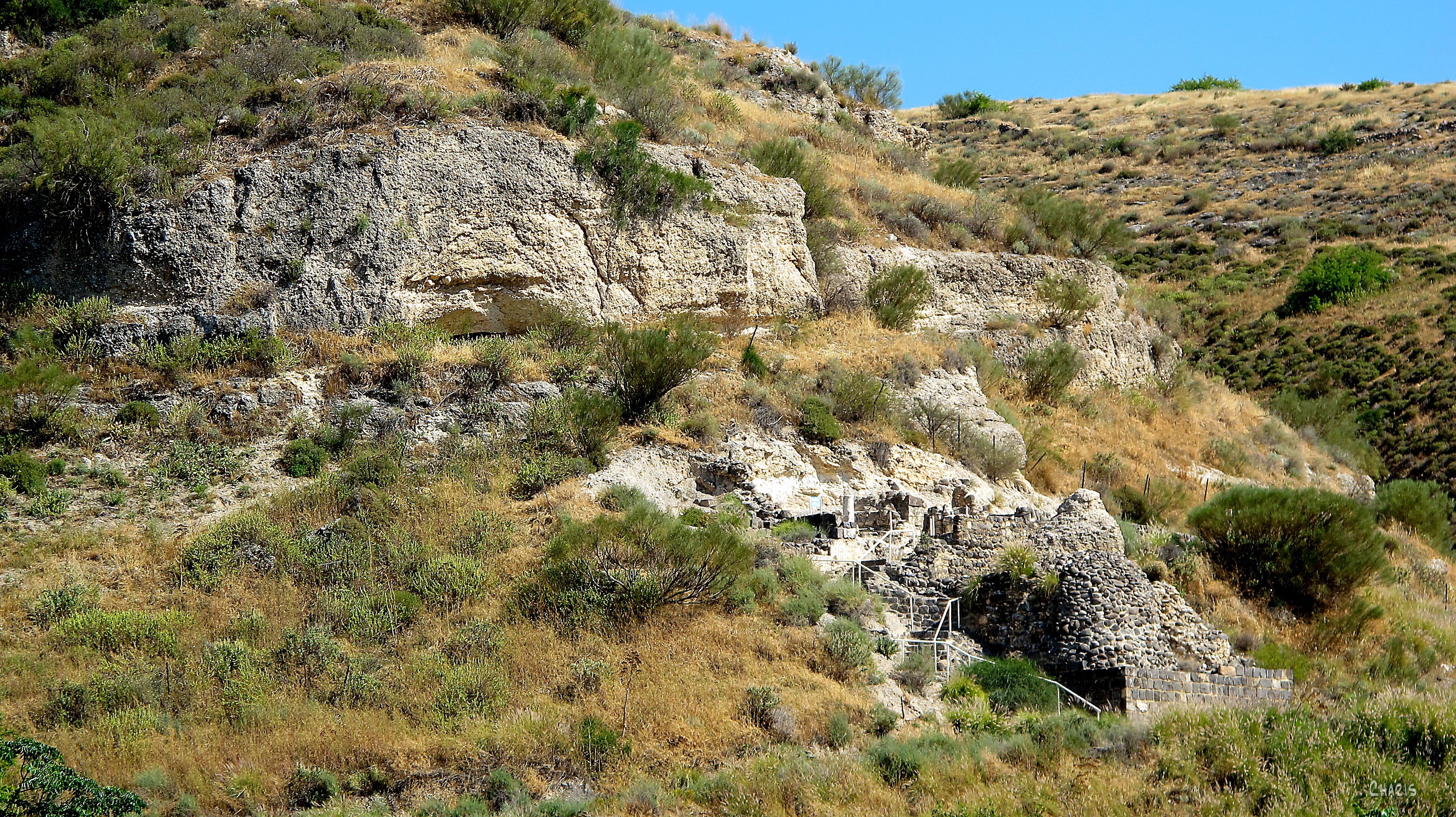


 Charis: Subject to Change