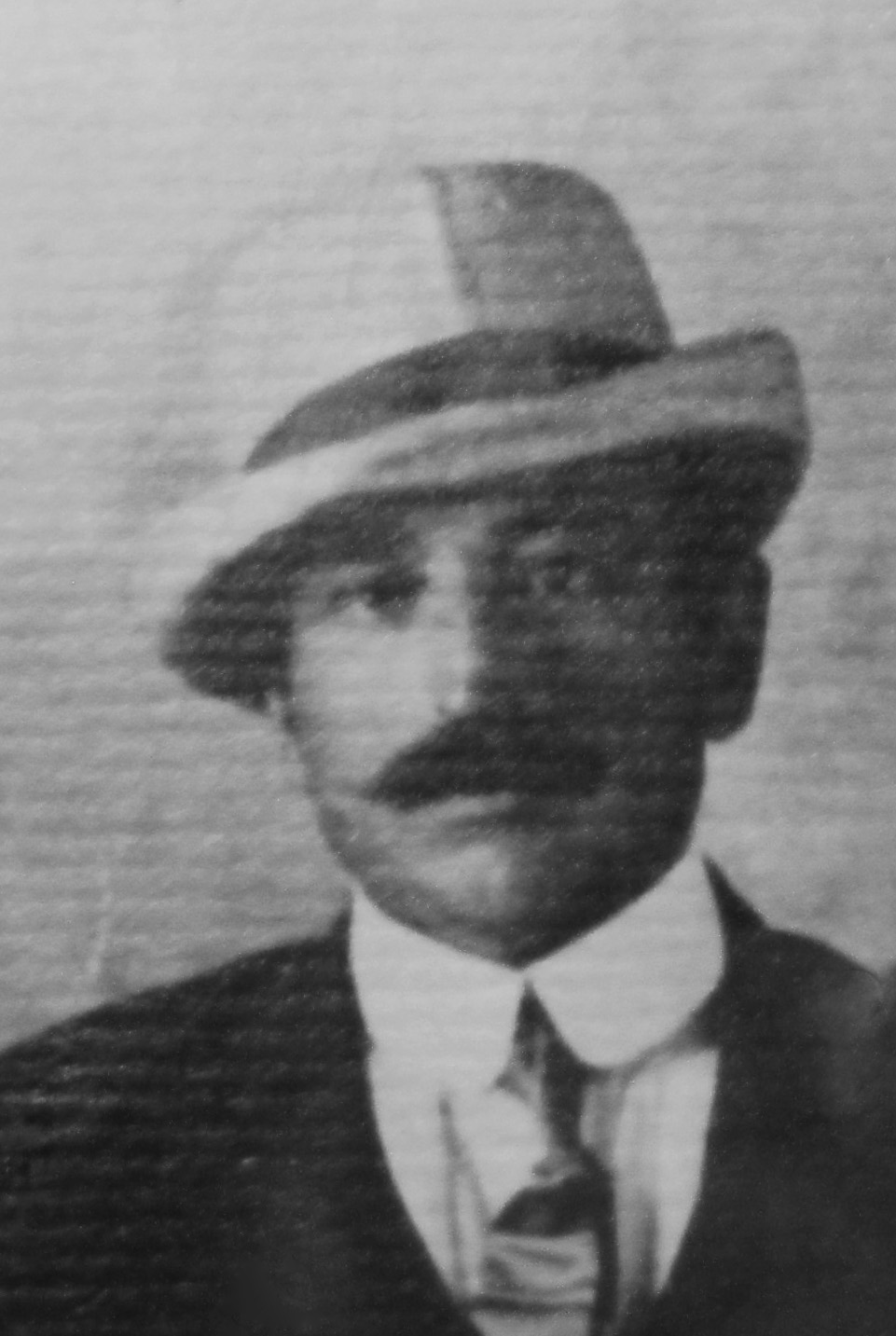
On Remembrance Day, amid all the photos posted on social media of grandfathers who fought in the wars, I would like to honour my grandfather, the deserter. He held some sort of minor rank in the Russian army that allowed him to see early that the Czar was sending troops out horribly under-equipped for war. He sent his men home and fled the country with a price on his head.
Remember that scene in Dr. Zhivago? It’s just drama, of course, but somewhere in there is a story like my grandfather’s.
Twice now I have seen a TV show about ancestry with interviews of famous people who were ashamed to find out their forefathers chose not to join “the Patriots” who won the violent conflict that established the direction their nation took. Instead their great great great grandpappies (or their surviving families) also fled to Canada. The famous peoples’ reactions upon discovering this news puzzled me. In Canada their forefathers’ choices are not a source of shame. They are called United Empire Loyalists. In Canada they are heroes, ancestors who are honoured, not sources of embarrassment.
That’s the way it is with war. Often you can’t tell heroes from villains, loyalists from rebels, patriots from deserters, until the history books are written, and even then it depends on who writes them.
Grandfather’s son grew up to fight in WWII in the Netherlands. Uncle was overwhelmed by their genuine expressions of gratitude when he visited Europe 40 years later. He knew he had done the right thing.
Sometimes courage is fighting for the King or for the President, and sometimes courage is laying down your arms in the midst of a stupid, pointless conflict and dismissing your men, even if it means risking standing in front of a firing squad yourself. The man in the photo spent the rest of his life looking over his shoulder, but he also knew he had done the right thing.
When I heard this statement in a discussion of how the early church fathers handled (and mishandled) disagreement I had to pay attention.
Far too often I’ve heard the word heresy thrown at people on the journey –people who are in process, people who have not yet arrived. I have wondered what the difference is between being in error and promoting heresy. Perhaps this statement helps to clarify.
Yesterday’s offense becomes tomorrow’s heresy.
Some things are clear. Some things are not. By heresy I mean the big stuff – lies about the character of God (Father, Son and Holy Spirit), lies about who we are, and lies about God’s intent and interaction with us. By heresy I definitely do not mean the size and shape of a communion cup or how you cut your hair or your preferred worship style. I mean orthodoxy, the essentials of the faith, the Apostle’s creed kind of stuff. Behaviour and practices (orthopraxy) are the result of living out what we really believe.
So many truths are suspended in the tension of paradox (two seemingly conflicting concepts, dying in order to live, for example). In the process of asking the questions which give meaning to answers God gives latitude (aka grace) to explore all the neighbourhoods inside a paradox. Sometimes we revel in the revelation of an aspect of God we have not seen before. We celebrate it. We take it out for a spin to see how it works. We proclaim it.
Then we feel the backlash from those who have had a different understanding. Then the bashing over the head with the Bible starts. Then proof-texts send less-than-subtle messages telling you to change back. Change is uncomfortable. It throws off the equilibrium of everyone around us.
I have friends who are vegan. The reason is not important here, although it is valid and unique to their situation. They will tell you that as soon as people learn of their choice they are confronted by the defensiveness of those who feel their freedom to eat egg salad sandwiches is being attacked. The temptation for some people in this situation is to retaliate and disparage the character of those who consume animal products. My gracious friends are not among them. You are perfectly welcome to consume a cheeseburger in their presence. Sometimes in Christianity, if you ask a scary question or make a choice that is different from others around you, the backlash can take you by surprise.
In the discussion about heresy one person pointed out that historically if the conversation stopped at the point where both sides could agree, or agreed to disagree on emphasis or the priority of a concept and how it plays out in our actions, there was still unity (if not uniformity) and a chance for seemingly different truths to exist within a paradox. Since ideas have consequences the way we choose to live out our faith in Christ will reveal which truth we emphasize (and our understanding at that particular moment – which, if I may remind you, is subject to change as we seek the Lord and pay attention to what He is showing us. It’s called growth.)
Heresy takes root when we are unwilling to honour the truths in the understanding of others and must not only prove ourselves right, but are compelled to prove them wrong. I use the word “compelled” because the father of lies takes advantage of anger and unforgiveness to plant lies in this fertilized soil. That’s what he does. And history proves he has taken his role seriously.
People who have gone off the rails have often been good people who desired to pursue and honour God. Often a stream of Christianity has a revelation they have stewarded well, but when they chose to stand against other streams, to devalue and dishonor them in order to feel better about their choices, we can see heretical ideas begin to form within a generation or two. Out of feelings of hurt and rejection comes the defense and explanations that lead to division, proof-texting that ignores or dismisses context or other passages of scripture, and loss of sight of the other end of the paradox scale.
In other words, as 1 Corinthians 13 states, “We see in part.” There are already too many sects holding up their piece of the puzzle as if it is the only one. No one denomination has a monopoly on the truth, and no one denomination is entirely in error. As uncomfortable as questions and change and the potential for error make us feel, or as frustrated as the restraints of traditional understanding and practices make us feel, we in the universal church cannot afford to make our choices from a place of offense, unresolved issues and unforgiveness.
This way heresy lies.
Truth needs to upheld and error corrected, yes, absolutely. But there is a better way.
I want to be a person who is always at peace inside.
I’m getting better, but I’m not there yet. Until then, I would rather be a person who handles stress by cleaning and organizing. At least there would be slightly less chaos at the end of the day. When I am in the throes of useless obsession about a problem, I can step over mounds of rubble and not even notice. When the problem is resolved I am knee-deep in another one of my own making. It’s probably symbolic of the uselessness of worry.
People who clean obsessively are trying to find a measure of control in an atmosphere where things appear to be out of control. People who mull a problem over and over and over in their minds (aka worry) are doing the same thing, of course. We want to understand the eternal repercussions of every decision, every move toward the heights. We want a sense of certainty in the fog of unknowns.
Here’s the thing about change: It’s messy, and disorienting.
I finally got around to cleaning out some closets – but first I had to pull everything out and dump it on the floor and the bed. There was stuff in the back corners I don’t even remember putting there. (And since I haven’t missed it in five years it seemed like a good opportunity to bless the thrift shop.) But for a while the room looked like an episode of a hoarders TV show – piles of essentials and distractions and embarrassment and potential and memories all heaped together.
That’s what my life feels like this week.
Some people who choose to pursue God with all their hearts get the holy cuddles and effervescent joy special. Some of us get thrown into the lake.
What? But, Lord, I thought I would get what she was getting. I wanted kindergarten happy-happy free-play time. I got “let’s get serious.” I can’t touch the bottom! I’m drowning!
No you’re not!
I am!
I won’t let you drown, but you’re going to be miserable if you don’t get out of that stroller and kick the feet I gave you. I want to take you out swimming in the deep end with me, but I can’t if you don’t start using what you already have. Now kick your feet – and use your arms. That’s what they’re there for.
The fruit of the Spirit, like the Holy Spirit is already in you because I am in you. It’s my fruit, my character. But the peace I bring you won’t do any good unless you pick it up and use it.
These circumstances are not just an attack of the devil to show you how much he hates you and wants to hinder you (although he does). They are meant to cause you to dig deeper, to lean harder on Me to discover the resources already placed within you – stuff you have never even taken out for a spin yet.
How does this peace thing work? Ask Me – I’ll show you.
If you think God has no wrath you do not understand the power of His love. What kind of loving Father sees his children slaughtered and does not feel outrage?
Yet he tells his people not to avenge themselves. Romans 12:
Beloved, never avenge yourselves, but leave it to the wrath of God, for it is written, “Vengeance is mine, I will repay, says the Lord.”
Instead he asks his children to respond in the most counter-intuitive way possible!
To the contrary, “if your enemy is hungry, feed him; if he is thirsty, give him something to drink; for by so doing you will heap burning coals on his head.”
For those thousands of people around the world who trust in him and who are seeing their children beheaded and their fathers burned, and their mothers raped and the enemy surrounding their city this seems like an incredibly impossible request. But there s a reason. When we fight darkness with darkness we ourselves are overcome by evil.
Do not be overcome by evil, but overcome evil with good.
Evil brings it own kind of blindness. It lies to us. It keeps us from seeing who the real enemy is. The idea of heaping burning coals on someone’s head is to give them something to carry home and start their own fires with. It is a gift of light and warmth that allows them to change their thinking and breaks the cycle of revenge.
If we take revenge for very real cruel acts of hateful persecution we risk killing the very people Jesus came to save — hostages of the evil one who have been his captives for so long they have believed his lies. They are delusional. Mental health workers will tell you some of the most difficult people to work with are those who suffer from paranoid delusions because they fear the very ones who want to see them healed. There are times, when for the sake of safety of others (and themselves) when they need to be restrained, but it is always understood that their reactions are the result of working under the assumptions of a lie. Many persecutors are operating under the assumption of a lie perpetrated by the father of lies -the god of this world – the real enemy -satan. That’s where God’s wrath is directed.
It is so easy to be captured by the spirit you oppose. There are genuinely evil people out there who have deliberately chosen to be the devil’s servants. And there are wounded people who have been deceived. God sees the heart. That’s one reason He says he is in charge of vengeance. When we fight darkness with darkness we are contaminated by the lie. We are called to walk in the light.
Today I was moved almost beyond belief when I heard the story of a mother and her children in Baghdad asking to be baptized even as the city is surrounded by troops hell-bent on killing people who identify as believers in Christ. They ask this even as Iraqi soldiers surrounding their enclave have said that they are prepared to discard their uniforms and run. Where does that kind of courage this woman has demonstrated come from? Would my trust in the Eternal goodness of God be so great that I would do that under the same circumstances?
Would I be willing, like the brother of a man who had been chopped to pieces in Mozambique by those who opposed the message of salvation in Christ, to approach them and say, “You can cut my body into a thousand pieces and everyone will cry out, ‘Jesus Christ loves you.'” The entire village turned to Christ.
Love like this is more powerful than all the bombs in the world.
Praying for courage and profound world-changing love in the persecuted church around the world today –especially in Iraq. May they see the glory of the Lord as God’s will is done on earth as it is in heaven.
Lord hear our cry! In the Name of Jesus who bowed the heavens and came down.
Psalm 18
I love you, O Lord, my strength. The Lord is my rock and my fortress and my deliverer, my God, my rock, in whom I take refuge, my shield, and the horn of my salvation, my stronghold. I call upon the Lord, who is worthy to be praised, and I am saved from my enemies.
The cords of death encompassed me; the torrents of destruction assailed me; the cords of Sheol entangled me; the snares of death confronted me.
In my distress I called upon the Lord; to my God I cried for help. From his temple he heard my voice, and my cry to him reached his ears.
Then the earth reeled and rocked; the foundations also of the mountains trembled and quaked, because he was angry. Smoke went up from his nostrils, and devouring fire from his mouth; glowing coals flamed forth from him. He bowed the heavens and came down…
As summer ends I watch the exchange of green to gold and orange and red with mixed feeling. Autumn is probably my favourite season, partly because of the bitter-sweetness of it. I feel a need to grab every moment and soak in the colour craziness before the monotone of winter descends
Old age can be a time of bitter-sweet beauty as well. I’ve watched some elderly people fade into bitter grey resentment and I’ve watched some press on in colourful joyful hope. It’s a choice often made in the spring.
It is you, not I, who have been carried from before you were born. Indeed, when you were still in the womb, I was taking care of you. And when you are old, I will still be there, carrying you. When your limbs grow tired, your eyes are weak, And your hair a silvery gray, I will carry you as I always have. I will carry you and save you.
You know those dreams where you are back in high school or university and you realize you have an exam and you can’t remember your locker combination or the room number — or if you ever went to that class? Sometimes my life feels like that when I’m awake. I thought I was done with learning something and I find myself back in school — only this time it’s the school of higher un-learning.
This week the song “Young Love, First Love” has been going through my head.
“And the significance of that, Lord?”
“You have no idea how deep the acceptance of performance-oriented, hypo-grace, approval-seeking, ‘me-do-it-self’, busy-ness-is-next-to-godliness thinking runs. Churchianity is full of it. So are you.”
“Still? Seriously? I thought I was doing much better.”
“Pack your bags. We’re going on a love-trip.”
Ok, I’ve been thinking (again) about the warning to the church in Ephesus that although their diligent efforts are appreciated, God said they had a serious problem. They had left their first love. “However, I have this against you: you have abandoned your first love. Do you remember what it was like before you fell? It’s time to rethink and change your ways. “(Rev 2:4) The messenger told them to return to it or they stood in danger of losing their light (their understanding and their influence symbolized by a candle stand).
I began to realize that my secret reaction to the warning was an internal groan that even though I had worked hard all summer there was something else that should have been on the list. Oh yeah, remember to spend time loving God. Oh boy, something else to do before I can put out the cat and get some sleep.
“Think again,” He said. “You’ve got some un-learning to do.”
That’s where the song came in. (I know the word the Bible uses is agape, the type of perfect all-giving love God has, and not eros, the type of love that makes us get all hot and bothered and more than a little self-conscious, but I think the connection is still there.) I remember telling a lonesome young woman bemoaning her unattached state, that when people fall in love they actually fall in love with themselves in a way. When we see ourselves through the eyes of someone we respect and who thinks we are worthy of their time and attention, we are willing to lower our barriers a little. Sometimes we misjudge the quality of character in a person and find ourselves the object of the attentions of some obsequious little stalker who will hit on anything, but we learn and move on. But the attentions of someone we admire? Wow. Weak knees and butterfly stomach time. It can be a little disorienting. (So how to get a person of quality to fall in love with you? Become a person of quality yourself.)
When we fall in love we are constantly aware of that person’s presence. We know exactly where they are in a room without even looking. We are fascinated by everything they are. We want to know everything about them, their values become our values, their heartaches become our heartaches, their victories become our victories. We talk only about them and we need to be near. We have the urge to merge.
To be loved by someone you deeply respect who thinks you are worthy of his sacrifices, who can make you realize how amazing you are? Wow! He or she will inspire you to become bold and become a better person and do greater things simply because he or she believes in you.
You don’t fall in love with someone who makes you feel ashamed, or ugly, or unable to change. You fall in love with someone who makes you aware of your own potential -simply because their very presence in you life makes you realize you are of value to someone important. (Are you listening, Self?)
The lines of the song that keep running through my head: Young love, first love, filled with true devotion.Young love, our love, we share with deep emotion.
That’s it. He’s asking us to return to true devotion and deep emotion by letting him love us the way he wants to. Returning to the source of our motivation, knowing that the Being of ultimate quality, and worthy of infinite respect longs for us, means we can start to see ourselves through His eyes. He shows us how amazing we are; he emboldens us to become more than we ever thought we could be, because he says we are worthy of his attention, his time, his sacrifice.
When we do we will long to become like our beloved, to make his priorities ours, to understand his heart, to share his secrets and rejoice in his victories. When we return to our first love, we live and move and have our being in Him and our sanctified imagination is again motivated by His love -his perfect, unselfish, giving love.


















 Charis: Subject to Change