Eyes to See

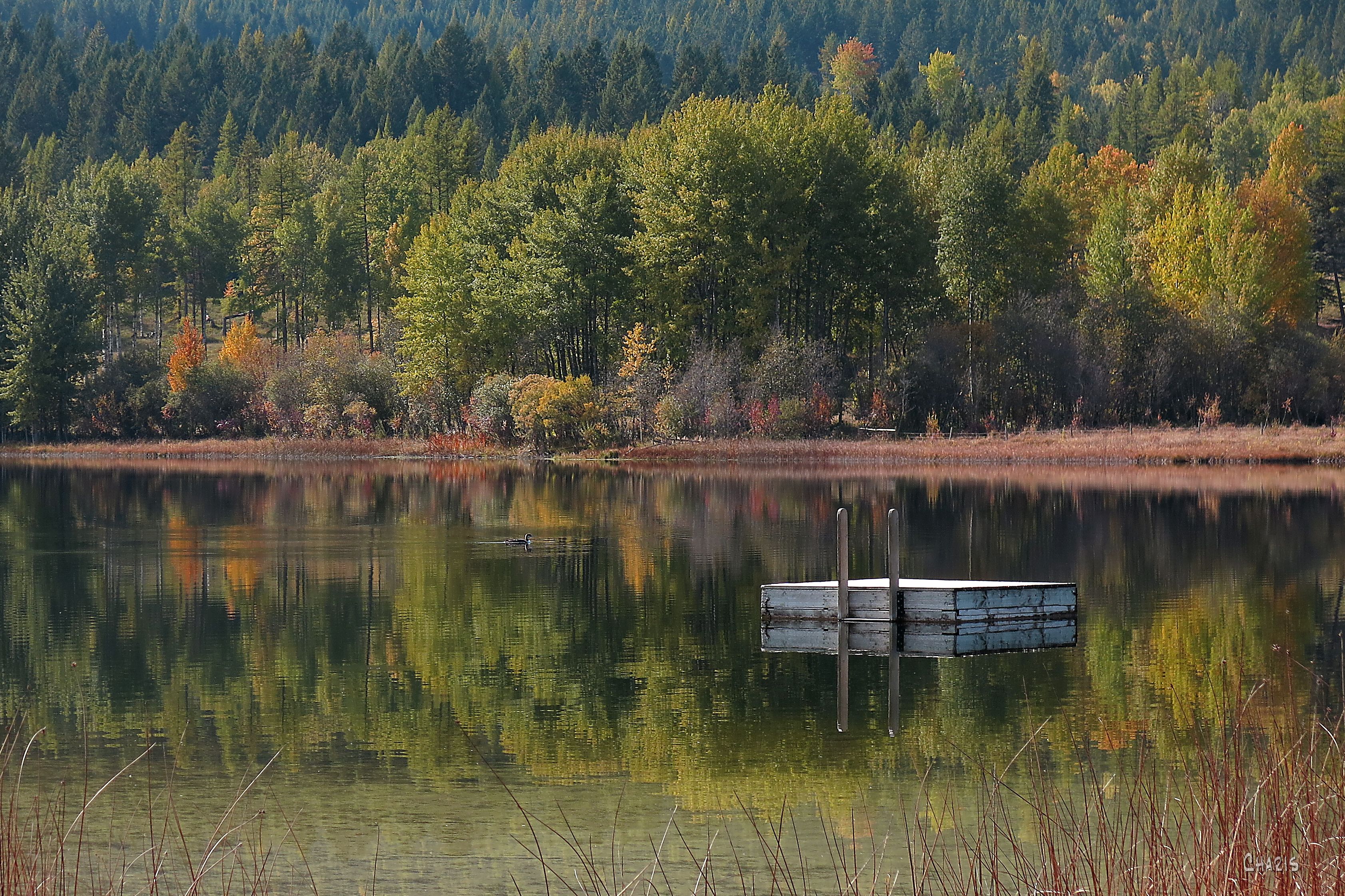
IMG_6032 upper mayook pond autumn ch


“Arthur: If I asked you where the hell we were, would I regret it?
Ford: We’re safe.
Arthur: Oh good.
Ford: We’re in a small galley cabin in one of the spaceships of the Vogon Constructor Fleet.
Arthur: Ah, this is obviously some strange use of the word safe that I wasn’t previously aware of.”
— Douglas Adams, The Hitchhiker’s Guide to the Galaxy


I was telling someone about an event I considered to be a miracle (in which a man who was given a 0% chance of survival walked out of the hospital perfectly whole shortly after). Her response was, “Sometimes I think we give God too much credit. There is probably an explanation somewhere; we just don’t understand it yet.”

I expect some people to say, “Prove it.” Most of the time that phrase, being interpreted, means, “I have already decided you are either lying or delusional.” Any documentation provided is either then ignored or dismissed. It’s amusing in a sad sort of way when they go on to announce “There is no documentation…” I don’t try to convince them. Not my job. I just thank God and enjoy him. The question, “How can that be?” young Mary’s question (upon being informed that she, a virgin, was about to have a child) asking for understanding, has greater integrity.

Another person said, “Oh, the guy was just healed (as if that wasn’t impressive enough.)  A miracle would be if an amputee received a new limb.”

This made me think. Was I giving God credit for a miracle when he only did a speeded-up supernatural version of natural healing?

Researching this made me realize I had accepted a strange use of the word miracle given by someone who, in fact, did not believe in miracles. It was an assumed definition I had absorbed somewhere or other in my education. Then I learned that the Bible itself defined such events quite differently.

The etymology (historic root) of the word miracle comes from the Latin word for wonder.
The New Testament uses these words to describe “miraculous” events: dunameis (displays of power or authority) simeion (signs or portents) teras (a wonder or unusual occurrence) paradoxa (unexpected) and thaunasion (a marvel or astonishing thing.) Or something close to those translations. Many concepts do not cross language barriers easily.

The definition of miracle that I had grown up with was something that could be proven to defy the laws of physics.

The people Jesus walked among would have been puzzled at our strange use of the word. N.T. Wright, as he often does, brought my attention to the need to understand the concept in the culture and times in which the Bible was written.

“These words do not carry, as the English word ‘miracle’ has sometimes done, overtones of invasion from another world, or outer space. They indicate, rather, that something has happened, within what we would call the ‘natural’ world, which is not what would have been anticipated, and which seems to provide evidence for the active presence of an authority, a power, at work, not invading the created order as an alien force, but rather enabling it to be more truly itself.’

‘The word ‘miracle’, by contrast, has come to be associated with two quite different questions, developed not least in the period of the Enlightenment: (a) is there a ‘supernatural’ dimension to our world? (b) Which religion, if any, is the true one? ‘Miracles’ became, for some, a way of answering ‘yes’ to the first and ‘Christianity’ to the second. Jesus’ ‘miracles’ are, in this scheme, a ‘proof’ that there is a god, who has ‘intervened’ in the world in this way. Hume and his followers, as we saw, put it the other way around: granted that ‘miracles’ do not occur, or at least cannot be demonstrated to occur, does this mean that all religions, including Christianity, are false, and the Bible untrue?” (N.T. Wright, ‘Jesus and the Victory of God’, p.186-188)

When I use the word miracle now I mean seeing God at work in unusual, unexpected, marvelous, astonishing displays of power and authority that point to Who He is. A miracle may defy the laws of physics by making the sun stand still or parting a body of water or turning water into wine, but it may also be a series of crazy astonishing coincidences – or a man walking out of the hospital against all expert expectation.

The “supernatural” is no more unnatural than natural to God and to those familiar with His ways, those learning to see with the eyes to see and hearing with the ears to hear that Jesus talked about.

And no. I don’t think we can ever give God too much credit for the unusual, unexpected, marvelous, astonishing things He has done, however He chooses to do them.

To God be the glory!

On Guard

IMG_7810 kootenay river autumn ch


I went down to the river one evening this week. It was so peaceful. We can never take peace for granted.

After yesterday’s events in Canada, when a gunman shot a young reserve soldier on ceremonial duty at the War memorial in Ottawa and then entered the very halls of the parliament building with his weapon, I am even more aware of the need to pray.

There is more than one way to stand on guard. We need to pray for all those in positions of leadership, and for those who put their lives on the line to protect us.

Those who are called to pray and bring the needs of this country to the throne of God also do guard duty.

God keep our land glorious and free –and peaceful.

The Burmis Tree

IMG_7388 burmis tree colour dark clouds bw

I’ve driven past the Burmis tree too many times to count but I have never stopped to photograph it before. Apparently it is the most photographed tree in Alberta. There are always vehicles pulled over near it and locals watch in amusement as tourists try to push their doors open and steady their cameras in winds that can almost knock you off your feet sometimes. I’ve never stopped or taken my camera out – just because so many other people do, and I  have to be different I guess. But this week the light was perfect, and nobody was watching, so…

Experts (who knows which ones) say it is a 600 to 750-year old limber pine. That means it could have been a sapling during the time of the last Crusades or the Black Death. It could have been bending in that wind when Kublai Khan came to power, when Dante and Chaucer were writing, when William Wallace was painting his face blue, or Marco Polo eating noodles in a Chinese take-out for the first time, or Wycliffe had just lost his teaching position for ticking off the University establishment with the crazy notion that if you are going to tell people to follow the teachings of the Bible they should at least be able to read it for themselves. I suppose the tree is worthy of attention simply for standing from then until now.

Except that it sort of blew over that time in the nineties, after it was pronounced officially dead about twenty years before. The thing is the Burmis tree is just about the only thing that the town of Burmis still has going for it, so some stalwart citizens discretely employed rods and brackets and raised it back up again. When annoying vandals (sans Huns) broke off an iconic branch they glued it back on and supported it with a rod, Jeremy Bentham-style.

Most photographers, including me, edit it back out.

Don’t get me wrong, I love history, I really do. I almost passed out from excitement when I saw the gates of Ninevah and the Rosetta Stone and the Elgin Marbles at the British museum. No beach vacation on earth could ever compare to walking the pavement of Jerusalem or hearing the crunch of pottery shards underfoot in Shiloh. But there is something about this sad-looking dead tree, reminiscent of a Dr. Seuss illustration, gathering tourists’ attention on the side of a blustery highway that makes me want to ask, “So, little tree, what have you done lately?” The tree’s claim to fame was that it had lived for such a long time. An amazingly long time actually, but now it is no longer living and I wonder if it is an homage to life or to death and its inevitability, even if one had the strength to stand strong through a thousand winter gales.

I suppose though, that all these historic figures I admire are just as dead as the Burmis tree. Well, deader actually, because they popped off their mortal coils long before the tree gave in. So many women and men of the past have demonstrated greatness and taught us profound truths, but they are gone now too. Perhaps the lesson of the tree is to simply be an example of standing in the gales of adversity, and having done all one can, to stand some more.

I pondered. Then I read this quote by E.M. Bounds (who demonstrated some standing ability himself):

The past has not exhausted the possibilities nor the demands for doing great things for God. The church that is dependent on its past history for its miracles of power and grace is a fallen church....”

Hmmm… Perhaps that’s why the Lord drew my attention to the Burmis tree this week. The greats were not great when they started. There was a time when they were as weak as saplings. But when we look to the deep thinkers and devoted people of the past and the institutions they started more than we look to the God who longs to be active in our present, we tend to cease to see, or even believe in miracles of power and grace in our own day – or when we do we dismiss them as coincidences or “unexplained” events too good to be true.

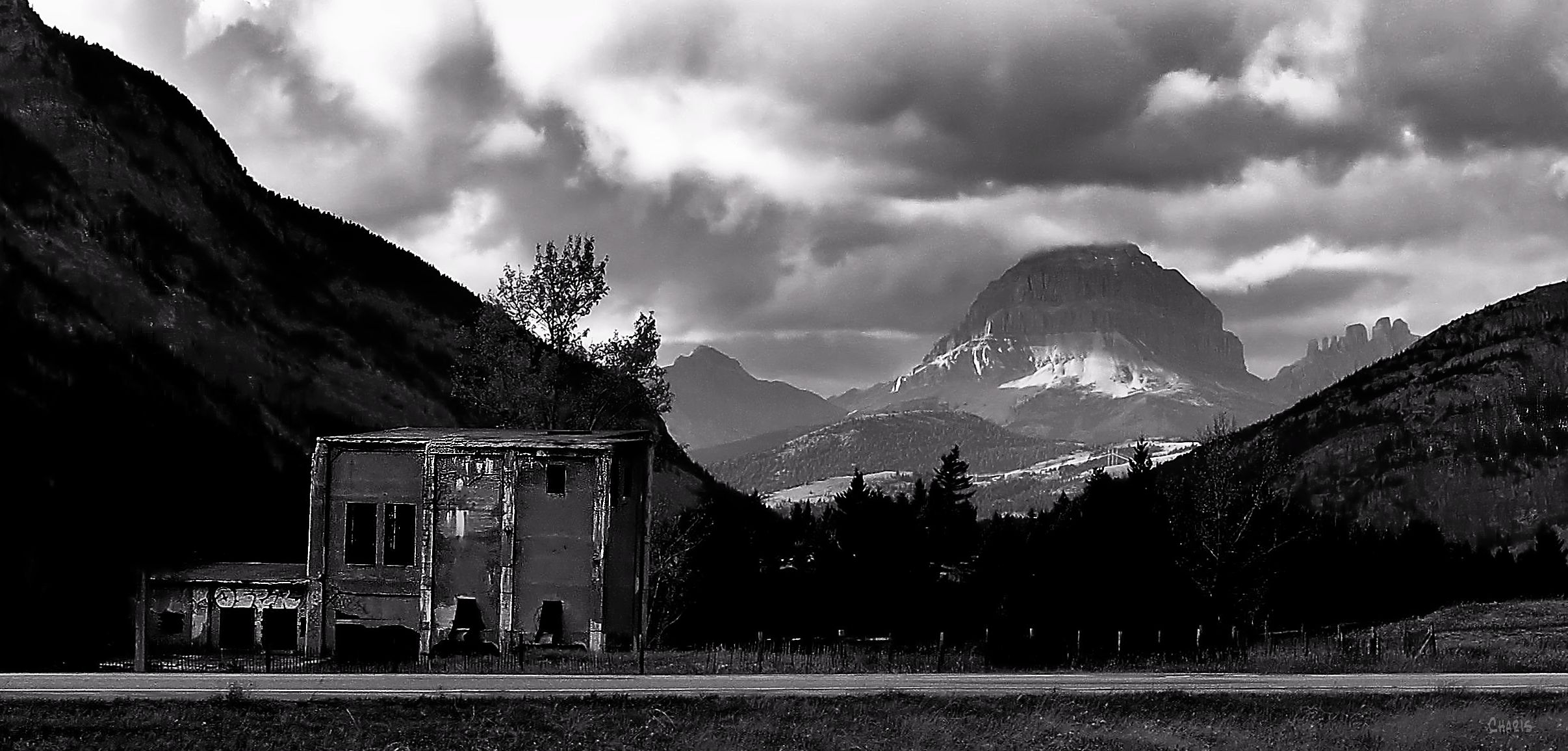
Further down the road the fire-ravaged shell of the old Mohawk tipple in Burmis stands as a symbol of the loss of prosperity and hope in a town of people who ran out of resources. There are some vacation homes in the area, but not much else is happening in downtown Burmis these days.

The thought strikes me that it is so easy to forget Who our source is and to try to resurrect dead monuments to the past instead of pursue active encounters with God.


IMG_7397 crowsnest from burmis coal tip bw ch

St. Paul, the intellectual who changed his opinion about Jesus Christ so drastically he went from killing his followers to risking his own life to bring the good news of the kingdom of God, had this to say to folks in Corinth: When I came to you, I did not come with eloquence or human wisdom as I proclaimed to you the testimony about God. For I resolved to know nothing while I was with you except Jesus Christ and him crucified.  I came to you in weakness with great fear and trembling.  My message and my preaching were not with wise and persuasive words, but with a demonstration of the Spirit’s power,  so that your faith might not rest on human wisdom, but on God’s power.”


Many Crowns

autumn colour on my street ch


Crown Him with many crowns
The Lamb upon His throne
Hark how the heavenly anthem drowns
All music but its own
Awake my soul and sing
Of Him who died for Thee
And hail Him as thy matchless King
Through all eternity

yellow aspen  ch DSC_0488


 Crown Him the Lord of life
Who triumphed over the grave
And rose victorious to the strife
For those He came to save
His glories now we sing
Who died and rose on high
Who died eternal life to bring
And lives that death may die


Edmonton autumn elm gouache ch


 Crown Him the Lord of love
Behold His hands and side
Those wounds yet visible above
In beauty glorified
No angel in the sky
Can fully bear that sight
But downward bend His wond’ring eye
At mysteries so bright

maple red yellow autumn ch


 Crown Him the Lord of heaven
Enthroned in worlds above
Crown Him the King to Whom is given
The wondrous name of Love
Crown Him with many crowns
As thrones before Him fall
Crown Him ye kings with many crowns
For He is King of all

IMG_4960 yellow aspen ch

Crown Him with Many Crowns” by Matthew Bridges

Glimpse

IMG_7485 kootenay river valley autumn ch


The dark clouds hovered over the mountains as we drove home today. I was a bit disappointed because I was hoping to catch some of the colour which is quickly being dispersed in the autumn winds. Every once in a while the sun would break through and catch the tip of larch trees, or a stand of aspen, but there was a lot of shadow. I was coming up Steamboat Hill when I looked over my shoulder and caught a glimpse of the sun’s glory on the Kootenay River.

There is something about the clouds parting on a dark day that reminds us that there is more to life than sorrow and disappointment and fear. It’s like prophets who catch a glimpse of truth in the midst of dark times and tell us that God is not afraid. He has a plan for our lives.

God, who gave our forefathers many different glimpses of the truth in the words of the prophets,

has now, at the end of the present age, given us the truth in the Son.

(Hebrews 1:1)

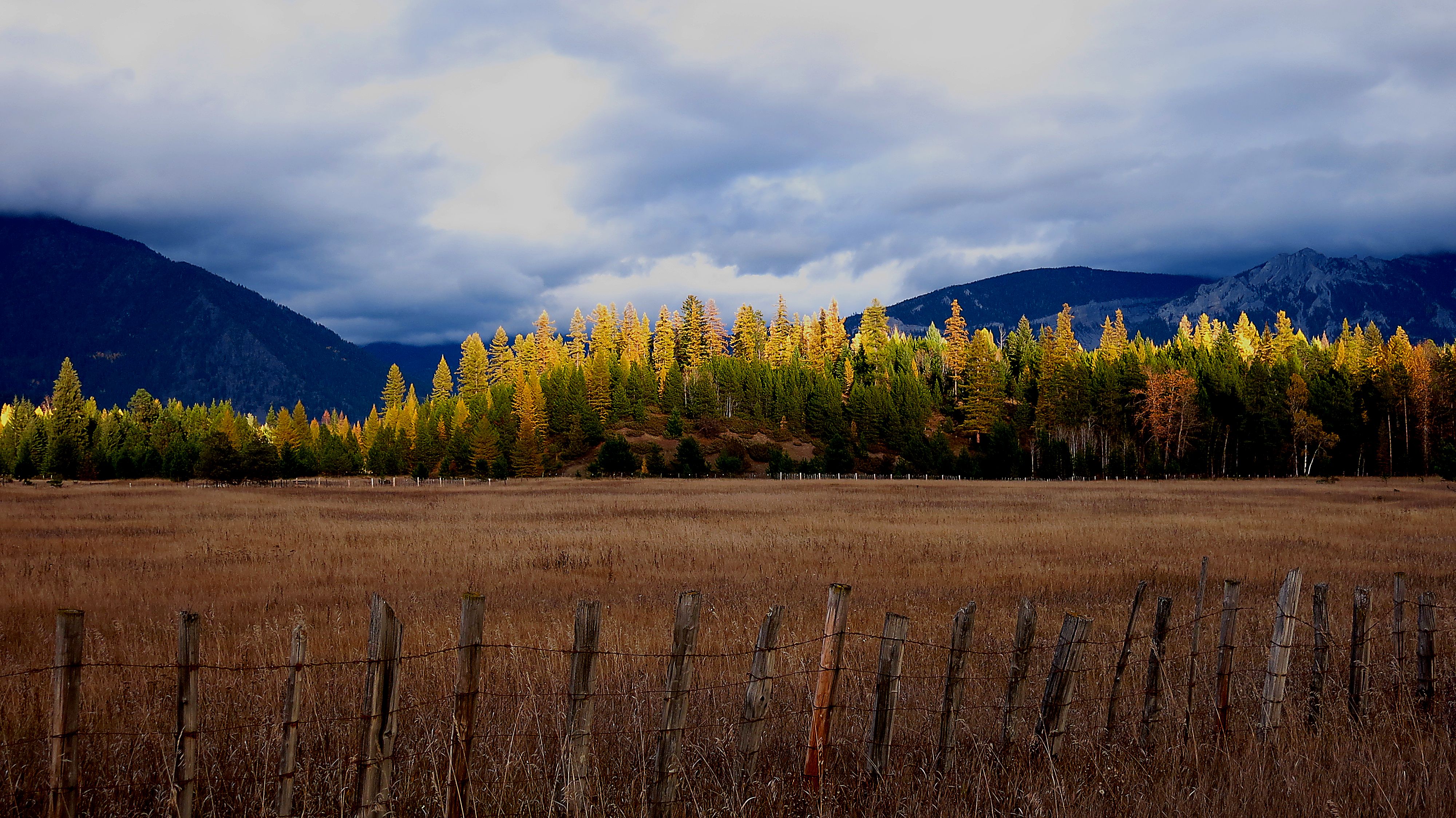
IMG_7478  ch Jaffrey field autumn mountain storm clouds

A Holy Mess

IMG_6586 Mt. fisher fog hwy

I want to be a person who is always at peace inside.

I’m getting better, but I’m not there yet. Until then, I would rather be a person who handles stress by cleaning and organizing. At least there would be slightly less chaos at the end of the day. When I am in the throes of useless obsession about a problem, I can step over mounds of rubble and not even notice. When the problem is resolved I am knee-deep in another one of my own making. It’s probably symbolic of the uselessness of worry.

People who clean obsessively are trying to find a measure of control in an atmosphere where things appear to be out of control. People who mull a problem over and over and over in their minds (aka worry) are doing the same thing, of course. We want to understand the eternal repercussions of every decision, every move toward the heights. We want a sense of certainty in the fog of unknowns.

Here’s the thing about change: It’s messy, and disorienting.

I finally got around to cleaning out some  closets  – but first I had to pull everything out and dump it on the floor and the bed. There was stuff in the back corners I don’t even remember putting there. (And since I haven’t missed it in five years it seemed like a good opportunity to bless the thrift shop.) But for a while the room looked like an episode of a hoarders TV show – piles of essentials and distractions and embarrassment and potential and memories all heaped together.

That’s what my life feels like this week.

Some people who choose to pursue God with all their hearts get the holy cuddles and effervescent joy special.  Some of us get thrown into the lake.

What? But, Lord, I thought I would get what she was getting. I wanted kindergarten happy-happy free-play time.  I got “let’s get serious.” I can’t touch the bottom! I’m drowning!

No you’re not!

I am!

I won’t let you drown, but you’re going to be miserable if you don’t get out of that stroller and kick the feet I gave you. I want to take you out swimming in the deep end with me, but I can’t if you don’t start using what you already have. Now kick your feet – and use your arms. That’s what they’re there for.

The fruit of the Spirit, like the Holy Spirit is already in you because I am in you. It’s my fruit, my character.  But the peace I bring you won’t do any good unless you pick it up and use it.

These circumstances are not just an attack of the devil to show you how much he hates you and wants to hinder you (although he does). They are meant to cause you to dig deeper, to lean harder on Me to discover the resources already placed within you – stuff you have never even taken out for a spin yet.

How does this peace thing work? Ask Me – I’ll show you.

And here’s some chaos to practise on.

Listen Carefully

IMG_7173 coleman creek ch

Monday afternoon, Thanksgiving Day, 2014. A stream in the Crowsnest Pass, Alberta.

Reading about nature is fine, but if a person walks in the woods and listens carefully, he can learn more than what is in books, for they speak with the voice of God.
– George Washington Carver

Bind Me Not

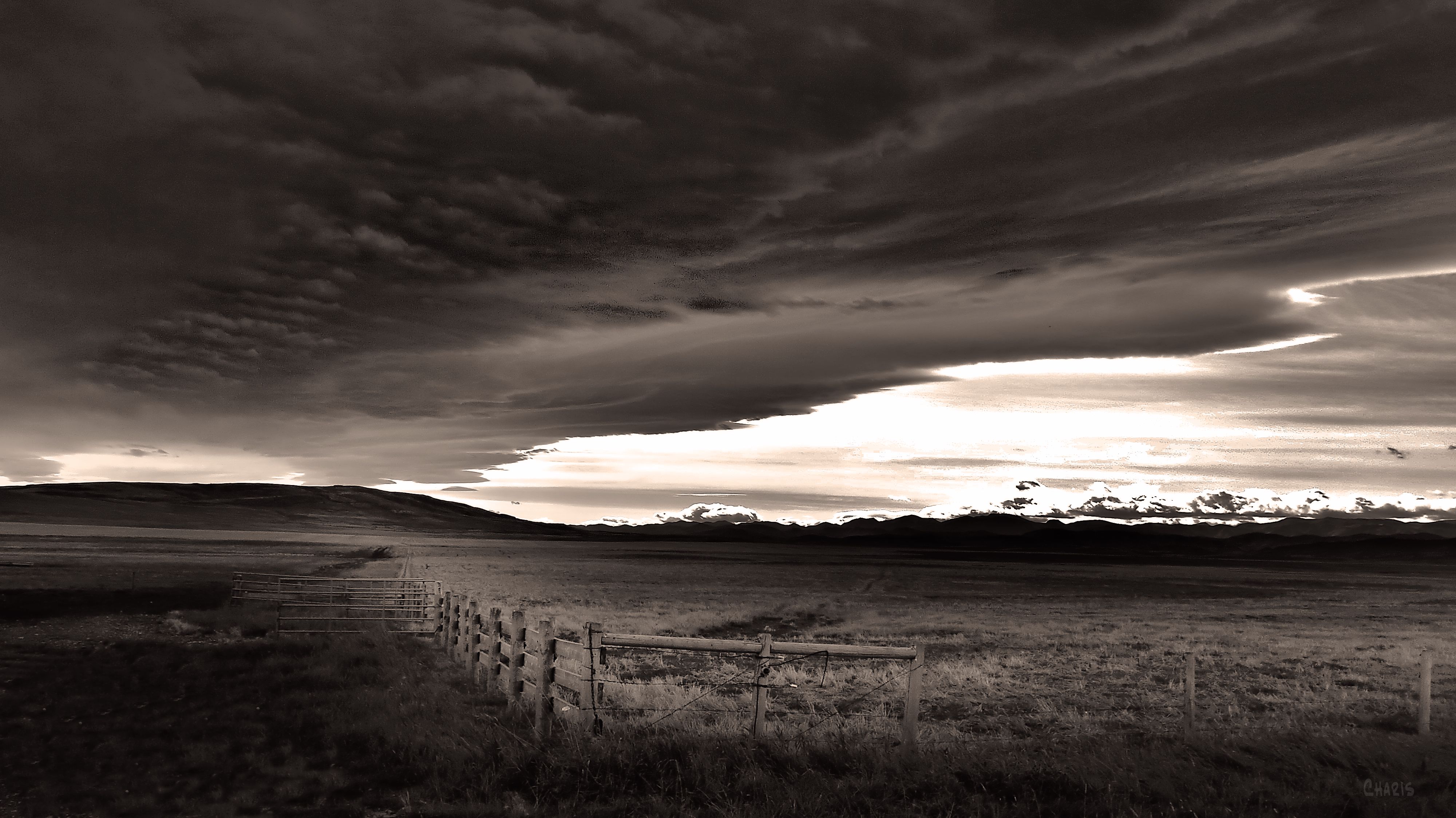
IMG_7152 dark sky near Longview bw ch

“Bind me not to the pasture

Chain me not to the plow

Set me free to find my calling

And I’ll return to you somehow…”

from Homeward Bound by Marta Keen