In worship an increased power steals its way into the heart sanctuary, an increased compassion grows in the soul. To worship is to change.
– Richard J. Foster

In worship an increased power steals its way into the heart sanctuary, an increased compassion grows in the soul. To worship is to change.
– Richard J. Foster

It’s not winter and it’s not spring and in the valley the fields are pretty ugly (oxymoron intended).
Signs of spring are few; some crabgrass is getting a head start on the gardeners, a few little crocus pop up close to the house, and tiny tiny yellow buttercups bloom in the meadow. I take my camera and go out looking for evidence of change, but to be honest, in this shoulder season, it’s very drab out there.
The deer like our garden in the winter. They come late at night and bed down under the bare plum tree. You can tell this is a favourite place because when the snow melts the brown grass harbours dozens of piles of deer poop. (I’ll spare you the photo.)
Brown rotten leaves that I never got around to raking, or that fell after the first snows made raking pointless, gather in the hollows. They lodge between grey branches and add to the dullness of barren bushes and empty flower beds.
Shrinking piles of snow in the corners of parking lots in town look like speckled black slag heaps from old movies about miserable coal miners. The accumulated garbage of a season once blanketed by pristine white snow emerges on the boulevard like guilty memories of junk food binges after you realize your jeans are too tight.

Don’t get me wrong. I see hope. There is nothing finer than the first afternoon warm enough to sit in the sun and enjoy a good cup of coffee. But the reality of once hidden things that need to be dealt with is hard to ignore, especially the day the ground in the stockyards thaws out.
It’s an ugly season, but it too is a season of grace.
Sometimes God sends us a gift we are not sure that we want after a while. A revealing season is one of them. Sometimes he melts the blanket of lovely white snow that has been covering a lot of nastiness. He reveals what has been hiding under there all along. Transitions can be ugly.
Sometimes he sends people (and attached circumstances) who seem to promise great things. When they come into our lives we welcome them eagerly only to discover that the great things are not so great – at least not yet. Their purpose (of which they are probably totally unaware) may merely be to reveal debris and garbage and piles of poop in our lives that need to be cleaned up so they don’t distract from the great things when they do happen. They may just be part of the unwitting transition team.
My friend and I were praying for a ministry which was having an important meeting. We prayed that God would move mightily. He did. The meeting fell into shouting-match chaos when old resentments and bitterness were revealed like piles of poop that had been under the cover of cool politeness for years. It got ugly. They could not move on until things were cleared up. The board members, being thoroughly humbled, set about to do that.
 We don’t always appreciate that a promising new boss, who turns out to be more difficult to work with than the last one, or a new political leader, who seems to be more inept than the former office-holder, may actually be in our lives for a reason. Their whole purpose (of which they are probably totally unaware) may be to be the agent that reveals the garbage we need to deal with and the brokenness that God wants to heal next. They may also be a part of an unwitting transition team.
It can be an ugly season when unpleasant stuff is revealed, but we don’t need to lose hope. In time the valley will bloom again. Watch for the signs.


“God has foreordained the works to which He has called you. He has been ahead of you preparing the place to which you are coming and manipulating all the resources of the universe in order that the work you do may be a part of His whole great and gracious work.” – G. Campbell Morgan
“The situations you are in are not more powerful than God. They are not stronger than Him. There is light. There is truth. There is wisdom. There is revelation. There is hope. There is joy. There is peace in believing.”
~Graham Cooke

Summer and winter and springtime and harvest,
Sun, moon, and stars in their courses above;
Join with all nature in manifold witness,
To Thy great faithfulness, mercy, and love.

Great is Thy faithfulness!
Great is Thy faithfulness!
Morning by morning new mercies I see
All I have needed Thy hand hath provided
Great is Thy faithfulness, Lord unto me!
(from Great is Thy Faithfulness by Thomas Chisholm)

When my anxious thoughts multiply within me, Your consolations delight my soul.
(Psalm 94:19)
I took a different path from my usual road-less-travelled route in the forest. I was talking to God about some of the many concerns on my heart, one of them being as essay I promised someone on “hearing God’s voice.” I explained to God that it’s rather embarrassing to talk about hearing his voice if I can’t hear it. I haven’t heard much from you lately, Lord, in case you haven’t noticed.
Then the thought came, “Meditate on scripture.” OK. Which scripture?
“Be still and know that I am God,” came immediately to mind.
That’s one I chose to meditate upon a few years ago – because it was short and easy to memorize. Was that thought just from me, because that verse was familiar, or was it from God? There was no audible voice answering my question. I don’t know. This is frustrating.
My meditation didn’t last a full minute before I was back obsessing about whether or not I said the right thing, or if I remembered to pray for everyone on my list, or why so many jets from the south seem to be flying over our remote valley lately, or if I left that important prescription I can’t find in the bottom of a shopping bag, or if I got the garden planted in time and ISIS! Oh, God, your people are being slaughtered! How do I pray about this?
It can be very noisy in my head.
I came around the bend near the meadow by the second lake and saw a group of people down in the grass looking like they were searching for something. I asked someone what was happening and a woman explained to me that they were digging out noxious and invasive weeds.
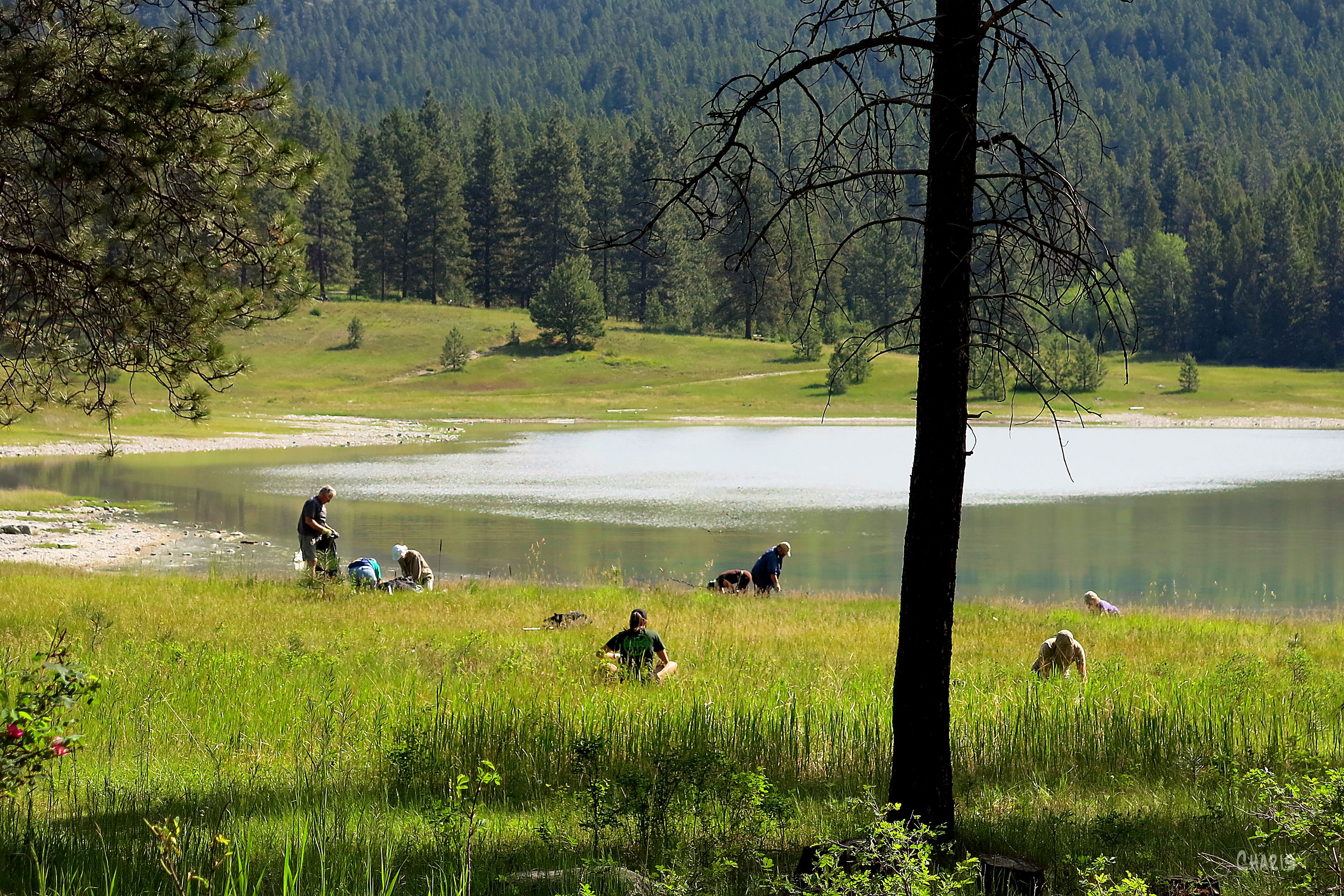
“Dalmatian toadflax and St. John’s wort mostly,” she told me. “There’s a bit of knapweed which of course is noxious, but today we are mostly concerned with other invasive weeds. St. John’s wort has its uses but it doesn’t belong in this environment and will soon take over if it’s not rooted out.
I went away thinking about them. In nearly thirty years of walking in these woods I have never run into any sizable group of people doing anything but walking dogs and giving visitors a tour. I’ve seen evidence of bush parties, but never evidence of parties of environmentalists digging invasive weeds out of the meadow. I felt I needed to pay attention.
I walked down another shaded trail thinking about invasive weeds and remembered some one-issue people I’ve known. I began composing a blog in my head about the way some people with a cause based on a perfectly good justice issue, or an over-looked aspect of theology, or an unmet practical need in the world “invade” an environment so that other people’s favourite causes are not given space.
I decided to sleep on it and woke with a song in my head that I have not thought of in many, many years.
Lord, I have shut the door, Speak now the word
Which in the din and throng could not be heard;
Hushed now my inner heart, whisper Thy will,
While I have come apart, while all is still.
“What are you saying, Lord?”
“It’s not about them.”
“Huh?”
“It’s about you. Your thoughts are like noxious and invasive weeds. Some are just bad, and although many concerns are useful in their place, when your anxious thoughts invade our quiet place you can’t hear. Be still and know that I am God.”
Psalm 94:19 came to mind: When my anxious thoughts multiply within me, Your consolations delight my soul.
It’s not that I don’t need to pray about these things; I do! It’s when they, and the fear attached, invades my inner heart, the place where I have invited Christ to dwell, that they multiple and drown out his voice – his consolations. God is speaking all the time but unless I learn to be still, I’ll have trouble hearing him – and even when I do, I may make the mistake of thinking it’s for them and not me.
Sometimes hearing God’s voice is not only about making connections, it’s about learning to turn down the volume on noxious and invasive noises and root out obsessive thoughts that invade the sacred space so his consolations have room to thrive.
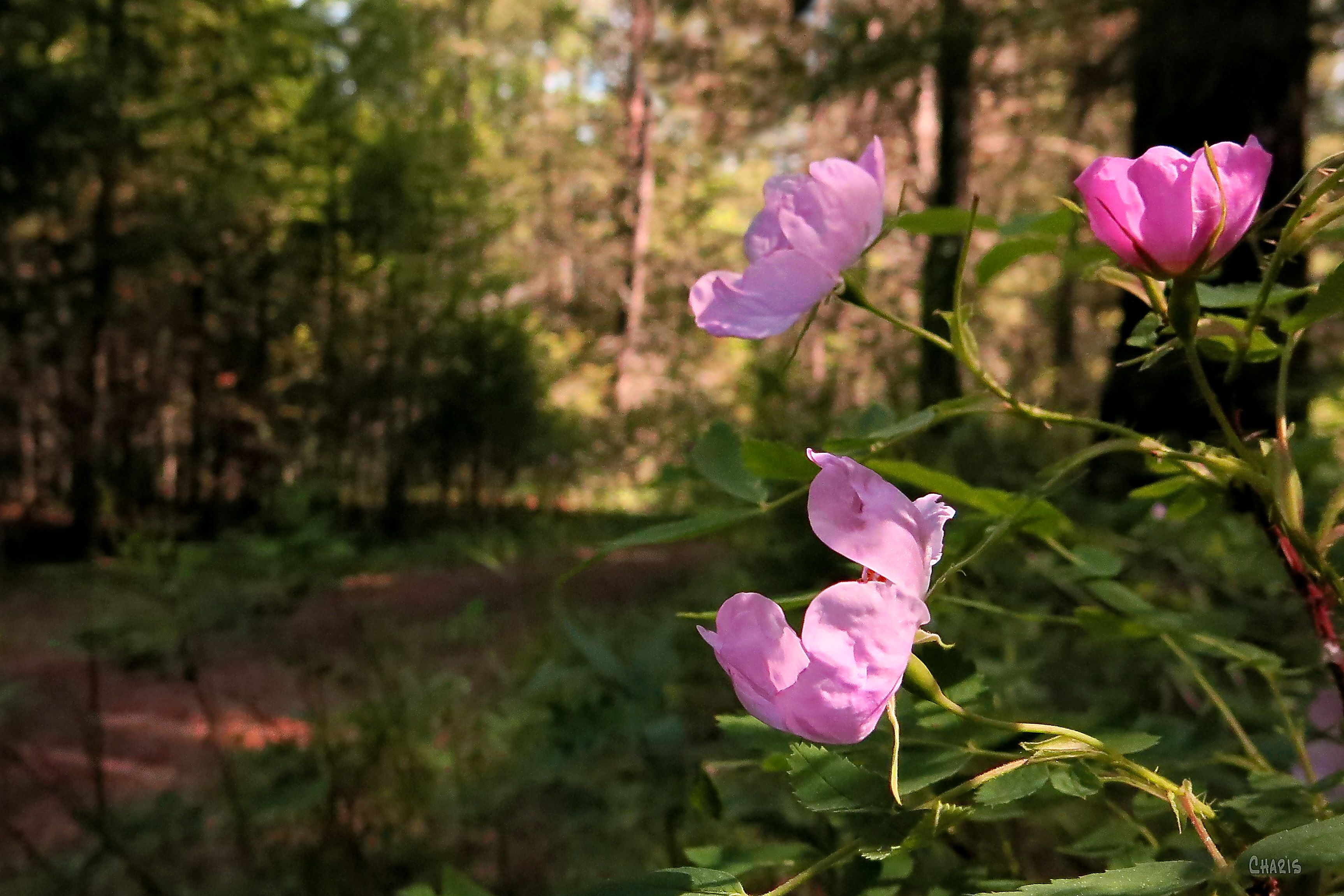
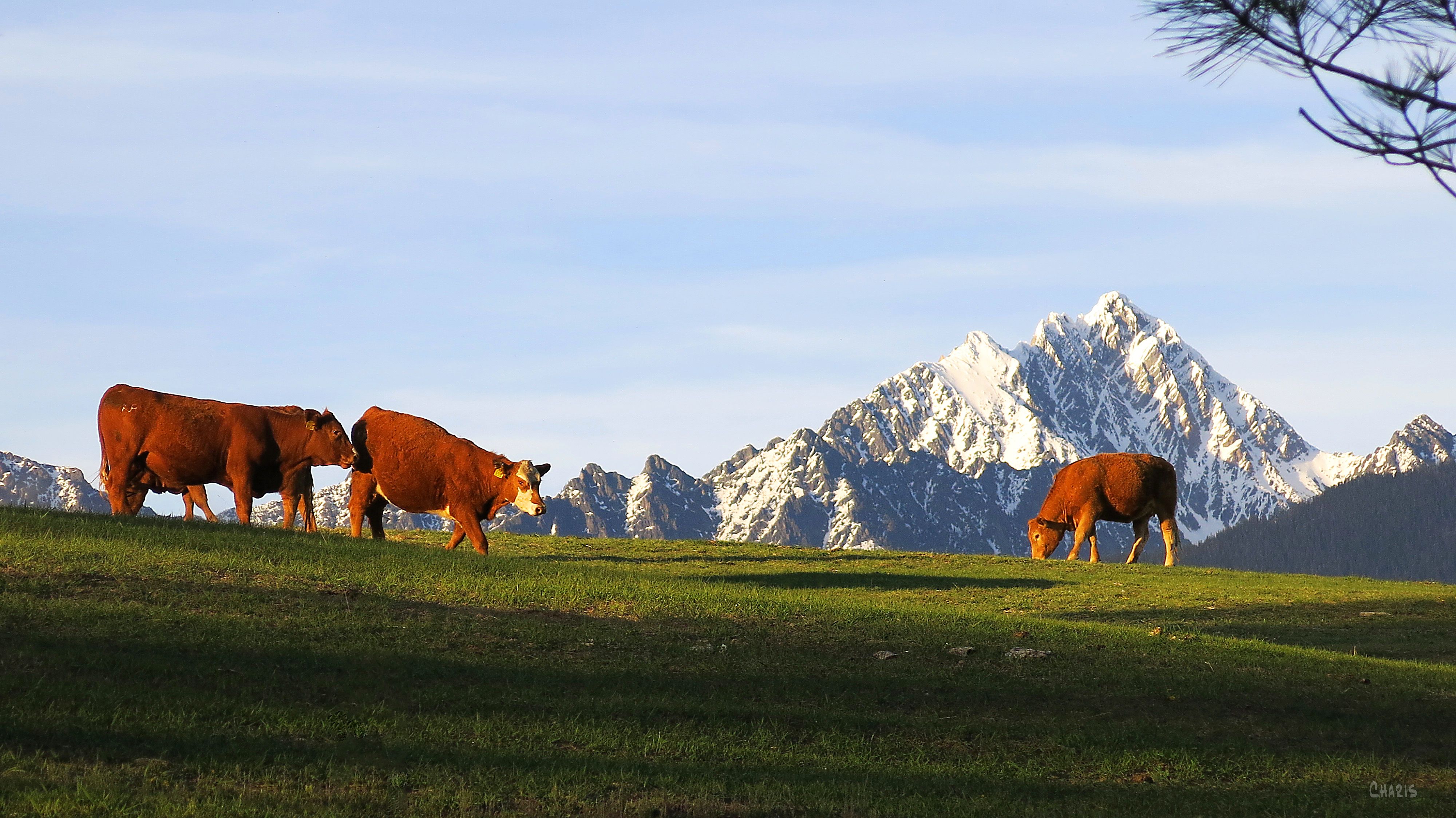
The clouds, too, drink up their share,
raining it back down on the mountains from the upper reaches of Your home,
Sustaining the whole earth with what comes from You.
And the earth is satisfied.
Thus You grow grain for bread, grapes for wine, grass for cattle—
all of this for us.
And so we have bread to make our bodies strong,
wine to make our hearts happy,
oil to make our faces shine.
Every good thing we need, Your earth provides;
our faces grow flush with Your life in them.
(Psalm 104: 13-15 The Voice)

When my uncle from Saskatchewan came to visit I took him to one of my favourite lookouts to see the mountains. I asked him what he thought. He thoughtfully stroked the stubble on his cheeks that reminded me of the stubble covering his flat fields after harvest.
“They’re okay I guess, but they kind of block the view, ” he said.
A talented musician I once worked with told me she had a similar reaction. She grew up in The Netherlands and although she had seen pictures of mountains she never actually climbed even a hill until a visit to Scotland when she was eighteen.
“The mountains in Canada make me feel claustrophobic,” she said. “I miss the sky.”

I must admit that when I take trips back to the prairies I appreciate the sky and the marvelous sunsets, but I feel so exposed. My Dad joked that on his childhood farm he could see the train coming two days away and it was this environment that necessitated the invention of the outhouse.
Communication involves so much more than the facts of terrain and topology. Words and images don’t always contain the same meanings to different beholders.
I loved the annual “Missionary Convention” at my church when I was a kid. The missionaries on furlough brought costumes and articles from far away exotic cultures and told stories of eating local comfort foods that made kids raised on Jello and Wonder bread gag. I remember one guy telling us the problems he had translating the Bible into the language of a society whose only previous outside contacts had been oil and mining company workers and anthropologists. He wondered how to translate, “Behold the lamb of God.” Somehow “Behold the fuzzy creature of God” didn’t seem appropriate. “Behold the little pig-sized animal covered with curly whiskers like the ones on Jake the geologist’s face” seemed too cumbersome to repeat more than once. He finally went with “Behold the piglet of God” because these people raised pigs and often took the little ones into their homes as pets. He knew that word could be shocking in other cultures, but it conveyed the meaning of something innocent, valued and loved. A lamb, in a way, was like their piglet, but then again, not really. There are limits to how far an analogy can go. Sometimes you need more than one.
Jesus told stories to explain a kingdom outside the experience of the people who gathered around him. “The kingdom of God is like a pearl. It’s like a coin. It’s like…”
“The disciples came up and asked, “Why do you tell stories?”
He replied, “You’ve been given insight into God’s kingdom. You know how it works. Not everybody has this gift, this insight; it hasn’t been given to them. Whenever someone has a ready heart for this, the insights and understandings flow freely. But if there is no readiness, any trace of receptivity soon disappears. That’s why I tell stories: to create readiness, to nudge the people toward receptive insight. In their present state they can stare till doomsday and not see it, listen till they’re blue in the face and not get it. I don’t want Isaiah’s forecast repeated all over again:
Your ears are open but you don’t hear a thing.
Your eyes are awake but you don’t see a thing.
The people are blockheads!
They stick their fingers in their ears
so they won’t have to listen;
They screw their eyes shut
so they won’t have to look,
so they won’t have to deal with me face-to-face
and let me heal them.”
(Matthew 13: 10-15 The Message paraphrase in modern clichés)
God still speaks to us today in stories and similes that come from our own cultures. His language is not always English nor any other spoken language. He can speak through nature and pop music and babies and even international politics – and many other ways that connect us with his heart – but most people don’t hear because his imagery means little without a desire to understand the story-teller. His language is relationship. He is the Word.
I’ll be honest and say that I enjoy poetry and I write poetry, but I don’t read a lot of it. It’s work and I want to know the poet has something of value to say before I invest mental energy in interpreting the imagery. You can’t read poetry (except perhaps limericks) without taking time to ponder over what the writer is trying to communicate. Taking time to listen to God develops eyes to see and ears to hear what the kingdom of God is like, but more importantly what the Lover of our Soul is like.
“But you have God-blessed eyes—eyes that see! And God-blessed ears—ears that hear! A lot of people, prophets and humble believers among them, would have given anything to see what you are seeing, to hear what you are hearing, but never had the chance.” (verses 16-17)
“Oh Lord my God, when I in awesome wonder consider all… I see… I hear… Then sings my soul, my Saviour God to Thee.” (How Great Thou Art)

Then I realized that my heart was bitter, and I was all torn up inside. I was so foolish and ignorant— I must have seemed like a senseless animal to you. Yet I still belong to you; you hold my right hand. You guide me with your counsel, leading me to a glorious destiny. Whom have I in heaven but you? I desire you more than anything on earth. My health may fail, and my spirit may grow weak, but God remains the strength of my heart; he is mine forever. (Psalm 73:21-26)
A humble wise man once requested that if God is bringing you to a time of removing old habits and ways of thinking, please die quietly. God has been working on a major character flaw I was oblivious to until others finally became so frustrated with me they had to stop being subtle. I did not respond kindly. I have not been dying quietly. I’ve been torn up inside and lashing out like a senseless illogical wounded animal. It feels like submitting to surgery without anesthetic, this putting to death the sinful, earthly things lurking within me. It involves removing a coping mechanism that has helped me survive some pretty horrendous memories and letting go of it makes me feel very alone and weak and vulnerable. It has been firmly entrenched behind thick walls for a long time – a stronghold. Today my heart literally aches and my spirit is on wobbly legs. In myself I have no ability to cope with this kind of pain. None at all. But God is still faithful and still good. When I read these verses this morning I was reminded that He is the strength of my heart. My thoughts need to be on the realities of heaven where Christ, the Lover of my soul, sits by my Father who wants only to raise me up to be who He sees me to be. Since you have been raised to new life with Christ, set your sights on the realities of heaven, where Christ sits in the place of honor at God’s right hand. Think about the things of heaven, not the things of earth. For you died to this life, and your real life is hidden with Christ in God. And when Christ, who is your life, is revealed to the whole world, you will share in all his glory. So put to death the sinful, earthly things lurking within you. (Colossians 3) Here’s the thing. Jesus’ love makes me want to be a better person. I know he loves me just the way I am, but he also loves me too much to leave me this way. So… here we go.





 Charis: Subject to Change