Sketchbook, circa 1971

cartoon 13 BA psych DSC_0840

“I’m not having a porch prom!” my granddaughter protested when she learned her high school graduation celebration had been cancelled.

She had a porch prom. We attended by Zoom. Her grandparents, aunts, uncles and cousins praised her dress, her taste, her beauty, her intellect, her perseverance, and her attitude. Except for taking screen shots and cell phone shots of the computer screen, and the absence of any escort, friends, or fellow graduates, it was like the evening of her father’s graduation. We praised him, celebrated him, and took photos of him on the porch too. Then we waved as he left to pick up his date for the prom.

But her grad ended on the porch. No ceremony. No sitting in the sun in a stiflingly hot gown while some minor dignitary issued platitudes about adult life on a glitchy sound system. No diploma in hand, no hat in the air. No discovery that friends in expensive formal attire are still the same imperfect people they were all year.

I sympathized with her disappointment as I dealt with my own. We were unable to travel to see a very precious person cross the stage. I remembered my grad. I sang a solo at the ceremonies, but I wasn’t allowed to attend the prom. My parents forbid me to go to a dance. That was disappointing.

I dealt with more disappointment this week when a faucet burst and water poured out, unobserved for too long. My back was killing me by the time I moved the last crate in the storage room to higher ground. It looked then like I would have to toss out the empty frames and old sketch books it contained. It looks now like the frames can be salvaged, but not the sketch books. They were old anyway.

cartoon 1 gallbladder DSC_0855

I turned the wet margined pages of a sketchbook/journal I used when I was a teenager about the age my granddaughter is now. It felt like an archeological uncovering of my own history nearly half a century ago. I took photos of some of the less damaged yellowed pages. These quick cartoons were observations from my teenage point of view.

cartoon 8 beautician DSC_0847

1971 was a year of shift too, particularly in ideas of what it meant to be a woman, which, of necessity, included adjustments in the ideas of what it meant to be a man. I was, in equal parts, angry, enthused, confused, determined, and concerned.

In 1971, sexual harassment was called “Boys will be boys.” (that story for another day) I received one third less pay for the same summer job boys working beside me took home. One of my brilliant female classmates with a 98% average failed to get into pre-med in university. She was told, apparently without shame, that since she would probably drop out of medical practice when she had children, the spots were reserved for those most likely to benefit society. Another classmate, male, who I knew was not particularly brilliant since I helped him with math, was accepted. His father was a Member of Parliament.

In 1971, my pastor suggested I go to seminary, not to study and become a pastor, but to meet a pastor because he thought I’d make a good pastor’s wife. I looked at the lives of pastor’s wives I knew — and ran the other way.

cartoon 6 cleaned DSC_0850

In 1971, many women wanted to be able to choose to have a fulfilling job where they would receive recognition in the form of a pay cheque. Now, many women happily pursue careers that fit their talents and interests, but the other side of the story is that many women feel they have no choice but to show up for less-than-fulfilling jobs to meet expenses. Not all, certainly, but some women long for the seemingly unattainable luxury of nurturing and teaching their own children at home themselves. I suspected in 1971, and finally knew in 1986, after leaving a sick child behind to fulfill a contract for rehearsals and concerts, that I was one of those.

cartoon 14 diswashers DSC_0839

When I was growing up, my mother had a job. I had a house key. I wanted both and I wanted neither. As a teen, I didn’t know what it meant to be a woman, and I often resented what I saw, but it never occurred to me that I could choose not to be a woman as some of my granddaughter’s friends have done. I never foresaw that foundation crumbling.

So I tell my granddaughter not to let these circumstances break her stride. She is an exceptional person with impressive insight in spite of  “unprecedented” times. I wonder how she will see her journal in half a century?

In the meantime, here are some pages from mine.

cartoon 19 exercise DSC_0845

cartoon 4 si ann greg DSC_0852

cartoon 2 carbolic acid DSC_0854

cartoon 7 cindy lou mature DSC_0849

cartoon 12 stanfield DSC_0843


corrupt as men DSC_0848

cartoon 12 worst pregnancy DSC_0841

cartoon 9 lose DSC_0846

cartoon 3 hard day at the office DSC_0853

cartoon 5 tide DSC_0851

And Then…

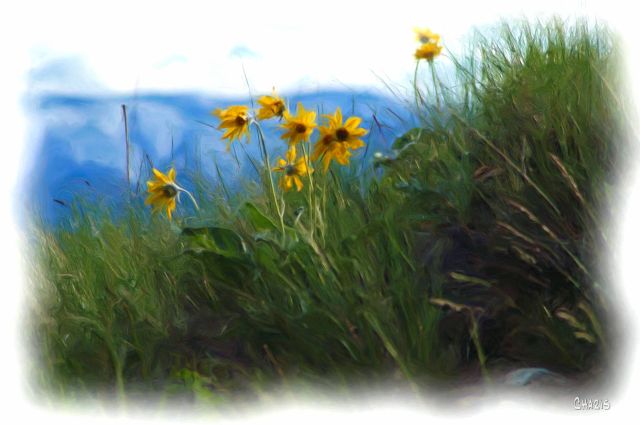
balsamroot ch rs

Sometimes it takes me a while to figure out where my emotions are coming from. I agree with people who say we ought not to be led by emotions, but I don’t discount them. God created us with emotion for a reason. Jesus demonstrated a full range of emotional experience, and demonstrated their rightful place. Like the Psalmist I have been asking my soul, “Why are you downcast? Why are you disquieted?”

Grief has roots that tangle under the surface. You can’t tug on one without unsettling memories of other losses and separations. This time of pandemic-led physical separation, although not permanent (we hope), is also stirring up feelings of old losses. I miss my loved ones. I miss my friends. I miss my freedom. I know we shall soon meet again, but these nebulous emotions all end up in the same pot like some strange concoction of lament that ignores reason. It feels like grief.

I’ve been feeling a bit down and unusually nostalgic the last few days. Old movies, old songs, old photos, old recipes, and even old cars make me laugh, but also shed tears. This morning, it being Mother’s Day, I thought about my mother, who passed away eleven years ago. I wish I could sit in her kitchen and tell her about my day. I read many posts from motherless children and childless mothers on Facebook, so I know I am not the only one who is aware of the ambivalent feelings this day evokes.

Then I remembered this week also marks the anniversary of separation from my Dad as well.

Time shrinks and stretches with age, moreso without the usual daily landmarks that keep us oriented. What day is it? Has it been three or four years since I received the call that Dad died in his sleep? The fence needs painting again. Didn’t I just do that? Was it really almost sixty years since Daddy took the photo of Mom serving Kool-aid to the pretty little girls in their birthday party dresses? The house I grew up in shows up on Google maps. It is dwarfed by the trees my brother and I planted as seedlings we received at school. When did that happen?

Part of prayer is paying attention to the stirrings in our hearts as we lean in to hear our heavenly Father. God often speaks to me through music. As I asked him to bring clarity to this messy emotion a song started to play in my mind. It is Brahms’ setting of John 16:22. In English it reads:

“So will you also pass through a time of intense sorrow when I am taken from you, but you will see me again! And then your hearts will burst with joy, with no one being able to take it from you!” (from The Passion Translation that seeks to include emotional content)

These were Jesus’ words to his friends before he was taken from them. We know the next part of the story – that he conquered death and appeared to them again before ascending to his place with the Father. He told them, on that same evening he gave the warning, that something better was coming. He was sending the Holy Spirit to advocate, teach, comfort, and empower in his place.

We have the advantage of living on the other side of the cross. We know loss here and now, but we also know that Holy Spirit will never leave. He reminds us of the promise that is for both here and now and even more in the future: “Then your hearts will burst with joy with no one being able to take it from you!”


Why, my soul, are you downcast?
Why so disturbed within me?
Put your hope in God,
for I will yet praise him,
my Savior and my God.

(Psalm 42:11 NIV)

When We Have Exhausted Our Store of Endurance

flowering almond 2 ch crop DSC_0653

In northern climates, spring is just beginning. Oh, how I welcome the signs of season change this year. Sitting in the warm sun without a coat, even if I am sitting alone on my deck, feels like the world is starting to open again. This has been a tough season – for nearly all of us.

As a student, I noticed a pattern in my educational history (because I notice patterns). I seemed to have seasons when learning new things came easily and seasons when study felt like slogging through hip-deep snow. The slogging season ended with new shoes and clothes, because in those seasons I grew physically. Another common season, the one my mother thought was my perpetual dwelling place, was the season of not much happening, not visibly, at least. Those times became the opportunity to enjoy relationships and put into practice and some of the good habits Mom tried to drill into us.

Years later, I read an article by someone else who noted the same pattern – and took time to research it properly. Children tend to alternate physical and mental growth spirts.

As an adult, I noticed that spiritual growth also came in spirts. Just as there are rhythms in nature, there are rhythms in the spiritual realm. I’m learning to ask the Lord what he wants to show me in whatever season I find myself in. I don’t believe we are all in the same place at the same time, nor do we all progress at the same rate. Sometimes change occurs suddenly. Some seasons do drag on. This has been a drag-on one for me.

A verse from an old hymn showed up in answer to my prayer about what this season is about and what provision the Lord has set aside for me now.

When we have exhausted our store of endurance,
When our strength has failed ere the day is half done,
When we reach the end of our hoarded resources
Our Father’s full giving is only begun.

His love has no limits, His grace has no measure,
His power no boundary known unto men;
For out of His infinite riches in Jesus
He giveth, and giveth, and giveth again.

(From He Giveth More Grace by Annie J. Flint)

It’s about endurance. Patient endurance. It’s about provision of physical, emotional, and spiritual strength fueled by hope and learning to run with it.

Our cross-country running coach back in high school trained us for endurance races by pushing us to go farther each time we ran. His was not my favourite class. Not even close. Undiagnosed exercise-induced asthma made gym class a miserable experience for me. I didn’t wheeze. I went directly to heart-pounding dizzy and sick. I just about puked on his shoes in an oxygen deprived moment one day, but even that failed to win sympathy. He tolerated no whining. If I dawdled, I got an extra lap. I didn’t die, and even though I often came in with the last stragglers, my endurance improved significantly that year. After I forgave him, I could acknowledge some gratefulness.

The writer of Hebrews talked about the necessary quality of endurance in running the race set before us. I want to whine that I’m hurting, that I’m tired, that this is too much. It’s as if the coach is indicating that another lap is required before this season of uncertainty is over. Really? I don’t think I can do it, but he thinks I can. And he is right. I can go a little farther in trust than I did before.

Seasons when I learned about God’s goodness and discovered his love and abundant grace and favour were more fun than this one has been, but learning that God is faithful, steadfast, and will provide what I need, when I need it (and not a moment sooner) builds endurance. Learning that pain is bearable siphons off some of the fear the enemy used to manipulate me in the past.

The discipline of running the race set before me, and not another person’s race, has helped me to stop comparing. I may take longer than others, but I make better time than I used to. That feels good.

There’s also something about patient endurance with focus on a goal that makes us willing to pare down and drop things that don’t matter as much as they once did. I’m travelling lighter.

The unexpected prize in this season of patient endurance is joy. Jesus’ endurance was a result of seeing the joy set before him. I’ve been praying for more joy. This joy doesn’t feel like giddy happiness, but it does feel like something inexplicably wonderful lies ahead. The joy I see reminds me of something as wonderful as new life awaking on  branches that appeared dead for so long. It smells like the scent of hope blooming in the spring sun. It feels like the certainty of sweet fruit.

flowering almond 1 ch sq crop DSC_0657

Jesus encourages, “Look at me! Eyes here! Come on. You can do it…”

One more lap. One more…

Therefore we also, since we are surrounded by so great a cloud of witnesses, let us lay aside every weight, and the sin which so easily ensnares us, and let us run with endurance the race that is set before us, looking unto Jesus, the author and finisher of our faith, who for the joy that was set before Him endured the cross, despising the shame, and has sat down at the right hand of the throne of God. (Hebrews 12:1,2 NKJV)

That Other Time the World Was Inconvenienced

bethlehem queue ch

It must have seemed like the whole world had been inconvenienced – everyone except the leaders and bureaucrats who ordered the chaotic mess. What were they thinking?

What ordinary citizen could afford to walk away from a shop or farm or business and travel for days, simply to register for the privilege of paying more taxes? With the town’s resources stretched and tired traveler’s incomes pinched, tempers flared. They usually do when people feel out of control.

Only two people could afford to appreciate the unprecedented circumstances. Eventually a few more outsiders on the bottom rung of the social ladder understood,  and later some inquisitive foreigners showed up, but most people had no idea the world was about to change. They dragged themselves into the next day not knowing they had just entered a new era.

Seven years ago, I stood in crowd of hot, tired people from every place except the town we were in. We all waited for a chance to squeeze into a ridiculously small room with a metallic star around a hole in the floor. This place, the tourist machine told us, was the birthplace of the Christ.

Our guide had his doubts. He made a quip that locations of famous events in Israel were more likely to be determined by the availability of parking for tourist busses than archeological evidence. He favoured an empty field north of the edifice. Nevertheless, on tired legs and aching feet hundreds of us shuffled forward on a worn stone floor as the cacophony of many languages surrounded us.

Today, looking at photos, I remember the crowds in Bethlehem. It was the Sabbath. Christian sites were open on the Sabbath, so it seemed like a good day to go. Bethlehem no more lay in peaceful stillness that day than I suspect it did on the day Joseph and Mary arrived for the census ordered by Caesar Augustus.

We passed armed soldiers at check points beside high walls and rolls of razor wire. Later in the day, loud fighter jets passed overhead while we wandered around ruins on the outskirts of town. A man in our group, who was a native Israeli raised on a kibbutz, became very serious and immediately took out his cellphone.

“This is not good,” he said as he waited for someone to answer. “The Israeli air force never flies exercises on the Sabbath. They’re on a mission.”

We felt the tension in the air. When we returned to our hotel, we learned the planes had attacked a convoy of trucks in Lebanon. With only partial information available speculation and rumour filled in the blanks.

I don’t think I’ve had a discussion with anyone in the past month, on an online group call, or by text, or yelling across the fence, that hasn’t begun with observations of these strange times and unprecedented circumstances we find ourselves in. As the repercussions of a halted economy begin to sink in, and voices express more irritation with inconveniences, speculation and rumours fly.

The lull in the daily-ness of life in the past six weeks provided me with time for reflection. I see a young Jewish couple in my mind’s eye.

The woman is very pregnant. They have walked for days. Her back aches and she needs to pee again. The baby’s head is engaged and intermittent cramps make her stop and lean on the man while she waits them out. Yet she and her husband smile at each other and exchange knowing glances. They know what this means.

The God who sent an angel to bring both of them into his plan played the politicians and experts who thought they were in charge. He inconvenienced the whole country to arrange to get them here in this place at this time. Without fanfare, an ancient prophecy is about to be fulfilled. In the midst of enormous upset, strain, and confusion, the world was changing forever.

On this night, at the perfect moment, predetermined from the beginning of time, the Messiah arrived. God with us. The crowds queueing in the streets, worried about finding accommodation and having enough shekels to pay for everything, had no idea they were entering a new era.

The fullness of time arrived.

Nothing would ever be the same.

Joseph and Mary knew. God graced them with his favour – not with a life of painless ease, not with social approval, not with wealth, but with inclusion in his plan. He shared the secret of the ages with them.

They knew.

God smiled and the angels rejoiced.

Into the Hidden Places

painting appointment 4 ch rs DSC_0608

I watched two people play statistics wars. Both debaters adamantly claimed ownership of diagrams and charts that backed their positions. Now I’m not a scientist, but I live with one. I’ve been around academics long enough to recognize poor research protocols and an apples and oranges argument. I’ve also learned it’s pointless to say anything to people who have their minds made up, academics included.

I walked away to make coffee when a line from Simon and Garfunkle’s song, The Boxer, began to play in my head.

All lies and jests, still a man hears what he wants to hear and disregards the rest.

When my coffee was ready, before I even started my Bible reading for today, I remembered this verse from my childhood:

You desire truth in the inward parts.

The Passion translation phrases it this way:

I know that you delight to set your truth deep in my spirit.
So come into the hidden places of my heart
and teach me wisdom. (Psalm 51:6)

Deceit is deceiving. No one believes a lie or jest intentionally, but very few ask to have falsehoods they believe publicly exposed. Gullibility feels like a character flaw, like a failure to fact check with the right fact checkers backed by the right authorities. With playground taunts still ringing in their ears many people will double down before admitting error.

Sometimes we absorb untruths because we need them to fit into a construct that allows us to feel less insecure. Sometimes we believe lies simply because we trusted the wrong people. Is that not the theme of millions of stories since the Garden of Eden?

Still thinking about the song (and about them and the lies they believed) and how that fit in with the verse about truth, the Lord arrested me with, “Let’s talk about some truths I’d like to set in your heart. There are some things that need displacing.”

He’s kind like that. He doesn’t talk about my stupidity for believing a falsehood, he talks about a truth that is lacking, a gap in my understanding temporarily filled in by something else. Cooperating with the process is called transformation.

Earlier this week, while I listened to some uplifting worship and encouraging speakers, I tried to paint my feelings about this time of isolation I find myself in.  It feels like the Lover of my soul is asking me to come away with him and simply sit quietly in this prepared time and appointed place. I do believe we are stepping into a new era and this long pause is a gift to reflect on embarrassingly wonky values and  ideas I’ve accepted that need to be replaced with truths before we journey on.

A little defensively I ask, “Who can I trust anyway? What is the truth?”

“Me,” he says. “In answer to both questions. Let’s start with how much I love you — and how much I love them — because you don’t really believe me yet.”


Fly!

boy running bw ch DSC_0324

Love, it seems, made flying dreams so hearts could soar…

-Jerry Goldsmith & Paul Williams

Children are often the best teachers. I watched this boy running and leaping on newly exposed grass on a south-facing hill where the sun melted winter’s snow. He spread his arms like wings and flew down that hill as only the young can.

As I edited photos this morning, a line from the song, Flying Dreams, came to mind.

This was the day churches and theaters were told to limit gatherings to fifty people or less because of the threat of contagion. We did not yet know that within a few days we would be isolated in our house unable to see or hug our children and grandchildren, but we knew the situation was serious.

The photo I took that day reminds me of the innocent, trusting nature of children. They played without fear while their parents made plans to teach, nurture, and protect them during this time when fear wraps the world in its ugly grip. Children simply trust and obey the ones who care for them. That’s their job.

To be humble is to remember to trust in the One who loves us perfectly and not place other sources in positions of authority over him. (Don’t hear what I’m not saying. God gives people intelligence, skills, and wisdom for a reason.) Repeatedly, the Bible tells us that God has a special place in his heart for the humble. His love raises them up so their hearts can soar over any circumstance.

Then Jesus, overflowing with the Holy Spirit’s anointing of joy, exclaimed, “Father, thank you, for you are Lord Supreme over heaven and earth! You have hidden the great revelation of this authority from those who are proud, those wise in their own eyes, and you have shared it with these who humbled themselves. Yes, Father. This is what pleases your heart and the very way you’ve chosen to extend your kingdom: to give to those who become like trusting children. (Luke 10:21 TPT)


New Life, New Hope

forsythia 5 ch rs DSC_0570

Beware of harking back to what you once were when God wants you to be something you have never been.

Oswald Chambers

The sun shone brightly. A warm gentle breeze stirred the topmost branches to tap a joyful rhythm against the window.

My friend came by while I was in the house and released Mason bees into the forsythia bush, now laden with new blossoms. She told me with delight that she watched a female immediately find a mate.

Last week, our spirits fell along with the temperature and bare branches (save one leaning against the warmth of the window) collected more snow. Last week was winter.

This week, the first bright colour in the garden arrived suddenly. This week is spring.

Transformation is like that. We wait and wait and wait, then suddenly life changes — and nothing will ever look the same again. We are not who we used to be.

forsythia 6 7 ch DSC_0578

Looking Back: Fake News and the Right to Think for Myself

rear view mirror ch rs DSC_0215

I grew up with someone who lied – a lot. She lied when it was not in her best interest. She lied when it was in no one’s best interest. She lied when her story could easily be disproven. She lied when the mood was light and when the mood was serious.

She also told the truth – a lot. She sometimes told the truth when most people would have exercised more discretion, but she could be incisive. She also had many valuable skills and taught me practical, useful knowledge I am grateful for to this day.

People she upset labeled her a compulsive liar and broke off relationships. Folks inclined to be more gracious added, “Sally’s* version” with a wink to the end of any information they passed on from her.

When I asked about family history she related, my uncle said, “Well now, you know how she had trouble getting her story straight,” he said, adjusting his dusty cowboy hat. “But you know she meant well.”

We all learned she couldn’t get a story straight — eventually. The problem was that sometimes she told the truth. Important truth. Truth that required response.

I couldn’t trust what she said, but I couldn’t afford to dismiss her either. The major complicating factor was that I loved her dearly and knew that she loved me and did her best to care for me. I knew she had a good heart and would never intentionally hurt anyone, but the lying did hurt a lot of people, myself included. Kind, responsible family members cleaned up more than a few messes she left in her cheerful wake. They shrugged and privately gave me a more accurate version later.

It wasn’t until after she died that I read an article explaining the complicated, frustrating behaviour of the person that was part of my childhood environment. A disorder resulting from head trauma, or brain damage before birth, or as a result of advanced age, can cause a person to “confabulate.” Often, as in my caretaker’s case, parts of one story mix with the details of another story without the speaker being the least bit aware of blatant inaccuracies. Sometimes their brain will fill in forgotten memories with memories from another time, or a work of fiction, or even from another person’s story. In all innocence they trust their mind to give them accurate information and are hurt when you accuse them of making it up.

Sally sincerely believed she was telling the truth. Since she showed some other traits of learning disabilities, such as being almost illiterate, I began to understand. She was not intentionally lying after all. She would stick to her story even as people stared at her, slack-jawed at the audacity of her whoppers. She cried when they rejected her.

She could say, for example, “School is closed today because some bad kids stole a backhoe and burned it down when they hit a gas main.” The actual story was that school was closed because workers accidently hit a water pipe when they were working on the building extension. The part I needed to know was that my school was closed that day. The school that burned down was her school, half a century earlier. Sometimes it was like she saw a version of events through a distance-distorting rearview mirror and temporal space anomaly at the same time – but the essence was still there.

More than once I was embarrassed when I passed on a confabulated story. More than once I struggled with anger for believing all of it. In the years when I developed, like most teens, a radar for hypocrisy, I was not very respectful. I didn’t want to be seen with her. As an adult I honoured her and even enjoyed her, but kept a skeptical distance. She died more than thirty years ago and as I write this, tears fall because I know she loved me more than anyone before or since. I would love to hear her ridiculous synopsis of the six o’clock news about now, because as off-base as it could be, there was always an essential truth I needed to know in there somewhere.

Growing up in that environment taught me an important lesson. I cannot assume a report is entirely true. I cannot assume it is entirely false. The balance of accurate facts and misplaced facts cannot always be determined by the teller’s motives. We are all broken people in some way and our stories are filtered through experience, lack of experience, biases, selfish motives, altruistic motives — and even brain damage. I may not agree with Dr. House in the re-runs I’ve been watching that “everyone lies,” but I don’t believe everyone tells the whole truth and nothing but the truth either. God only knows what the whole truth looks like, but I want to hear what people have to say anyway.

Whether it’s the government, or social media sites, or heresy hunters who want to clamp down on sources of “fake news” or “bad teaching” or “uncertified medical opinions” and thereby determine truth for me, I want to shout no!

When someone tries to keep me from seeing the work of a writer, or a speaker, or photographer, or film maker because their narrative doesn’t fit the desired grid, I feel insulted. To eliminate sources “experts” consider fake is to imply there are some they consider to always be perfectly accurate.  I have to question their motives.

If I let another source do the critical thinking for me, I’m relinquishing a hard-earned skill and the opportunity to ask questions, spit out the bones, and humbly accept correction when I have swallowed something without exercising proper discernment. Worse than that, it means giving up access to important information that could be in there somewhere that I need to pay attention to. Creativity begins with thinking outside the box.

I believe we can ask God for wisdom and discernment. I believe we can pray for His light to shine in dark places and expose intentional lies and evil motives. I believe information should be as accurate as possible and age-appropriate when presented to children. I believe positions of trust require scrutiny and accountability. Justice must be seen to be done when trust is intentionally broken.  These things are important. But I also believe God gave us brains for a reason. Without exercise, they will atrophy.

I’m not a child anymore. Give me the freedom to think and discern for myself, please. I know how. Sally taught me.

*not her real name

A Season of Hardship

snow ranch bw ch

It snowed again. It’s hard in this season when one day is full of the promise of spring and the next throws us back into more time of waiting. Yesterday I worked in the garden, waving to neighbours as I cleaned up dead branches and winter debris, and made plans for planting. Today I’m back in the house, in isolation, wondering when this cold, lonely season will end.

Weather forecasts from several sources differ only slightly on when the weather will warm up again. Forecasts about when voluntary and increasingly forced isolation will end vary much more widely. Health and economic experts seem to be at a loss themselves. Many people are asking, “What is actually going on?”

It’s hard when you don’t know what is happening.

The followers of Jesus must have been at a loss themselves the day after the Messiah died. Only a few days earlier, songs of joy and elation rang out in the streets. Now Jesus was dead. How crushed their hopes! The greatest disappointment in history! They could not see what was being accomplished during that time. From the vantage point of isolation in hiding from fearful opposition they had no idea what was actually going on.

I don’t know what’s going on right now. I don’t know which experts to believe, which news sources are fake, which are reliable, or who is exploiting whom in this situation. It appears many people are suffering physically and financially as the whole world cries out for deliverance from this evil.

This much I do know. God hears and he can take what was intended for evil and turn it to the advantage of those who trust him. He can also use it to reveal himself to those who deny who he is.

Wait, my soul. Take courage. Wait and learn. Remember the Father’s words.

How compassionate he will be
when he hears your cries for help!
He will answer you when he hears your voice!

Even though the Lord may allow you
to go through a season of hardship and difficulty,
he himself will be there with you.

He will not hide himself from you,
for your eyes will constantly see him as your Teacher.
 
When you turn to the right or turn to the left,
you will hear his voice behind you to guide you, saying,
“This is the right path; follow it.”

Then you will see your idols as they are—unclean!

(Isaiah 30:19b-22a TPT)