
He changes times and seasons;
he removes kings and sets up kings;
he gives wisdom to the wise
and knowledge to those who have understanding
(Daniel 2:21 ESV)

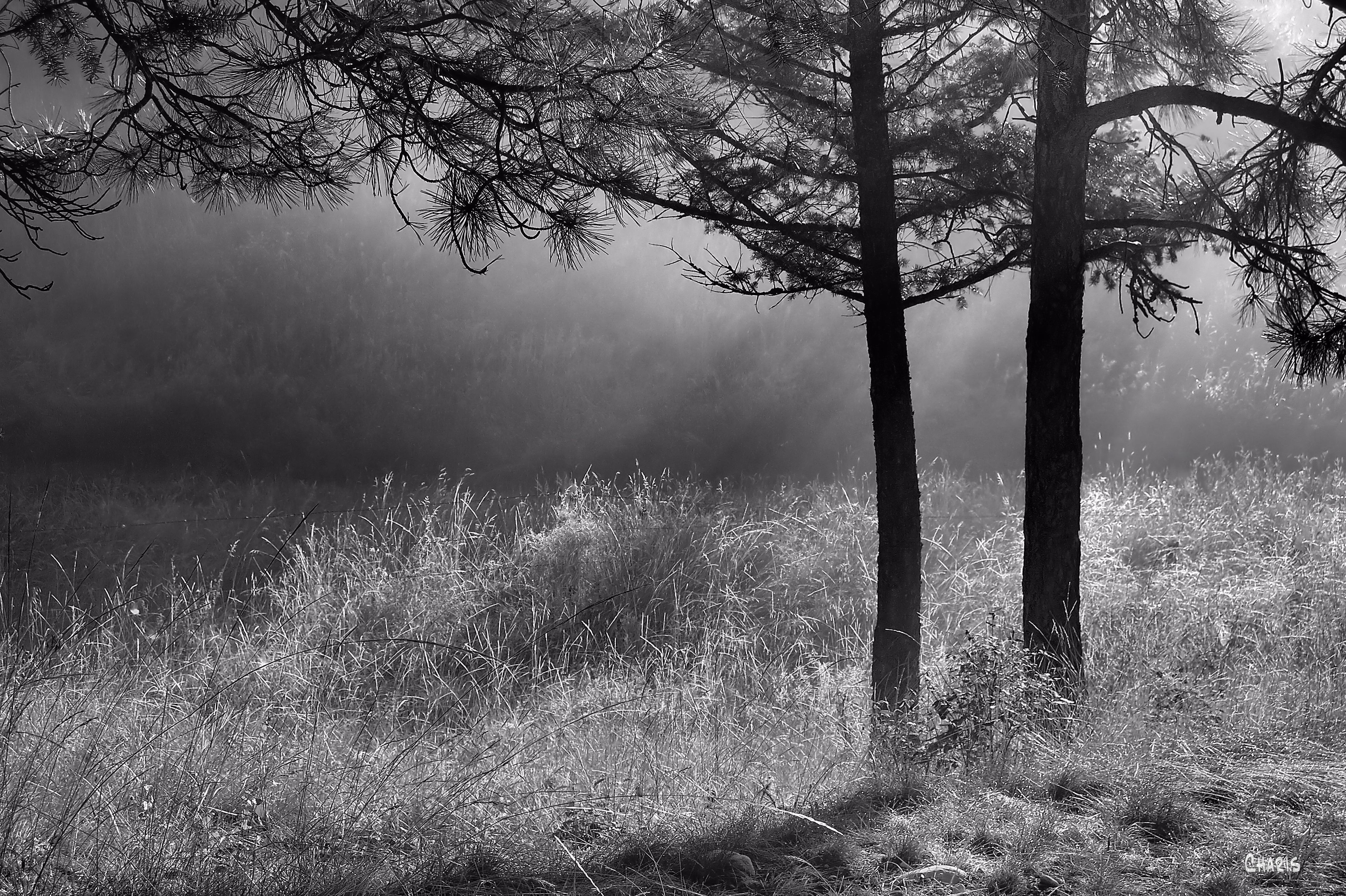
I can’t hear normally right now. A nasty cold has tormented my sinuses for almost a month and has now taken up residence in my ears. For several days my left ear has not been giving my brain the usual messages. Voices on the phone sound like they are coming through a kazoo on the other side of a heavy door. I can’t hear the sound of my feet on the trail, or the wind in the trees. At the same time normal noises are painfully loud. I avoid nerve-jarring distorted noise at the level of normal conversation, and run from loud sounds that feel like a slap to the ears, yet I strain to hear the quiet things, like the little ping that tells me I have a message on my cell phone. I feel like I am shut up inside my own head (where the sound of chewing my breakfast crunchies is like giant aliens devouring some hapless metropolis in a sci-fi flick.)
What an odd and uncomfortable feeling – especially for someone whose lifestyle has focused on hearing the fine nuances of music for so many years. It’s taking its sweet time clearing up, this wretched infection, but in the meantime maybe there is something to be learned (or un-learned) even in this.
I thought about Elijah’s still small voice experience again today. After a tremendous victory on Mount Carmel in which the Lord rained down fire, and sent the rains at his request, he ran from the ugly threatening voice of the King’s wife. He ran all the way back to the place where Moses has his trumpet blast and fire on the mountain experience.
There he came to a cave and lodged in it. And behold, the word of the Lord came to him, and he said to him, “What are you doing here, Elijah?”
He said, “I have been very jealous for the Lord, the God of hosts. For the people of Israel have forsaken your covenant, thrown down your altars, and killed your prophets with the sword, and I, even I only, am left, and they seek my life, to take it away.”
And he said, “Go out and stand on the mount before the Lord.”
And behold, the Lord passed by, and a great and strong wind tore the mountains and broke in pieces the rocks before the Lord, but the Lord was not in the wind. And after the wind an earthquake, but the Lord was not in the earthquake. And after the earthquake a fire, but the Lord was not in the fire.
And after the fire the sound of a low whisper [or a sound, a thin silence]
And when Elijah heard it, he wrapped his face in his cloak and went out and stood at the entrance of the cave.(1 Kings 19, 11 -13 ESV)
I think it was straining to hear a soft voice today that reminded me of the story. When I looked up the Hebrew words describing this “still, small voice” I found it was stiller and smaller than I thought. It was still like a calm sea after a storm. It was small like a particle of dust, less than a hair’s breadth, barely perceptible — except to a prophet who recognized it.
David wrote that the voice of the Lord thunders. Sometimes we can hear Him loud and clear. Moses and the children of Israel certainly did, and it scared most of them half to death. But sometimes his voice can only be heard in thin silence.
In thin silence there are no other sounds competing for attention. No other voices playing anything-you-can-preach-I-can-preach-louder – and which then add electronic amplification.
In thin silence we are forced to lean in closer, to wait for a particle of sound, the Voice that speaks in stillness.
I have a confession. I live in the mountains, and I love them, but I am afraid of heights. I’m a valley dweller. I prefer to look up at lofty mountain grandeur. Looking down makes me feel, well, uneasy, to say the least.
Some people who come here from sea-level cities also find themselves a little out of breath, even in the valleys, but for different reasons. It takes a while to adjust to the altitude. On the other hand, when we visited the Dead Sea area in Israel, which is well below sea level, I was amazed at the way I could scramble around on the rocks without becoming tired. My body had been trained simply by living on a higher plane.
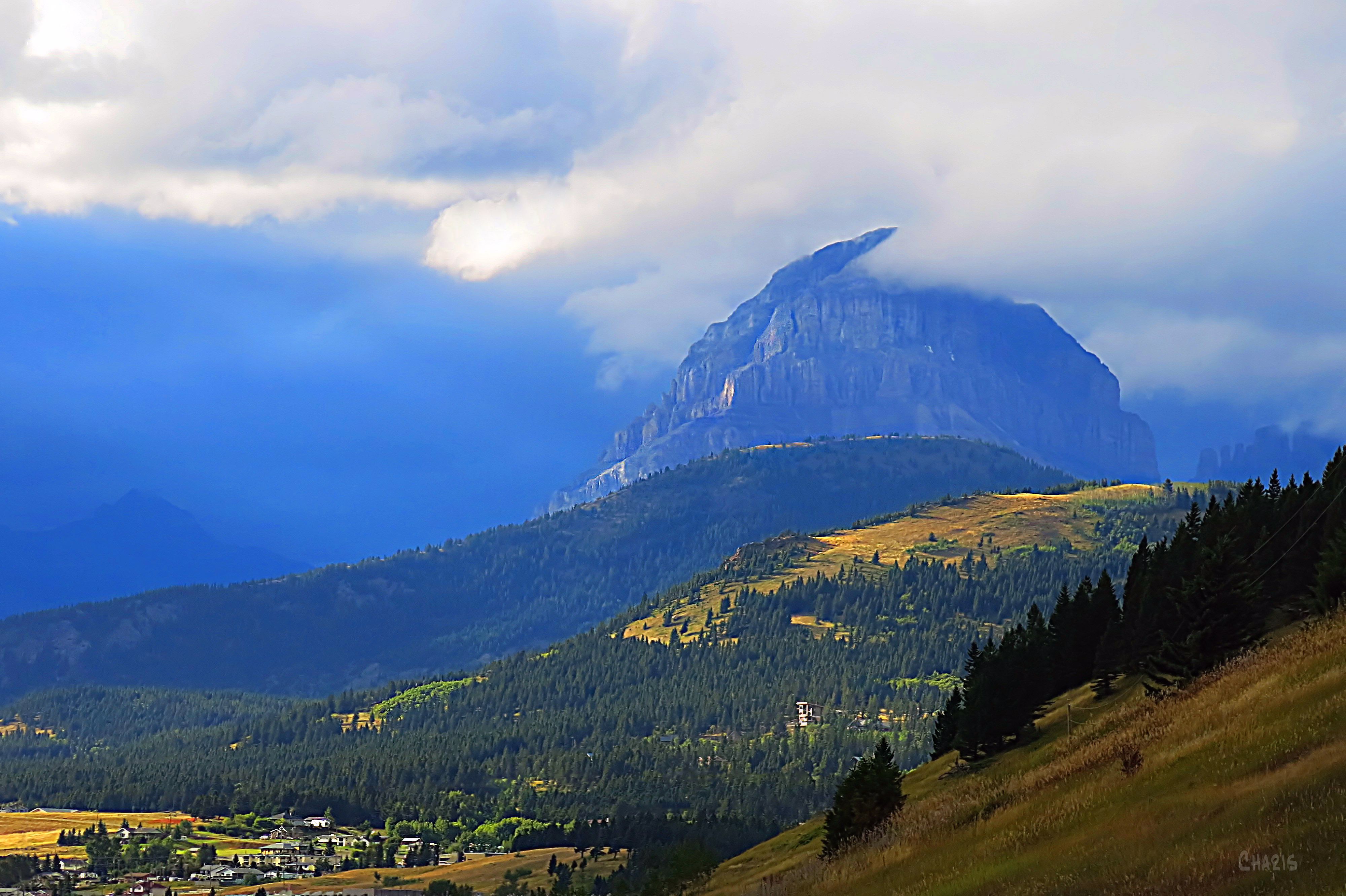
Many of our friends are mountain climbers, including several who climbed Crowsnest mountain recently (the one pictured here.) My brother is a well-known climber who lives near Banff. I’m content to admire their drive, look at their photos and listen to their stories.
One story my brother tells is about the time he paired up with another climber to scale one of the highest mountains in the province on one of those rare days when its peak was not in the clouds. His friend had climbed many times before, but not quite that high, and not quite that fast. Neither of them expected that he would get altitude sickness. My brother said his friend began to act as if he were drunk. That’s when he knew he needed to help him back down -very carefully. The descent took longer than expected and they had to bivouac on the side of the mountain overnight. That means they secured their sleeping bags to stakes pounded into the sheer face of the mountain and tried to get some sleep -whilst one of them was exhausted and the other was impaired. Fun times.
Like I said, I prefer valley living. But in our spiritual lives sometimes God calls us to come up higher and see things from his perspective. Jesus took Peter, James and John on a mountain climbing trip when he wanted to let them in on some inside information.
“Come up here,” He told John later in a vision on the isle of Patmos, “I want to show you something.” And he did.
Mountain top experiences can be a little disorienting. Not only are we not accustomed to the perspective, we are not used to the altitude. It takes some time to adjust. We are meant to live at altitude -after all Paul tells us in Ephesians that we who have been adopted into the family of God are seated in high places with Christ. He calls us to come up higher and get his perspective, but sometimes it’s a little disorienting for valley dwellers. Sometimes we feel out of breath, our ears feel the pressure, our brains can’t keep up; some people feel downright panicky or sick for a time. The climb to higher ground can be frankly uncomfortable and even scary, so the Lord provides resting places along the way where we can take time to adjust, but soon he calls us to keep moving to higher ground -because he has something to show us we could not see any other way.
I want to live above the world,
Though Satan’s darts at me are hurled;
For faith has caught the joyful sound,
The song of saints on higher ground.
from “Higher Ground” by Johnson Oatman

I found one!
The first lone crocus I saw this year was not in a forest clearing but in the middle of a construction zone. At the end of every winter I go out looking for signs of life. I have a lot of photos of crocus flowers in my stash because they give me such hope. When I was a child I picked bunches of them to bring inside, but they soon flopped over the side of the jam jar. A wild crocus is not easily domesticated; it is meant to be out in the dead cold field poking its optimistic head through patches of snow. It is a forerunner of better things to come.
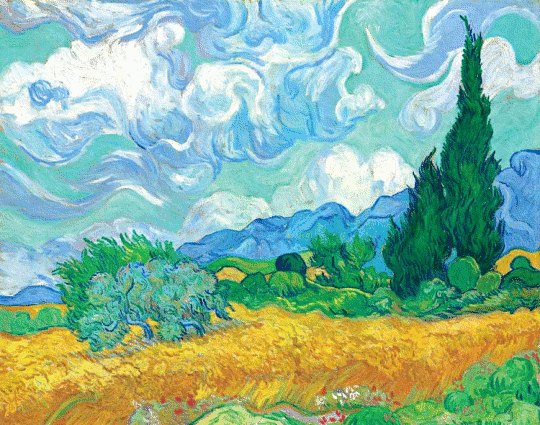
I was thinking about forerunners the other day, those people who can see what is coming next before anyone else does. Hawk-eyes, scouts, prophets, innovators, preparers-of-the-way. In the art world Van Gogh was one of these. In his lifetime he never sold a painting, never received recognition, never found a place where he “fit.” That boy was “different.” It wasn’t until many years later his paintings sold for millions. Forerunners don’t run to be popular.
John the Baptist was a forerunner. He was also “different.” He didn’t have a complete picture of the One who was to come, forerunners seldom do, but he knew with certainty in his heart that there was a change coming, and his assignment was to prepare hearts for change. Like a farmer who prepares the field for planting he set about tearing out obnoxious weeds that had been there so long folks had accepted their presence as part of the landscape. He preached the message of repentance. Repentance is not the same thing as penance, (trying to make up for wrongs done by some sort of demonstration of self-administered punishment or public humiliation, although, for some making public apologies and announcements of plans to repay what they stole may be an indication of their intent to change.) Repentance often involves grief, but primarily repentance (metanoia in Koine Greek) means change. Repentance is admitting our thinking has been off and coming into agreement with God that we have missed the mark he set (hamartia, the Greek word for sin means just that -missing the mark.) Repentance means having a better thought and adjusting our aim. Repentance means leaving the past behind and doing things differently.
The basic mission of forerunners like John is to poke a finger into embarrassingly sensitive, and often hidden, parts of our lives and ask the question, “And how’s that workin’ for ya?”
There are forerunners amongst us now, folks with an antsy sense that change is imminent, but who don’t know exactly what that change will look like. They go through life awkwardly, never really fitting in anywhere, annoying themselves and others with their inability to find contentment with accepted ideas and practices that don’t quite line up with both the Holy Spirit’s whisperings and with Scripture. They are not easily domesticated, and often pop up in places where dormancy is “normal.” They stand out because they are different and the light shines through them in colours we haven’t seen for a long time.
Yet somehow we are drawn to them. They are messengers of hope.

“We need to be trued,” she said.
“Trued?” I asked.
“Trued,” she said. “It’s an old construction word meaning everything has to be in line before you can build on it.”
I called a dear older friend yesterday to tell her an event had been re-scheduled. She has just come back from spending several weeks alone, resting in the Lord.
“I’m so glad you called! Let me get my notebook. I thought this was just for me, but the Lord said it’s for more than me. It’s for you. It’s for His church.”
When she came back and picked up the phone this is part of what she said:
“We are the temple. We are the living stones and Christ is the cornerstone, yes? Well, we need to be careful that our foundations are true to the cornerstone. We all need to be in alignment with Jesus Christ. It won’t do to get in line with whatever stone you are near hoping they are true. Every stone must be trued with the cornerstone.”
“He is talking to me about stones,” she went on, “About cobble stones, about building stones, about precious stones, about polished and engraved stones, about prospecting for gold nuggets the size of eggs. This is a season of building. Personal building first — then building together — but we must become true to the cornerstone and nothing but the cornerstone.”
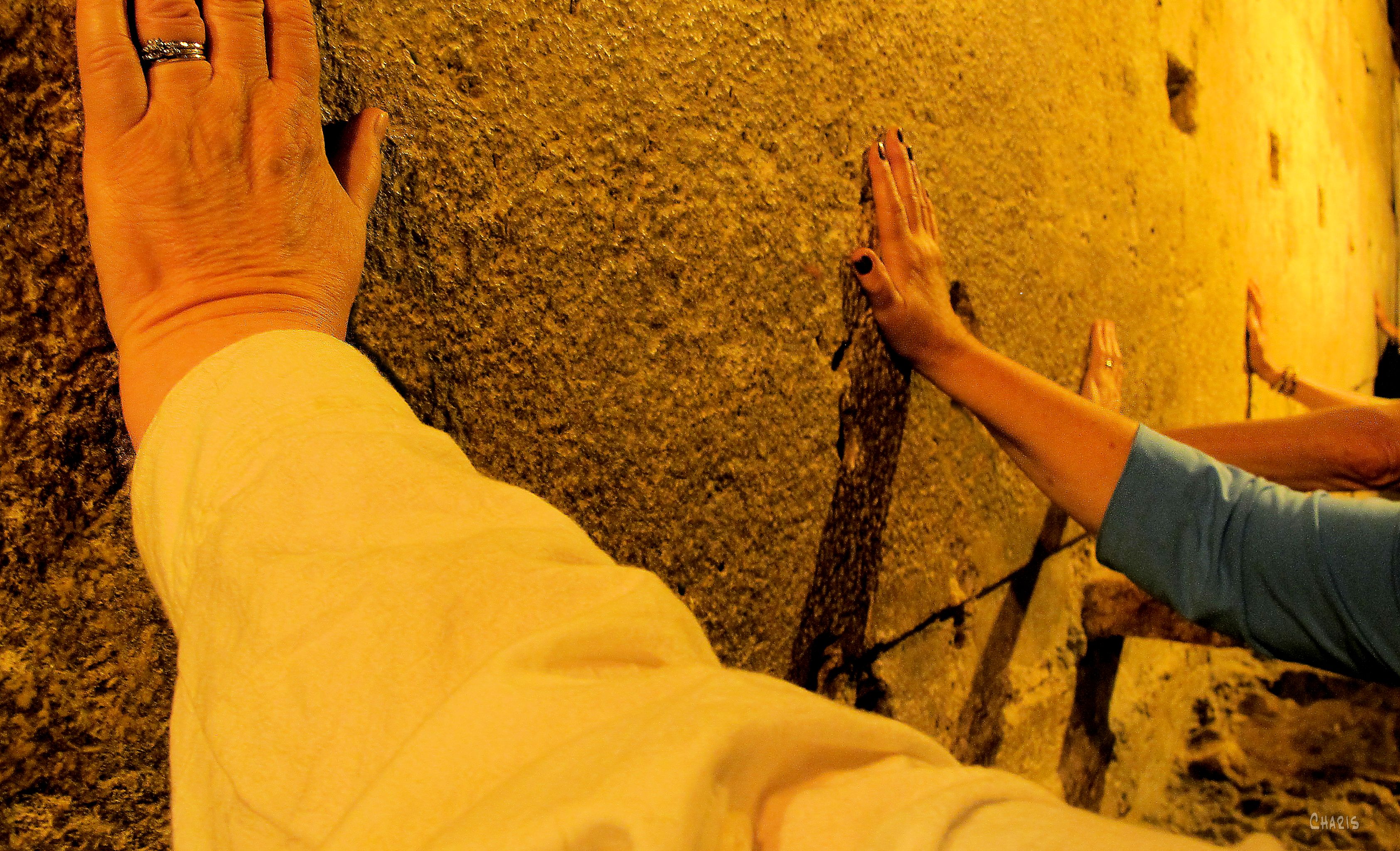
I remember a hugely impressive stone I saw a few months ago. We stood in a tunnel under the Temple Mount in Jerusalem and touched an enormous stone about 11 1/2 feet high and 41 feet long. They called it a “master course stone” and it was a foundation stone for the western wall of the temple area where Jesus was brought as a baby, where his parents found him talking to the learned men while still a child, where he drove the money-changers and merchants out, where he taught, and where he wept when he saw its future. This stone was so perfectly dressed, with every tiny bit of extraneous rock chiseled off, that no mortar was needed to hold the massive walls and buildings together (we were told the temple was probably three times taller than the Dome of the Rock which dominates the Temple Mount now) but this also made it possible for the Romans to dismantle the temple in 70 A.D. just as Jesus predicted. The old temple was torn down within a generation of his resurrection. God doesn’t live there anymore; the dwelling place of God is now in mankind -his adopted sons and daughters.
The stone we stood beside sat on bedrock and was almost as big as a bus, but when it was laid even this giant master course foundation stone had to be moved and adjusted until it was in perfect alignment with the cornerstone.
Another illustration of being in alignment came through Susanne who commented on an earlier post this week. She included this quote:
“Has it ever occurred to you that one hundred pianos all tuned to the same fork are automatically tuned to each other? They are of one accord by being tuned, not to each other, but to another standard to which each one must individually bow. So one hundred worshipers met together, each one looking away to Christ, are in heart nearer to each other than they could possibly be, were they to become ‘unity’ conscious and turn their eyes away from God to strive for closer fellowship.”
― A.W. Tozer, The Pursuit of God
These words written by Mr. Tozer reminded me of this story:
I once sang with an amateur orchestra made up of members with widely varying skills. (It included a gracious group of experienced musicians who mentored young players.) At rehearsal I found the tuning somewhat disorienting. As I walked across the stage in front of the orchestra pit (it was a concert of scenes from opera) I could hear the pitch gradually rise slightly from one side to the other. This was the problem: the young musicians tuned to each other rather than to the piano which was on stage right. (Since a piano was included in the work and its pitch cannot be easily changed, the instruments needed to tune to it rather than the oboe this time.) At any rate, the concert master rushed in, having arrived late, and picked up the problem with a discerning ear honed by years of experience. He supervised the re-tuning of the instruments and everything was back in order.
Both stories give the same message. When the stones are all lined up with the cornerstone the building has integrity and stability. When the instruments of the orchestra, which all have their unique qualities, are tuned to the same pitch, even though each instrument plays a different part, the result is harmonious unity. When the Church, the universal Church, is in alignment with Jesus Christ, our cornerstone, we are in alignment with each other. We are in tune with each other. We are one in the Spirit. We are one in the Lord.
The Church is not a man-made edifice, nor is it a group of people aligned to a particular doctrinal emphasis or administrative style or methodology or personality. The Church is the body of Christ with all of its members intact. The Church is me and the Church is you trued to Jesus Christ.
The Church is Christ in me and Christ in you, the hope of glory.
The Church is made up of living stones with Christ as its head -an organic, breathing, growing and moving force of love against which the gates of hell cannot prevail.
You are coming to Christ, who is the living cornerstone of God’s temple. He was rejected by people, but he was chosen by God for great honor.
And you are living stones that God is building into his spiritual temple. What’s more, you are his holy priests. Through the mediation of Jesus Christ, you offer spiritual sacrifices that please God. As the Scriptures say,
“I am placing a cornerstone in Jerusalem,
chosen for great honor,
and anyone who trusts in him
will never be disgraced.”
Yes, you who trust him recognize the honor God has given him. But for those who reject him,
“The stone that the builders rejected
has now become the cornerstone.”
And,
“He is the stone that makes people stumble,
the rock that makes them fall.”
They stumble because they do not obey God’s word, and so they meet the fate that was planned for them.
But you are not like that, for you are a chosen people. You are royal priests, a holy nation, God’s very own possession. As a result, you can show others the goodness of God, for he called you out of the darkness into his wonderful light. ( 1 Peter 2:4-9)
We are obviously not in unity of the faith yet. We need each other, because going it alone is a sure way to lose perspective. We need the concert masters who are part of the orchestra (and not soloists!) who can keep us tuned to the Maestro/Master Musician and in time with Him, so we will be in tune and in time with each other. We need the whole orchestra playing together without rivalry over which section is the greatest. We need the builders who keep their eyes on Christ and help us stay true and in line with Him, (and not themselves!) because Jesus showed us who the Father really is.
And he gave the apostles, the prophets, the evangelists, the shepherds and teachers, to equip the saints for the work of ministry, for building up the body of Christ, until we all attain to the unity of the faith and of the knowledge of the Son of God, to mature manhood to the measure of the stature of the fullness of Christ, so that we may no longer be children, tossed to and fro by the waves and carried about by every wind of doctrine, by human cunning, by craftiness in deceitful schemes. Rather, speaking the truth in love, we are to grow up in every way into him who is the head, into Christ, from whom the whole body, joined and held together by every joint with which it is equipped, when each part is working properly, makes the body grow so that it builds itself up in love. (Ephesians 4:11-16) (emphasis mine)
We need a reformation.
 “We need a baptism of clear seeing. We desperately need seers who can see through the mist–Christian leaders with prophetic vision. Unless they come soon it will be too late for this generation. And if they do come we will no doubt crucify a few of them in the name of our worldly orthodoxy.” -A.W. Tozer


 Charis: Subject to Change