
He changes times and seasons;
he removes kings and sets up kings;
he gives wisdom to the wise
and knowledge to those who have understanding
(Daniel 2:21 ESV)

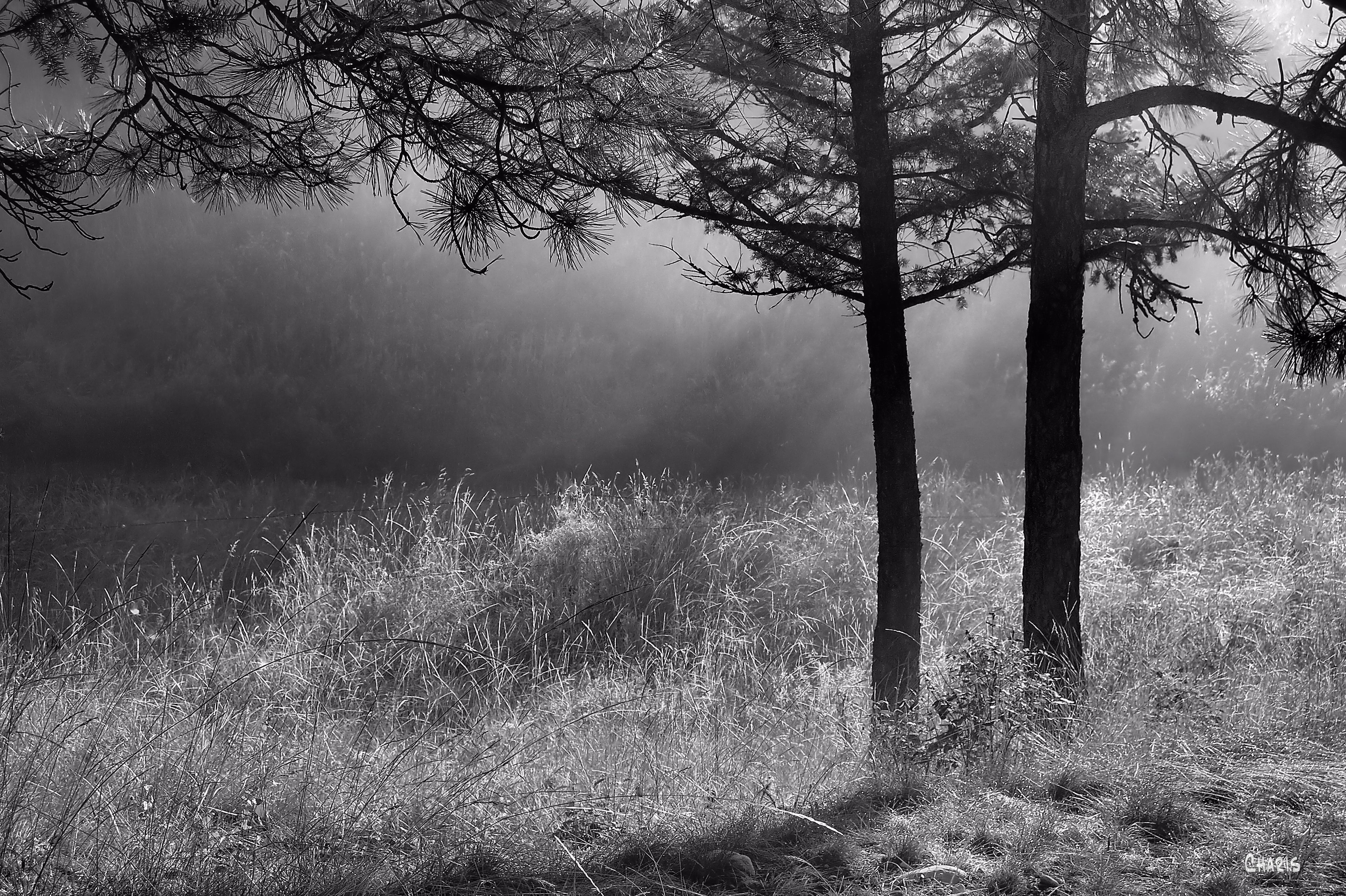
I can’t hear normally right now. A nasty cold has tormented my sinuses for almost a month and has now taken up residence in my ears. For several days my left ear has not been giving my brain the usual messages. Voices on the phone sound like they are coming through a kazoo on the other side of a heavy door. I can’t hear the sound of my feet on the trail, or the wind in the trees. At the same time normal noises are painfully loud. I avoid nerve-jarring distorted noise at the level of normal conversation, and run from loud sounds that feel like a slap to the ears, yet I strain to hear the quiet things, like the little ping that tells me I have a message on my cell phone. I feel like I am shut up inside my own head (where the sound of chewing my breakfast crunchies is like giant aliens devouring some hapless metropolis in a sci-fi flick.)
What an odd and uncomfortable feeling – especially for someone whose lifestyle has focused on hearing the fine nuances of music for so many years. It’s taking its sweet time clearing up, this wretched infection, but in the meantime maybe there is something to be learned (or un-learned) even in this.
I thought about Elijah’s still small voice experience again today. After a tremendous victory on Mount Carmel in which the Lord rained down fire, and sent the rains at his request, he ran from the ugly threatening voice of the King’s wife. He ran all the way back to the place where Moses has his trumpet blast and fire on the mountain experience.
There he came to a cave and lodged in it. And behold, the word of the Lord came to him, and he said to him, “What are you doing here, Elijah?”
He said, “I have been very jealous for the Lord, the God of hosts. For the people of Israel have forsaken your covenant, thrown down your altars, and killed your prophets with the sword, and I, even I only, am left, and they seek my life, to take it away.”
And he said, “Go out and stand on the mount before the Lord.”
And behold, the Lord passed by, and a great and strong wind tore the mountains and broke in pieces the rocks before the Lord, but the Lord was not in the wind. And after the wind an earthquake, but the Lord was not in the earthquake. And after the earthquake a fire, but the Lord was not in the fire.
And after the fire the sound of a low whisper [or a sound, a thin silence]
And when Elijah heard it, he wrapped his face in his cloak and went out and stood at the entrance of the cave.(1 Kings 19, 11 -13 ESV)
I think it was straining to hear a soft voice today that reminded me of the story. When I looked up the Hebrew words describing this “still, small voice” I found it was stiller and smaller than I thought. It was still like a calm sea after a storm. It was small like a particle of dust, less than a hair’s breadth, barely perceptible — except to a prophet who recognized it.
David wrote that the voice of the Lord thunders. Sometimes we can hear Him loud and clear. Moses and the children of Israel certainly did, and it scared most of them half to death. But sometimes his voice can only be heard in thin silence.
In thin silence there are no other sounds competing for attention. No other voices playing anything-you-can-preach-I-can-preach-louder – and which then add electronic amplification.
In thin silence we are forced to lean in closer, to wait for a particle of sound, the Voice that speaks in stillness.

You know those dreams where you are back in high school or university and you realize you have an exam and you can’t remember your locker combination or the room number — or if you ever went to that class? Sometimes my life feels like that when I’m awake. I thought I was done with learning something and I find myself back in school — only this time it’s the school of higher un-learning.
This week the song “Young Love, First Love” has been going through my head.
“And the significance of that, Lord?”
“You have no idea how deep the acceptance of performance-oriented, hypo-grace, approval-seeking, ‘me-do-it-self’, busy-ness-is-next-to-godliness thinking runs. Churchianity is full of it. So are you.”
“Still? Seriously? I thought I was doing much better.”
“Pack your bags. We’re going on a love-trip.”
Ok, I’ve been thinking (again) about the warning to the church in Ephesus that although their diligent efforts are appreciated, God said they had a serious problem. They had left their first love. “However, I have this against you: you have abandoned your first love. Do you remember what it was like before you fell? It’s time to rethink and change your ways. “(Rev 2:4) The messenger told them to return to it or they stood in danger of losing their light (their understanding and their influence symbolized by a candle stand).
I began to realize that my secret reaction to the warning was an internal groan that even though I had worked hard all summer there was something else that should have been on the list. Oh yeah, remember to spend time loving God. Oh boy, something else to do before I can put out the cat and get some sleep.
“Think again,” He said. “You’ve got some un-learning to do.”
That’s where the song came in. (I know the word the Bible uses is agape, the type of perfect all-giving love God has, and not eros, the type of love that makes us get all hot and bothered and more than a little self-conscious, but I think the connection is still there.) I remember telling a lonesome young woman bemoaning her unattached state, that when people fall in love they actually fall in love with themselves in a way. When we see ourselves through the eyes of someone we respect and who thinks we are worthy of their time and attention, we are willing to lower our barriers a little. Sometimes we misjudge the quality of character in a person and find ourselves the object of the attentions of some obsequious little stalker who will hit on anything, but we learn and move on. But the attentions of someone we admire? Wow. Weak knees and butterfly stomach time. It can be a little disorienting. (So how to get a person of quality to fall in love with you? Become a person of quality yourself.)
When we fall in love we are constantly aware of that person’s presence. We know exactly where they are in a room without even looking. We are fascinated by everything they are. We want to know everything about them, their values become our values, their heartaches become our heartaches, their victories become our victories. We talk only about them and we need to be near. We have the urge to merge.
To be loved by someone you deeply respect who thinks you are worthy of his sacrifices, who can make you realize how amazing you are? Wow! He or she will inspire you to become bold and become a better person and do greater things simply because he or she believes in you.
You don’t fall in love with someone who makes you feel ashamed, or ugly, or unable to change. You fall in love with someone who makes you aware of your own potential -simply because their very presence in you life makes you realize you are of value to someone important. (Are you listening, Self?)
The lines of the song that keep running through my head: Young love, first love, filled with true devotion.Young love, our love, we share with deep emotion.
That’s it. He’s asking us to return to true devotion and deep emotion by letting him love us the way he wants to. Returning to the source of our motivation, knowing that the Being of ultimate quality, and worthy of infinite respect longs for us, means we can start to see ourselves through His eyes. He shows us how amazing we are; he emboldens us to become more than we ever thought we could be, because he says we are worthy of his attention, his time, his sacrifice.
When we do we will long to become like our beloved, to make his priorities ours, to understand his heart, to share his secrets and rejoice in his victories. When we return to our first love, we live and move and have our being in Him and our sanctified imagination is again motivated by His love -his perfect, unselfish, giving love.
We blossom.

Like an apple tree among the trees of the forest is my beloved among the young men.

I delight to sit in his shade, and his fruit is sweet to my taste.
(Song of Songs 2:3 ESV)

I know your deeds, your tireless labor, and your patient endurance. I know you do not tolerate those who do evil. Furthermore, you have diligently tested those who claim to be emissaries, and you have found that they are not true witnesses. You have correctly found them to be false. I know you are patiently enduring and holding firm on behalf of My name. You have not become faint.
However, I have this against you: you have abandoned your first love. Do you remember what it was like before you fell? It’s time to rethink and change your ways; go back to how you first acted. (Revelation 2:2-5 The Voice)

If I speak with human eloquence and angelic ecstasy but don’t love, I’m nothing but the creaking of a rusty gate.
If I speak God’s Word with power, revealing all his mysteries and making everything plain as day, and if I have faith that says to a mountain, “Jump,” and it jumps, but I don’t love, I’m nothing.
If I give everything I own to the poor and even go to the stake to be burned as a martyr, but I don’t love, I’ve gotten nowhere. So, no matter what I say, what I believe, and what I do, I’m bankrupt without love.
(1 Corinthians 13:1-7 The Message)
When I become so busy that I don’t have time to revel in God’s love, I have nothing left to give. Without knowing deeply how much he loves me and wants to spend time with me I become a performance-oriented, fear-based person who spews dire predictions instead of faith, cynical expectations in place of hope, condemnation rather than love. I hear God speaking about a better way. I hear him inviting me to return and lay my head against Jesus’ chest, until I can hear his heart beating for me. Everything good thing flows from there.

I have a confession. I live in the mountains, and I love them, but I am afraid of heights. I’m a valley dweller. I prefer to look up at lofty mountain grandeur. Looking down makes me feel, well, uneasy, to say the least.
Some people who come here from sea-level cities also find themselves a little out of breath, even in the valleys, but for different reasons. It takes a while to adjust to the altitude. On the other hand, when we visited the Dead Sea area in Israel, which is well below sea level, I was amazed at the way I could scramble around on the rocks without becoming tired. My body had been trained simply by living on a higher plane.
Many of our friends are mountain climbers, including several who climbed Crowsnest mountain recently (the one pictured here.) My brother is a well-known climber who lives near Banff. I’m content to admire their drive, look at their photos and listen to their stories.
One story my brother tells is about the time he paired up with another climber to scale one of the highest mountains in the province on one of those rare days when its peak was not in the clouds. His friend had climbed many times before, but not quite that high, and not quite that fast. Neither of them expected that he would get altitude sickness. My brother said his friend began to act as if he were drunk. That’s when he knew he needed to help him back down -very carefully. The descent took longer than expected and they had to bivouac on the side of the mountain overnight. That means they secured their sleeping bags to stakes pounded into the sheer face of the mountain and tried to get some sleep -whilst one of them was exhausted and the other was impaired. Fun times.
Like I said, I prefer valley living. But in our spiritual lives sometimes God calls us to come up higher and see things from his perspective. Jesus took Peter, James and John on a mountain climbing trip when he wanted to let them in on some inside information.
“Come up here,” He told John later in a vision on the isle of Patmos, “I want to show you something.” And he did.
Mountain top experiences can be a little disorienting. Not only are we not accustomed to the perspective, we are not used to the altitude. It takes some time to adjust. We are meant to live at altitude -after all Paul tells us in Ephesians that we who have been adopted into the family of God are seated in high places with Christ. He calls us to come up higher and get his perspective, but sometimes it’s a little disorienting for valley dwellers. Sometimes we feel out of breath, our ears feel the pressure, our brains can’t keep up; some people feel downright panicky or sick for a time. The climb to higher ground can be frankly uncomfortable and even scary, so the Lord provides resting places along the way where we can take time to adjust, but soon he calls us to keep moving to higher ground -because he has something to show us we could not see any other way.
I want to live above the world,
Though Satan’s darts at me are hurled;
For faith has caught the joyful sound,
The song of saints on higher ground.
from “Higher Ground” by Johnson Oatman

I’m thanking you, God, out in the streets,
singing your praises in town and country.
The deeper your love,
the higher it goes;
every cloud’s a flag to your faithfulness.
Soar high in the skies, O God!
Cover the whole earth with your glory!
(Psalm 108 The Message)

“God is Light.” “God is Love.” That which professes to be light yet lacks love, is not of God; while that which calls itself love, but is not according to light is equally not of God.
– J. Charleton Steen

The best and most beautiful things in the world cannot be seen or even touched – they must be felt with the heart.
— Helen Keller

The story is told in the book of John about the time Jesus grossed his disciples out. He said something about not being a part of what he was doing unless they ate his body and drank his blood. For people who wouldn’t touch shrimp barbeque or BLT sandwiches, this was pretty offensive. Some of them left. They didn’t get it.
The ones who stayed didn’t get it either, but Peter, who was one of them, answered Jesus (who asked if they wanted to leave too), “Lord, to whom shall we go? You have the words of eternal life, and we have believed, and have come to know, that you are the Holy One of God.”
Later, they understood the significance of “eating his body and drinking his blood” when they remembered the last supper where he offered them broken bread and wine and said, “This is my body. This is my blood.”
Jesus spoke the language of metaphor. That’s why his first miracle involved replacing the ceremonial cleansing water at the wedding in Cana with gallons and gallons of wine. Wine symbolized his blood which was shed to save people from their sins. But all these things became clear only in retrospect.
Children tend to be concrete literal thinkers and the disciples often thought like children. People often misunderstood the language of the Kingdom because, like children, their thinking was literal. God often speaks in symbolic pictures.
Jesus said, “It is the Spirit who gives life; the flesh is no help at all. The words that I have spoken to you are spirit and life.”
His words came to life for the disciples later when Holy Spirit brought them to memory and interpreted them.
Sometimes the Lord will give us a puzzle piece and it does not make sense to us. Sometimes there is the temptation to try to make sense of it before we have the other pieces, but there is meant to be a certain amount of tension as we follow Jesus in faith, not understanding what on earth he is talking about.
Like Mary we treasure and ponder, but we don’t always know where this is all going. I think of Joseph who died before seeing the man he raised as his own son crucified and risen from the dead. I’m sure he knows now, but it must have been difficult at times.
In the chapter that comes in the middle of the discussion of the charisma, or gifts of the Spirit, Paul talks about living with only part of the picture.
For our knowledge is fragmentary (incomplete and imperfect), and our prophecy (our teaching) is fragmentary (incomplete and imperfect).
But when the complete and perfect (total) comes, the incomplete and imperfect will vanish away (become antiquated, void, and superseded).
When I was a child, I talked like a child, I thought like a child, I reasoned like a child; now that I have become a man, I am done with childish ways and have put them aside.
For now we are looking in a mirror that gives only a dim (blurred) reflection [of reality as in a riddle or enigma], but then [when perfection comes] we shall see in reality and face to face! Now I know in part (imperfectly), but then I shall know and understand fully and clearly, even in the same manner as I have been fully and clearly known and understood [by God].
And so faith, hope, love abide [faith—conviction and belief respecting man’s relation to God and divine things; hope—joyful and confident expectation of eternal salvation; love—true affection for God and man, growing out of God’s love for and in us], these three; but the greatest of these is love. (1 Cor. 13: 10 – 13 Amplified)
So what do we do in the meantime, when we see only in part?
We have faith that He will not lead us astray.
We cooperate with Holy Spirit living in us in the development of our character that leads to hope that does not disappoint.
And when we don’t know what we are doing, we err on the side of love.
We love because He loved us first and He gives us the ability to extend to others the grace He extended to us.
Sometimes following Jesus means saying, in all humility, “I don’t know. But I have come to believe, and to know, that Jesus Christ is the Holy One of God and I choose to follow Him.”

“Another cause back of our top-heavy and ugly over-organization is fear. Churches and societies founded by saintly men with courage, faith and sanctified imagination appear unable to propagate themselves on the same spiritual level beyond one or two generations.
The spiritual fathers were not able to sire others with courage and faith equal to their own. The fathers had God and little else, but their descendants lose their vision and look to methods and constitutions for the power their hearts tell them they lack. Then rules and precedents harden into a protective shell where they can take refuge from trouble. It is always easier and safer to pull in our necks than to fight things out on the field of battle.
In all our fallen life there is a strong gravitational pull toward complexity and away from things simple and real. There seems to be a kind of sad inevitability back of our morbid urge toward spiritual suicide. Only by prophetic insight, watchful prayer and hard work can we reverse the trend and recover the departed glory.”
~ A.W. Tozer
I overheard a conversation recently when a clergyman was challenged to explain a certain practice in his denomination. He said it could best be explained by giving the history. It began in Victorian times, apparently, and seemed like a good idea at the time, and even though circumstances are very different now, the practice has remained. It’s become rather endearing actually, and is now part of their “distinctives.” Then he admitted, in a softer voice, that although some contemporary pastors agree it makes no sense and quietly try to ignore it, it is still entrenched in their constitution, and change is not something they do well. It upsets people.
The church I grew up in was never intended to be a denomination. The first members of the group left the confines of the steepled building to reach out to poor people in the local streets and then in the streets around the world. They had to leave because most parishioners were comfortable in their enclaves and wanted to protect standards -and the lower classes did not meet those standards. The poor and dysfunctional who met the real Jesus in the streets found they never did fit in with the established church so they just hung out together until they realized they were also the church and they gradually formed a constitution and established methods of maintaining their own standards.
My grandmother joined in the early days, but by the time she lived in the senior’s lodge, beside the new mega church edifice, the social climate there had changed. It’s called “lift.” The problem is that the protestant work ethic works. Get a person free of alcohol and other addictions, restore their love for neighbour and family, and their kids become better educated, get good jobs and nice homes, and their grandchildren are raised in a completely different environment with different expectations (or feelings of entitlement). I remember Grandma lamenting that it was a sad day when she realized she was too poor to go to prayer meeting in that church. You see, someone (who undoubtedly did not live on a widow’s pension) thought it was a good idea to encourage people to come to prayer gatherings on certain mornings by having them catered. A woman who had fed her children lard sandwiches had trouble adjusting to the thought of paying $15 for breakfast. She did know how to feed a street full of kids on $15, but the church she was now in was just like the church the founders left, because those members had also lost understanding of the people on the outside. My grandmother’s denomination became comfortable with plush theatre seats, sound systems and coffee shop in the grand foyer. The order of service was established, and the academic qualifications (from approved seminaries) of those who are ordained to preach and preside over communion was written in stone. Policies now require a complicated procedure at the national annual general conference to change.
History shows us this pattern repeating itself.
In “The Jesus Style,” Gayle D Erwin writes about fresh movements of the Holy Spirit in different generations. He has this to say in the chapter entitled “Prisoners of History”:
“Here is a drastic proposal. Every religious organization should have in its first constitution the irrevocable provision that it be disbanded and dispersed at the end of 50 years. For some this limit should be 25 years. This would free the constituency to be more constantly in touch with God . . . Such an approach would simply be recognizing the manner in which the Holy Spirit works anyway. He keeps raising movements that are alive and in touch with him, while the older structures get huffy and kick the new movement out. . .”
Perhaps we have reached a point where we can recognize the pattern and instead of kicking new movements out of the older structures, the older structures can offer the benefits of wisdom seasoned by knowledge accumulated in good and bad years and make room for those not familiar with the culture. Or it that too optimistic? Can we repent – that is, think again, determine not to repeat the errors of the past, change our ways and join in following what Holy Spirit is doing now – or does fear of loss of control keep us clinging to old wine skins whether they be two generations or two hundred generations old? Is giving control of the church back to Holy Spirit feasible? Or is that thought too scary? Can the Church of Laodicea become hot again? Can its vision be healed? Can the Church of Ephesus return to it’s first love? Can the Church of Sardis awaken from its near-death coma?
Or is it time for another Reformation?
Tell me what you think.


 Charis: Subject to Change