Turning Point

treelight snow mounds ch blue

Today at 4:03 p.m. Mountain Standard time, we pass a turning point. It’s one I’ve been looking forward to.

After sunset today the light begins to return. From now on the days will no longer grow shorter. They will grow longer.

The sun is returning to the northern lands.

Wait for it.

This is going to be good.

A Thrill of Hope

sunrise mountain reflection IMG_2335

Long lay the world
In sin and error pining
‘Til he appeared
And the soul felt it’s worth.
A thrill of hope the weary world rejoices
For yonder breaks a new and glorious morn.

(From Oh Holy Night by Adam Adolphe)

I wonder if a thrill can be a quantity, like a pride of lions or a murder of crows. A thrill of hope. I like that.

My prayer for the past year is to be able to comprehend in some small manner how God sees me. It’s been an adventure, and sorry, much too personal (and embarrassing) to tell here.  So many people are searching for their true identity. I think that’s why things like which-Disney-princess or which movie-character-are-you quizzes are so popular. While none of us like to think we are just like anyone else we read the information that assigns our butts to labeled personality boxes with fascination. The fun part about God telling you who you are is that he doesn’t confuse you with your sin or your temptations. Sometimes it is easiest for us to identify personality types by their weaknesses -or at least imbalances. Imagine being known only by your strengths -especially by the strengths that he knows about before you have ever seen a scrap of evidence of them yet.

While Gideon was still hiding out in a wine-press trying to thrash grain (which must having been frustrating because the exercise needed a breeze to carry away the chaff) the angel messenger called him, “Mighty Warrior.” That’s not how Gideon saw himself at all. He saw him as the least influential in a family of insignificance. That didn’t faze the angel. He wasn’t talking to a coward because the message was for the man Gideon was to become. Once assured, he did become that man.

These words in the second verse of Oh Holy Night caught my attention this week. We are way-laid by the identity sin has hung on us like a scarlet letter. I am an alcoholic. I am a gossip. I am a sloth. I am an incorrigible approval-seeker. I am a rigid perfectionist. I am a coward. What would we say if a winged messenger showed up in our in our basement while we were doing laundry and said, “Hail Mighty Warrior!” or “Hey there, favoured one so full of grace!” Most of us would probably turn to see who he was talking to. But God sees his children with different eyes than we see ourselves.

When we begin to comprehend that God sees our worth, that he actually likes us and takes pleasure in us, and that we do have significance to him, we desire to live up to his image of us. We can start to lay down our own burdens of pits of despair, clouds of darkness, or predictions of failure as we see him approaching carrying a thrill of hope meant for us.

And that’s a good time to fall on your knees and worship him.

Peuple, à genoux, attends ta délivrance! People, on your knees! Pay attention to your deliverance!

Into the Gaps

joseph creek snow vertical IMG_9125 ch


There is always an enormous temptation in all of life to diddle around making itsy-bitsy friends and meals and journeys for itsy-bitsy years on end. It is so self-conscious, so apparently moral, simply to step aside from the gaps where the creeks and winds pour down, saying, I never merited this grace, quite rightly, and then to sulk along the rest of your days on the edge of rage.

I won’t have it. The world is wilder than that in all directions, more dangerous and bitter, more extravagant and bright. We are making hay when we should be making whoopee; we are raising tomatoes when we should be raising Cain, or Lazarus.

Go up into the gaps. If you can find them; they shift and vanish too. Stalk the gaps. Squeak into a gap in the soil, turn, and unlock-more than a maple- a universe. This is how you spend this afternoon, and tomorrow morning, and tomorrow afternoon. Spend the afternoon. You can’t take it with you.”

― Annie Dillard, Pilgrim at Tinker Creek

White

joseph creek wonter snow trees blue ch IMG_9148

White is not a mere absence of colour; it is a shining and affirmative thing, as fierce as red, as definite as black. God paints in many colours; but He never paints so gorgeously, I had almost said so gaudily, as when He paints in white.
– G.K. Chesterton

Suspension or Restoration

IMG_8230 columbia falls trees reflect fog ch

“We modern people think of miracles as the suspension of the natural order, but Jesus meant them to be the restoration of the natural order. The Bible tells us that God did not originally make the world to have disease, hunger, and death in it. Jesus has come to redeem where it is wrong and heal the world where it is broken. His miracles are not just proofs that he has power but also wonderful foretastes of what he is going to do with that power. Jesus’ miracles are not just a challenge to our minds, but a promise to our hearts, that the world we all want is coming.”
— Timothy Keller

Kind Words

IMG_6303 lazy lake reflection fence

Kind words produce their own image in men’s souls; and a beautiful image it is. They soothe and quiet and comfort the hearer. They shame him out of his sour, morose, unkind feelings. We have not yet begun to use kind words in such abundance as they ought to be used.
— Blaise Pascal


Perplexed

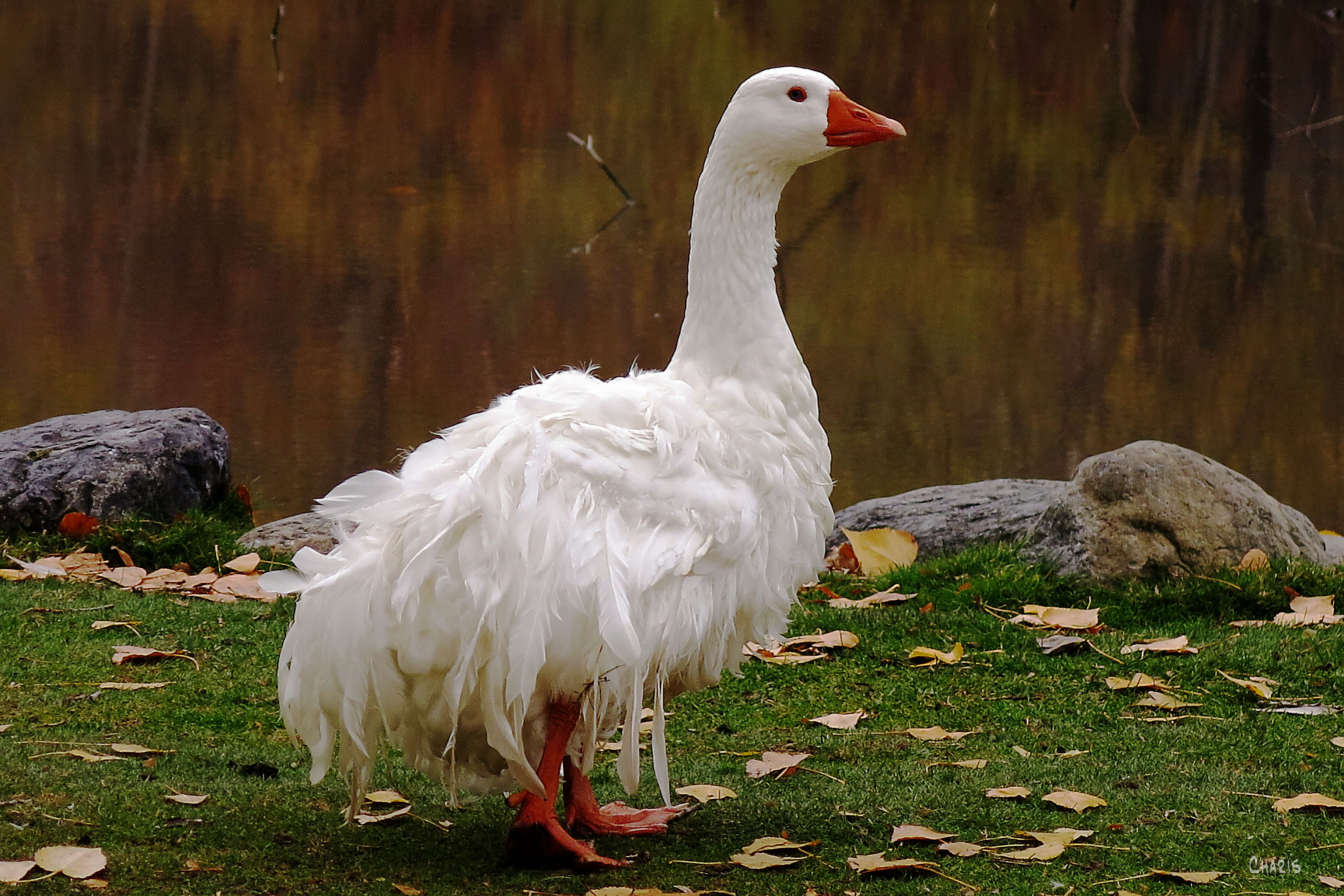
IMG_8543 frazzled goose ch

I’ve been going through a bit of a molt lately. I think we all do that once in a while. It involves the shedding of  parts of ourselves which were once effective, and perhaps even attractive, if I may say so myself, but now this time of examining which ideas to keep and which to shed has left me in a somewhat frazzled state. I feel a lot like this goose I met in the park the other day. The other geese seemed to have it all together, but this one seemed just a little, well, perplexed…

Yeah. Perplexed. Not where I thought I would be as the next season approaches. But I am here anyway – disheveled, unfashionable, decidedly non-trendy and not at all prepared to fly in formation.

Pardon my appearance. Molting (or going through a spiritual “ponfar” -Trekkie reference) can be a little embarrassing. I’m apt to “lose it” at the most inconvenient times, and frankly I don’t even know if I agree with myself half the time.

But change is like that. Sometimes the hardest part is having grace for ourselves when our own inconsistencies and partially formed concepts frazzle our own nerves, let alone the people around us.

Thanks for your patience. You are very gracious, my friends.

IMG_8539 frazzled goose


But we have this treasure in jars of clay, to show that the surpassing power belongs to God and not to us.  We are afflicted in every way, but not crushed; perplexed, but not driven to despair;  persecuted, but not forsaken; struck down, but not destroyed… (2 Corinthians 4:7-9)


You Raise Me Up

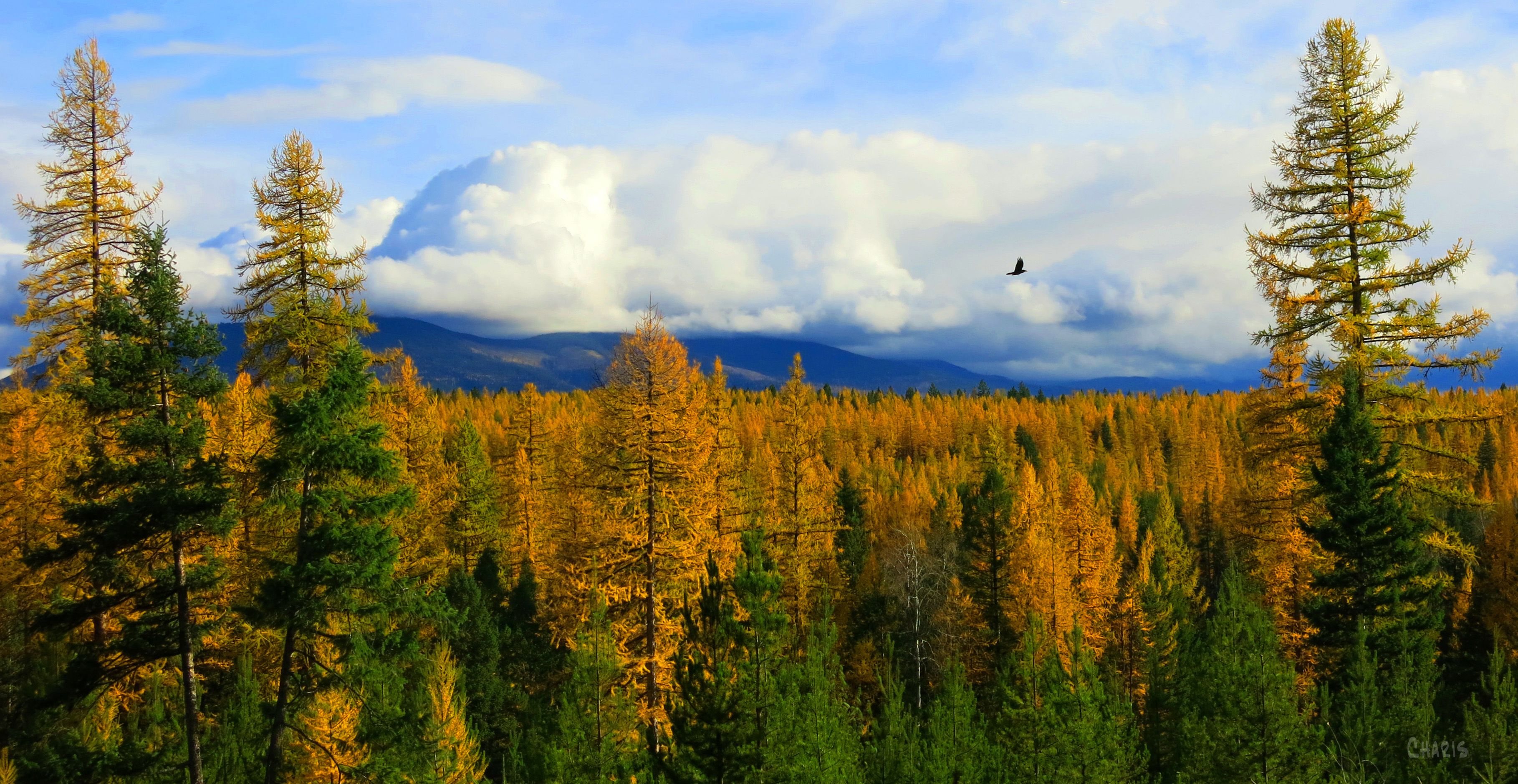
IMG_7914_larch raven autumn ch

I heard crying from the room my two little grandchildren shared whilst on vacation. They were supposed to be sleeping. When I opened the door to see what was going on the little guy immediately gave his defense:

“She hit my head really hard, like this!” Then he thumped his head dramatically with a closed fist.

“But honey, now you have hit your own head,” I said.

“Yeah, but she started it!”

Today the Lord has reminded me how I have perpetuated some of the attacks on my own head long after insensitive, wounded, well-meaning-but-mistaken, or even downright nasty people have hurt me with words. I remember word variations of the shame-on-you theme of my childhood and thump my own head with them sometimes. When someone calls me on it, I give an explanation of why I am not at rest. This is my history; this is where the idea came from that I am not smart enough, not pretty enough, not hard working enough, not ________ enough. I rehearse the injury and end up hurting myself yet again.

Abba says, “Who told you that?” (He asked a similar question of Adam and Eve who hid in shame, “Who told you you’re naked?”)

Guilt says “I did something wrong” and can lead to the kind of sorrow that makes us want to change. Shame says “I am something wrong,” for which there is no recourse but to hide -or perhaps blame. Shame tells me I will not be okay until the world changes -until the territorial big sisters of the world are no longer a threat.

God’s solution (if I don’t hide from him)  is to raise me up to his perspective, and tell me who he sees when he looks at me. He tells me I am of great worth to him and that he loves me so much he freely provided a way for all that shame to be lifted off -by bearing the shame himself on the cross.

He didn’t start it, but he ended it when he proclaimed, “It is finished.”

Thank you, Lord. You  give me wings to fly. You raise me up to all that I can be .

Save

Eyes to See

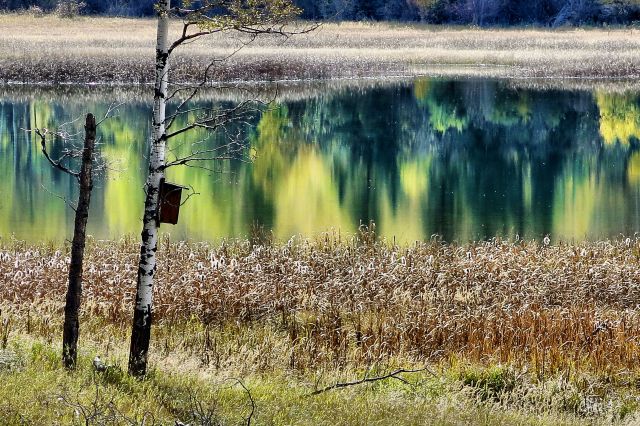
IMG_6032 upper mayook pond autumn ch


“Arthur: If I asked you where the hell we were, would I regret it?
Ford: We’re safe.
Arthur: Oh good.
Ford: We’re in a small galley cabin in one of the spaceships of the Vogon Constructor Fleet.
Arthur: Ah, this is obviously some strange use of the word safe that I wasn’t previously aware of.”
— Douglas Adams, The Hitchhiker’s Guide to the Galaxy


I was telling someone about an event I considered to be a miracle (in which a man who was given a 0% chance of survival walked out of the hospital perfectly whole shortly after). Her response was, “Sometimes I think we give God too much credit. There is probably an explanation somewhere; we just don’t understand it yet.”

I expect some people to say, “Prove it.” Most of the time that phrase, being interpreted, means, “I have already decided you are either lying or delusional.” Any documentation provided is either then ignored or dismissed. It’s amusing in a sad sort of way when they go on to announce “There is no documentation…” I don’t try to convince them. Not my job. I just thank God and enjoy him. The question, “How can that be?” young Mary’s question (upon being informed that she, a virgin, was about to have a child) asking for understanding, has greater integrity.

Another person said, “Oh, the guy was just healed (as if that wasn’t impressive enough.)  A miracle would be if an amputee received a new limb.”

This made me think. Was I giving God credit for a miracle when he only did a speeded-up supernatural version of natural healing?

Researching this made me realize I had accepted a strange use of the word miracle given by someone who, in fact, did not believe in miracles. It was an assumed definition I had absorbed somewhere or other in my education. Then I learned that the Bible itself defined such events quite differently.

The etymology (historic root) of the word miracle comes from the Latin word for wonder.
The New Testament uses these words to describe “miraculous” events: dunameis (displays of power or authority) simeion (signs or portents) teras (a wonder or unusual occurrence) paradoxa (unexpected) and thaunasion (a marvel or astonishing thing.) Or something close to those translations. Many concepts do not cross language barriers easily.

The definition of miracle that I had grown up with was something that could be proven to defy the laws of physics.

The people Jesus walked among would have been puzzled at our strange use of the word. N.T. Wright, as he often does, brought my attention to the need to understand the concept in the culture and times in which the Bible was written.

“These words do not carry, as the English word ‘miracle’ has sometimes done, overtones of invasion from another world, or outer space. They indicate, rather, that something has happened, within what we would call the ‘natural’ world, which is not what would have been anticipated, and which seems to provide evidence for the active presence of an authority, a power, at work, not invading the created order as an alien force, but rather enabling it to be more truly itself.’

‘The word ‘miracle’, by contrast, has come to be associated with two quite different questions, developed not least in the period of the Enlightenment: (a) is there a ‘supernatural’ dimension to our world? (b) Which religion, if any, is the true one? ‘Miracles’ became, for some, a way of answering ‘yes’ to the first and ‘Christianity’ to the second. Jesus’ ‘miracles’ are, in this scheme, a ‘proof’ that there is a god, who has ‘intervened’ in the world in this way. Hume and his followers, as we saw, put it the other way around: granted that ‘miracles’ do not occur, or at least cannot be demonstrated to occur, does this mean that all religions, including Christianity, are false, and the Bible untrue?” (N.T. Wright, ‘Jesus and the Victory of God’, p.186-188)

When I use the word miracle now I mean seeing God at work in unusual, unexpected, marvelous, astonishing displays of power and authority that point to Who He is. A miracle may defy the laws of physics by making the sun stand still or parting a body of water or turning water into wine, but it may also be a series of crazy astonishing coincidences – or a man walking out of the hospital against all expert expectation.

The “supernatural” is no more unnatural than natural to God and to those familiar with His ways, those learning to see with the eyes to see and hearing with the ears to hear that Jesus talked about.

And no. I don’t think we can ever give God too much credit for the unusual, unexpected, marvelous, astonishing things He has done, however He chooses to do them.

To God be the glory!