I saw this section of fence while out on a walk. It’s been neglected for a very long time. No one tended to it by painting it or mending it, yet it still stands, held together by roots and branches. It’s still there, but it is shattered in places and vulnerable to the attack of weather, lichens, insects, and age. It reminds me of a broken heart held together by coping methods, but not by love. It’s still standing, beautiful in an interesting way, but decaying.
When Jesus read out his personal manifesto (recorded hundreds of years earlier through the prophet Isaiah) in the synagogue in Nazareth, he told the people one of his purposes was to bind up the broken-hearted. Why bind? Why not heal instantly like he did for the blind and lame?
Through the prophet Ezekiel, God chides the shepherds of Israel for healing people superficially and failing to “bind up the broken-hearted.” I wonder if it’s because a heart shattered by process requires process to heal. Wounding through episodes of neglect, rejection, abuse, betrayal, disappointment, and loss (and all the other consequences of living in a fallen world) happens over time. Someone told me once that if the damage occurred in relationship, healing needs to occur in relationship. Jesus offers that kind of loving relationship that wraps the heart in swaddling bandages to keep it protected while healing.
The compassionate are continually wounded by not only assaults on their own hearts, but by what they see and feel around them when people they care about suffer deep wounds. Sometimes, it’s all too much. They “fall apart.” Without the arms of their Saviour holding them together and binding up their own wounds, and strengthening them with empowering grace, they would succumb to false comforts that would use them and leave them vulnerable to the elements of fear, distrust, jealousy, despair, unforgiveness, and apathy.
Jesus came to bind up the broken hearted – if we will let him.
The Spirit of the Sovereign Lord is on me, because the Lord has anointed me to proclaim good news to the poor. He has sent me to bind up the broken-hearted, to proclaim freedom for the captives and release from darkness for the prisoners, to proclaim the year of the Lord’s favor and the day of vengeance of our God, to comfort all who mourn, and provide for those who grieve in Zion— to bestow on them a crown of beauty instead of ashes, the oil of joy instead of mourning, and a garment of praise instead of a spirit of despair.
I saw these old dead flowers in a flower bed by the church down the street. When I had my own garden I gathered spent flowers and threw them in a compost bin. Later, I shoveled the unrecognizable rotted material into the garden and worked it into the soil.
I suppose that if we are what we eat, plants are what they eat too. The nutrients in old dead flowers become green beans or sugar peas or sunflowers that may bear no resemblance to the plants of the former season.
The transformation Christ creates in us is even more dramatic. He says that baptism is a symbol of the old self dead and buried and the new self raised and living a life transformed. Holy Spirit is in us to oversee the change into the image of Christ.
“For if a man is in Christ he becomes a new person altogether—the past is finished and gone, everything has become fresh and new.” 2 Corinthians 5:17
We get a re-do, this time with access to the throne of Creator of the Universe — the Three in One who has never lost a battle.
Jesus said, “Blessed are the poor in spirit.” These are the ones who recognize their spiritual need, the ones who have tried and know they can’t make it on their own. To the spiritually downcast he gives a promise: “for theirs is the Kingdom of heaven.”
The psalms written by the Sons of Korah are about the journey back from rebellion and shame. This is in Psalm 42.
I say to God my Rock, “Why have you forgotten me? Why must I go about mourning, oppressed by the enemy?” My bones suffer mortal agony as my foes taunt me, saying to me all day long, “Where is your God?”
Why, my soul, are you downcast? Why so disturbed within me? Put your hope in God, for I will yet praise him, my Savior and my God.
Sometimes God plants a glimpse of higher things right there on the ground where the downcast can find it.
Not everyone is there yet, but many health officials around the world are starting to talk about life post-pandemic. I don’t think we are prepared for this any more than we were prepared for the unlabelled corona virus when it first spread across our continent. It may take a while to let go of the sense of being on high alert that has ruled our decisions for the past how many? … too many months.
I’m choosing to write about what I think we may see shortly because I feel qualified. I’m a triple vaxxed, law-abiding, “extremely vulnerable” senior who is ready to move on. I’m in the category of people all these measures were supposedly taken to save and I say thank you and I say enough now. It’s time to start thinking about approaching this differently. In my life I’ve seen financial reversals, tornados, floods, wildfires, near-death experiences, and the post-crisis crises with PTSD symptoms that inevitably played out later.
We have been focussed on survival because we needed to be. We are now accustomed to seeing signs on doors and walls reminding us to mask, distance, and isolate. We’ve heard public service announcements on every speaker reminding us that danger lurks everywhere. As images of hundreds dying in the hallways of hospitals popped up on our screens, we needed to be aware of how our choices affect other people – and how other people’s choices affect us.
Some people were better than others at adapting and not letting the fear get to them, but we all face another big adjustment soon. Even countries that enforced extremely controlling regulations are beginning to admit that the current highly contagious, but less lethal variant means the virus cannot be by eliminated like smallpox was. The health minister in my province, Dr. Bonnie Henry, has said, “We have to change our way of thinking.”
The reality is we are now dealing with a virus that is still very serious to some but merely disrupting and unpleasant for most. The time is approaching to come out of our caves and learn to live with it in our midst like we live with the flu and the common cold.
When the day is finally here I expect there will be a time of celebration for those of us who survived. But there will also be shock and mourning as we start seeing the devastation both the disease and measures taken to stop it have caused around us.
Every day we have seen statistics on case numbers and deaths. What we haven’t seen are daily statistics on businesses lost, case numbers on anxiety and depression, suicides and accidental overdose, bankruptcies and homelessness, and numbers on massive increases in personal and national debt.
We have not yet reckoned with the number of people in mourning for those who died, marriages that have crumbled under the stress, school-aged children who have missed quality education or opportunities for training in extracurricular sports and arts programs, and university students who failed to make important social connections on campus as they instead watched zoom lectures alone in the basement.
For many struggling people, savings for retirement or higher education or down payments on first homes have slipped away and left only a vague memory. Trust in institutions and authorities has similarly faded as questions arise about whose best interest motivated decisions. Some of the mess we will see when our eyes adjust to sunlight ain’t gonna be pretty.
Recently, I have become aware of so many people who have mourned the loss of loved ones during lockdowns without hospital visits to say goodbye, funerals to honour, or the person-to-person comfort we once knew how to give. Some have told me they still need closure. As well as a time of celebration I think we are going to need a time of mourning for those lost not only to the pandemic, but those lost to the consequences of lockdowns, travel restrictions, and quarantines.
We haven’t begun to count the cost of delayed medical diagnosis and treatment. My own scans and appointments with my oncologist and other specialists were delayed by up to nine months –and this was at a time when our local hospital had few, if any, covid cases. I’m good enough for now, thanks for asking, but I know whereof I speak. The wait wasn’t easy. Others have suffered much more than I have. My daughter grieves for a friend who died of cancer that was diagnosed far too late due to postponements.
I believe that our whole country, as well as most others, will soon face a time of mourning if they haven’t already. Not everyone will experience the stages of shock, denial, anger, depression, and acceptance at the same time, nor to the same degree, but we might see a lot of people experiencing feelings of anger or depression at the same time. Tread gently.
My own anger was triggered the other day by the sight of dirty discarded masks in a parking lot. It took me a while to realize it wasn’t about the stupid masks. It was about what they represented – all the inconvenience, fear, feeling unheard, and feeling pushed into choosing sides when I could see more than one side. It was about living in unnatural isolation and loneliness without seeing my sons and daughters-in-law or some of my grandchildren for over two years. It was about not being able to say goodbye to friends. It was about the pain of trying to communicate in a cyberworld with people who could be nastier than I ever realized. It was about too much and too little.
It was about grief. I cried and eventually found peace again. Who knew the sight of a muddy mask in the gutter could evoke so much emotion?
Some people are experiencing the first exciting glimpses of hope that this war may soon be over. Many others are already experiencing the anger stage of grief and are standing up and shouting “Enough!” I am one.
Someone told me that anger is a secondary emotion. It’s like a fix engine light on the dashboard of vehicle. It doesn’t tell us what exactly is wrong, just that something is wrong. Something is not working. Ignoring anger, stifling it, or legislating it away will not work. We are going to have to work through this emotion stuff or we risk even greater division, distrust, and more demonstrations of deep pain than we have thus seen.
Historically, the years after pandemics have involved great upheaval. Anger after tragic loss seeks someone to blame. People will start looking for those responsible for “poisoning the well” like they did after previous plagues. Those who could be in the line of fire may try to redirect blame or even become persecutors of scapegoats themselves. It could turn nasty.
OR people can make one more big voluntary sacrifice of personal rights. After the reckoning and counting the cost, we can choose to extend forgiveness. We can move toward reconciliation. Reconciliation goes beyond forgiveness. Reconciliation requires transparent honesty and the willingness to seriously listen to folks from on all sides, but I believe it is possible.
So, what am I saying? Love.
Love is what I am saying. Love is the way out of this mess.
We have got to get our love on. Without love we aren’t going to make it through this next phase intact.
Whether you believe Jesus of Nazareth was the Son of God, a prophet, or just a good teacher, his teaching of love instead of hate, forgiveness instead of revenge, kindness instead of greed, and hopefulness instead of hopelessness is the only thing that will revive our souls and allow us to live in the light again.
When I was in Jr. High I sang a duet with a classmate for the opening of Confederation Park in Calgary. (He later became a “Crazy Canuck” skier and won the World Cup Ski Championship – how Canadian!) Some of the songs we sang came back to me today, especially the concluding line of the Canada Centennial song by Bobby Gimby. My prayer is that soon we will grieve the loss, heal the rifts, and sing,
Merrily we roll along, together all the way! Ensemble!
Our yesterdays present irreparable things to us; it is true that we have lost opportunities which will never return, but God can transform this destructive anxiety into a constructive thoughtfulness for the future. Let the past sleep, but let it sleep on the bosom of Christ. Leave the Irreparable Past in His hands, and step out into the Irresistible Future with Him.
Oswald Chambers
I could tell she was frustrated. The young woman standing beside my piano stopped singing and turned her face away. It’s hard to sing with a lump in your throat. I know. I did the same thing more than once when I was studying voice. I told her that discouragement after taking singing lessons for a few months was not unusual. A few months was enough time to learn about changes she needed to make, but not long enough to remember all of them at the same time and definitely not long enough to let go of familiar ways of singing that could eventually hinder her progress.
“For a while it will feel like trying to hold several beach balls under water when you only have two hands. Something always pops back up,” I told her. “Don’t be too hard on yourself. Relax. It will come.”
I don’t teach anymore, but I needed to be reminded of my own advice after these past few months. My creative process feels like it was wrapped in newspaper and packed away in a forgotten box. I sit down to write or sketch and realize my brain is as blank as the page.
We’re mostly settled into our new place. I should be ready to get back to some of the projects I was working on before we decided to move but something has been stopping me. As I prayed about the blockage, three similar articles came to my attention in the same week. The message they carried? You need to say goodbye to the past and grieve for the loss of the familiar, both good and bad, before you are ready to move on.
I know this move was the right one at the right time. We had so many answers to prayer including selling our house before it was listed and finding a new place (without stairs) in the new city on the first day we started looking. In spite of my anxiety that I would forget something essential, everything fell into place and we realized, on the day of the first snow, that our prayer to be finished with the moving process before winter was answered.
But I have realized that even though everything looks like it is in place, I still have unfinished business.
I asked the Lord if there was anything I still needed to let go of. I remembered walking in the snowy silence of the forest near our old house. Around the snow-covered tree trunks that fell in that big windstorm a few years back and down a deer path, there was a stump where I used to sit and pray. Suddenly tears welled up. I miss my stump! I miss my trees and my mountains! I miss not being able to walk very far (one of the reasons behind downsizing) and I especially miss my time with the Lord out in nature where I most easily feel his presence.
“What do I do with these memories and feelings, Lord?” I asked.
“Give them to me,” I heard.
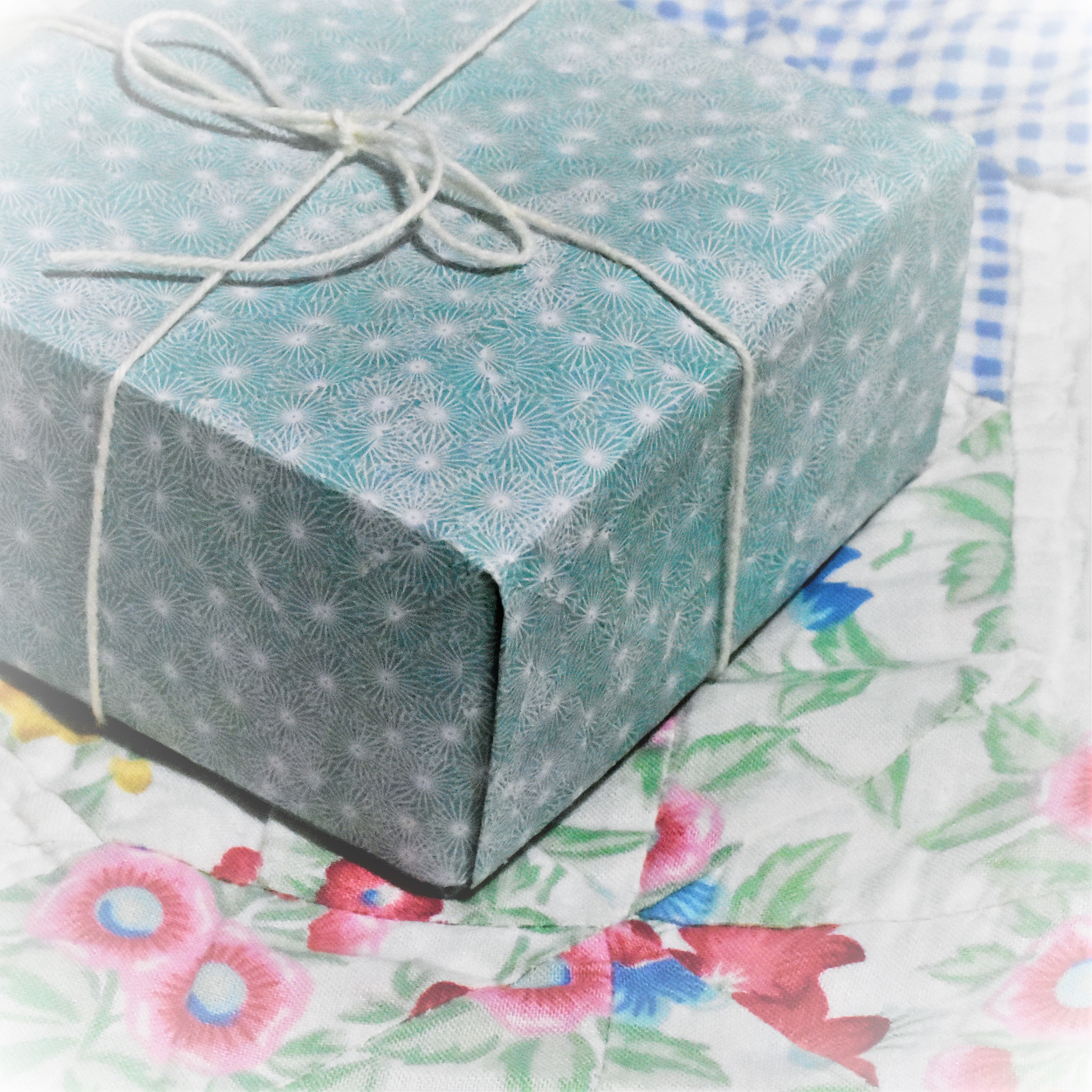
I wrote memories on a sticky note and put them in a little paper box. More memories came, not just of beautiful people and places I loved, but also sad memories of goals unattained, of relationships that remain unreconciled, of disappointments with myself. I wrote down my worries for people I wanted to help (okay, fix) but I left them behind still suffering pain and mess. Finally, I realized that I left behind a young, energetic woman who could accomplish much more in a day than the one who sits writing this now.
There is always grief involved in saying goodbye, I guess. I added to the pile of sticky notes in the little box and tied it up with a piece of string.
“Lord, I give this to you. It’s not as impressive as I wish it could have been. There’s some disappointing and embarrassing stuff in it, but I know you’re not surprised because nothing surprises you. You know all about it. There’s some good stuff in there too, really good stuff — and it’s hard to let go. But I trust you. I know you have more to show me and a purpose for the time remaining in my life no matter the circumstances. Here you go.”
Transformation comes with the willingness to cooperate with God’s process. (I think I wrote that somewhere.) When our hands and hearts are clinging to the old there’s not much room for the new. Letting go of the past is the only way to move forward. The little box is a symbol of my intention to do that.
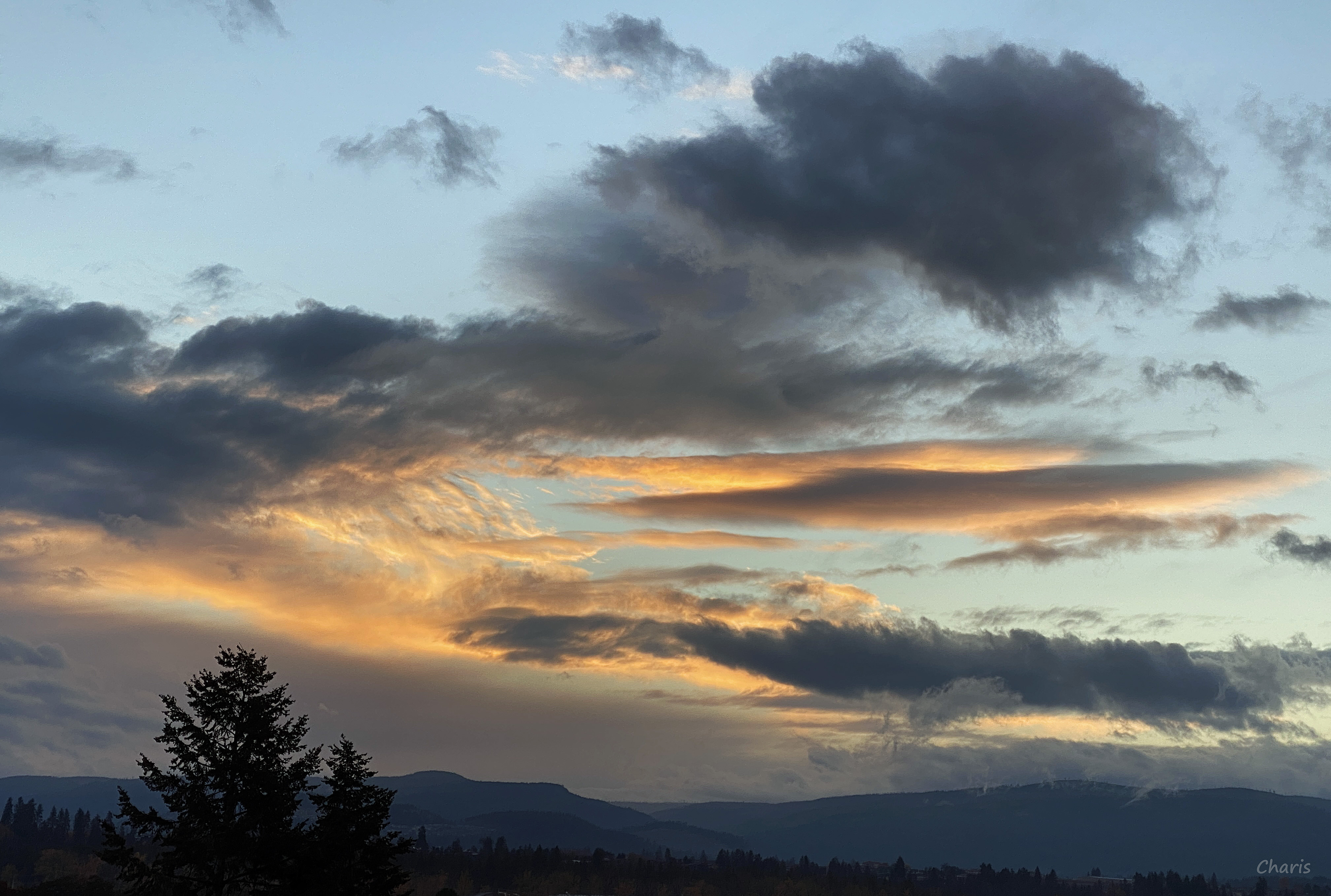
It’s strange the way darkness displaces a little more light every day in the north. I’ve been so busy I didn’t notice the dawn slowly shift from behind the eastern mountains to rise, lazily, beside the ridge of hills much further to the south. Yesterday I needed to turn on my headlights at 3:30 in the afternoon. How did it get so dark so fast?
I have a light on my desk that imitates sunlight. It produces “lux” sufficient to cheer my writing space, but little more. If I were to aim it out my window into the blackness it would scarcely draw the attention of anyone stumbling in the dark street. It’s enough to change my room but not enough to make an impact beyond it.
One of the best opening sentences of any novel (prove me wrong) is Dickens’ “It was the best of times; it was the worst of times.” Today I feel if I wrote, “It was the darkest of times; it was the brightest of times.” many of you would understand.
I don’t want to be accosted by the news anymore. It’s not just a matter of avoiding the pain of another disaster, another riot, another variant, another death count, another public breach of trust, another grab for power in the guise of “public service.” (“No one jostles for the position of servant,” Gayle Erwin reminds us). I don’t want to pay so much attention to the news on any media because it involves so many people promoting problems by yelling higher and louder than they did the last time their attempts at playing God didn’t work. Very few are listening. Animosity escalates. Our best efforts are not enough. And it’s getting dangerous to say so. How did it get so dark so fast?
I had a vision the other evening. (Take it or leave it. I’ve stopped apologizing.) I saw crowds of people coming from all directions toward a small circle with light emanating from the center. Tired bodies were dressed in dark clothes. Everyone had slumped shoulders and moved without swinging their arms. Some shuffled along as if in pain, but they were all drawn by curiosity to see this strange light. Some pushed their way to the front. I was one of them.
The light emanated from a baby in a manger. I watched him turn into a boy discussing matters of importance with religious leaders baffled by his enlightened insight. He grew into a man creating with carpenter’s tools in his hands. I saw him touching, healing, teaching, caring, and leading as crowds of followers grew. With every action the light around and within him shone brighter. The whole story was told in light I can’t explain. Then I saw him being taken away and murdered on a cross. His body was left in a sealed tomb. The light in the circle suddenly died.
A moan went up from the crowd. It was as though their greatest fear, the fear of disappointment, had been realized.
Then the light walked out of the grave and expanded as he rose until it was too bright for the onlookers to see. The light rose to fill the whole earth. It spread in ripples, and as it did tens, then hundreds, then thousands spontaneously fell to the ground and bowed in worship. I looked and saw costumes and masks drop. I saw ceremonial and honorary robes of all kinds fall to the ground as people bowed in humble adoration.
I realized that Jesus Christ was at the center of all of this. I watched as a chalice appeared where he stood and became a fountain. Out of him flowed light, hope, healing, forgiveness and love, pure love in the form of blood. It was as if many people were overwhelmed by his presence and, really seeing him for the first time, knew he was the answer to the darkness within themselves.
I saw selfish ambition, mockery, slander and mischief slink away as if they found the light too painful to bear.
Later that night, as I walked home under dark clouds, I thought of all the Christmas songs that talked about waiting in darkness and about the baby who came to bring light into the world. On the first day of advent an obscure verse from the ancient hymn “Oh Come, Oh Come, Emmanuel” played in my heart.
O come, Thou Day-Spring, come and cheer Our spirits by Thine advent here Disperse the gloomy clouds of night And death’s dark shadows put to flight. Rejoice! Rejoice! Emmanuel Shall come to thee, O Israel.
Emmanuel means “God with us.” Before this happened I had been praying about how to pray in these dark days. I believe God was showing me the importance of keeping Christ at the center of everything I do. I pray for new life to spring up as his light shines in the darkness and makes an impact beyond my own little corner.
After Paul the apostle came down from his intellectual discussions with philosophers on Mars Hill (which impressed only a few people) he ended up in Corinth. He wrote this about the experience with the people there: My brothers and sisters, when I first came to proclaim to you the secrets of God, I refused to come as an expert, trying to impress you with my eloquent speech and lofty wisdom. For while I was with you I was determined to be consumed with one topic—Jesus, the crucified Messiah.I stood before you feeling inadequate, filled with reverence for God, and trembling under the sense of the importance of my words.The message I preached and how I preached it was not an attempt to sway you with persuasive arguments but to prove to you the almighty power of God’s Holy Spirit.For God intended that your faith not be established on man’s wisdom but by trusting in his almighty power. (1 Corinthians 2:1-4)
My eloquent speech and lofty wisdom plus ten dollars will get you on any subway in Moose Jaw, Saskatchewan. But the Holy Spirit? His signs point to the Light. As circumstances become darker, the light shines brighter and brighter. This time we’re in? It may be the darkest of times, but it is also the brightest of times. Consider the Light.
This has been a difficult time in British Columbia. A massive storm caused floods that destroyed roads and bridges and triggered landslides. The photos are heartbreaking. We are okay in our new home In Kelowna, but since the highways between here and the major west coast port and main agricultural areas of the province were closed we are very aware of the devastating consequences of the storm. People who had been travelling were stranded and trucks and trains carrying goods couldn’t connect with the interior of the province (although I believe one round-about route is open for essential travel now.)
Panic buying started a week ago and many shelves were empty by the next day. The grocery store near us had no fresh produce (other than cilantro and a few potatoes), no meat other than expensive steaks, no eggs, no dairy products, no bread, no rice, no canned or frozen vegetables or fruit, and no toilet paper. For those of us accustomed to abundance, it was a shock.
When disaster occurs I go into survival mode. My mind races ahead to prepare for all the possibilities we could face. Perhaps it comes from being a mother who had to anticipate dangerous situations children could get into or inconveniences I could face if I neglected to pack everything I could possibly need in the diaper bag. I like to be prepared, but after years of trying to be ahead of the game, I realized I had taught myself to expect a worst-case scenario. This time I decided not to rush out and buy more than we usually bought for the week.
In the midst of the panic I heard a song by Jonathan Ogden that was new to me. It was called “Slow Down.” I still have so much to do with settling in to this new place that the thought of slowing down was, frankly, a little annoying. Then I realized that God was using the song to speak to my heart about the need to slow my racing thoughts and listen for his voice.
The oft-quoted scripture verse, “Be still and know that I am God,” is in Psalm 46 which describes situations that are anything but tranquil. The first three verses in The Passion Translation read:
God, you’re such a safe and powerful place to find refuge! You’re a proven help in time of trouble— more than enough and always available whenever I need you. So we will never fear even if every structure of support were to crumble away. We will not fear even when the earth quakes and shakes, moving mountains and casting them into the sea. For the raging roar of stormy winds and crashing waves cannot erode our faith in you. (Pause in his presence)
Lately I’ve been having dreams about the importance of staying close to God in these perilous times. I know it’s absolutely necessary to lean on him and trust his ways. Sometimes his ways are counter-intuitive, but the impossible becomes possible when let God be God.
This is not about passivity or laziness. We still work to help feed and house evacuees or doing whatever we can to help those affected by the storm. This about learning to quiet our souls and becoming more effective because we come from a place of rest and trust where fear doesn’t call the shots.
Surrender your anxiety. Be still and realize that I am God. I am God above all the nations, and I am exalted throughout the wholeearth.
I suppose that since I write a blog about change, I can expect to encounter more opportunities to learn about change. My answer to kind readers who are wondering where I have been and have been checking up on my welfare is this: I am ok, thank you very much for taking the time to ask. I am weary and sometimes exhausted. I am emotional –sometimes embarrassingly so– but it is well with my soul.
We are now living in our new place. The last boxes have been unpacked. We’ve taken a carload of stuff we didn’t need to haul out here down to the thrift store in our new city. We’ve replaced some of the things we should have brought that we donated to the thrift store in our old city.
Things have changed since the last time we moved over three decades ago. We’ve discovered that some items we need to make this new place more functional are out of stock and will not be available for several months. There is a shortage of labour all across the country. Arguments over who to believe about Covid responses are as heated here as they were where we came from.
Health and safety protocols have changed attitudes and the process of meeting new people in more ways than we expected. I have to remind myself that what once would have been interpreted as a snub is just people who have spent months in isolation in our 55+ building being cautious. We’re adjusting to living in a much smaller space with strata council rules needing to be considered at every turn as well. We’ve been re-introduced to traffic jams and the sound of sirens.
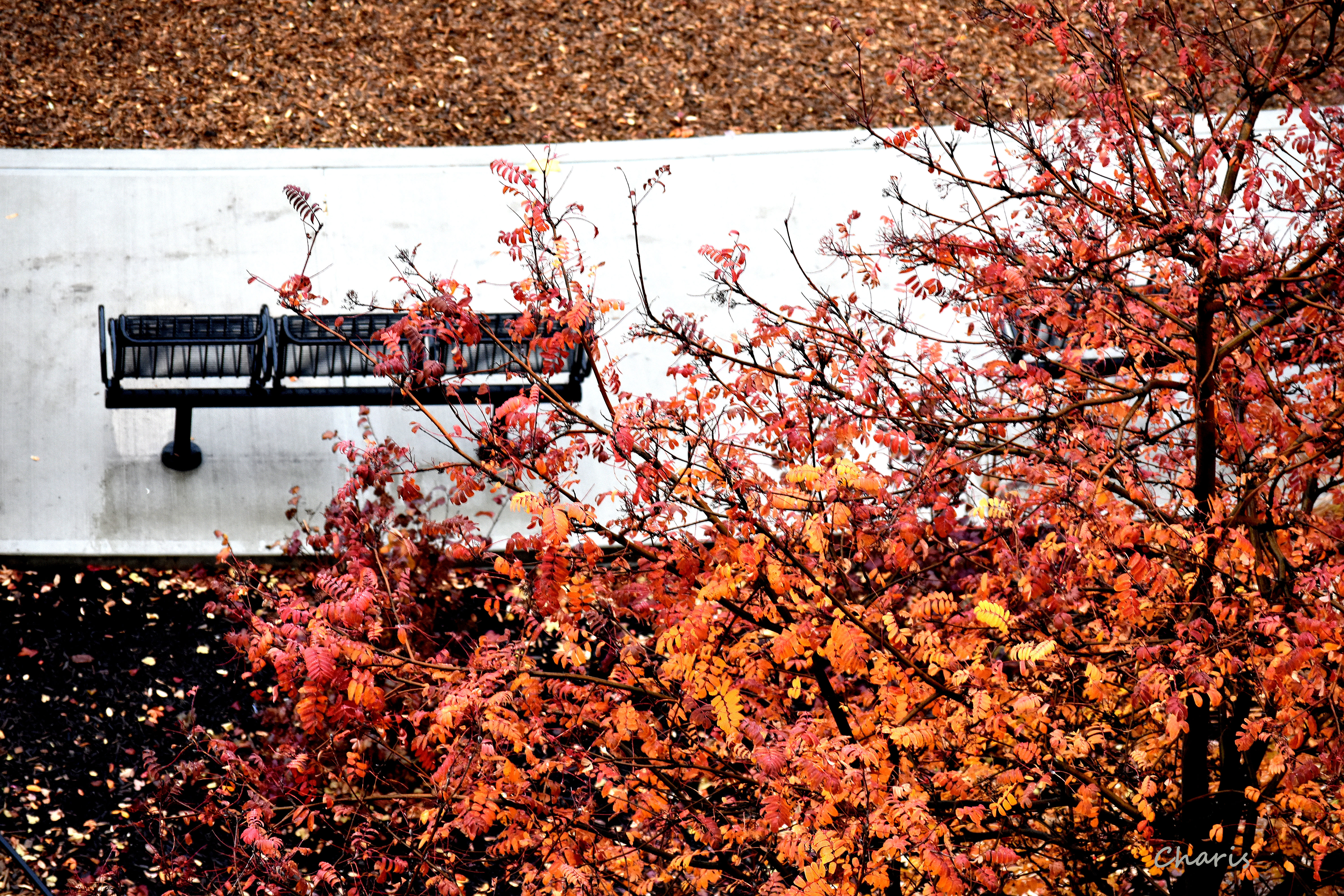
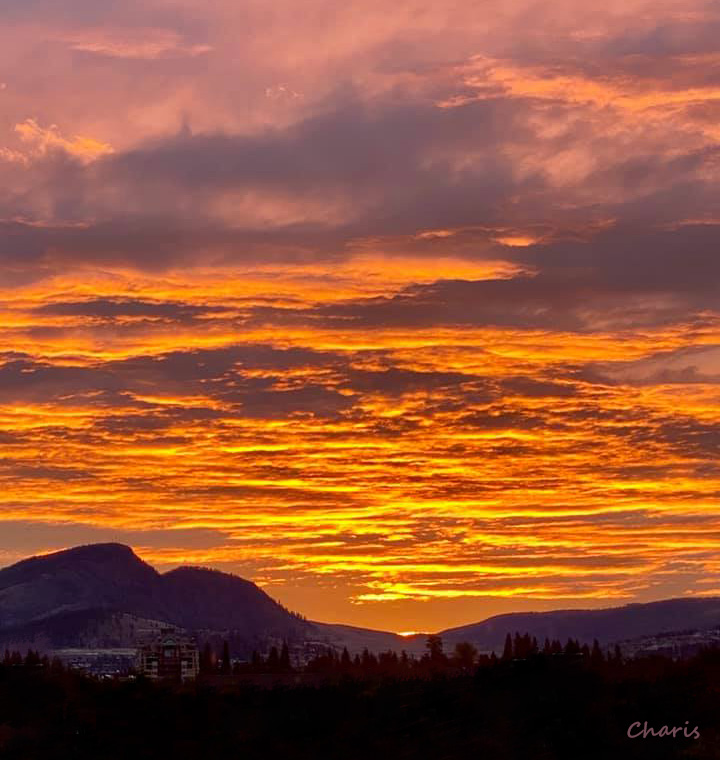
We’ve also discovered that orchards and vineyards are beautiful in the autumn and living close to the center of a city saves a lot of time in transport and money for gas (petrol) because many shops and services are within walking distance. I can now see sunrises from the kitchen window. We’ve met beautiful, welcoming people in the faith community. The joy of living near family is something we have not known for many years. Family connection is a major reason for all this bother – and well worth it.
I’ve been back in a learning season. This has been more of a practicum than a classroom environment, but I’ve learned that God usually follows up revelation of a concept with rubber-meets-the-road experience to increase understanding.
This course could be called “Upgrading Through Downsizing.” It has been both harder and easier than I thought it would be. I found myself in frustrating situations more than once. Faith grows when circumstances are so ridiculously impossible that you can do nothing but trust God. When he shows up with a creative solution (which sometimes arrives as an amazing miracle and sometimes reveals false assumptions and the need to redefine success) it gets easier to trust him next time.
Previous life-lessons taught me how to let go of baggage. This venture has been about letting go of freight. I miss my friends, my music books, my garden, my familiar spaces, and the cherished items that carried memories. But there is no room for them anymore. This is a new day, a new assignment, and a time for getting used to different.
There is excitement in moving toward something new. There is also a type of mourning in letting go of the familiar. As I took time to rest and recover physically, I realized I also needed time to recover emotionally. While discovering new possibilities is exciting, letting go of the familiar involves all the stages of grief. Skipping those stages is like stuffing the feelings in another box marked “this side up” and tripping over it like the last plastic tub of miscellaneous stuff I don’t know what to do with that still sits beside my desk.
Perhaps this has been the greatest lesson of this season: I will not have grace to extend to others if I fail to extend grace to myself. Time is a precious gift that I have chosen to open and enjoy. I’ll be back to writing soon.
Right now, my little granddaughter is waiting for me to come pick her up. She wants me to teach her how to sew.









 Charis: Subject to Change