The angel of the Lord encamps

Photo: Campground

I’ve driven right past this campground for years and never noticed it was there until I was so drowsy one day I pulled off the road to take a nap. It was hidden in plain sight. I took this photo from an empty camping spot. There was no one else in the park but maintenance people that day. I love this place. The smells are wonderful and the mountains feel like giant guardian angels keeping out the riff-raff. Apparently angels like camping too 😉

I sought the Lord, and he answered me
    and delivered me from all my fears.
 Those who look to him are radiant,
    and their faces shall never be ashamed.
  This poor man cried, and the Lord heard him
    and saved him out of all his troubles.
  The angel of the Lord encamps
    around those who fear him, and delivers them.

(Psalm 34:4-7)

This is also a prayer and declaration for friends on the other side of the world who face severe persecution this very night. He hears you.

Memories in Sepia

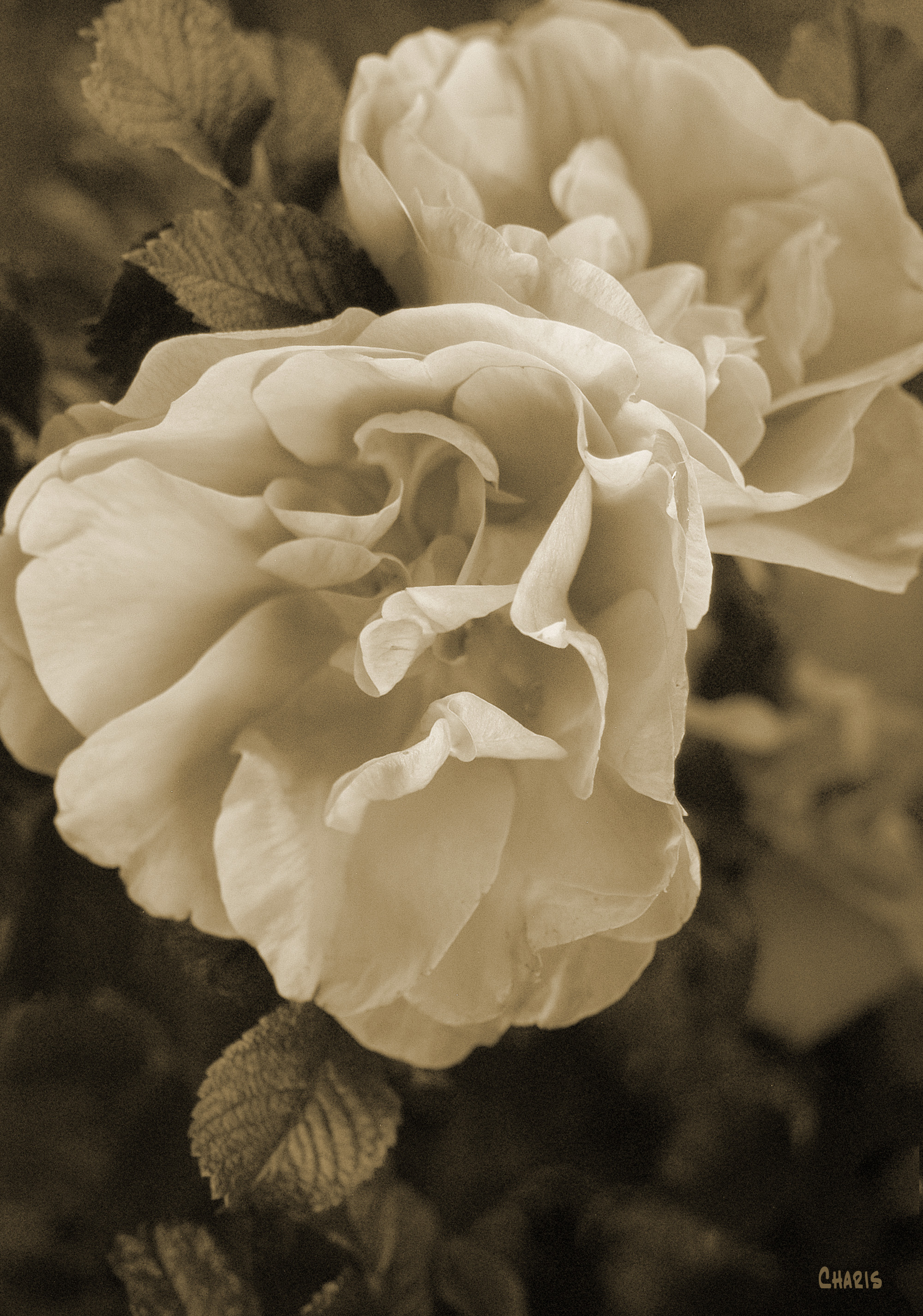
Photo: Sepia roses

I tried my hand at my version of vintage-style photography this week. I like the juxtaposition of something new and fresh encased in a historical frame.

When I was a child I thought the second world war took place in black and white. That idea probably came from watching the old TV show about the war narrated by Walter Cronkhite- the one on Sunday afternoons that started with a big picture of the Rock of Gibraltar. Even as an adult I am surprised when I see photos of the war years in colour.

In a way, I suppose all history is written in black and white. So many colourful nuances are left out of historical accounts. What made masses of regular people believe certain ideas? Why did they choose to make the choices to follow the leaders they did? What made some cultures xenophobic or aggressive or peaceful? Who convinced some that genocide or infant sacrifice or slavery was a good idea? What was going on in the mind of an ordinary woman as she stirred the pottage, or a man as he mended a door hinge?

Historical accounts are rarely accurate, of course, since they are written by the winners and don’t take dissenter’s opinions into account. Dietrich Bonhoeffer, the German theologian who worked behind the scenes (aka a spy) to bring down a regime he saw as evil, is one example of many who opposed what was happening in his country. Current history writers (the winners) remove his traitor status, but that label hung him on the gallows in his own time.

I was on a jury that heard the testimony of thirty-two people who witnessed the same shooting. Amazingly no two versions were the same. When I read newspaper accounts  later I wondered if the reporter and I were at the same trial. His perception of what took place was so different from mine. That month was a dramatic lesson in how people’s minds screened truth. I do believe the majority of witnesses were trying to be factual (although most were seriously drunk at the scene of the crime) but I tended to believe the ones who revealed their own weaknesses, and included details about which way the door opened and not being able to see faces clearly because of back-lighting, rather than the ones who saw themselves as heroes but couldn’t remember if they drove home “after imbibing.”

History, as we are taught it, may not be fully accurate in detail, but it does teach us about patterns and cycles. We are foolish to ignore those patterns. Mark Twain said something like, “History may not repeat itself, but it rhymes.” If the people holed up in David Koresh’ compound in Waco, Texas had known the strikingly similar story of the people holed up in Munster, Westphalia in the 16th century would they have used the same tactics? Would the government sponsored assailants have repeated the same type of seige?  Has anyone noticed the  pattern in history of proclaiming a group of humans “non-persons” in the process of trying to excuse their annihilation? Historically what has happened when people are fed messages of  fear over and over? What has happened when political leaders are more relied upon for safety and provision than God? Why are people surprised when ones they hand power to, expecting them to save us, tend to usurp more power and start acting like gods? (That power corrupts must be one of the most often repeated lessons in history.)

The Bible says to teach your children their history. It includes enough details about the failings and faults of so many characters to make it quite believable to me. Bible heroes were also cowards, adulterers, drunks, thieves, slave masters, perjurers, and power-delusioned wretches like the rest of us. We can learn from them, or we can repeat the same mistakes.

The roses I photographed yesterday will be blown next week. A photo-shopped sepia memory exists, and now that I’ve posted it may be flung out into cyberspace in perpetuity. It’s not exactly how they looked (they were actually softy pink) but they are recognizable as roses –and they have taught me something.

Hidden

Photo: Deep in the woods

I’m asking God for one thing,

only one thing:

To live with him in his house

my whole life long.

I’ll contemplate his beauty;

I’ll study at his feet.


 That’s the only quiet, secure place

in a noisy world,

The perfect getaway,

far from the buzz of traffic.

( Psalm 27 -The Message)

It just gets better

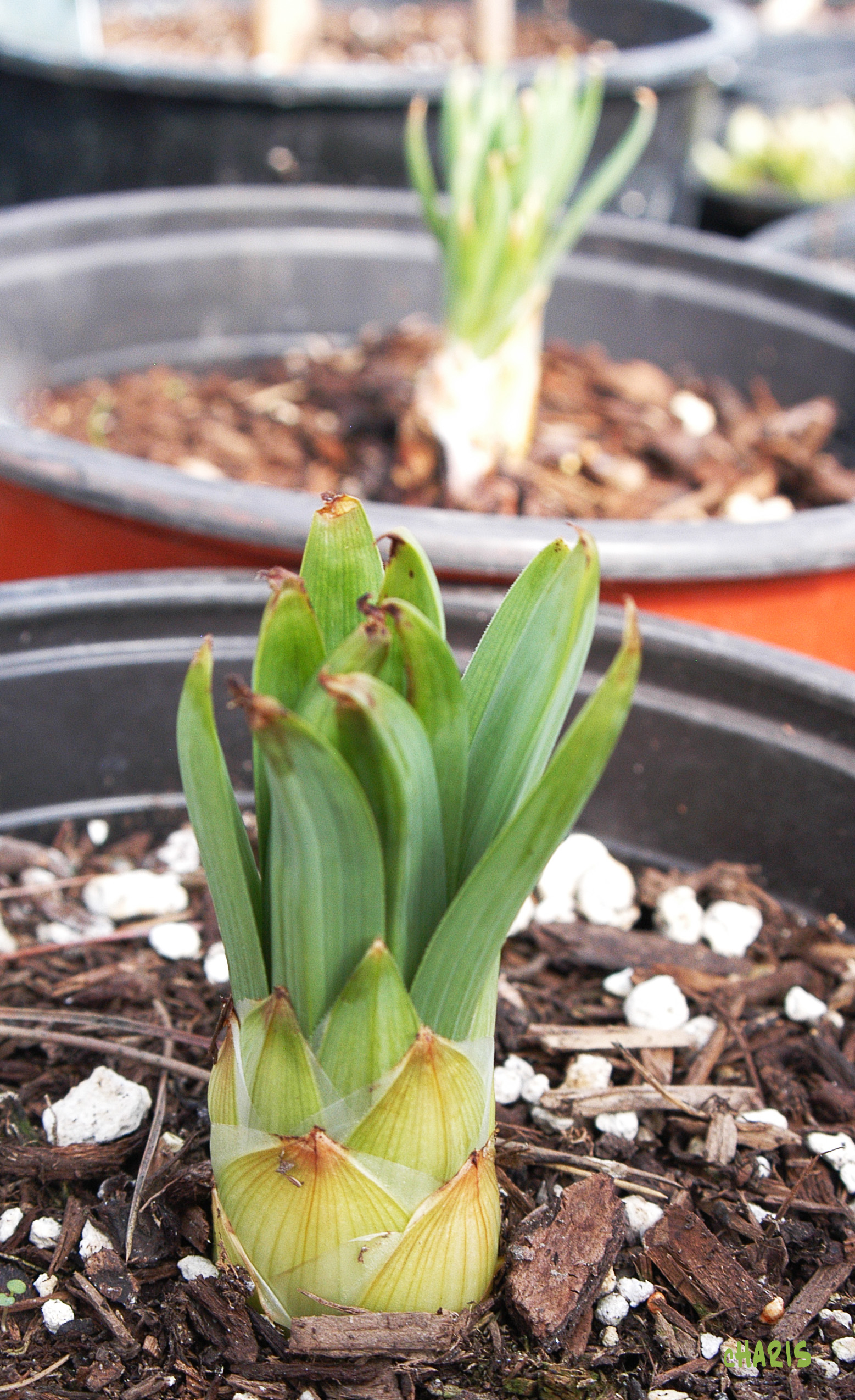
new growth


Peggy Lee’s song from the 60’s, “Is that all there is?” came to mind this week when I saw many of my young friends post pictures of graduation and the prom on Facebook. A former grad admitted to me that the whole thing was a little disappointing. After looking forward to it her entire school career as a magical night of glamour and celebration (and possible romance) in the end it was the same old people standing around in expensive, uncomfortable clothes saying and doing the same dorky things they said and did last week –and the week before, and the year before.

Dare we admit that some of the moments we were told would be the highlights of our lives were not all that brilliant? I came away from my high school grad party thinking like Peggy, “Is that all there is?” (Mom worked so hard to put together the perfect evening, but I was not permitted to go to the prom dance and since my dress was a gift, I never got to choose it. The guy I had just broken up with turned up with his fiancée and the last minute substitute escort was called home by his mother because she needed help getting his drunk uncle out of the bath tub.) Even if everything had turned out as planned I think I would have been disappointed.

The problem: I have an imagination.

Sometimes I feel like asking people not to give rave reviews to a movie or book or performance –or even a cleaning product that sounds like heaven by way of a sparkling shower door. I almost wish people hadn’t told me how wonderful life experiences like a wedding or childbirth and breastfeeding or a vacation in Mexico or a standing ovation after a performance were because although there were wonderful moments in all of them, secretly my imagination took liberties went a step further than reality. As great as many experiences have been there was usually a bit of “Is that all there is?” when they were over.

Solomon said it first in the book of Ecclesiastes, the book that epitomizes is-that-all-there-is disappointment and the limits of human’s wisdom and logic. He wrote, “I have seen all the works that are done under the sun; and, behold, all is vanity and vexation of spirit.” and “Eat, drink, and be merry, for tomorrow we die.” (He ends the book of his experiences with this: “Let us hear the conclusion of the whole matter: Fear God, and keep his commandments: for this is the whole duty of man.”)

Peggy’s song repeats Solomon’s observation of vanity:

If that’s all there is my friend, then let’s keep dancing.

Let’s break out the booze and have a ball, if that’s all there is.

Peggy’s song also dared to address fear of the final disappointment:

I know what you must be saying to yourselves.

If that’s the way she feels about it why doesn’t she just end it all?

Oh, no. Not me. I’m in no hurry for that final disappointment.

For I know just as well as I’m standing here talking to you,

when that final moment comes and I’m breathing my last breath, I’ll be saying to myself,

Is that all there is?

Perhaps disappointment is our greatest fear. Perhaps this is what motivates so many sermons and pop theology books. They are less about hope and faith than the pragmatic guarding of our hearts against the possibility of disappointment.  Like King Saul before his first battle we take things into our own hands when it looks like God may not show up in time to make our party a success.

I think the best moments in my life have been surprises:

-coming around a corner on a logging road to see an entire hidden valley of golden tamarack aglow in low evening sun,

-my wee little grandson this week, bringing me a grocery store flyer and pointing to a photo of watermelon to show me what he wanted when he is too young to have the words (Yes, I gave him some.)

-my “barren” daughter announcing her pregnancy

-my precious son, held prisoner in a dark basement of depression, coming up the stairs into the light saying he wanted to be baptized

-my four-year old grandson telling me he had a dream of sitting on Jesus’  lap and being hugged and hugged and hugged

-my husband covering my desk with Lindt chocolates on our fortieth Valentines Day together

-hearing a voice say “Run!” when I was up in the woods praying, then discovering that when I dared to attempt it the asthma and arthritis that had crippled me for so long were gone

-my mother with a broad smile and look of recognition on her face toward someone we could not see as she stepped into eternity from her hospital bed

-and so many more.

I believe this is not all there is. I believe God gives us promises that will not be disappointments. I believe that my imagination will not spoil the surprises he has for me because I am not capable of going a step beyond the greater reality. My imagination is no match for his.

Is that all there is?”

No! Not by a long shot!

Now to him who by his power within us is able to do far more than we ever dare to ask or imagine—to him be glory in the Church through Jesus Christ for ever and ever, amen! (Ephesians 3:21, 22)

Oh, dear children of mine (forgive the affection of an old man!), have you realised it? Here and now we are God’s children. We don’t know what we shall become in the future. We only know that, if reality were to break through, we should reflect his likeness, for we should see him as he really is! (1 John 1:3)


Beached

A day at the beach

There’s nothing quite like a day at the beach to remind us that although we are all fearfully and wonderfully made, very very few of us have perfect bodies.

A lot of people avoid the beach, postponing enjoyment (often indefinitely) until they have bodies that match the images in their minds. Others just have fun in whatever shape they may be in (although a little more modest covering on some could help avoid awkward moments and the problem of averting one’s eyes.)

We can be pretty good at trying to dress up our hearts to look spiffier than they actually are too, layering them with politeness, accessorizing with colourful splashes of generosity and public service to detract from our less  attractive “problem” areas. (To be sure a little discretion can sometimes help avoid awkward moments there as well. Not every foible needs to be exposed in public.)

I wonder if there is room in the big C Church for a beach for the heart -a fun place where we can dare to let go of tailored suits or winter boots or freshly-pressed vestments (or even flak jackets) and exchange them for modest, but less disguising garments and just enjoy life together, soaking in the warmth of the sun.

I guess it’s called friendship.

It might even be called love.

Dappled things

Photo: Lungwort and bee

Being a bit of a dappled thing myself, I have long appreciated this poem by Gerard Manley Hopkins.

Pied Beauty


GLORY be to God for dappled things—

For skies of couple-colour as a brinded cow;

For rose-moles all in stipple upon trout that swim;

Fresh-firecoal chestnut-falls; finches’ wings;

Landscape plotted and pieced—fold, fallow, and plough;

And áll trádes, their gear and tackle and trim.


All things counter, original, spare, strange;

Whatever is fickle, freckled (who knows how?)

With swift, slow; sweet, sour; adazzle, dim;

He fathers-forth whose beauty is past change:

Praise him.

He restores my soul

Beside the creek in the cool of the evening

I have joy.

For many years I could not say that. The best I could do was say, “I’ll be happy when…

when this course is over,

when I have a driver’s license,

when I am married,

when this baby is born,

when tax season is over,

when the swelling goes down,

when I get my Dad settled in his new home,

when the bills are paid,

when the house is clean and organized,

when my kids are doing well,

when their bills are paid…”

There was always a reason to postpone enjoying the moment, something that still needed improvement, some potential disappointment that needed guarding against.

I used to think that when I managed to finish everything on the job list I could reward myself with feeling a little joy.

I rarely finished the to-do list -and never finished the worry list. That list I took to bed with me.

Jesus said his burden was light.

Mine wasn’t.

I lumbered from burn-out to burn-out and laboured under thick layers of guilt.

In a dream, the Lord showed me a heavy suitcase. It was full of things that needed prayer. He said sometimes I needed to set it down. It would wear me out if I carried it all the time. Sometimes I needed to leave it with him, walk away and enjoy the scenery.

In a way, that is why I took up photography and painting. They make me pay attention and become more aware of beauty. The evening  light does not wait until the paperwork is done and the hedge is clipped and all the hungry people in the world are fed and all the sick are healed.

Sometimes on this journey we need to leave the heavy stuff and the “whys” in his care and sit by the stream in the cool of the evening and allow our souls to be restored. Right here, mid-crisis, in the hidden grottos of the valley, with all of the threats and fears and opposition looking on like jealous, ravenous beasts, God prepares a place of rest and safety and refreshing for us.

I am learning (slowly) to set the suitcase down, step into the joyful freshness of God’s presence and allow him to restore my soul -in that infinitely tiny and infinitely spacious moment called “now.” That’s where the battle is won.

Thank you, Lord. You are good.

Through the river

Photo: River rock in the flood

“Fear not, for I have redeemed you;

I have called you by name, you are mine.

When you pass through the waters, I will be with you;

and through the rivers, they shall not overwhelm you;

when you walk through fire you shall not be burned,

and the flame shall not consume you.

For I am the Lord your God.

(Isaiah 43)

I took my little granddaughter swimming this week. The new pool has a “river” with a strong current that is so much fun — to me, anyway. Daisy spent a lot of the time standing on the edge of the pool throwing balls and floating toys at me in an aquatic game of  “fetch”, in which I was supposed to respond to her bidding. I tried to convince her to jump into my arms, but she whined that she didn’t want to. It was too scary. I knew I would never let her go under and that learning to swim is a very useful skill that starts with getting in the water. She didn’t know that.

So often my prayers are more about worrying at God and trying to convince him to take my discomfort more seriously, so he will stop it, than they are about listening to him. Instead of asking,  “God? What are You trying to show me and how can I honour Your plans?” I am often more likely to holler, “Ouch! I don’t like this lesson! Fix the problem, don’t fix me. I’ll be just fine when the world changes, thank you very much. I don’t really trust you to keep me safe.”

Instead He answers, “Trust me. Listen to Me. Do it my way and you will not be overwhelmed. It looks scary, I know, but you are capable of much more than you think. Let me show you.”

Trust vs. fear. The lesson always comes back to trust.

First I have to jump into his arms.

Outside the fence

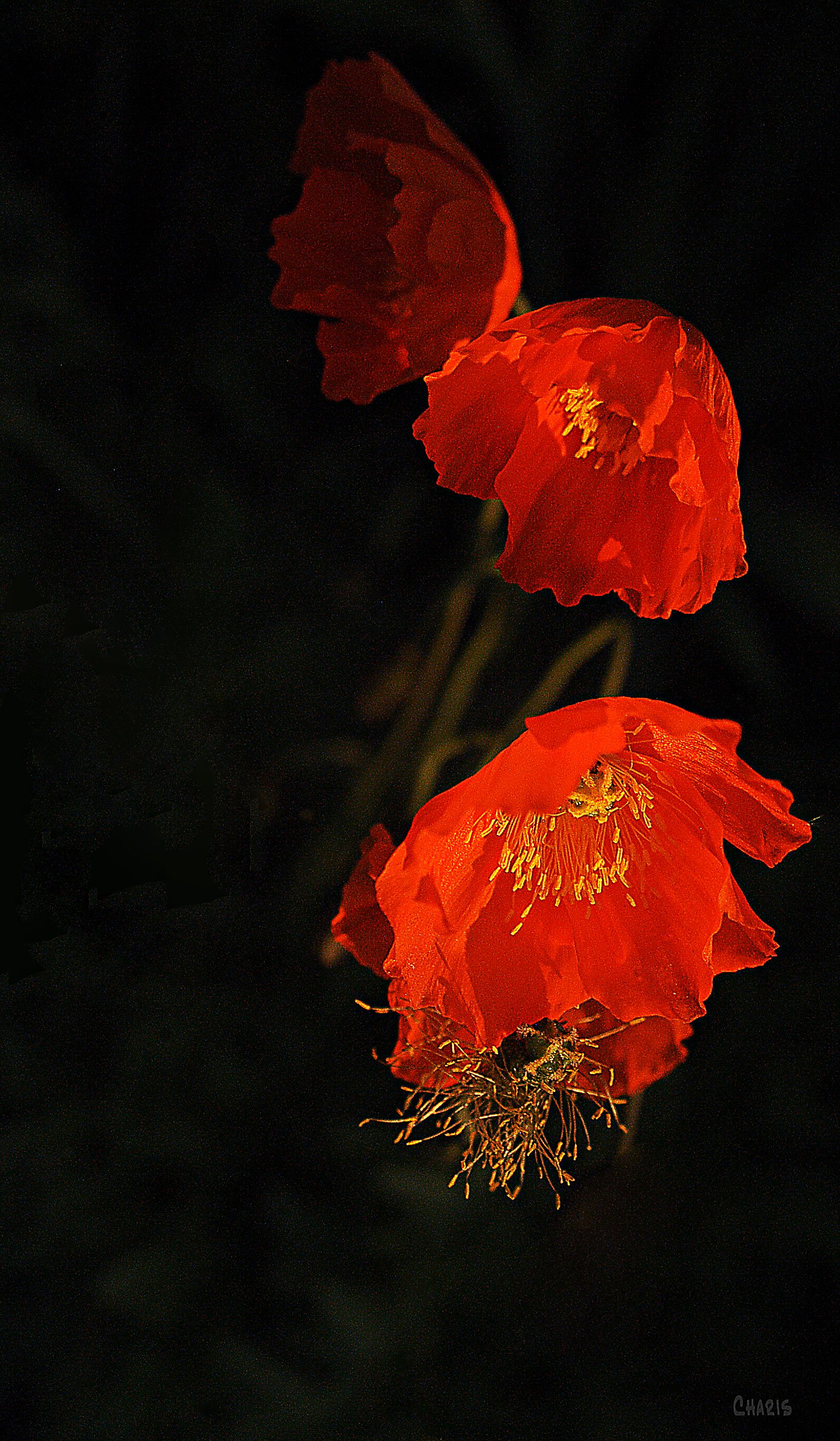
Poppies in the Back Alley

photo: Poppies growing behind the fence

Sometimes the organizations we form to celebrate connections end up separating us.

I realized this in the first grade, the day our friend Diana showed up at school after lunch with her short pixie cut hair full of bobby pins trying desperately to hold tiny braids together. It looked ridiculous. Earlier that day four or five of us were walking arm in arm in arm as little girls do, in a kind of six year-old chorus line. We were members of the French braid club. We had all worn braids that day and formed a band of sisters on that basis. I hadn’t noticed until Diana returned from lunch, that our basis for commonality excluded a sweet girl we all loved.

I think denominations are like that. At first we are excited about finding we share common beliefs with others and form First Church of  the Tidy Braids. Do we have stories! Sometimes we are so busy rejoicing in finding each other we don’t realize our denomination has excluded some lovely people with short hair.

That which was meant to bring people together ends up keeping people apart. A denomination formed around a common experience or emphasis may at first be a sheltering, warm, encouraging place, but within a generation or two it  attempts to redefine what it means to be “in” or “out” of the kingdom of God.

I took a photo of these poppies growing behind the fence as the last light of a slow summer day highlighted their beauty. I don’t have any poppies inside my garden. I wish I did.