

If you are a big fan of the book and have read and re-read it, you will be disappointed (as all fans are when they see a movie of “their” book). However, taking artistic license into consideration, the essentials are there, and for people who are not familiar with the story, it’s a great movie. My hope is that it will make them want to read the book.
This is how Paul described the essentials of the good news of the Kingdom of God story: “For I delivered to you as of first importance what I also received: that Christ died for our sins in accordance with the Scriptures, that he was buried, that he was raised on the third day in accordance with the Scriptures, and that he appeared to Cephas [Peter], then to the twelve. Then he appeared to more than five hundred brothers at one time, most of whom are still alive, though some have fallen asleep. Then he appeared to James, then to all the apostles. Last of all, as to one untimely born, he appeared also to me.” (1 Corinthians 15:3) Except for showing the 500 and the Apostle Paul those elements were all there.
There were a number of times in the film when I had to shut my inner critic off, much the way my husband has to learn to shut his bad science alarm off, my sister-in-law has to shut her bad medical practice alarm off, and I also have had to turn my bad singing technique alarm off -or at least way down- if we wish to see the story of the film or TV show director wants us to see. Most people who are not familiar with the factual details of a well-known story, like complete dialogue or setting and chronology, are not bothered by their absence. But since Twitter didn’t exist and Jesus and the boys (and the women who followed as well) didn’t leave dated moment by moment accounts of their activities there are a great many details the great editor decided were not necessary for us to know in order to grasp the essentials of the life and mission of Jesus Christ either (or Yeshua ha Meshiach from which we also get the name Joshua.) We know he was not an extremely good-looking European with amazing dazzling white teeth. Isaiah wrote that the Messiah had no extraordinary physical attributes that we should be attracted to him on that basis. People were probably shorter in those days, but I have a feeling if a 4’9″ 33-year old Woody Allen look-alike with a very, very dark tan and nasally voice were cast in the role western audiences would have just as much trouble relating. John, his beloved close friend, wrote at the end of his account of Jesus’ life: “Now Jesus did many other signs in the presence of the disciples, which are not written in this book; but these are written so that you may believe that Jesus is the Christ, the Son of God, and that by believing you may have life in his name.”
If the purpose of the film was to create interest in Jesus Christ for those who have not heard, that they might believe, then I’m good with that. I am not part of the target audience, so I will not criticize it for not being all I would wish it to be.
There was one aspect of the film, however, that I had, until recently, accepted as accurate simply because I knew no better. Since childhood I have seen films of Bible stories set in Israel which depicted the land as a dusty barren desert where people picked their way through rocky paths in their sandalled feet. Frankly I wondered why anyone would call this the Promised Land. I often thought there are a lot nicer places in the world to fight over.
Then I went to Israel a few months ago. I was amazed when I saw rich green and golden fields, orchards and vineyards, forests, and, in the north, lush semi-tropical gardens and jungle-like greenery. We were so happy to be able go with a tour leader who was also a botany prof and who had lived in the area doing research on native plants for ten years. He told us that many areas closer to Jerusalem were de-forested and over-grazed during the era of occupation by the Ottoman Turks, but in the time of Christ the hills of the northern half of the country were probably covered with natural forests. It was more like Sherwood Forest than the planet of Dune. (Actually it reminded me very much of the Okanagan Lake area in British Columbia -if the lake was a lot wider and the climate warm enough to grow mangoes and dates.)
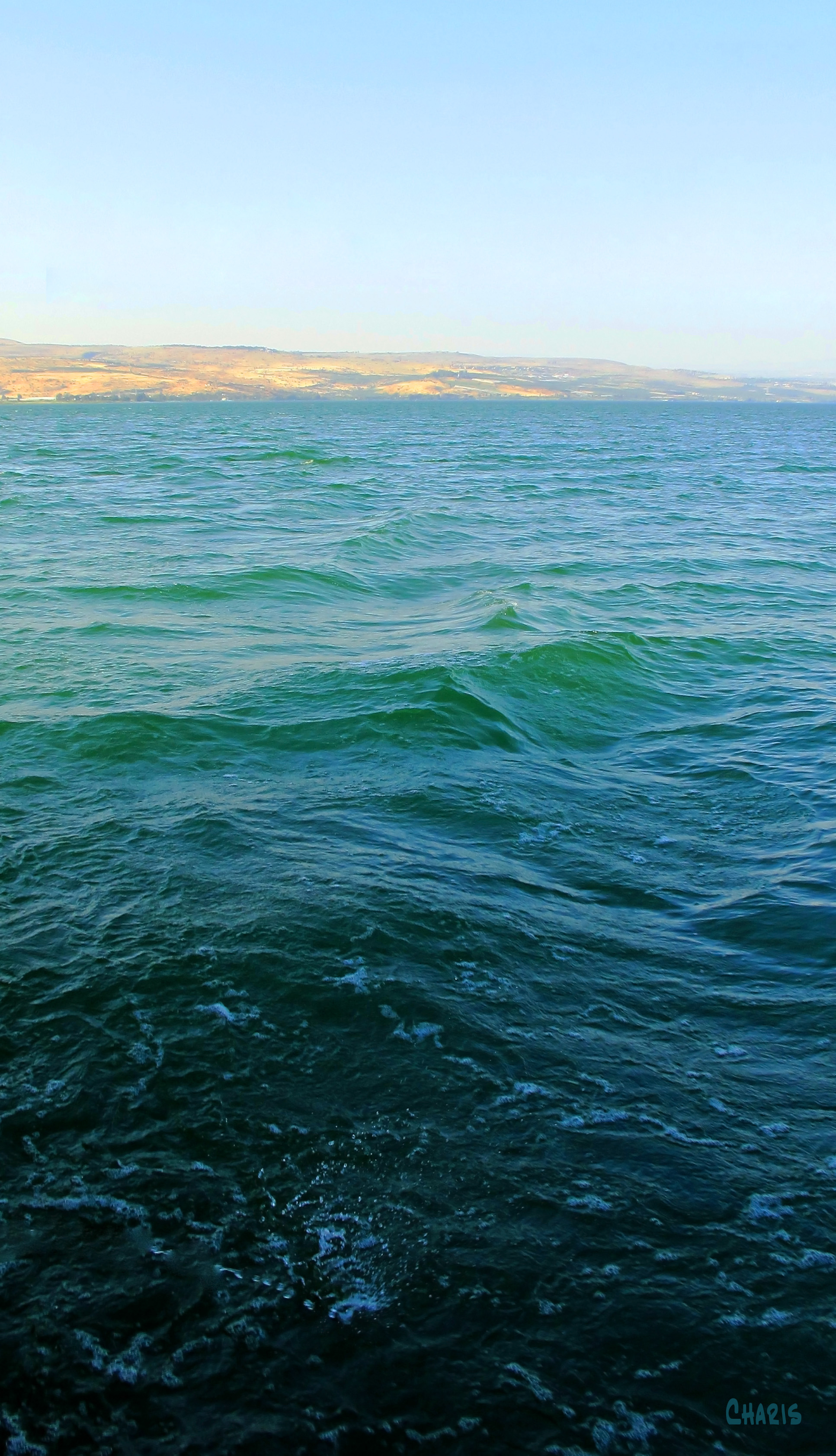
So, just in case, like me, you were also under the impression that Galilee was a large greenish puddle in the middle of a barren Moroccan landscape, I want to show you some photos of the area around the lake where Jesus spent most of his ministry. If you want to check on other details of the story, may I suggest you read the book? It’s been a best-seller for centuries.


I took this photo around the area on the north end of the lake which scholars believe is the most likely place for the Sermon on the Mount to have been preached since there is a natural bowl-type shape in the hill below this view.

If memory serves, this is a village near Migdal on the west side of the lake. Not exactly a barren collection of brown rocks.

Tiberias street in the morning.

This is what is left of Capernaum (Capher -house- of Nahum). The black stones are volcanic and are from the time of Christ. The third century synagogue with lighter stones was built on top of the black stones of the synagogue where Jesus taught and healed. Capernaum was a border town on the north side of the lake near the entry point of the Jordan River. The the wealthy Roman cities of the Decapolis were on the east side of the lake (now the Golan Heights). It is possible that the reason the Roman centurion who asked Jesus to heal his servant suggested that Jesus didn’t need to come with him because, just like today, crossing the border could be a hassle.

The north end of the lake where the river brings in nutrients that attract fish. This was likely the area where some of the disciples were fishermen since Peter’s mother-in-law’s house was in nearby Capernaum.

The view from the area known as Bethsaida.

Gardens. Not desert.
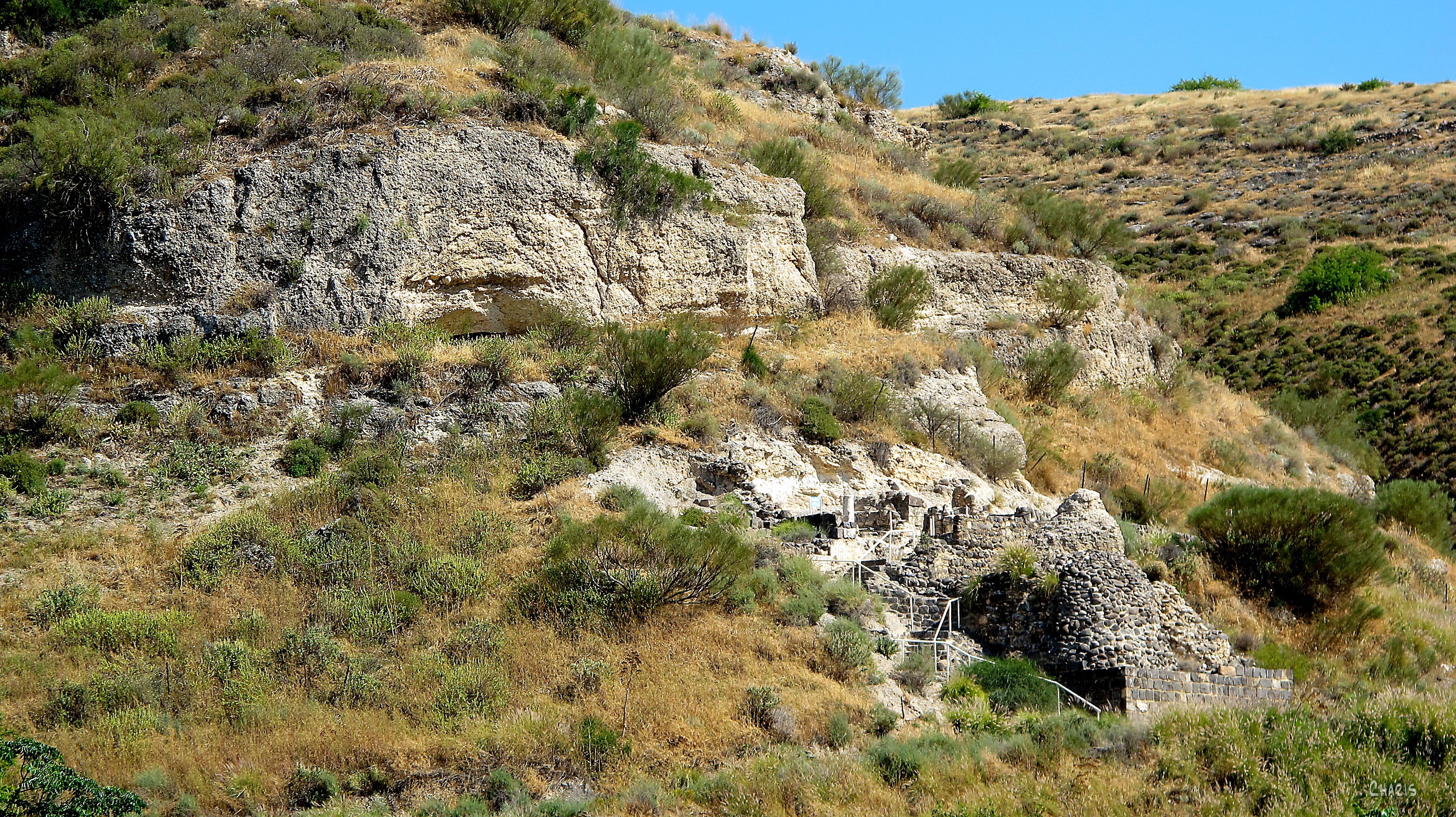
Kursi on the east side where scholars believe the demons left the Gadarene man to enter the swine that ran over the cliff.

Date farm

Dawn from Tiberias

This is not in the valley of the Galilee (Or Lake Kinneret as it is called now) It is actually a view from a hill on outskirts of Nazareth. It has a dramatic drop and would be a good place for shoving a person off if he offended you by saying Isaiah’s prophecy about healing the blind and lame and setting the captives free had been fulfilled in your hearing.

This is Caesarea Philippi, a significant journey north of the Galilee. It is a lush green area at the foot of the snow-topped Mount Hermon (which some say is also the most likely place for the transfiguration to have occurred). Springs at the base form the headwaters of one of the three tributaries that make up the Jordan River. This is where Jesus took the disciples to ask them, “Who do you say that I am?”
In the background you can see a cavern, which used to be part of the Roman temple to Pan. It partially collapsed after an earthquake, but in the time of Jesus it was a bottomless pit called, even then, “The Gates of Hell” where living sacrifices were thrown in. Caesarea Philippi was a Roman city with foreign architecture, culture and a religion imposed by a wealthy conqueror. It must have been an intimidating place for poor Jews to go, yet this is where Jesus took them to confirm his identity.
“Thou art the Christ, the Anointed One, Messiah.” said Peter
And Jesus said, “Upon this rock I will build my church and the gates of hell shall not prevail against it.”





 Charis: Subject to Change