
If it can be verified, we don’t need faith… Faith is for that which lies on the other side of reason. Faith is what makes life bearable, with all its tragedies and ambiguities and sudden, startling joys.
~Madeleine L’Engle

If it can be verified, we don’t need faith… Faith is for that which lies on the other side of reason. Faith is what makes life bearable, with all its tragedies and ambiguities and sudden, startling joys.
~Madeleine L’Engle

“[God desires] not that He may say to them, ‘Look how mighty I am, and go down upon your knees and worship,’ for power alone was never yet worthy of prayer; but that He may say thus: ‘Look, my children, you will never be strong but with my strength. I have no other to give you. And that you can get only by trusting in me. I can not give it you any other way. There is no other way.'”
~ George MacDonald

The signs were not good. I was worried. From where I stood the odds against a particular situation in my life turning out well for all concerned were as high as a British Columbia mountain. The word, “insurmountable” came to mind. I wasn’t so much praying as worrying at God, trying to explain the problem to Him from my point of view.
I placed my empty coffee cup and wadded napkin in the trash bag the stewardess held as she made her way back up the aisle of plane. She thanked me and moved on. I turned back to my book.
“Clearly, if we are to walk with the Father in his ways, then our earthbound thinking requires serious adjustment.”*

I looked out the window at the dramatic view of mountains and valleys below. It wasn’t easy, but I fished my camera out of my backpack under the seat in front of me. I am not fond of heights, but for some reason I love flying, especially on a glorious early spring day with fresh snow on the peaks.

The flight from Vancouver on the western edge of the province to my city, nestled in a valley on the eastern side, lasts less than an hour and a half. Crossing the province in a little car would take one very long day through deep dark valleys and over high passes. Driving in avalanche and unpredictable weather season is not for the faint of heart. I try to avoid the expense of flying, but going by plane, even a small prop plane, is so much easier.

I took a few more snaps then hung the camera strap around my neck and read on.
“In His realm, His abundance in heaven obliterates our poverty on earth. In his domain we are never outclassed, overwhelmed or overcome. No matter what is against us, we can win through His name. Impossible odds are fun to Him, who loves to laugh at His enemies.
I laughed out loud. The man across the aisle looked at me funny, but it didn’t matter. What are the odds of me telling God about impossible odds from my earthbound view and then Him telling me about odds from His heavenly view — as I occupied a seat in the sky?

“We are learning how to occupy a seat in heavenly places in Christ, so that his viewpoint of the circumstances is the one that dominates our thinking, praying, and believing.”
I aimed my camera out the window again. From this perspective I could see lakes and fields beyond the ranges that seemed so imposing from down there. I could see the bigger picture from my chair in the sky, seated where I was in this high place.

When it came to my problem, it felt as if the Lord was saying, “Keep looking down. You are seated with Christ in heavenly places.”**
In this place all things are beneath His feet and nothing is impossible.”
Nothing.
*Graham Cooke, Manifesting Your Spirit, pp. 28, 29
** Ephesians 2:6

Blooming beside my front door this morning, the crocus proclaims new life in tones of royal purple.
“But now Christ has been raised from the dead, the first fruits of those who are asleep. For since by a man came death, by a man also came the resurrection of the dead. For as in Adam all die, so also in Christ all will be made alive!”
1 Corinthians 15: 20-22

To realize we are not lost in a massive crowd, to realize we are thoroughly and intimately known by the most powerful Being in the universe and to know that he still loves us is the source of all joy.
The Psalmist wrote:
“Lord, you know everything there is to know about me.” (Psalm 139:1 TPT)
Falling in love is a risky undertaking. The truth is that the romantic idea of falling love is often more about seeing ourselves as attractive and lovable than developing an altruistic love for another person. Attention from someone we don’t respect fails to carry much authority, but when a person we admire tells us, through word or action, that we are worthy of attention our sense of value goes up in our own eyes.
In the process of falling in love we gradually expose more of our heart’s vulnerabilities as we search for acceptance. It means lowering defences and possibly giving another person all the ammunition they need to hurt us. Some people feel the risk is too great, especially if they have known betrayal before. Mutual vulnerability is a kind of insurance, but no guarantee against deceit or exploitation.
At breakfast this morning my little granddaughter and I talked about what makes a good story as we munched our crunchies. All the princess stories, she pointed out, go mostly sad-scary-happy or sometimes scary-sad-happy. Sometimes she wants to stop reading the story during the scary part, (we’re reading The Secret Garden together). Happy-sad-scary stories are really bad, but who remembers happy-happy-happy stories?
Many stories of true love start with a misunderstanding of the nature of the other person. There’s a scary part. But…Mr. Darcy is wonderful after all! It’s the stuff of novels — especially paperback romances. The brisk woman in the foreman’s hat proves witty, warm, and kindhearted! The lone guy on horseback hides a poetic soft side under a tough exterior! Sad-scary-happy!
What if our guardedness keeps us from learning to clear up lies we have been told about someone? What if we have been told lies about the character of God? What if we bail at the scary part?
We miss the opportunity to be known and to see ourselves through the eyes of the One who loves us perfectly. If we dare not risk posing the trust question to our Creator for fear of condemnation or rejection we miss the chance not only to know Him, but to know ourselves.
Falling in love with God is becoming open and vulnerable to the only person in the universe who can show us how to fall in love with ourselves – the way He sees us in the future as well as the present, with acceptance and the power of grace to become so much more than we are now.
My word for the photographic meditation exercise yesterday was “known.” I have learned that God is the initiator. He loved us first. He has always known us. There is nothing in our hearts that shocks him. He risked everything to show us his amazing love. He made the first move.
He says, “This is Me, naked and vulnerable on a cross out of love for you.”
Our part is to respond by taking the risk of saying, “Just as I am…this is me. Do you love me or am I just another stone among billions?”
He answers, “Yes. You. I love you. Just as you are. With an everlasting love.”

Have you heard this one? How many counsellors does it take to change a lightbulb?
Only one.
But the lightbulb must really want to be changed.

One of the words suggested for a photographic meditation in the season of Lent is “broken.” Contrary to my usual practice of looking for beauty in the midst of the ordinary, I looked for the less-than-lovely. For the sake of this exercise I gave myself one hour to photograph only the broken.

I love photography because it has trained me to pay attention to the goodness of God, particularly his creativity and generosity in nature. I have changed. I used to be overly aware of disorder. Seeing only the broken took no effort, and the loss and heartache it symbolized began to feel overwhelming.

This is not the way it was meant to be.
Yesterday we gathered with friends to study the book of Matthew. The more time I spend reading about Jesus’ words and actions the more ideas and practices I realize I need to unlearn in the quest to know him. I’m trying to imagine what it was like for him to live in a broken world among broken people when he was the only one who understood the way it was meant to be. He knew what was in people’s hearts, and yet he loved them. He did what he did for the joy set before him – for the hope of establishing a new normal.

This passage touched my heart:
Jesus walked throughout the region with the joyful message of God’s kingdom realm. He taught in their meeting houses, and wherever he went he demonstrated God’s power by healing every kind of disease and illness.
When he saw the vast crowds of people, Jesus’ heart was deeply moved with compassion, because they seemed weary and helpless, like wandering sheep without a shepherd. (Matthew 9:35, 36 TPT)

I thought about the type of compassionate responses offered to broken, weary, helpless, people falling through the cracks in my own country. We offer borrowed money to feed, drugs to numb, unrestrained sexual pleasure to distract, adversarial court procedures that throw gas on broken relationships to pacify, and physician-assisted death for those who have lost hope for themselves or their offspring still in the womb.

Compassion without hope can be a cruel kindness.

Many religious folk have lost hope as well. They may raise funds to offer material relief, or pray that a person will be comforted in their incurable condition, but they seldom act with the type of merciful power Jesus demonstrated. They would never admit it, but their responses to broken people are not much more effective than the Pharisees who saw doubling down on the rules as the way to prevent hopeless suffering. They take a stance at the other pole on the cruel kindness playing field. They see the world in terms of “us and them.”

“Later, Jesus went to Matthew’s home to share a meal with him. Many other tax collectors and outcasts of society were invited to eat with Jesus and his disciples.
When those known as the Pharisees saw what was happening, they were indignant, and they kept asking Jesus’ disciples, “Why would your Master dine with such lowlifes?” (Matthew 9: 10, 11)

Jesus told them, essentially, that if they thought they held the copyright on normal, they wouldn’t value what he had to offer.
“…Healthy people don’t need to see a doctor, but the sick will go for treatment.” Then he added, “Now you should go and study the meaning of the verse:
I want you to show mercy, not just offer me a sacrifice.
For I have come to invite the outcasts of society and sinners, not those who think they are already on the right path.” (verses 12 and 13)
Earlier in Matthew we read about the narrow road to knowing who Jesus is and the significance of what he has done for us. It starts with step one, “Blessed are the poor in Spirit for theirs is the kingdom of heaven.”
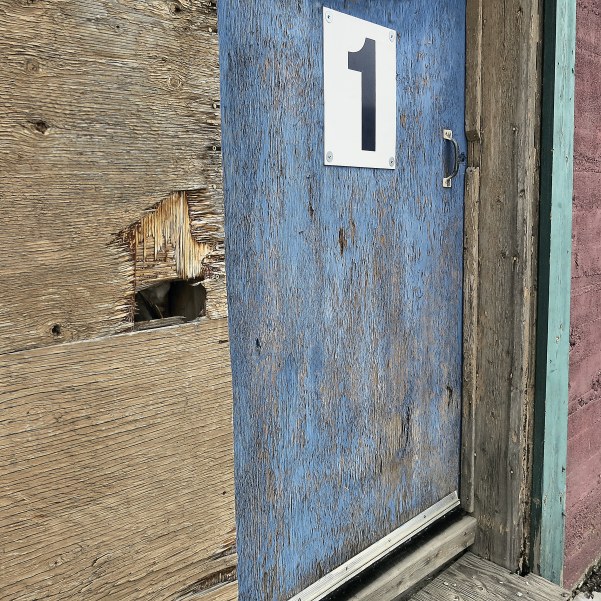
Being poor in spirit means admitting that our methods of coping with brokenness are not working. It means we recognize our powerlessness. It means looking at the mess we think “is what it is” and recognizing our inability to conceive of how effective God intended us to be. My own heart is convicted.
It means admitting, like the old Gaither song says, “All I had to offer Him was brokenness and strife.”
It means turning to The Great Physician and asking him to heal us, body, soul, and spirit.

It means that we who make excuses about living in a way that does not demonstrate the way Jesus said the Holy Spirit would empower us to act, also need to admit our poverty, and turn to follow him more closely. Sharing his heart means not only feeling the deep compassion he feels for the broken, but also aligning with him to do something about it.
If we really want to be changed The Great Counsellor is willing.


“The sense of mystery must always be, for mystery means being guided by obedience to Someone who knows more than I do.”
~Oswald Chambers.
This is a digital manipulation of a photo I took of barren trees beside a winter road (see the little branches?).
Many times it is difficult to see how God can use things that appear dead in the cold dark season we are in, but He has a plan to make something beautiful of our lives.
How does he do it? It’s a mystery.


 Charis: Subject to Change