
Every blessing You pour out
I’ll turn back to praise,
and when the darkness closes in, Lord,
still I will say,
“Blessed be the name of the Lord!”
-Matt Redman

Every blessing You pour out
I’ll turn back to praise,
and when the darkness closes in, Lord,
still I will say,
“Blessed be the name of the Lord!”
-Matt Redman

For what we proclaim is not ourselves,
but Jesus Christ as Lord,
with ourselves as your servants for Jesus’ sake.
For God, who said, “Let light shine out of darkness,”
has shone in our hearts
to give the light of the knowledge of the glory of God
in the face of Jesus Christ.
(2 Corinthians 4:5,6)

Today as I was reading in Corinthians about pulling down strongholds I remembered this stronghold I saw in Sepphoris/Tzippori in Israel. It would be very hard to pull down. It has been there for a very long time. You can see from the depth of the window openings how thick the walls are.
Our guide told us it was built by the Crusaders on the top of the hill the Roman city sat on (about an hour’s walk from Nazareth) and later rebuilt by the Ottoman Turks. What fascinated me was that the builders scrounged stones and sarcophagi (stone coffins) from previous dynasties to use in the construction.

A cornerstone is the most important stone in a building because the other walls line up with the angles it establishes. In the photo the long rectangular stones are sarcophagi. These walls aligned with receptacles for the dead. Soldiers holed up inside fortifications like this would rain down arrows, and later bullets, on anyone daring to approach.
In 2 Corinthians Paul talked about the believers’ need to rely on different weapons than the ones used by human armies to tear down these seemingly impossibly strong fortifications.
For though we walk in the flesh, we are not waging war according to the flesh. For the weapons of our warfare are not of the flesh but have divine power to destroy strongholds. (2 Corinthians 10:3,4)
He explains the metaphor of stronghold in verse 5: We destroy arguments and every lofty opinion raised against the knowledge of God, and take every thought captive to obey Christ…
The Greek word translated “arguments” here is logismos, which means just what you think it would: reckoning, reasoning, computation, conclusion –all the things those of us educated in the West hold as the gold standard for decision-making. We gather data observable by our physical senses, make logical deductions, theorize, debate and come to a conclusion. Some of us hold this process in such high regard we require faith and the ways of God to pass through the same intellectual sieve. We have so elevated logic and our own intellect and reasoning ability that anything God does outside of the every day observable repeatable data-gathering experience is often rejected as myth or explained away as a re-telling of a misunderstood event by the superstitious.
Any theory is only as good as the presupposition it is built upon. Sometimes some of the old false ideas we have as foundational beliefs are so protected by thick-walled strongholds that no amount of argument, or ridicule or cannon balls or plastic explosives can tear down our defences.
Sometimes the behaviours based on these assumptions are the result of our acceptance of the death of dreams or an expectation of disappointment as the norm rather than on life and hope in the goodness of God being normal. Sometimes the strongholds of our own personal brand of logic and our ability to reason away experiences that are outside our dismal expectations are lifted higher than God’s word –especially when He says “Nothing is impossible for Me.”
Shortly after we visited Sepphoris we explored the ruins of the ancient city of Samaria. The fortifications in the photo were built by Herod upon the foundation of the city where control-freak Jezebel’s left-over bits were buried after zealous Jehu convinced disgruntled eunuchs to toss her out the window and the dogs had her for breakfast.
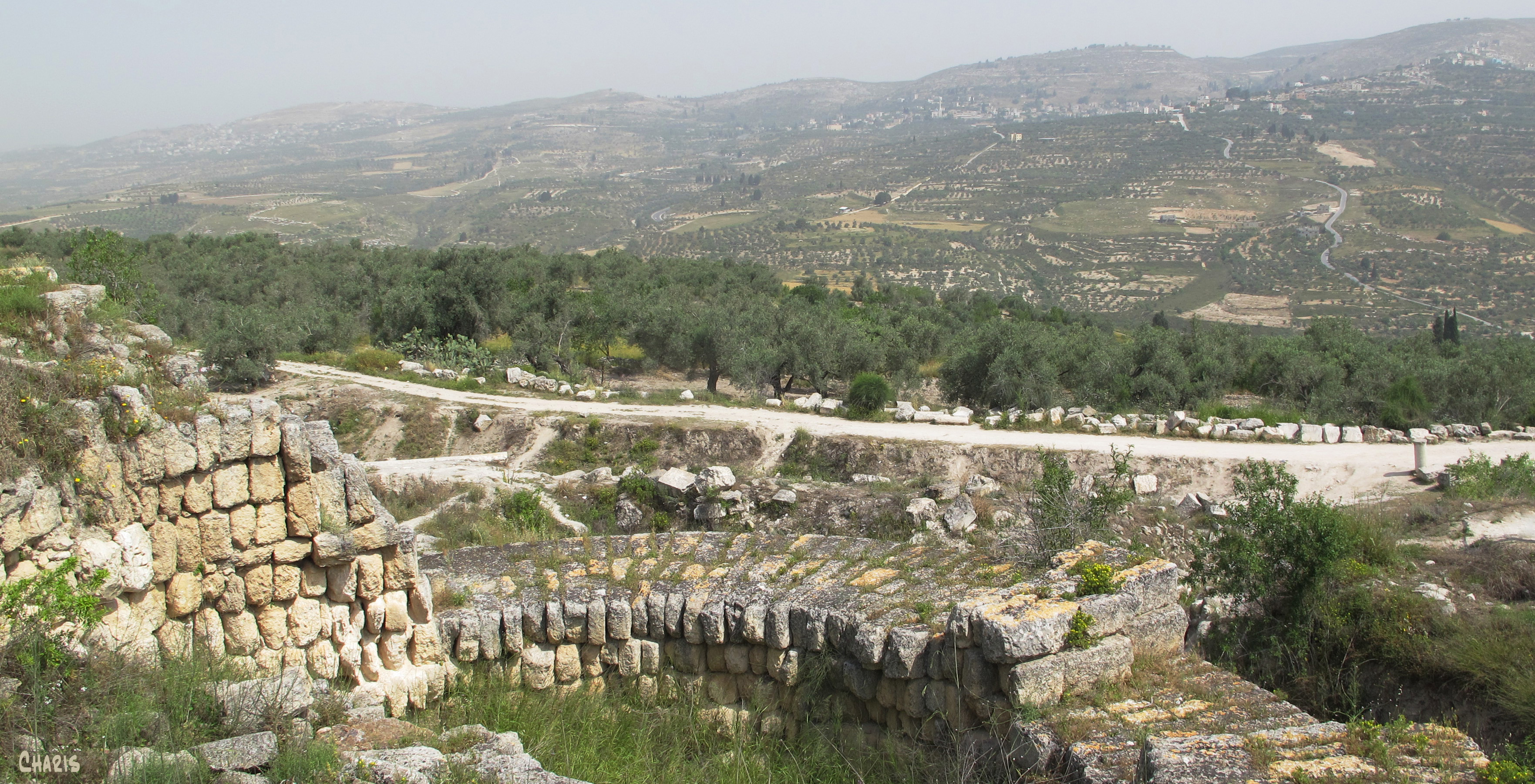
The story is told in 2 Kings 7 that when this city was under siege and the people were desperate with fear and hunger, to the point of killing and devouring their own babies, the prophet Elisha told the king’s right hand man that the next day food would be cheap.
The king’s officer replied, “That couldn’t happen even if the Lord opened the windows of heaven!”
Elisha told him he would see it, but not get to eat it because of his unbelief. The next day he was trampled in the gate when the inhabitants rushed out to grab the provisions the confused enemy had left behind when they heard frightening noises in the night. God arranged the impossible.
I wonder if we miss out on a lot of provision because we exalt our past disappointments and reasoning ability above the promises of God. Unlike the lepers in the story, we never bother looking beyond the gates.
I wonder if the spiritual armour offered for our use in this war of the mind — the helmet of salvation, the breastplate of righteousness, the belt of truth, the shoes that come from the preparation of the gospel of peace, the sword of the spirit of the word of God, and the shield of faith– free us up to recognize God’s way of thinking. What if our most effective weapons are the fruit of the spirit: love, joy, peace, patience, kindness, goodness, faith gentleness and self-control?
I wonder how much more of God’s perspective we would be able to perceive if we pulled down those thick walls that make “It couldn’t happen,” look like the only reasonable premise.
Jesus said, “In this world you will have trouble.”
True. But He didn’t stop there, as we often do.
“But I have overcome the world,” He said.
Edited to add: In the process of checking the spelling of the plural of sarcophagus (everything looks good until I hit publish) I had a surprise. The word sarcophagus comes from sarx meaning flesh and phagein meaning to eat. The word means literally flesh-eating. It was a pay-attention moment.
Some of you may have followed the story of how our son-in-law was on the brink of death from flesh-eating disease and how many people, some of whom had never done this before, took up the call to pray for his healing.
I will never forget the day (Good Friday) when he was too unstable to be moved into the O.R. for his second surgery, the day his doctors now admit they thought his chances of survival were 0%, the day his little four-year old daughter asked me for a different song to be played other than the favourite she had wanted for the previous three weeks. I will never forget that as fear of what looked like his certain death nearly engulfed me she sat in the van singing, “I believe that You’re my healer…Nothing is impossible for You! Nothing is impossible! Nothing is impossible for You, Jesus!”
On Pentecost Sunday, amid cheers and spontaneous outright bawling, our son-in-love walked into church on his own two legs, with his feet and all his toes attached and with kidneys and lungs functioning like a healthy twenty-year old.
God says, “It CAN be done. Just watch Me.”
Praise be to the Lord, to God our Savior,
who daily bears our burdens.
Our God is a God who saves;
from the Sovereign Lord comes escape from death.
Surely God will crush the heads of his enemies,
the hairy crowns of those who go on in their sins.
Your procession, God, has come into view,
the procession of my God and King into the sanctuary.
In front are the singers, after them the musicians. (Psalm 68:19-21, 24-25)
(Elisha said) But now bring me a musician.” And when the musician played, the hand of the Lord came upon him. And he said, “Thus says the Lord, ‘I will make this dry stream bed full of pools.’ (2 Kings 3:15-16)
Who would place musicians at the front of an army? Who would react to a national threat with the command, “Bring me a musician?”
We were walking from the Mount of Olives, past the Garden of Gethsemane, down through the valley of tombs and back up the hill toward the other side where Caiaphas’ house has been recently excavated and inside the walls where the Roman pavement of the soldiers quarters still exists below a convent. It was very hot -at least to a Canadian who had been driving through a snow storm only a week before.
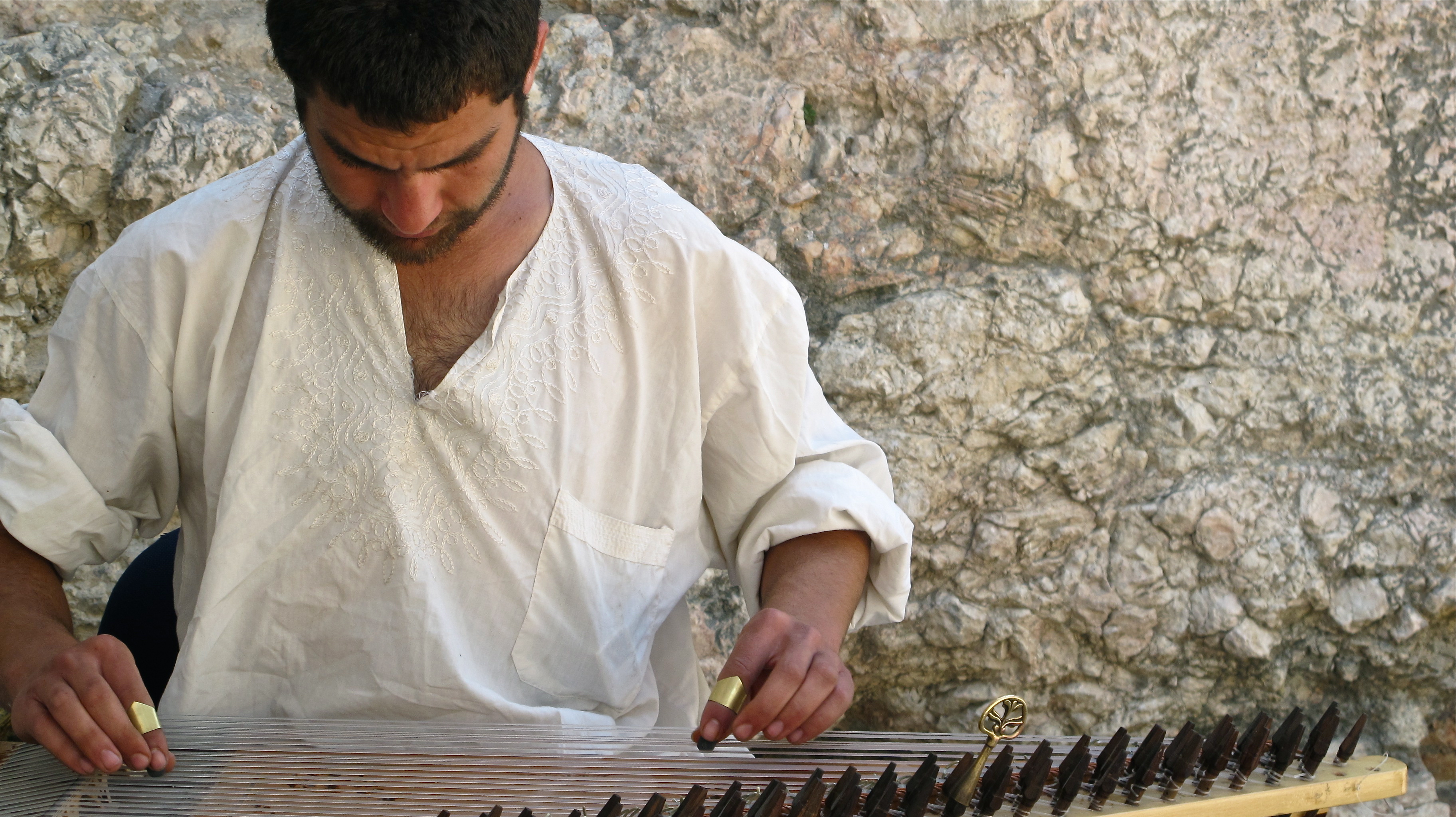
At the bottom, in the shade of an ancient tomb surrounded by hundreds of graves, literally in the valley of the shadow of death, this young man sat and played his instrument. The others in our group went on to explore more tombs, but I stopped and sat on a low stool by his feet and listened. The music was foreign to my ears. I didn’t understand the structure or the harmony, but it soothed my soul.
I had a dream in which a hotel we were preparing was inundated with new guests. At the front of the crowd, looking for a place to stay, were musicians of every sort. Some of them brought guitars and we put the instruments in gun cabinets while they rested. To me this spoke of the power of music in fighting the evil one.
When our son-in-love was walking through his own valley of the shadow of death on Good Friday, when doctors doubted he would survive, his faithful friends brought their guitars and sat in the waiting room quietly strumming and singing songs of praise to the great healer. Singing seems like an odd activity at such a time, but they understood the importance of warring with their instruments and with their songs.
There is something about music that by-passes our personal defence systems. It can get by the heart/brain barrier.
I had a singing student whose relationship had just broken up. She assured me, quite calmly, that she was fine, that it was a logical time to end it and she was ready to move on. We happened to be working on the song, “On My Own” from Les Miserables. She didn’t make it two lines into the song before the floodgates of tears opened. Music therapy works on the theory that words delivered via music can get past our intellectual defences and help us heal.
There is something about music that allows us to hear more than just the music. On that day in Jerusalem I felt jostled by crowds, harassed by vendors, impatiently tolerated by folk in religious garbs of many types, rushed by tour guides, dismayed by the lack of respect warring factions showed for each other and my feet and sun-burned neck hurt. Although our tour director carefully planned our itinerary to avoid the worst crowds there was no getting around this one if we wanted to see where Jesus spent so many critical hours. It was in the shade of a tomb, in the valley of the shadow of death, away from the crowds as I listened to a simple instrument played by a nameless man, that I heard my heavenly Father. He said simply, “Cease striving and know that I am God. It is finished. Rest in my love.”
The psalmist, David, understood. We war from a position of rest, in the valley of the shadow of death. That is where the feast is kept.

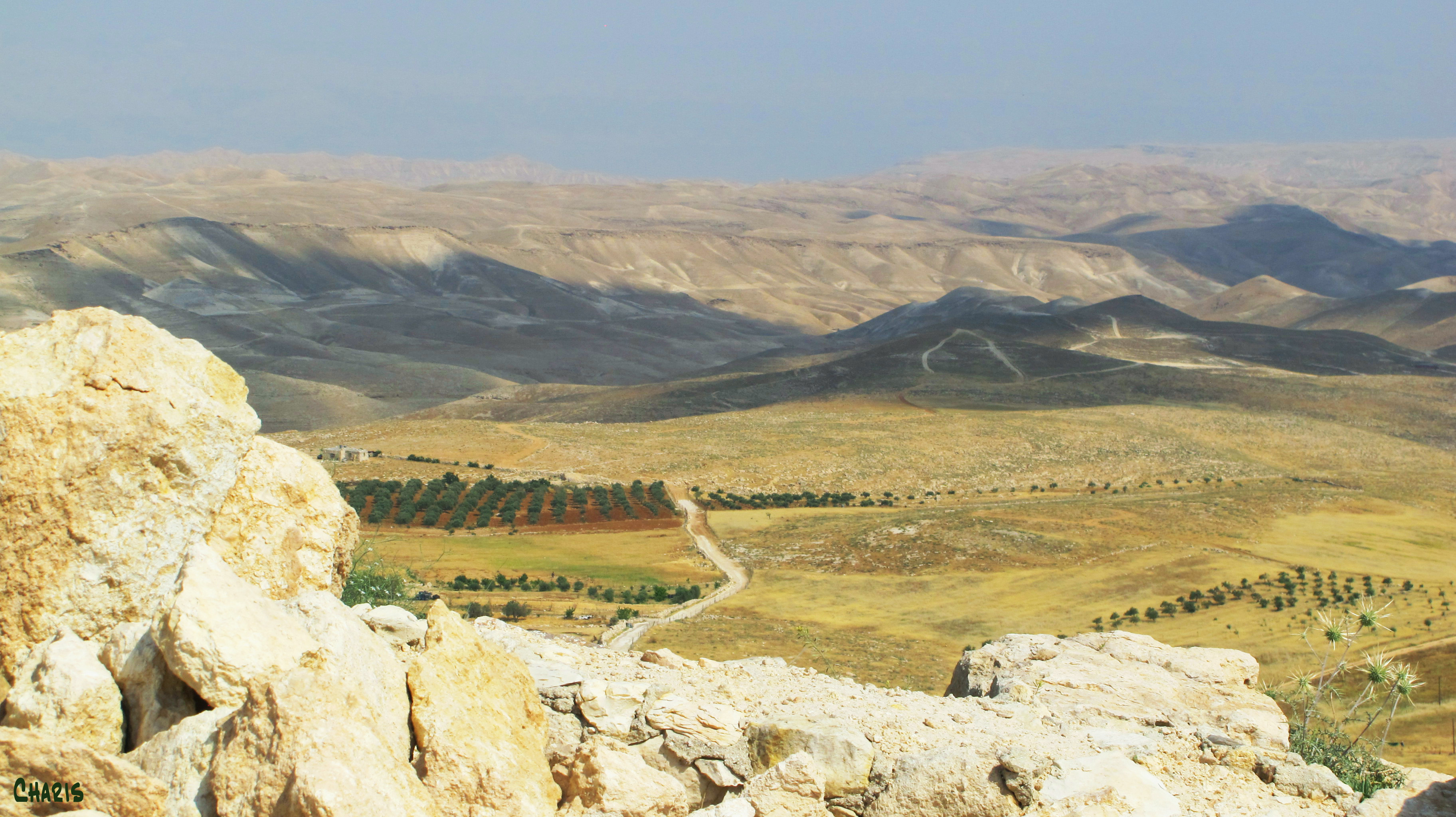
The Byzantines left a structure to mark the spot in the field where Jacob/Israel is said to have had his dream of an open heaven -or at least somewhere in this area that looks like an ordinary gently sloped hillside. (Dare I say I was somewhat relieved by the absence of a huge edifice or gift shop?)
Dreams are significant enough to be mentioned at least 121 times in the Bible. I’ve learned to pay attention.
Have you had a significant dream that changed your life?
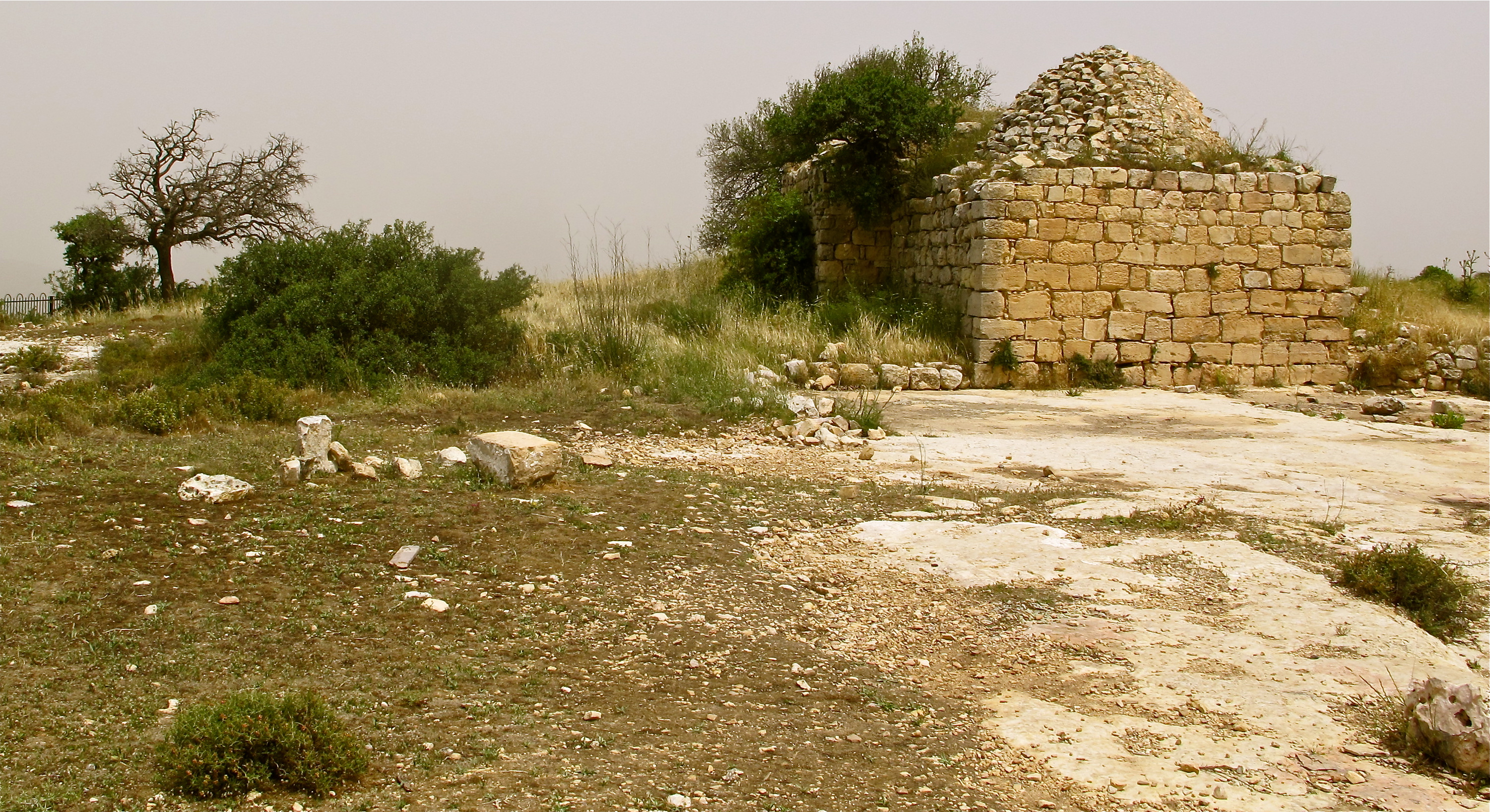
Jacob left Beersheba and went toward Haran. And he came to a certain place and stayed there that night, because the sun had set. Taking one of the stones of the place, he put it under his head and lay down in that place to sleep. And he dreamed, and behold, there was a ladder set up on the earth, and the top of it reached to heaven. And behold,the angels of God were ascending and descending on it! And behold, the Lord stood above it and said, “I am the Lord, the God of Abraham your father and the God of Isaac. The land on which you lie I will give to you and to your offspring. Your offspring shall be like the dust of the earth, and you shall spread abroad to the west and to the east and to the north and to the south, and in you and your offspring shall all the families of the earth be blessed. Behold, I am with you and will keep you wherever you go, and will bring you back to this land. For I will not leave you until I have done what I have promised you.” Then Jacob awoke from his sleep and said, “Surely the Lord is in this place, and I did not know it.” And he was afraid and said, “How awesome is this place! This is none other than the house of God, and this is the gate of heaven.”
So early in the morning Jacob took the stone that he had put under his head and set it up for a pillar and poured oil on the top of it. He called the name of that place Bethel. (Genesis 28)
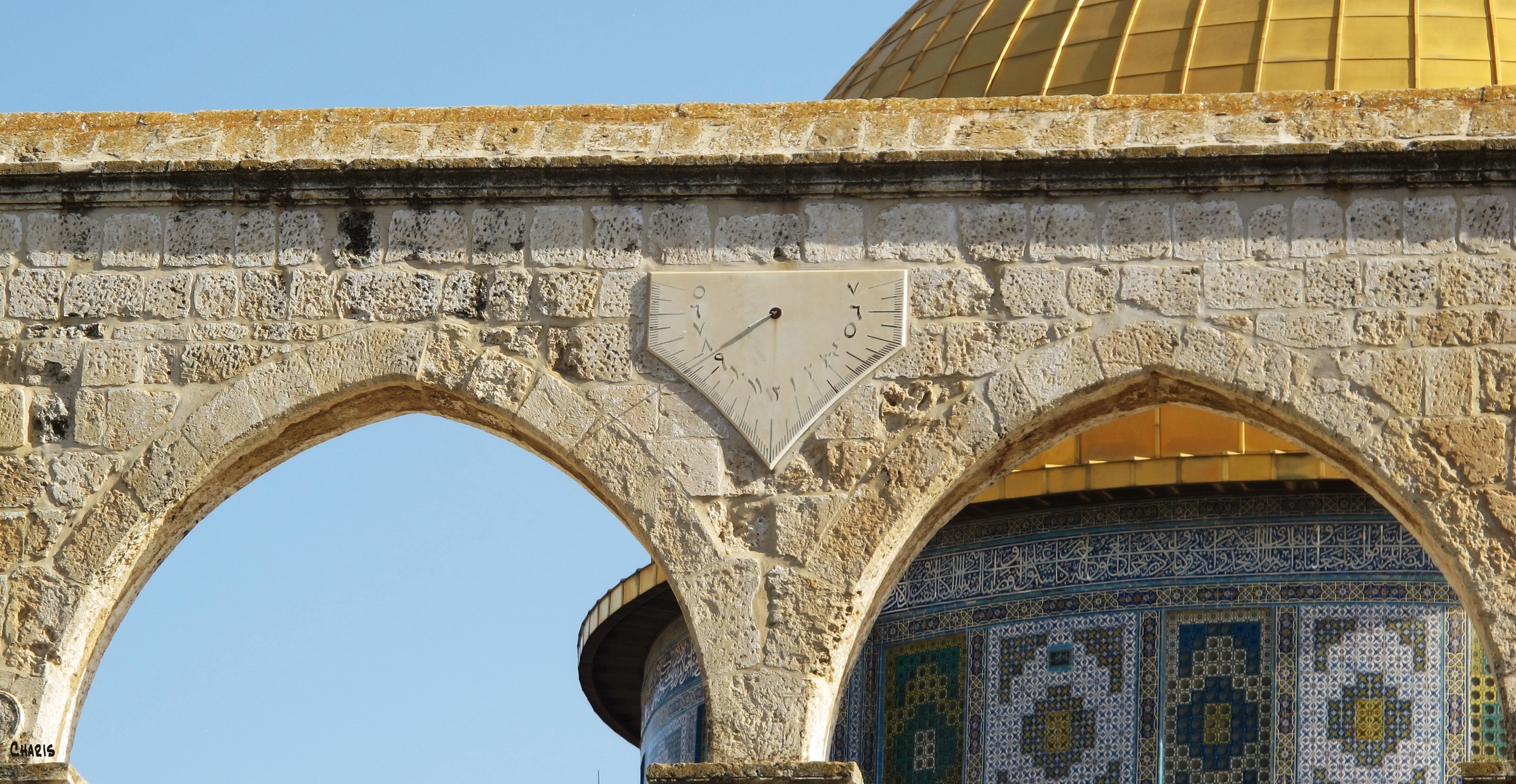
And God is able to make all grace abound to you, so that having all sufficiency in all things at all times, you may abound in every good work. (2 Corinthians 9:8)

I woke early and went down to the lake. In the spring, Israel is full of migrating birds who greet the dawn with song. Their singing is like a great chorus in a sky-domed cathedral giving glory to God as the light grows brighter.
My beloved spoke, and said to me:
“Rise up, my love, my fair one,
And come away.
For lo, the winter is past,
The rain is over and gone.
The flowers appear on the earth;
The time of singing has come,
And the voice of the turtledove
Is heard in our land.
The fig tree puts forth her green figs,
And the vines with the tender grapes
Give a good smell.
Rise up, my love, my fair one,
And come away!
(Song of Solomon 2)

The dream began when my grandmother gave me a sparkly star pin. She brought it back from Bethlehem when I was a teenager and every Christmas when I took it out of my jewelry box I remembered how she talked about her trip to Israel and how much it meant to her. I wanted to go too.
There are so many needs in the world. Frankly, I tend to be the over-responsible big sister type who feels the need to rescue and fix. I also grew up with a fear of not having enough. I justified my ability to pinch a penny so hard it screamed for mercy by giving my reserved squashed coins to charity -widow’s mite and all that.
A couple of years ago someone encouraged a group of us to remember dreams we had relinquished, thinking they were not practical, or were meant for people who needed them more. I realized I had not asked my good heavenly Father for things because I thought, that like my earthly father, he was on a tight budget, and that his resources were limited and had to be carefully meted out to fulfill the great commission of making disciples of all men. It felt selfish to ask Abba if he would give me a trip to Israel like the one my grandmother took. Maybe for someone else, but not for me.
But I dared to ask. And he answered.
The whole time we were in Israel for the past two weeks this song ran through my head:
Jesus, I am resting, resting
in the joy of what Thou art.
I am finding out the goodness
of Thy loving heart.
I know the word in the old hymn is “greatness” and not “goodness”, but that’s the word that kept showing up in that half-sleep time while dawn lightened the skies.
So many things seemed to make the trip look impossible -and up until two days before departure we thought we would have to cancel, but my health improved, our son-in-love came out of his coma and encouraged us to go, and people stepped in to look after things I had assumed were my responsibility alone.
Every day was a gift from a good Father. I thought that nothing could top the feeling of standing on top of Mount Carmel and realizing this was the place where God showed up for Elijah and sent the prophets of the false god, Ba’al, who demanded appeasement, running in ignominy. I thought that would be the highlight, but it just got better.
“Rest,” He said. “Sit down and let others do the running for a while. Rest and let me love you.”
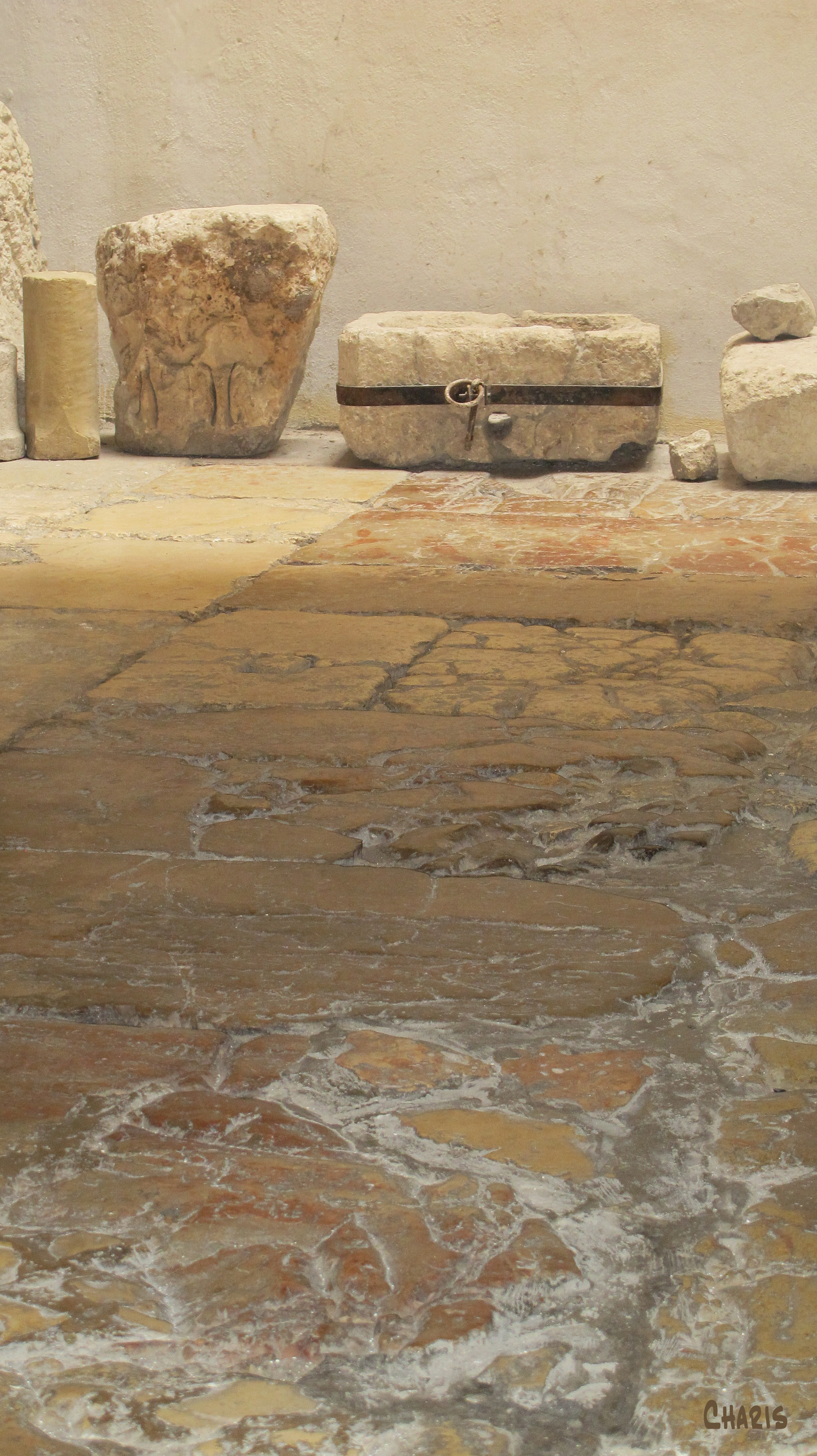
One day, in a lower room below the busy streets of Jerusalem, perhaps on the very pavement where Jesus stood, where the soldiers humiliated him and put a crown of thorns on his head, I sang. I sang with tears and a heart full of gratitude,
I love Thee for wearing the thorns on Thy brow.
If ever I loved Thee, my Jesus ’tis now.
When we came home a couple of days ago, we immediately went to see our son-in-love, who has been on his own journey in the valley of the shadow of death. He is out of ICU, and starting to walk and rebuild his strength in a rehab hospital. The hospital staff are calling him “Miracle Man.”
God is good. So very, very good.

The apostles then rendezvoused with Jesus and reported on all that they had done and taught. Jesus said, “Come off by yourselves; let’s take a break and get a little rest.” (Mark 6:30)
The past four months have been a powerful, but exhausting time of learning more about how the love and wonder-working power of Jesus is greater than fear, but now I am hearing His advice to take a break, so I’m going off the grid for a while.
We continue to see answers to prayer in so many areas. God is simply amazing.
We’ll chat more when I get back.
There is more to come…


 Charis: Subject to Change