
Holiness is a disposition of the heart that makes us humble and little in the arms of God, aware of our weakness, and confident – in the most audacious way – in His Fatherly goodness.
-Thérèse of Lisieux


I passed by this honeysuckle bush growing over the limits a dilapidated unpainted fence tried to set around a sad-looking house. I snapped a photo with my phone and thought about the contrast.
Sometimes the flowers that bloom in overgrown, untended yards surrounded by broken fences and derelict vehicles are all the more beautiful for their powers of endurance.
It amazes me that some of the sweetest, most beautiful, most caring people I know have grown up in foul, ugly, uncaring environments.
The grace they exude defies all predictions of perpetual victimhood. Like the garden flowers in the back alley, they are givers because they know how to receive from God when others have let them down.

“What has happened to create this doubt is that a problem (such as a deep conflict or a bad experience) has been allowed to usurp God’s place and become the controlling principle of life. Instead of viewing the problem from the vantage point of faith, the doubter views faith from the vantage point of the problem. Instead of faith sizing up the problem, the situation ends with the problem scaling down faith. The world of faith is upside down, and in the topsy-turvy reality of doubt, a problem has become god and God has become a problem.“
-Os Guinness

“I hear it all day, Grandma,” my grandson said with the same tone of exasperation I’ve heard in my own voice. “Tommy*, don’t run. Don’t run. Don’t run!” He rolled his eyes. “I hear it at school. I hear it at daycare. I hear it at the pool. I hear it at the mall. I hear it everywhere. Tommy, don’t run!” He put his hand on my arm and looked deeply into my eyes. “It haunts my dreams, Grandma.”
He was so cute, I wanted to smile, but I chose instead to treat him with the same respect all people deserve and listen.
Oh, honey, I hear you. I know God created you to be a runner. You just have to move. It’s hard for you, I know.
I’m on the other end of the age scale, but my dreams are haunted by admonishment and reminders of restrictions other people want to put on me too. Don’t sing. Don’t dance. Don’t laugh loudly. Don’t think for yourself. Do as you’re told. Don’t associate with the wrong people. Be aware of every possible thing that could offend or disturb anyone, anywhere and don’t offend them. Oh, and remember that those who have no problem giving offense are often the most easily offended. Keep your opinions –and especially your odd sense of humour– to yourself. Be quiet, be quiet, be quiet!
I hear you, my boy, because there is never an end to people who want to place restrictions on your desire to run, to dance, to sing, to laugh, to talk and to just be free. But here’s the thing: Their rules and regulations and protocols have holes. Big holes. They can’t keep out the light. They are defenseless against goodness and peace. Kindness leaks across property lines. Gentleness dismantles barbed wire. Joy makes them jealous. Peace irritates them no end, and love, well love elevates restrictions to a higher court where the judge is the one who made you. All of this equipment is available to you if you follow Jesus. He’s gone ahead of you and will show you where he stashed them, if you ask.
So you shine, boy. Run the race that is set before you and eventually the critics and accusers will either have to join you or be left behind.
But the fruit of the Spirit is love, joy, peace, patience, kindness, goodness, faithfulness, gentleness, self-control; against such things there is no law. (Galatians 5:22, 23 NIV)
*Not his real name

When I was a child I wondered who good Mrs. Murphy was. My teacher was named Mrs. Murphy and she was good, at least she was good to the kids who knew the right answers to her questions. She was not as kind to the naughty boys at the back of the classroom, but she didn’t follow them around, as far as I knew. Still we sang in Sunday School, “Good Mrs. Murphy shall follow me all the days of my life,” so there had to be a good Mrs. Murphy somewhere.
It wasn’t until I read the words in the Bible for myself that I realized I had misheard. “Goodness and mercy shall follow me all the days of my life.” I still didn’t understand what it meant, but it let Mrs. Murphy off the hook.
I misheard a lot of things about God when I was young. Sometimes I heard clearly but the speaker “misspoke.” I also skipped over a lot of things I heard and read, but since I had little experience, they remained in a file of “nice sayings” stored on a dusty shelf in the recesses of my brain. Later, when life tests showed up, I needed to dive into that file and learn what they were truly about.
Today I was reminded of my frustration two years ago. I have trouble walking very far, but I have improved a lot. Two years ago, I could hardly walk around my own house. I have always loved walking in the woods and often rambled in the countryside and through the streets of our town looking for beautiful things to photograph. Photography has been a way of intentionally looking for beauty in a world where we are confronted with so many demonstrations of the lack of goodness and mercy between people.

We live in a different city now. Spring arrived about a month sooner than I have been accustomed to. I can’t walk as far as I want to yet, but I can walk. For that I am very thankful. This week, I visited a local garden originally planted by a woman from Scotland over a hundred years ago.

As I stopped to appreciate every sign of colour and new life, I felt peace. I felt my spirit rest in the goodness of the Creator of beauty and the love of beauty he placed in the heart of a young woman far from everything that was familiar to her.

A song is playing in my head today:
I love You, Lord
Oh Your mercy never fails me
All my days, I’ve been held in Your hands
From the moment that I wake up
Until I lay my head
Oh, I will sing of the goodness of God.
I have looked back over the years of my life and seen “Good Mrs. Murphy” guarding my steps. It turns out Mrs. Murphy is actually my Father, my Friend, and my God.


For the Scriptures tell us:
Whoever wants to embrace true life
and find beauty in each day
must stop speaking evil, hurtful words
and never deceive in what they say.
Always turn from what is wrong
and cultivate what is good;
eagerly pursue peace in every relationship,
making it your prize.
(1 Peter 3:9-11 TPT)
I’m a stomper. When my anger is triggered by injustice toward myself —or especially toward vulnerable children— I go outside for a stomp. I go out whether it’s raining, or snowing, or if I’m in pain and limping heavily as I shove my walker through four inches of gravel. (Really! Who advertises handicap accessible trails then covers them with thousands of little wheel grabbing rocks?)
I don’t take my camera with me on these jaunts because I am busy composing defensive responses to obtuse accusers (absent from my side but repeating insults in my head) or writing imaginary posts to corrupt authorities (who will probably remain totally unaware of my important opinion) I’m too busy to notice anything photo-worthy. I’m snapping, but not in a sensitive creative way. Sometimes I walk away from a tense situation to avoid saying something to someone I will later regret.
I didn’t realize until these past few days of rumination following an excellent seminar on healing traumatized churches led by Ron Wean of Florida, that my habit of stomping out my rage is a way of getting out of the fight mode of the infamous flight/fight/freeze trilogy of survival responses to trauma (or the triggers of unprocessed memories of trauma stored in the body). Movement renews connection with the body and the logical/creative brain God gave us. I know I’m back when I can feel more than my own emotional pain and can see more than dark ugliness. The expression, “blind rage” was probably created by someone who was familiar with it.
I’m not anti-emotion. Not at all! Anger can be a useful emotion. It lets us know that all is not well like the check engine light on the car dashboard. The discomfort of angry feelings can let us know that something is not right in ourselves. It can motivate self-examination and change. Anger modified by self-control has been behind many reforms from freedom from slavery to the end of entrenched genocide. We are told: “In your anger, do not sin,” (Ephesians 4:26) and “Love must be sincere. Hate what is evil; cling to what is good.” (Romans 12:9) I’m not talking about becoming an emotionless doormat. I’m talking about choosing to not return evil for evil (with compounded interest) or seek revenge.
This morning I read this scripture passage in 1 Peter about finding beauty. I had never noticed before that speaking hurtful words in retaliation and neglecting to pursue peace can keep us locked in a world without beauty. Beauty remains hidden in the places where ugliness and darkness demand all the attention.
I thought that an intentional search for beauty would bring peace, but what if it is the other way around? What if a lack of peace hinders our ability to see beauty? What if peace improves our vision?
What if the pursuit of peace means letting go of wrathful words and unconscious tit-for-tat exaggerations and lopsided partial truths formed whilst in survival mode? What if the pursuit of peace means leaving our own devices and turning to the Prince of Peace, Jesus Christ, who entered our trauma out of love and compassion to bring us his peace, the peace that passes understanding?
Lord, remind us to turn from what is wrong and cultivate what is good. Open our eyes to see beauty again as we pursue peace in every relationship. Heal our hearts and renew a right spirit within us.


Plenteous grace with Thee is found,
Grace to cover all my sin;
Let the healing streams abound;
Make and keep me pure within.
Thou of life the fountain art,
Freely let me take of Thee;
Spring Thou up within my heart,
Rise to all eternity.
-From “Jesus, Lover of My Soul” by Charles Wesley
One of the most painful moments in my life was when a person I admired announced they had no more grace for me. An annoying trait of mine, that no doubt needed correction, inspired them to dump a load of dis-grace on me instead. I was devastated.
Trauma has roots like weeds that crop up in a garden bed far from the original invasive plant. I felt shame and ran when the flight option in the flight/fight/freeze trio of survival actions seemed most attractive. It took a while to realize that the original painful weed of rejection had spread to this corner of my life, its subconscious presence undetected for many years. I heard it sing a minor key lament from long ago, “Jesus is disappointed with you.”
Growing up in a competitive world where only the best smiled for the camera while the rest slunk out the door for the eliminated, harsh words felt like familiar shameful judgments of disgrace. I wept bitterly. The “NOT GOOD ENOUGH” stamp of disapproval showed up again on the bottom of my application for acceptance.
It was a horrible time and a good time. God can use anything and this time he used a person who also struggled with shame to point out that I was knocking on the wrong door. You can’t give what you have not received or received only in measured installments. I wanted another struggling sojourner to give me what only God could supply. That wasn’t going to work. I needed to find the source.
“Ask me,” he said.
“Ask you for what?” I mumbled, head hanging low.
“Ask me about my grace.”
“I don’t deserve your grace.”
“True. No one does. That’s the beauty. You can’t earn it. Failures only need apply.”
I did ask, and since then I’ve learned that my response to God’s empowering grace can be greater than a grudging, “Thanks for not hitting me when I deserved a good smiting.” It’s now “Thanks for showing me the way you see me and giving me the resources to become that person.”
Thank you, Lord, for grace that is plenteous and greater than barely sufficient grace, or scratch and dent grace for the less deserving, or grace that offers anonymity as a cover for permanent stains on the soul. Thanks for accepting me just as I am. Thanks for grace that heals and purifies and rises up to all eternity.

I was looking for something to watch on TV. I needed a break from the world’s problems, and I just wanted an hour or two of uplifting entertainment, something to make me smile and feel good inside. Years ago, a counsellor told me, “You are entirely too sane. A little denial might help lighten things up.”
I have access to multiple streaming services, but I couldn’t find anything that would “lighten things up.” I love a good film, but these didn’t hold out the beauty I was looking for. Instead, I ended up entertaining myself by listing themes from trailers and the blurbs on trending movies.
Have you paid attention to the themes of films lately? When I was depressed, I used to watch a lot of TV. My standards were not high. When things were really bad, I could lose hours to the weather channel. Whether TV-watching was a cause or effect of the depression, I don’t know, but I haven’t paid nearly as much attention to television or popular films since being set free from the pit.
I looked more closely at the offerings. The same kind of stuff kept coming up. This survey is not remotely scientific. It’s just what I noticed today. Most themes could be reduced to a few broad categories:
Dark secrets: Someone is lying to you.
Someone is trying to steal from you.
Someone wants to use you, or your loved one, for their own power or pleasure purposes.
Off-world or external forces beyond your control are bent on your destruction.
So much for escape from the news cycle.
Responses to disappointment and pain included: the celebration of absurdity; angry humour; creative revenge and one-upmanship pay-back; exploration of the dark side; not-so-noble means to earn public approval; accumulation and protection of wealth and the spending thereof; escape through mood-altering chemistry: and sexual hedonism involving every possible option but a happy marriage.
I’m sure there are films with themes of nobility, altruism, forgiveness, hope, and physical or emotional or spiritual healing, but they weren’t in the first forty on the “trending” list.
As my little granddaughter observed, good stories need problems. Understood — and a well-developed villain is often the character that keeps us coming back. I only looked at the written and visual enticements intended to draw us in like a carnival barker’s call today. I hope many of the issues in the storylines were resolved and brought great relief to the audience before they trundled off to bed. I just didn’t feel like taking the risk that the offered solutions came at the expense of bystanders. I decided not to saturate myself in despair as was once my habit.
As I thought about it, the word saturate reminded me of this advice to new believers meeting together in Philippi long ago:
“Don’t be pulled in different directions or worried about a thing. Be saturated in prayer throughout each day, offering your faith-filled requests before God with overflowing gratitude. Tell him every detail of your life, then God’s wonderful peace that transcends human understanding, will guard your heart and mind through Jesus Christ,” Paul wrote.
“Keep your thoughts continually fixed on all that is authentic and real, honorable and admirable, beautiful and respectful, pure and holy, merciful and kind. And fasten your thoughts on every glorious work of God, praising him always.”
“Put into practice the example of all that you have heard from me or seen in my life and the God of peace will be with you in all things.” (Philippians 4: 6 -9 TPT)
I’m not looking to escape, Pollyanna style, the reality that evil exists everywhere in the world. I can see that level of reality in my own dishonorable responses to fear that is the result of continually hearing the message, “Be afraid. Be very afraid.”
I choose to fasten my thoughts on every glorious work of God. It might seem boring to thrill-seekers, but my wanderings and simple photos of flowers and mountains and sky are reminders to me of a greater reality, the one in which the Creator and Lover of my soul says, “Trust me. I’ve got this.”
I’m shutting the TV and the computer off and going outside now.
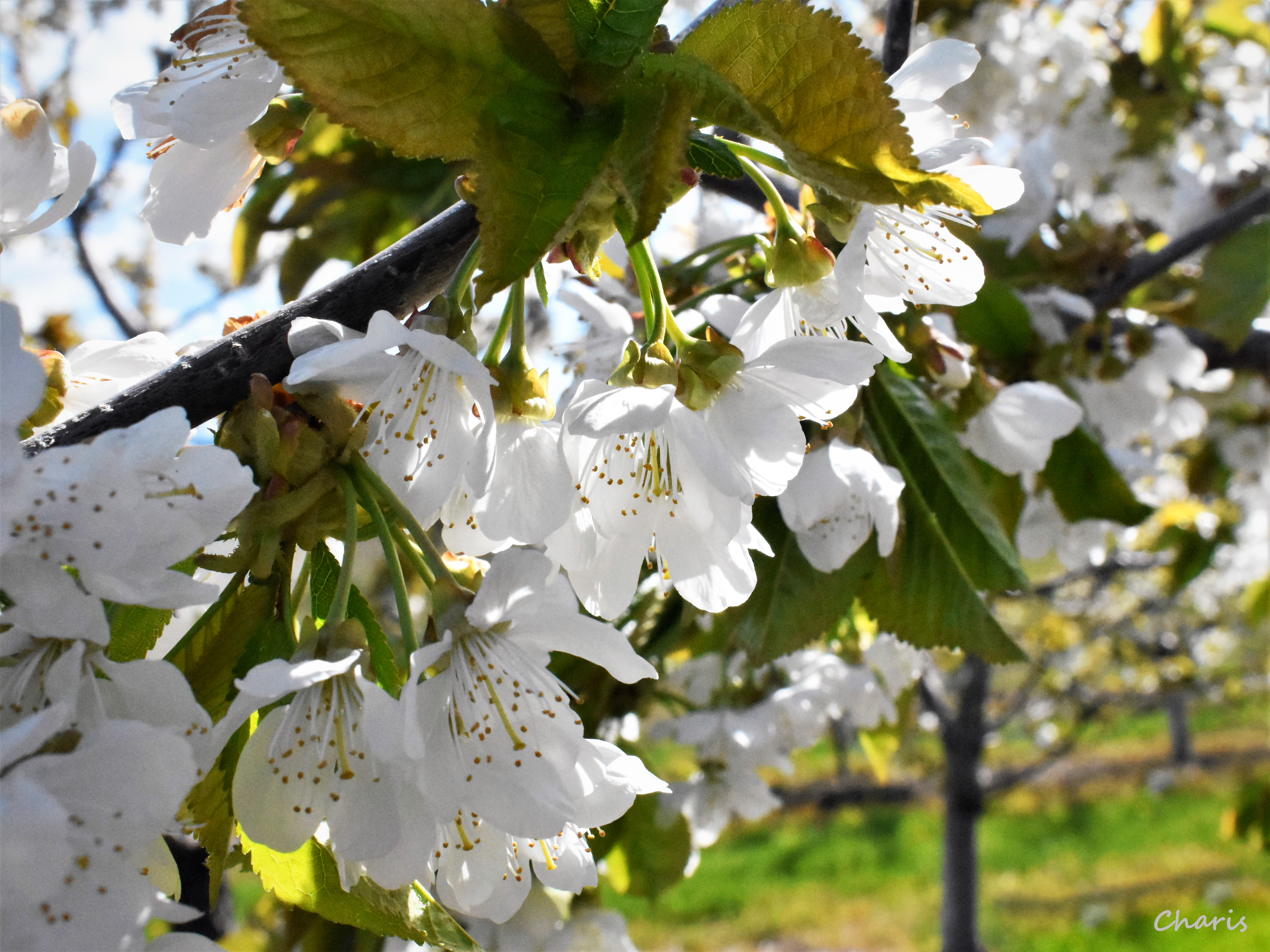
Oh, and in other news, the orchards are starting to bloom.

This morning I am going through photos I took in the garden next to our condo this week. I procrastinated again and the warm sunlight disappeared behind rain clouds before I ventured outside. I didn’t have high expectations for results. The contrast between bright colour and muted dark tones surprises me.
I was listening to Lauren Daigle’s “Remember” as this photo of a two-toned tulip popped up. This line from the song stood out to me: “Even when my eyes could not see, you were there, always there with me.”
I was reminded yesterday that this week marks fourteen years since I was healed of cycles of depression I thought would never end. The bouts in hellish darkness had become more frequent and were lasting longer. Medication helped, but I needed a lot to keep functioning in public and to keep hiding the condition of my soul from people who stigmatized and rejected those of us who walked a path they couldn’t understand, but they needed constant adjustment. I was taking drugs to counteract the side effects of the side effects of other drugs I needed to counteract side effects. Sometimes they threw me into the other ditch with short bouts of hypomania, inevitably followed by the need to make apologies for overconfident promises made that I couldn’t keep later when a crash returned — just as inevitably.
I am enormously grateful for doctors and medicines that kept me going, but I was told my condition was chronic. I would always be dependent on chemical means to chase despair and suicidal thoughts away.
I didn’t want more treatments! I wanted to be healed!
I prayed for years to be released from the prison of depression. Like the Psalmist I could say, “How long?”
How long, Lord? Will you forget me forever?
How long will you hide your face from me?
How long must I wrestle with my thoughts
and day after day have sorrow in my heart?
How long will my enemy triumph over me?
Look on me and answer, Lord my God.
Give light to my eyes, or I will sleep in death,
and my enemy will say, “I have overcome him,”
and my foes will rejoice when I fall.
But I trust in your unfailing love;
my heart rejoices in your salvation.
I will sing the Lord’s praise,
for he has been good to me.
Then one day, when I least expected it, I met the Healer. He set this captive free. I am no longer on antidepressants or mood stabilizers and have had no recurrence in fourteen years! Like this flower God gave me a garment of praise for the spirit of heaviness. How can I help but praise him?
Today I am singing, “I can’t stop thinking about your goodness!”
For those of you asking, “How long, Lord?” keep trusting. Keep seeking the Lord. Someday he will tell us why it took so long. If you have lost sight of hope, ask the Lord to send burden-bearers who will carry faith and hope for you until you can hold it in your own hands again. In the darkest hours He still loves you, even when you can’t see it or feel it.

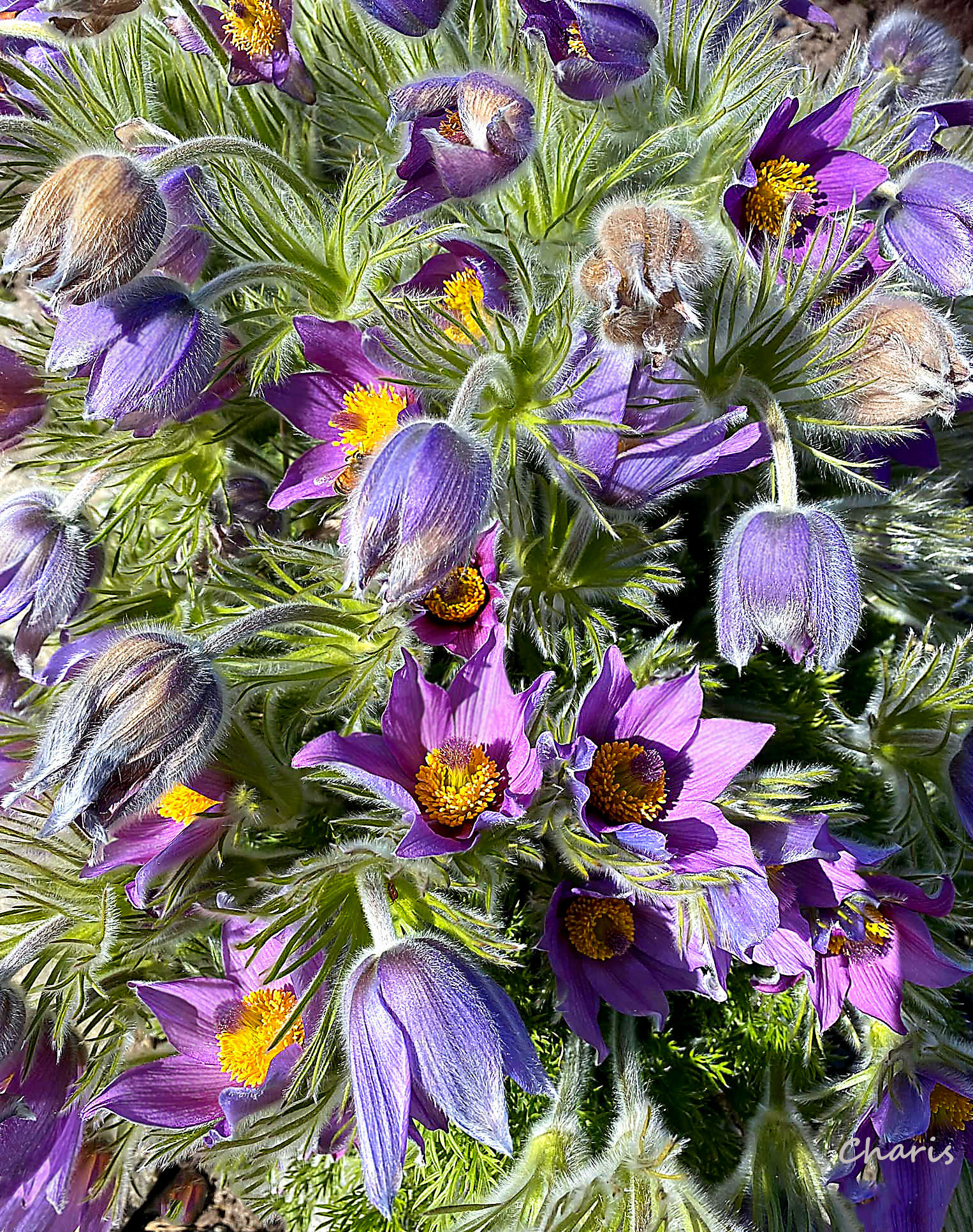
There is something about the crocus flower that symbolizes eagerness to me. They remind me of my childhood family walking over hills covered with last years dry grass and through thickets of gray branches to reach a trail that was still edged with melting snow. I remember the cold wind rushing down the mountainside making jackets billow and long hair whip around in every direction.
If we had been hiking in the late autumn, after everything with colour had blown away, we would have complained about how nasty that cold Alberta wind could be. But in the spring, the same temperature and the same stiff breeze felt wonderfully warm. We tucked hats and gloves into deep pockets and ran into the wind, our arms raised high as if to catch all the promises of spring in our hands.
A south-facing hillside showing off crocus flowers bobbing their heads in the breeze was our reward and evidence of better times and brighter days ahead. Yes, there would be disappointing blustery snowy icy days before winter fully released it’s grip, but the season of growth and harvest approached.
After this latest season of Lent and a time of allowing myself to be aware of the darkness Christ came to illuminate, the week after Easter feels like receiving the freedom to run toward the gifts He promised. One of those was the presence of the Holy Spirit who walks beside us and never leaves. He tells us through Paul:
Follow the way of love and eagerly desire gifts of the Spirit, especially prophecy.
(1 Corinthians 14:1 NIV)
Crocus flowers are like fuzzy purple floral forerunners who respond to the season change before the other flowers. That’s what New Testament prophecy makes possible –being the first to see what others miss in changing times and responding to it in faith.
Teach me your ways, Lord. Show me your paths. Lead me in the way everlasting. Let me run into the wind with joy.


 Charis: Subject to Change